Landscape Astrophotography
The majestic raw beauty of the Monaro - 11-12 October 2026
Again, I made a trip down to a very special spot with amazing landscapes to try my hand at capturing its magnificence. Here are some of the shots taken.
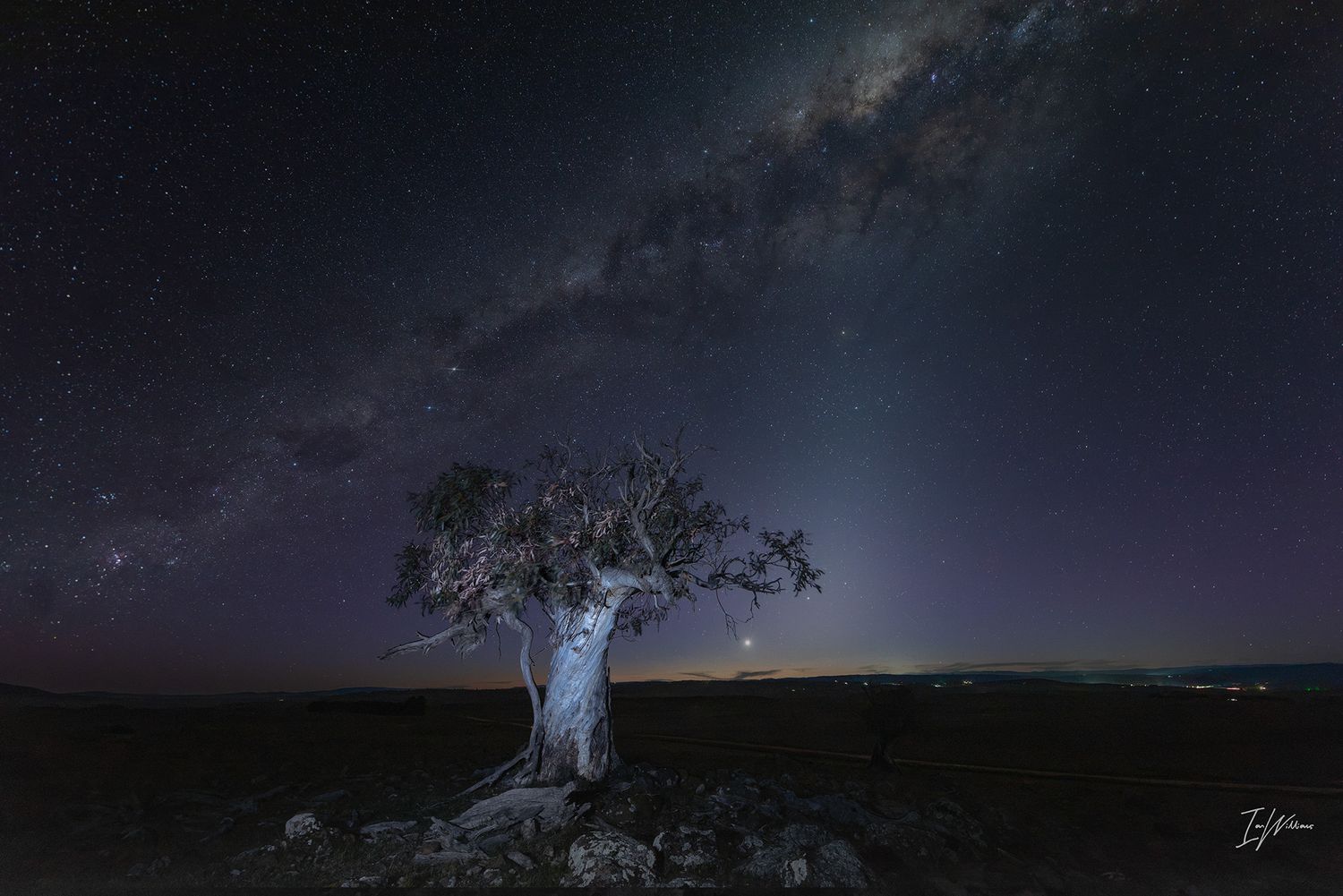
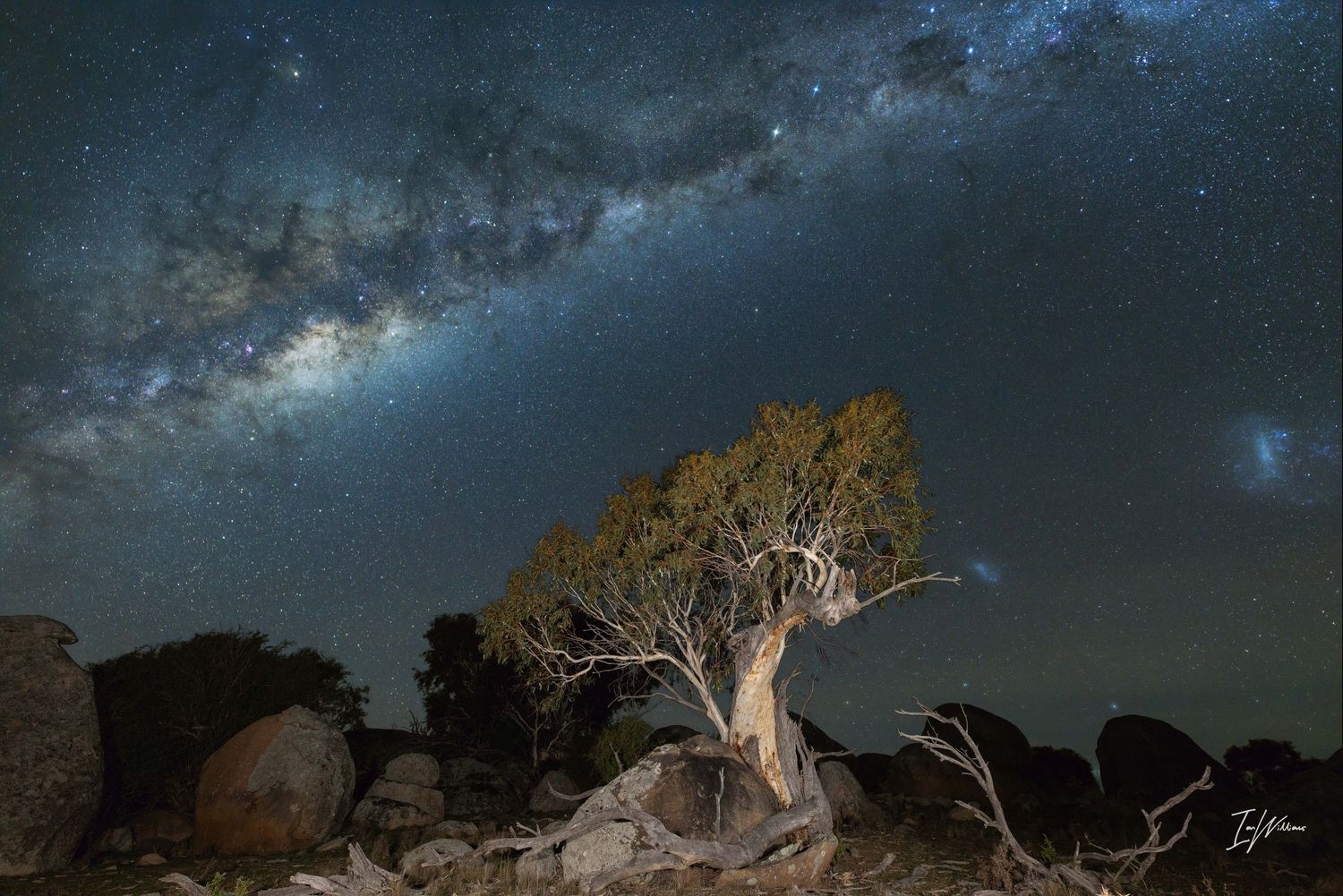
Carina nebula, Southern Cross, Milky Way, Venus and Mercury to right of lower part of tree and the glow of the Zodiacal light - 11 October 2026
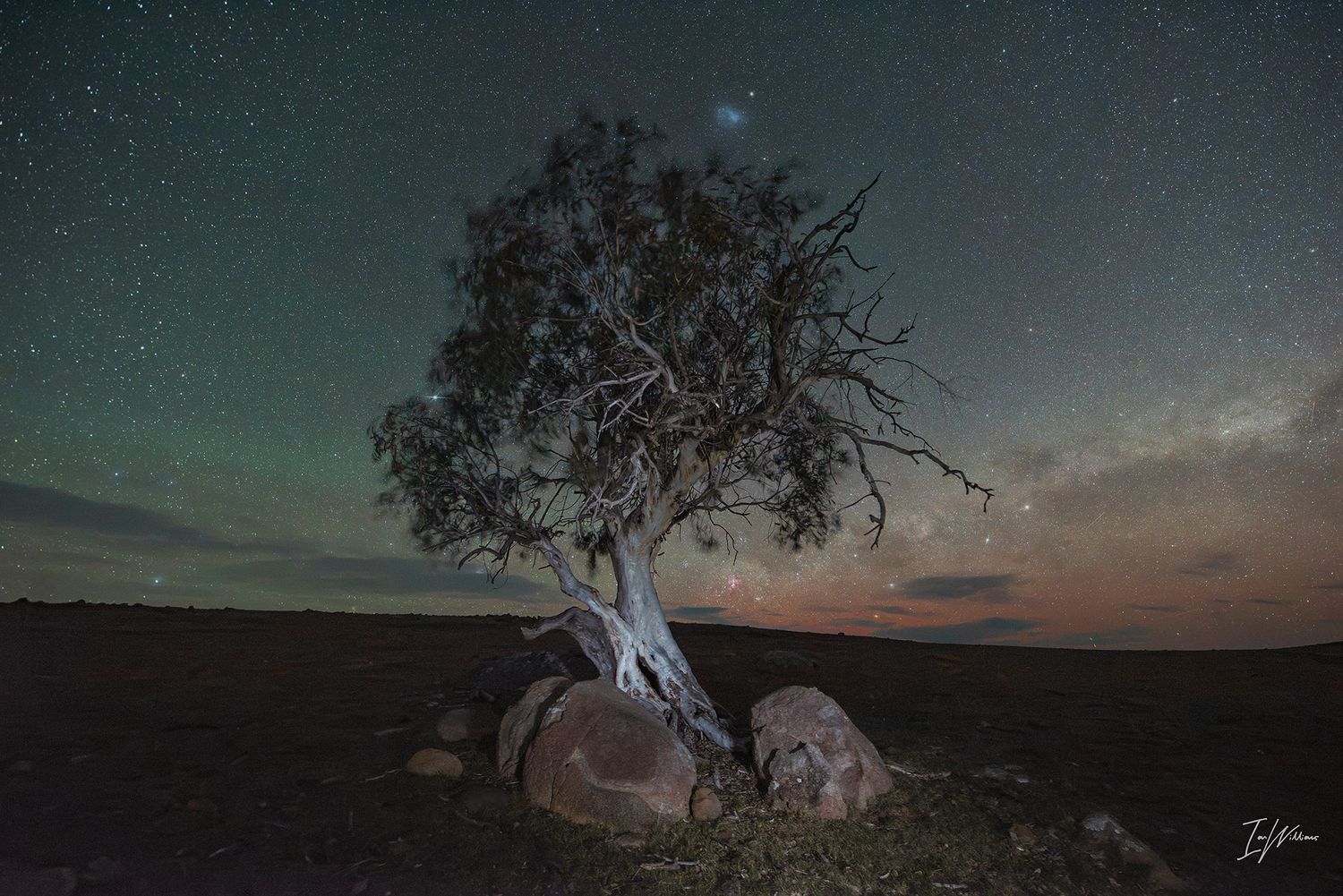
Green airglow to the left and reside of the aurora to the right of a striking gum with gleaming white bark judiciously light painted
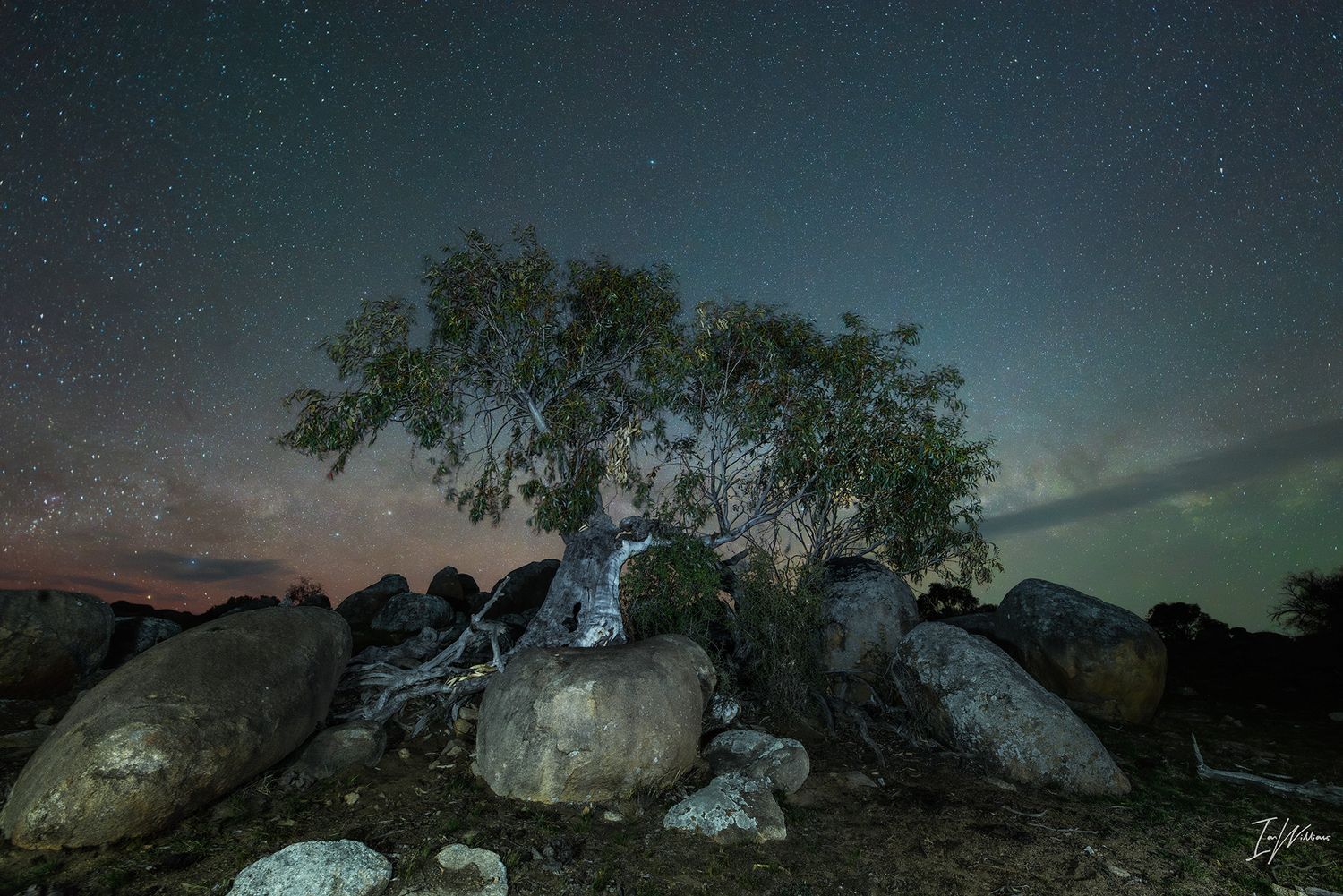
Residue of the aurora along with setting Milky Way core behind a striking tree
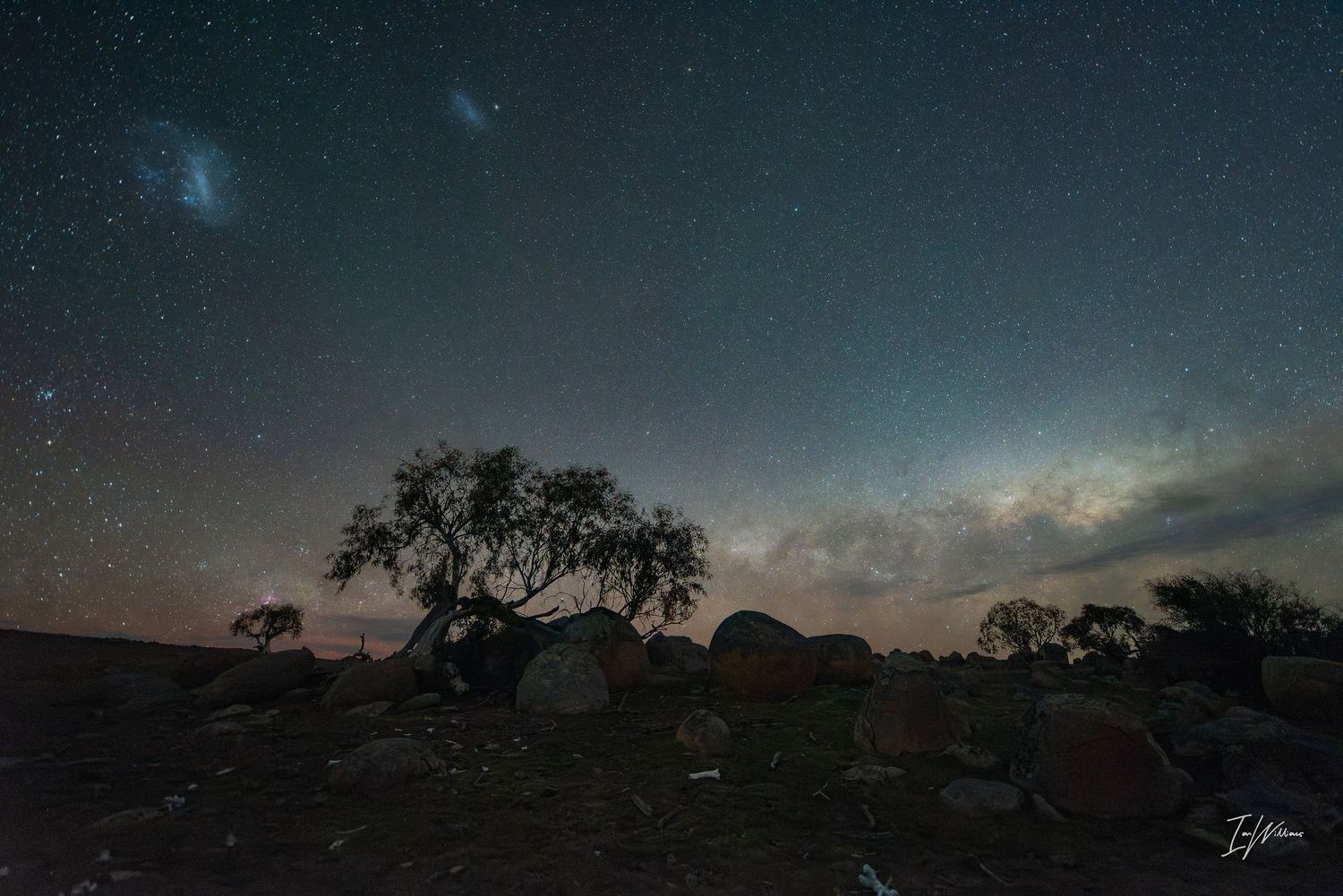
Three galaxies feature in this - the Large and small Magellanic Clouds (top left) and our own galaxy, the Milky Way
Tuross reflections
The dark skies of the south coast lend themselves to taking advantage of reflections on the many waterways. This is one gem off a very busy road!
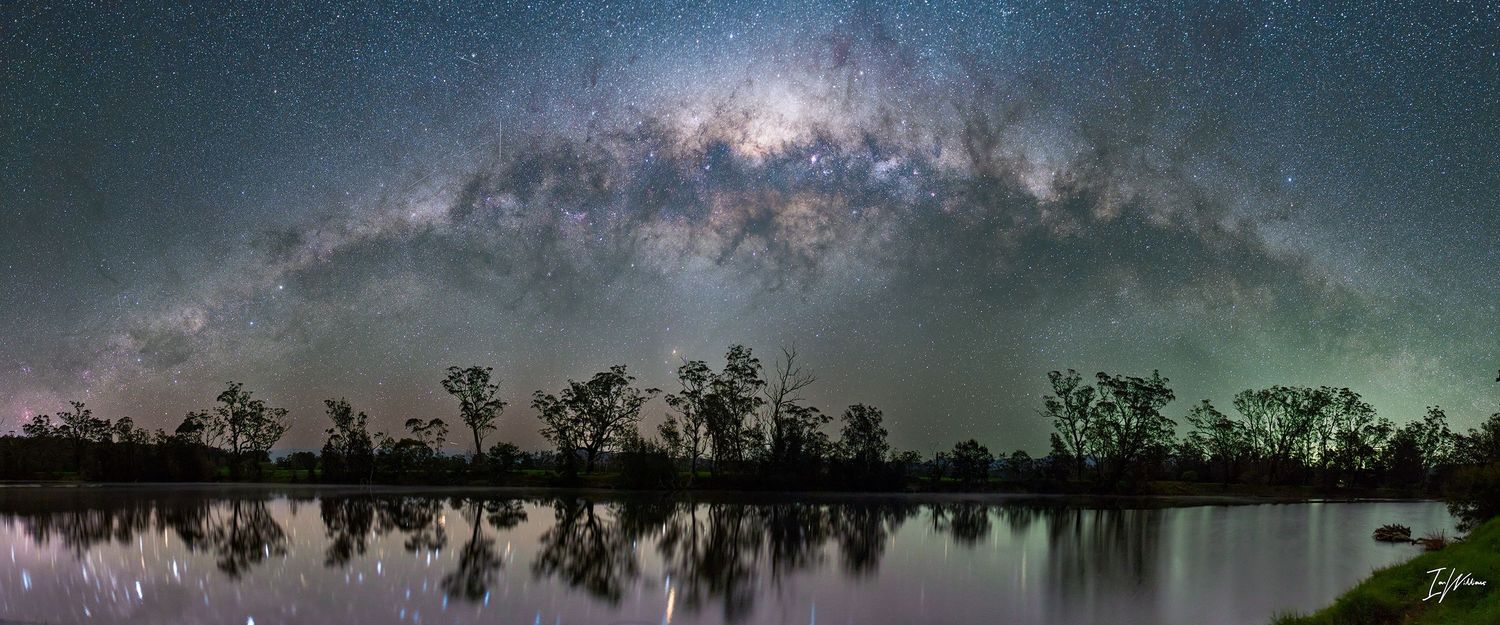
Milky Way reflections, Tuross Rover, 8 October 2026
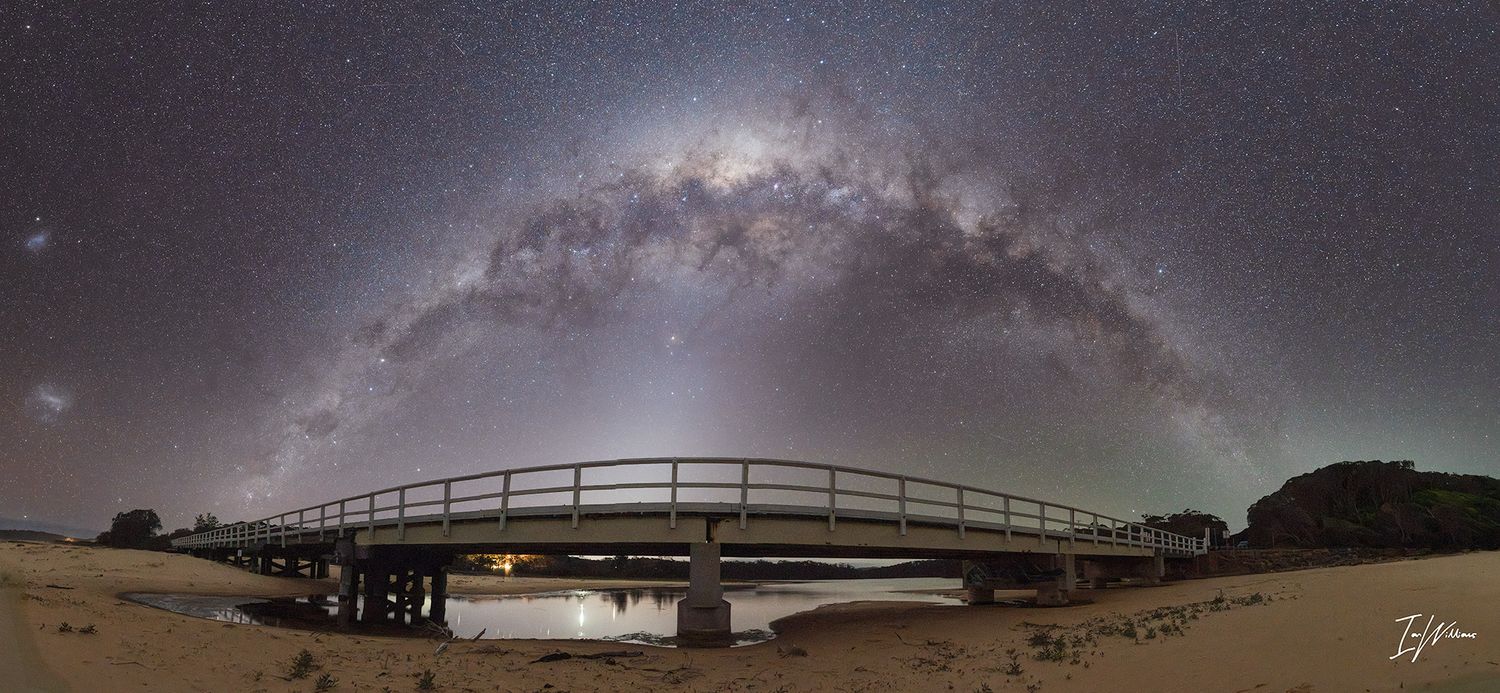
Historic Cuttagee Bridge, South Coast, NSW 8 October 2026
Capital Country landscapes
The area around and including the ACT is full of treasures. The skies to the south of Canberra, in particular offer very dark Bortle 1 and 2 skies with little light pollution. We need to jealously guard these skies from future lighting!
#capitalcountry
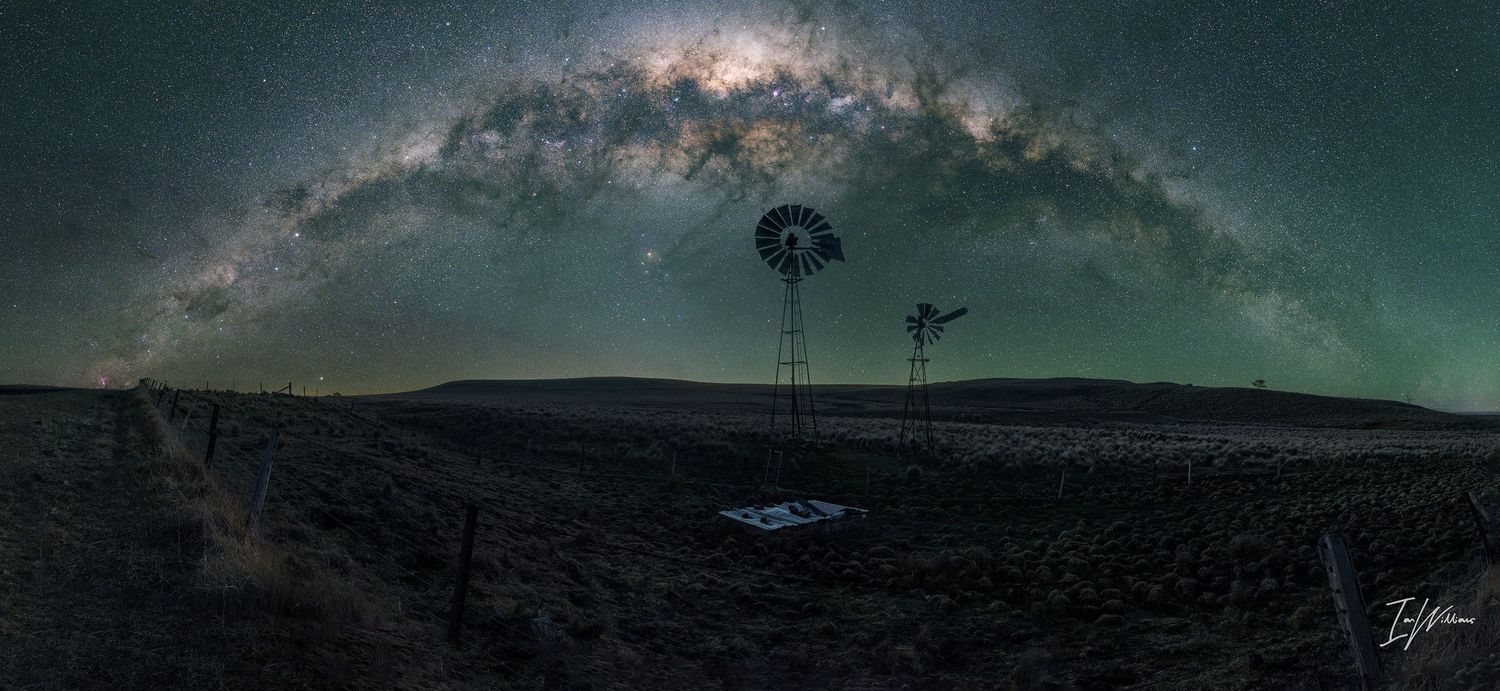
Boomerang Milky Way setting over a peaceful rural scene
The mysterious zodiacal light
Around the equinoxes each year, the Zodiacal light appears in the twilight night sky (September) or in the predawn sky (March) as a diffuse triangular triangle of light. It is thought to be caused by dust particles along the plane that earth orbits the Sun that cause light scattering. It really is a beautiful sight to behold if you can get dark skies!
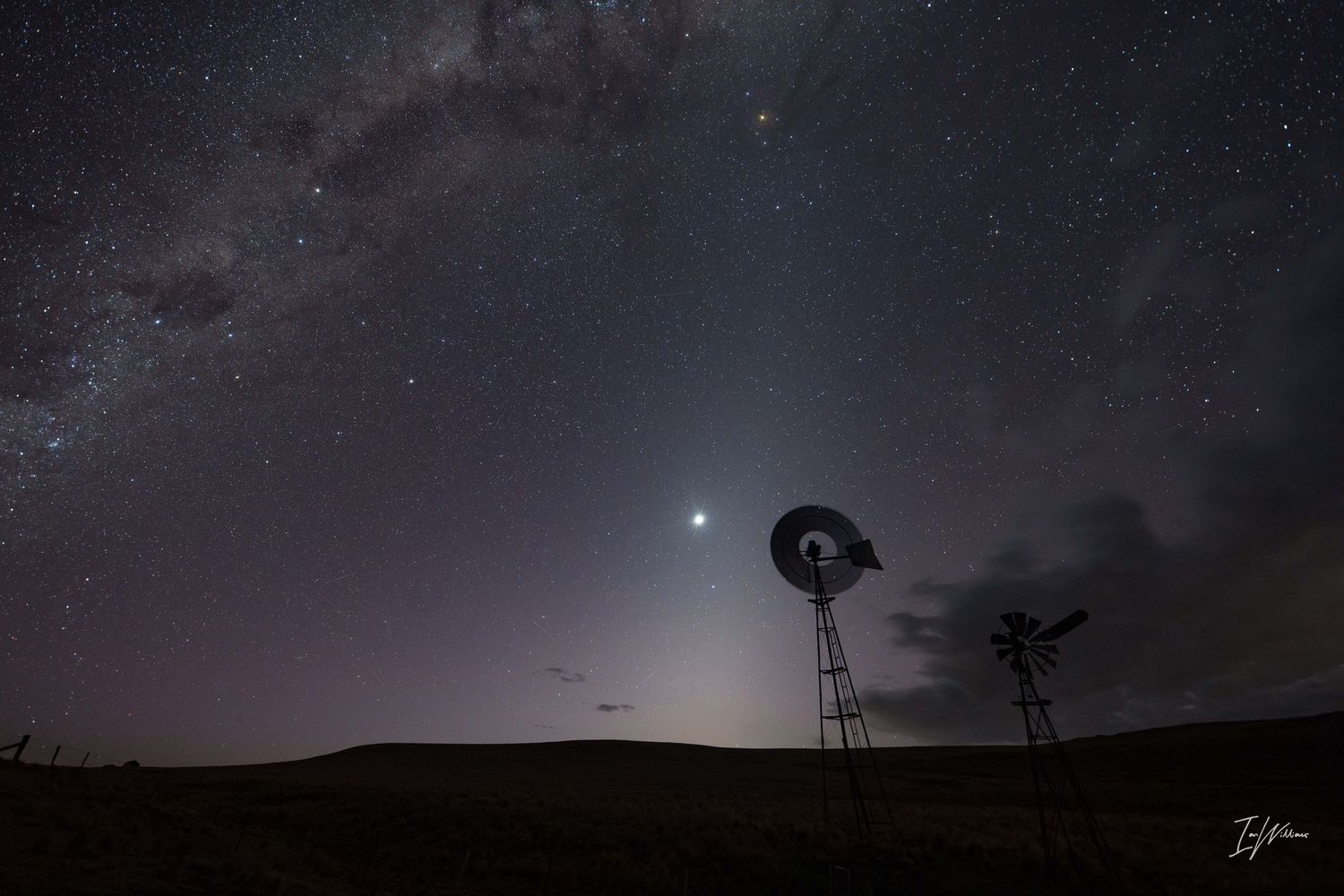
Zodiacal light and Venus with Southern Cross
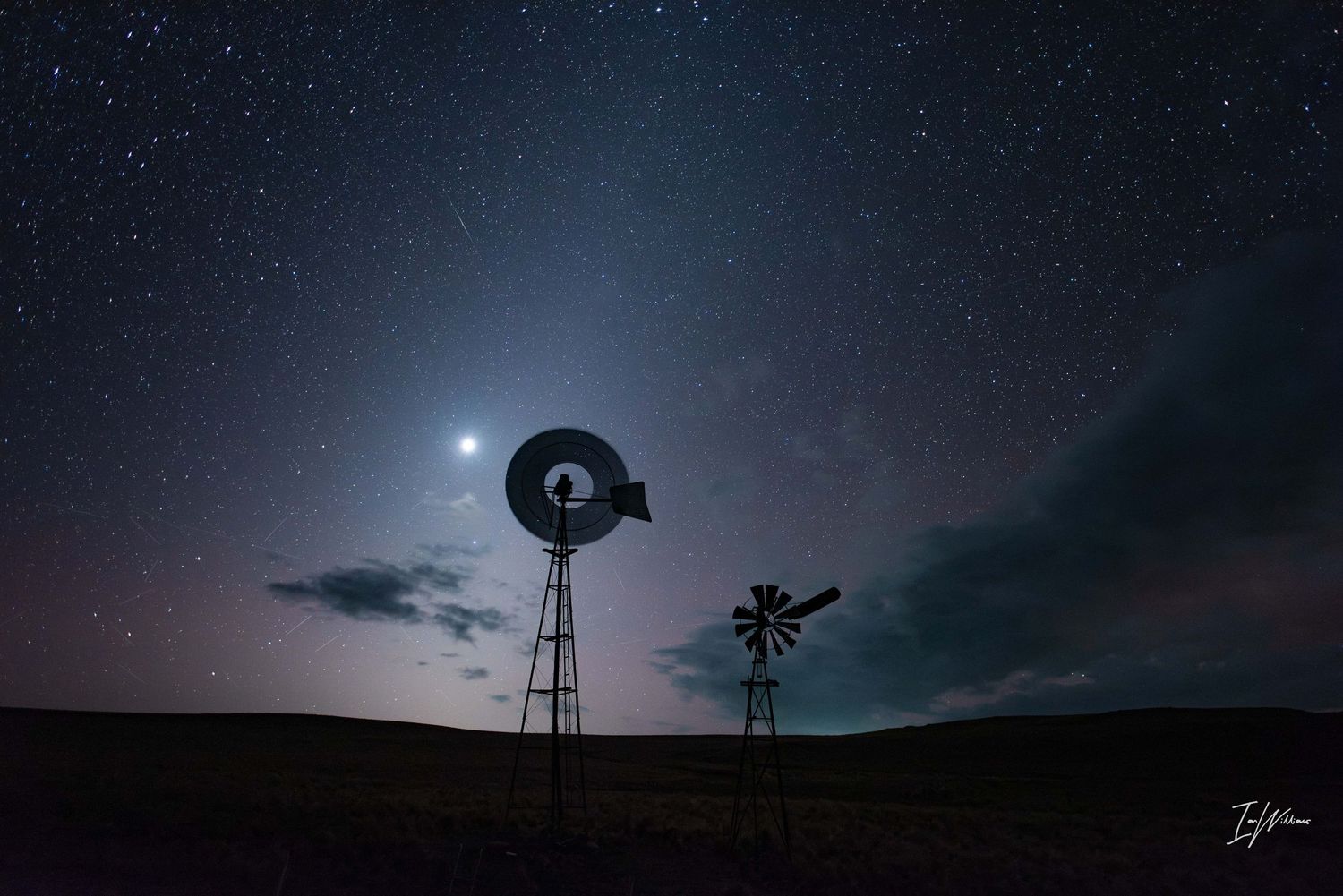
The Zodiacal light backlights an attractive pair of windmills in a hidden corner of the high country
Stickman and the aurora?
I don't know how old this tree is but I was privileged to be able to see and photograph it on a property in the high country with stunning dark skies. Whilst my subject was the amazing tree I smiled when the Aurora Australis provided some colour to the background!
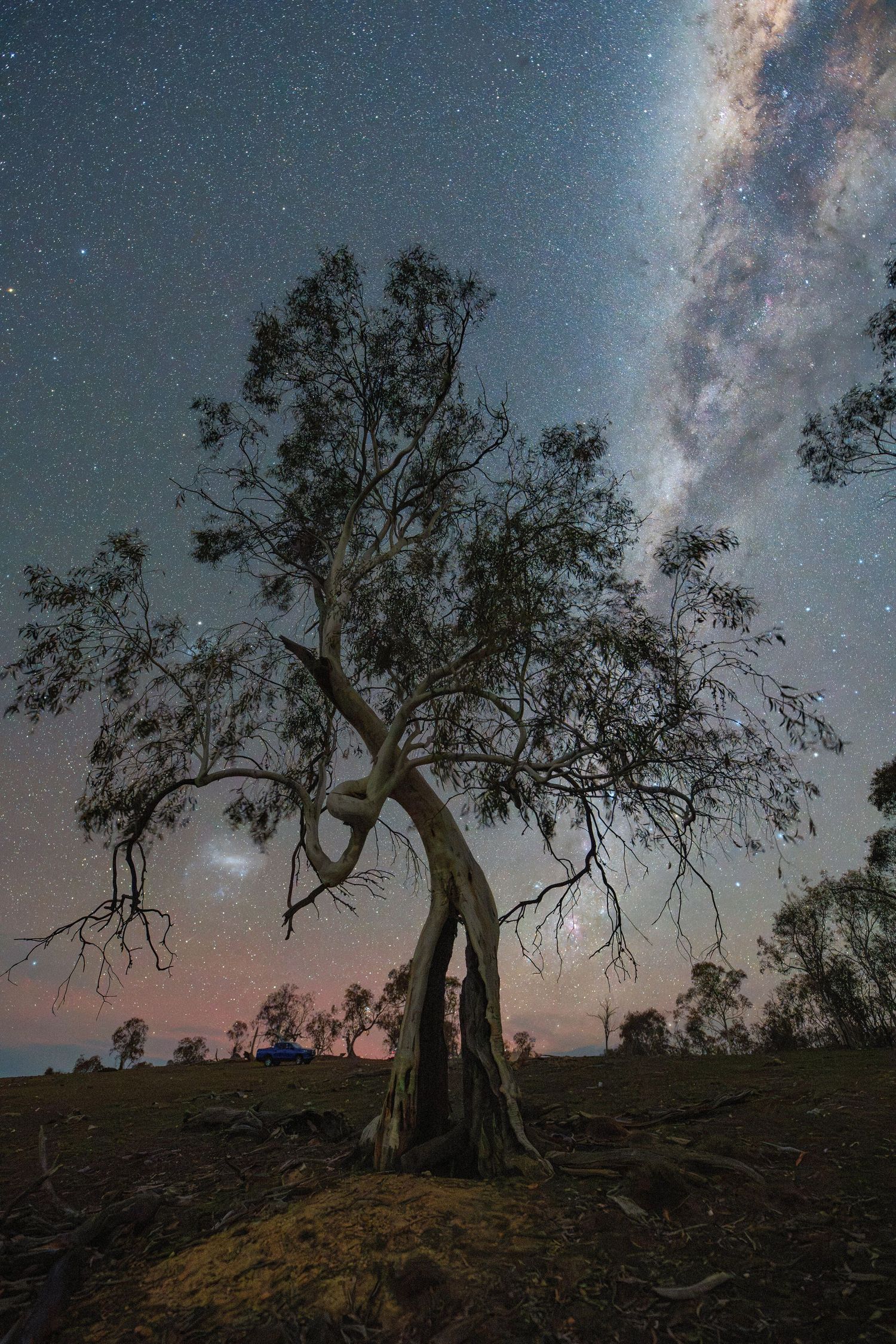
This tree looks like a man with sticks - what do you think? The red hues of the aurora appear along the southern horizon behind the tree.
Castle Rocks
The walk to these rocks (situated on private property - permission must be sought) is not for the faint hearted or for people like me who are prone to pack the kitchen sink and carry up too much gear!
The walk involved about a 300 m ascent to the granite tors which overlook the Lanyon Valley. From the top the views of Canberra's suburban lights is amazing!
Canberra's light is handy for lighting up long exposure shots of the foreground like in this image I have just re-editted from a few years ago).
Ian
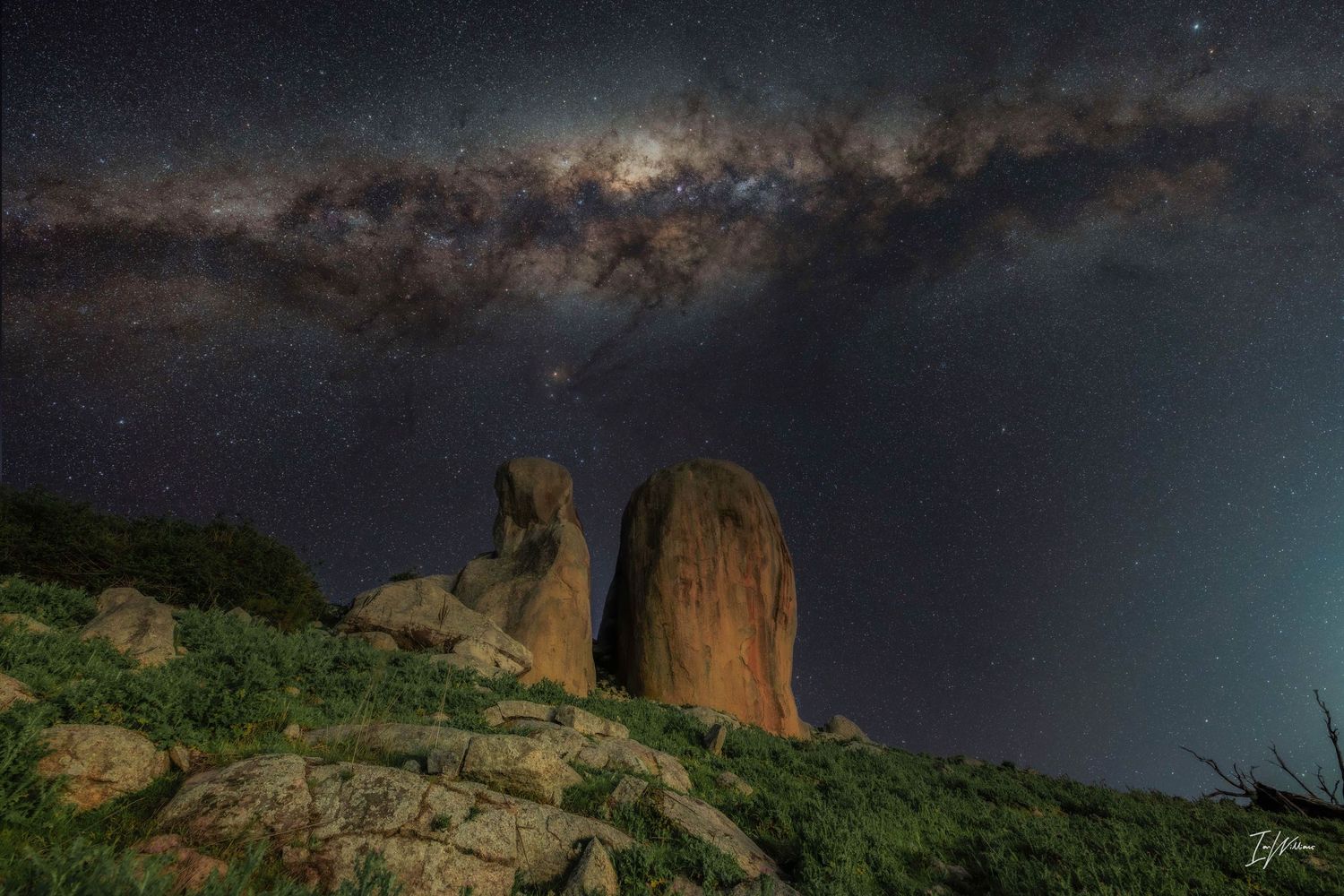
Castle Rocks and setting Milky Way
The amazing granite tors of Legoland in Namadgi National Park
This place is an amazing playground and the size of some of the granite boulders never fails to impress. I love the textures of the rocks and decided to show case them by gently light painting them for the purposes of a star trail.
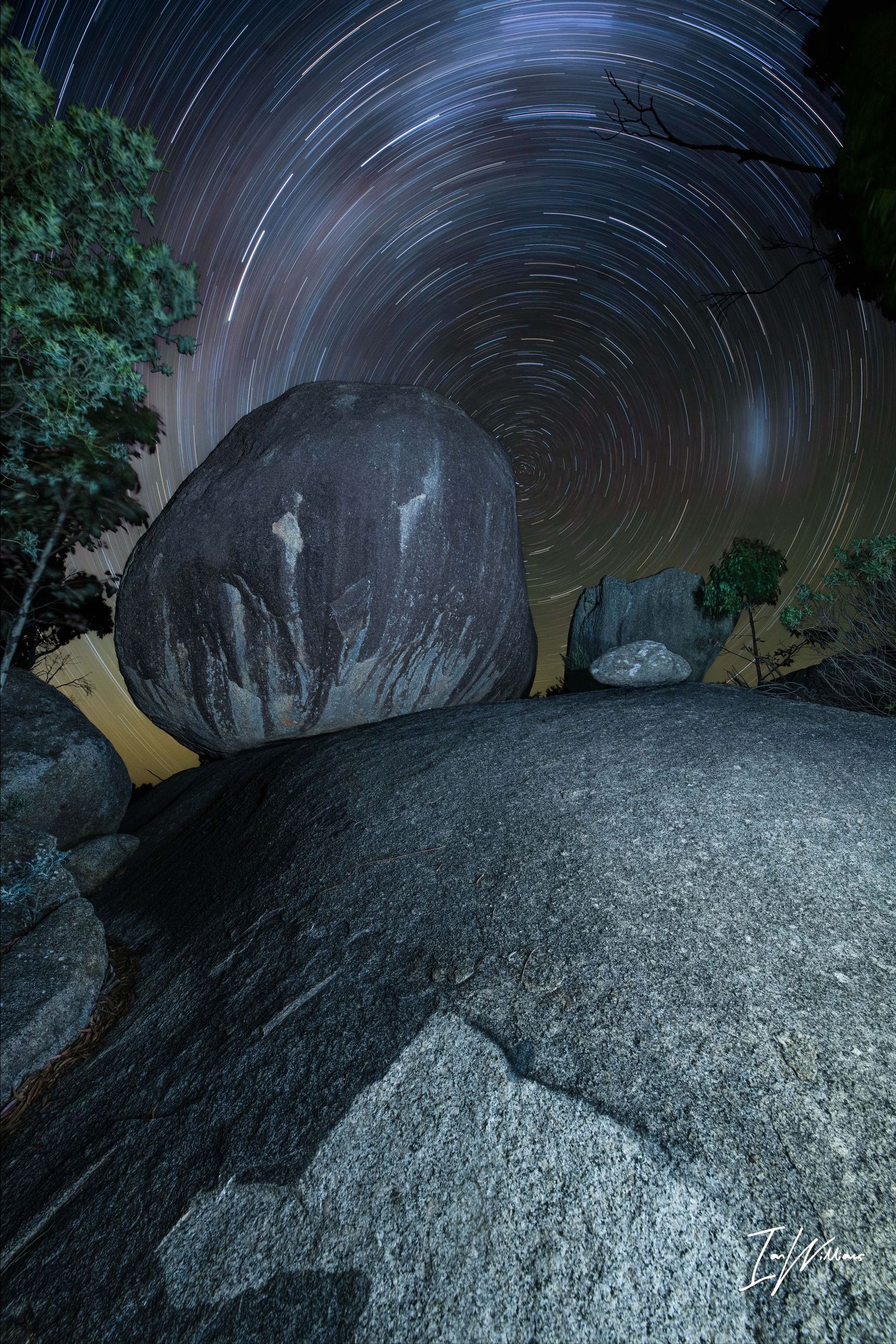
Can you see the ACT shape (in reverse) on the granite tor in the foreground?
What is it about old bridges and old railway bridges that lend themselves to astrophotography.
Nup, I don't know the answer either except that they make interesting foreground subjects...
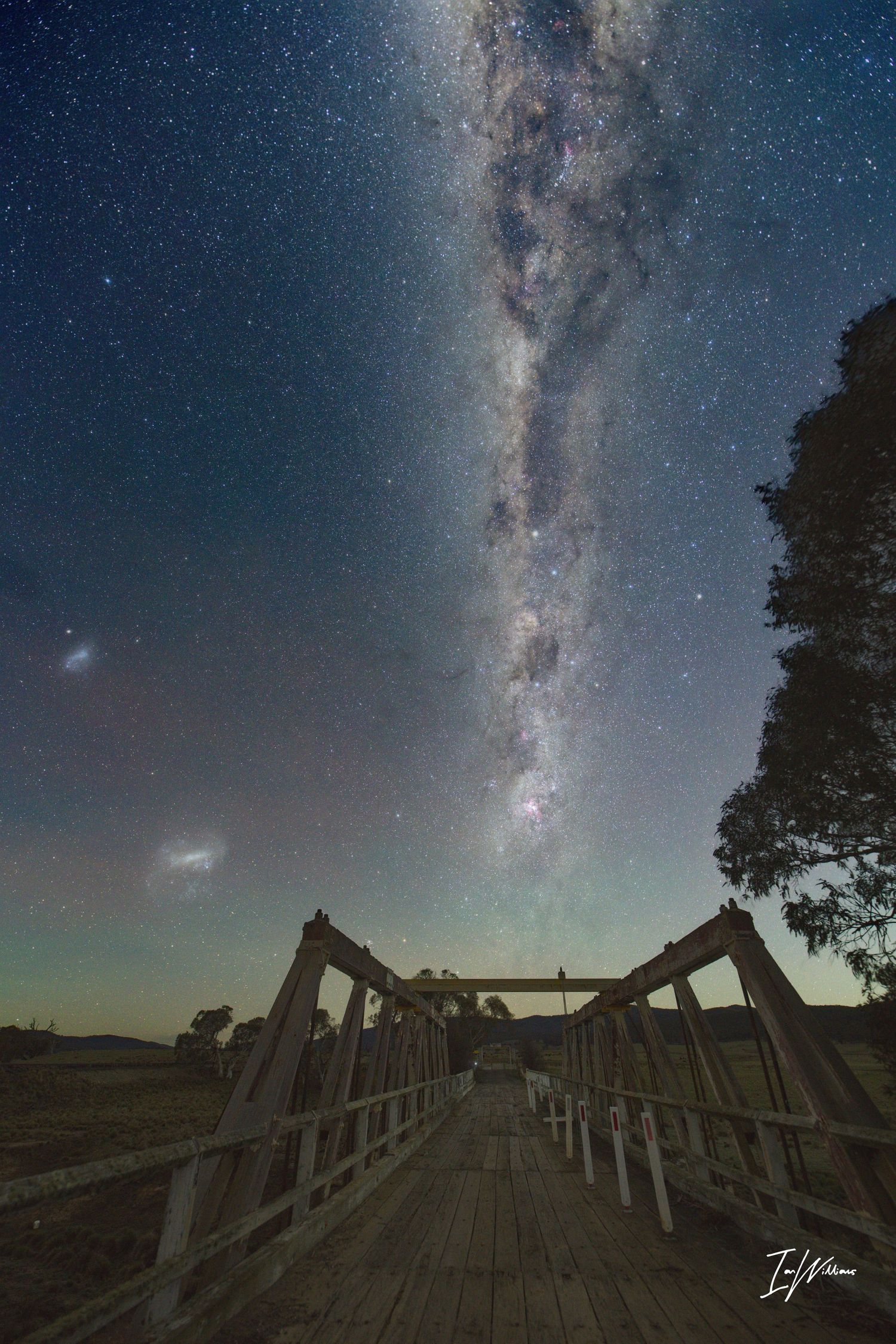
Southern end of Milky Way viewed from the old bridge
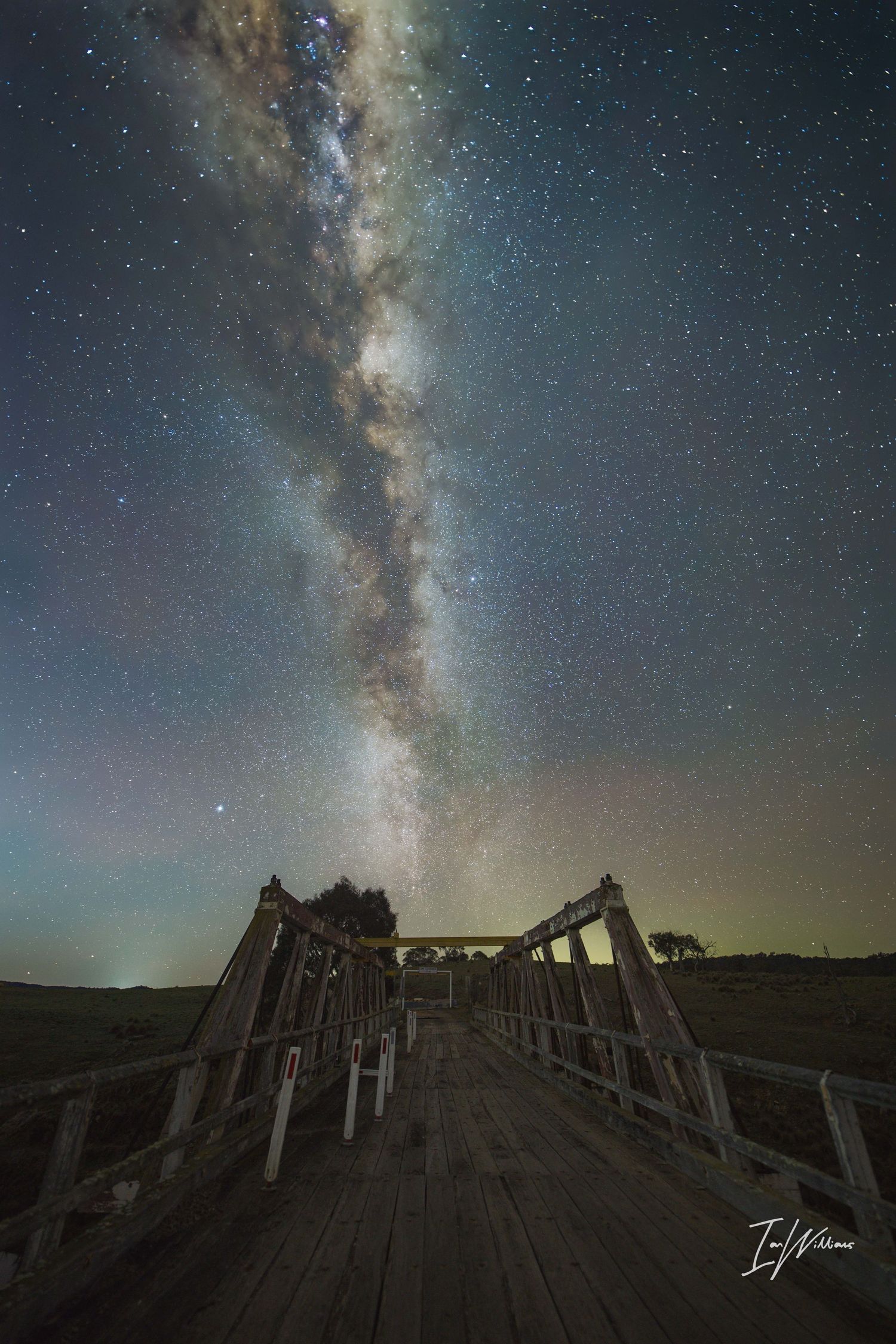
Northern end of the Milky Way viewed from the old bridge
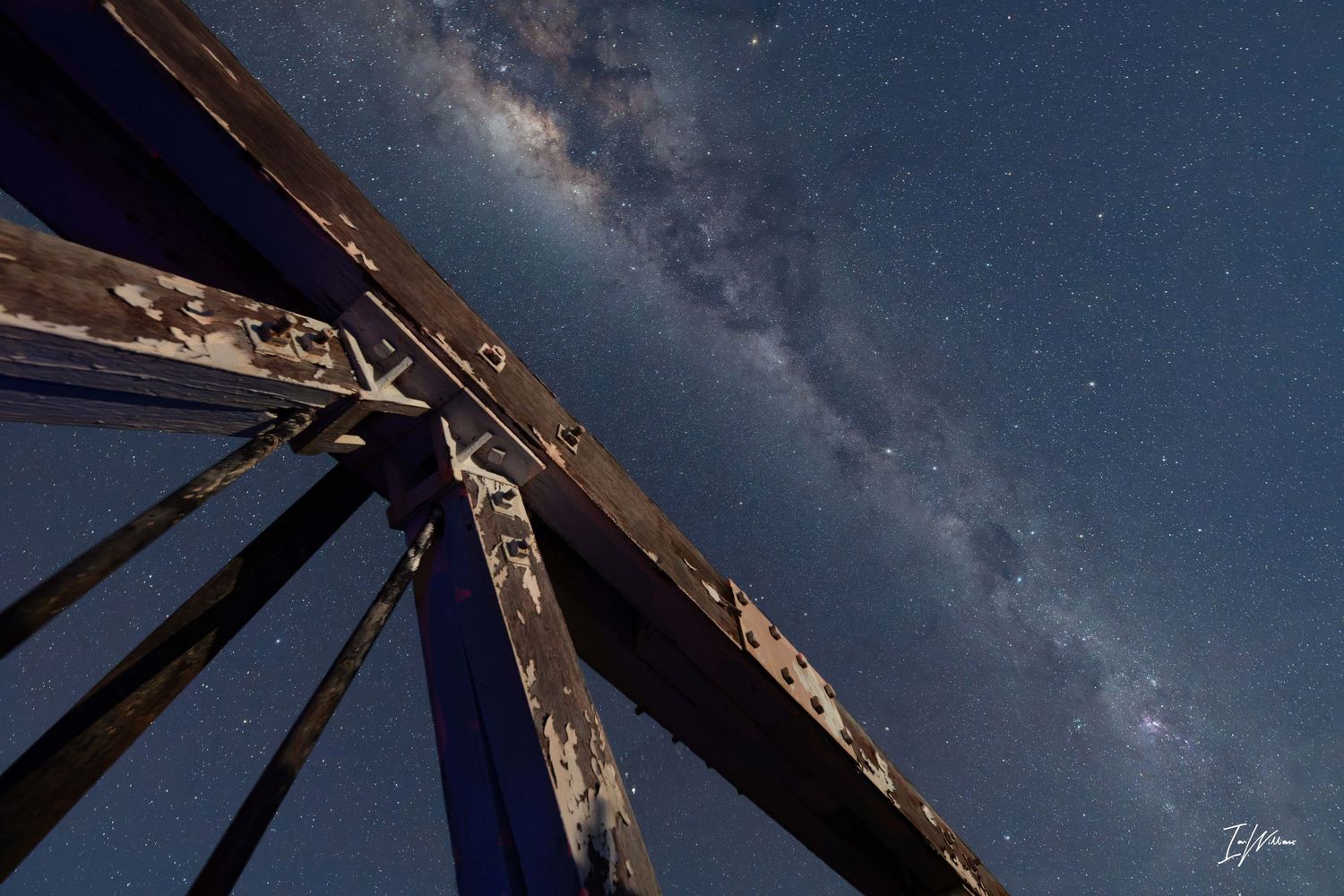
The Emu "takes flight" over the old bridge
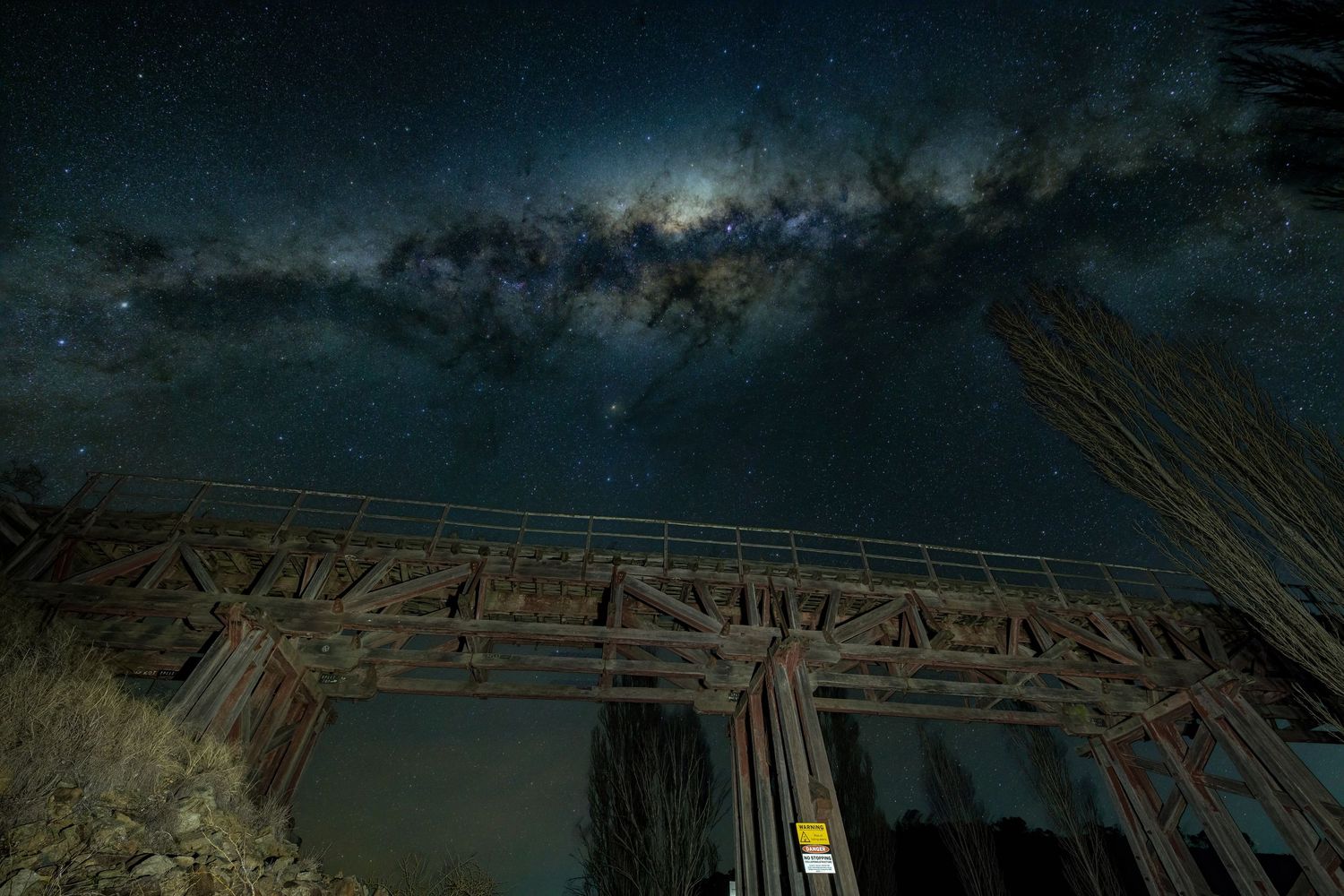
Milky Way setting over old railway bridge circa 1880s
Historic Brayshaw's Hut
This hut was built in 1903 by Edward Brayshaw as a grazier's hut. Brayshaw lived here until his death in 1931 and the hut was occupied until the early 1960s after which it was converted to shearers quarters. The hut is situated in the Namadgi National Park in the far south of the Australian Capital Territory, about 90 km south of Australia's capital city Canberra. This image was created using six tracked shots of the Milky Way shot at ISO 1250 using a Sigma Art 14 mm lens at f2.8 for 75 seconds on the Nomad Move Shoot Move tracker which were stacked in Starry Landscape stacker and then blended in with foreground shots of the hut gently light painted.
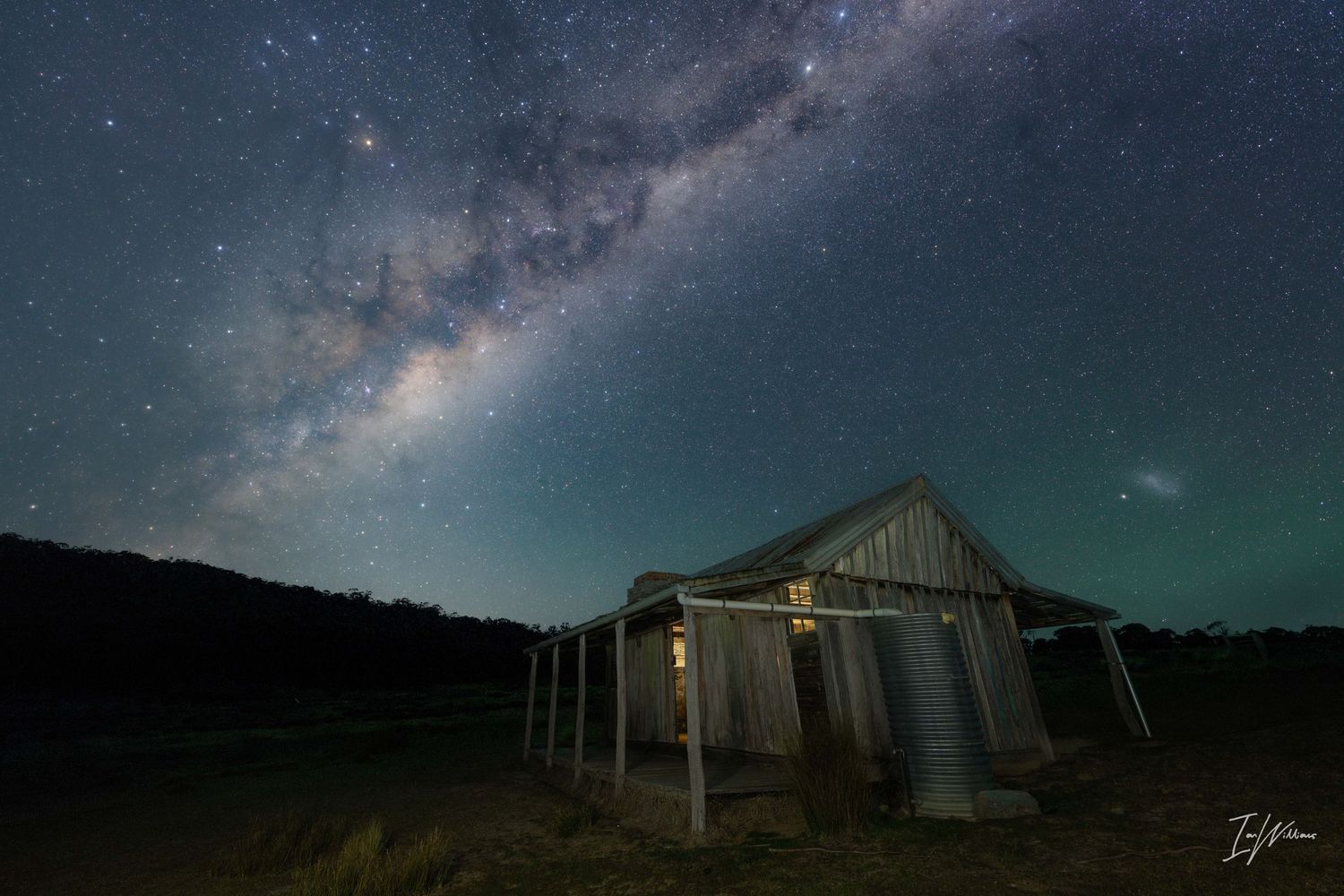
Brayshaws Hut (1903) and rising Milky Way core, 22 February 2026
The incredible dark skies of the Monaro area, New South Wales, Australia, September 14-15, 2025
On 14-15 September 2025, I photographed on an amazing property in the Monaro. The skies were so clear!
The Zodiacal light was booming and I shot several tracked panoramic images of the Milky Way on a 14 mm and 24 mm lens to complement the directs of compositions I had scoped out earlier in the afternoon.
I am pleased to showcase some of the beauty of this wonderful area of Australia.
#Monaro
#VisitCooma
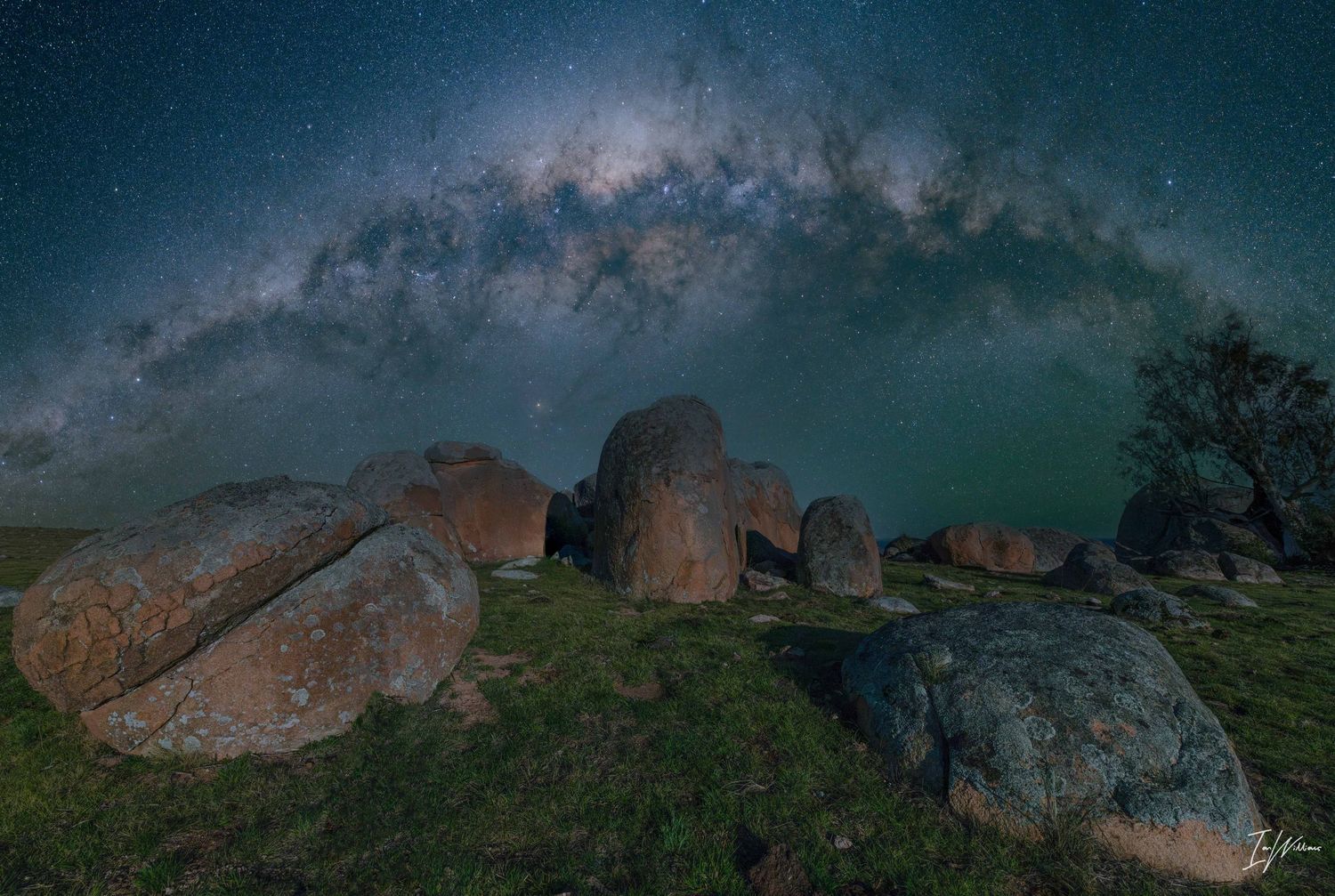
Milky Way over the tors of the Monaro area
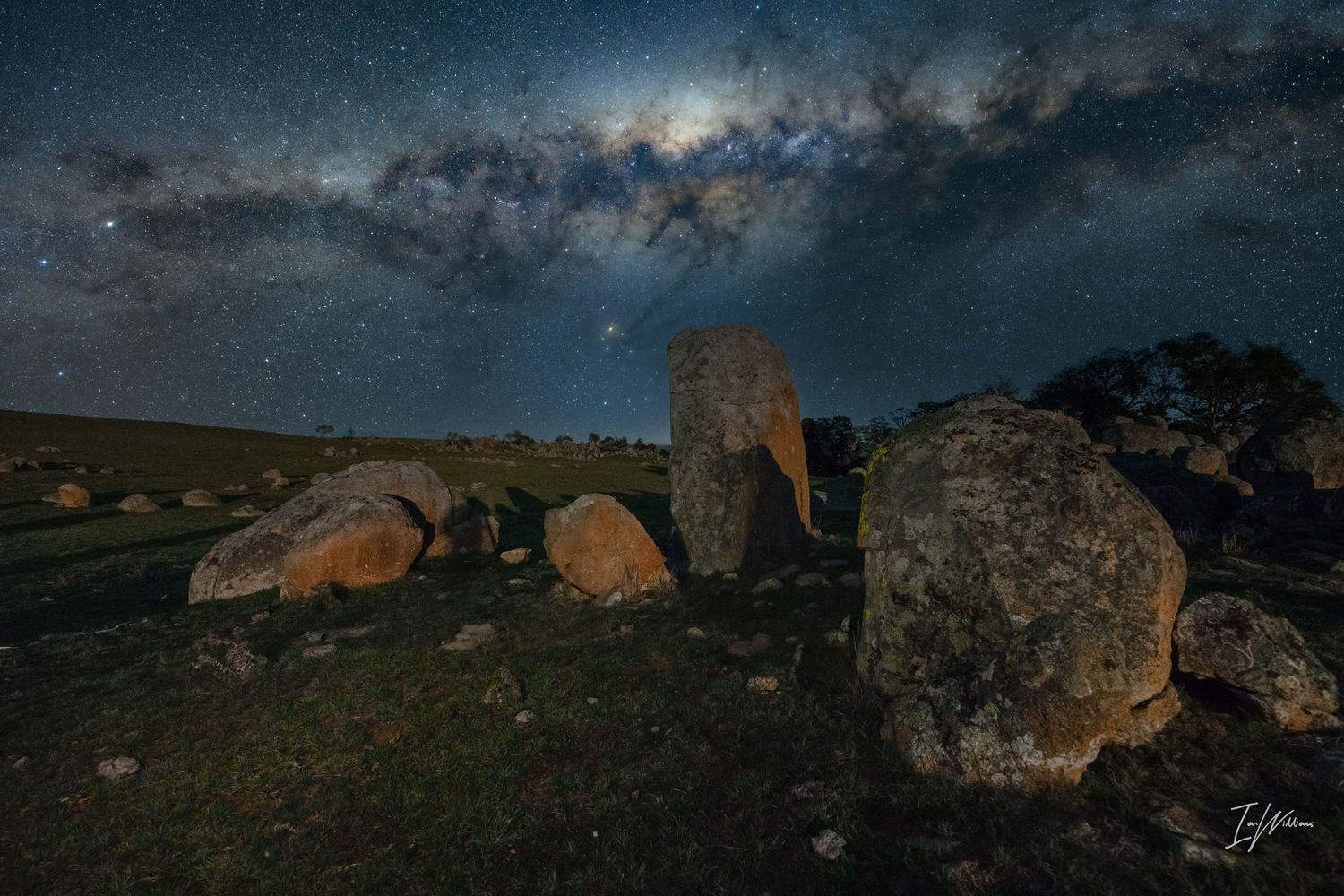
Monaro scene under clear skies
The harsh beauty of the Monaro - 18 August 2025
Taking advantage of a rare clear day which was forecast to turn cloudy, I decided to chance it! Fortunately the skies cleared as the temperature plummeted to minus 3 degrees on 18 August 2025!
I had private permission to enter the property and will be back. The famed had pointed my attention to this main dead tree. The shot was a single exposure taken at ISO 160 for 53 minutes at f4 using a Sigma 24. mm Art lens on the Nikon D850. Long exposure noise reduction was applied.
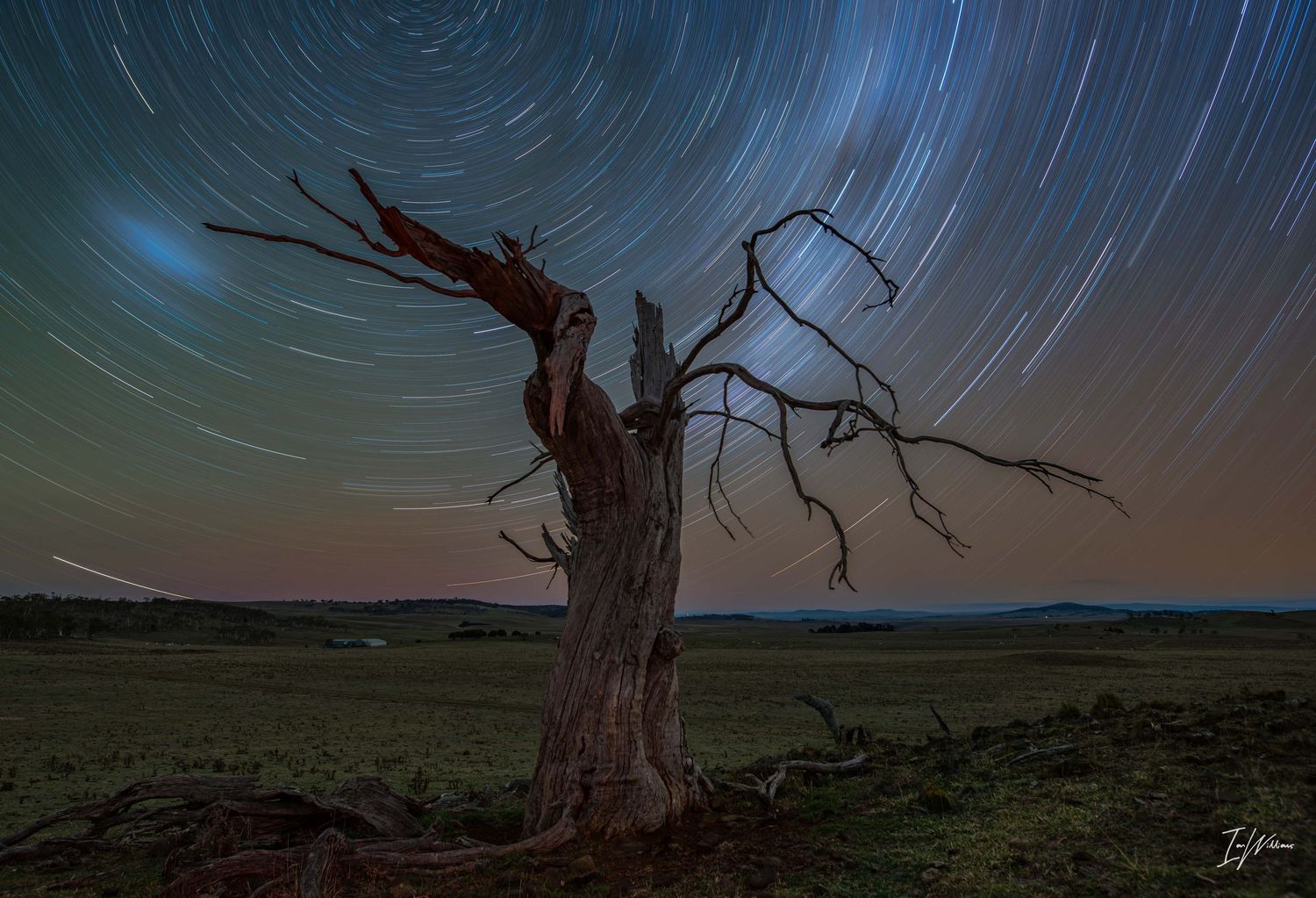
Folder 293 - Monaro gum star trails
Shooting on the longest night of the year - Winter solstice 21 June 2025
With a day length of 9 hours 46 minutes, the night is long. I decided to pull stumps just after 9 pm, to discover it got down to minus 10 degrees C later that morning!
Snow gum scene, Berridale area, NSW, Australia
Star trail snowgum
I have had this shot in my mind for nearly a year now and I intend to come back and shoot it with an evening shot blended in with star trails.
The tree itself is a bout 150 metres from the road, on private property so I needed a strong torch to light it up from the side.
As I had not been near the tree, I was surprised to see the shine of its magnificent bark in the light painted shots.
I thin shot a 15 min 30 second exposure of the star trails at f6.3 using a Nikon 200-500 mm lens set at 200mm and blended the two together which were taken it exactly the same position on my tripod.
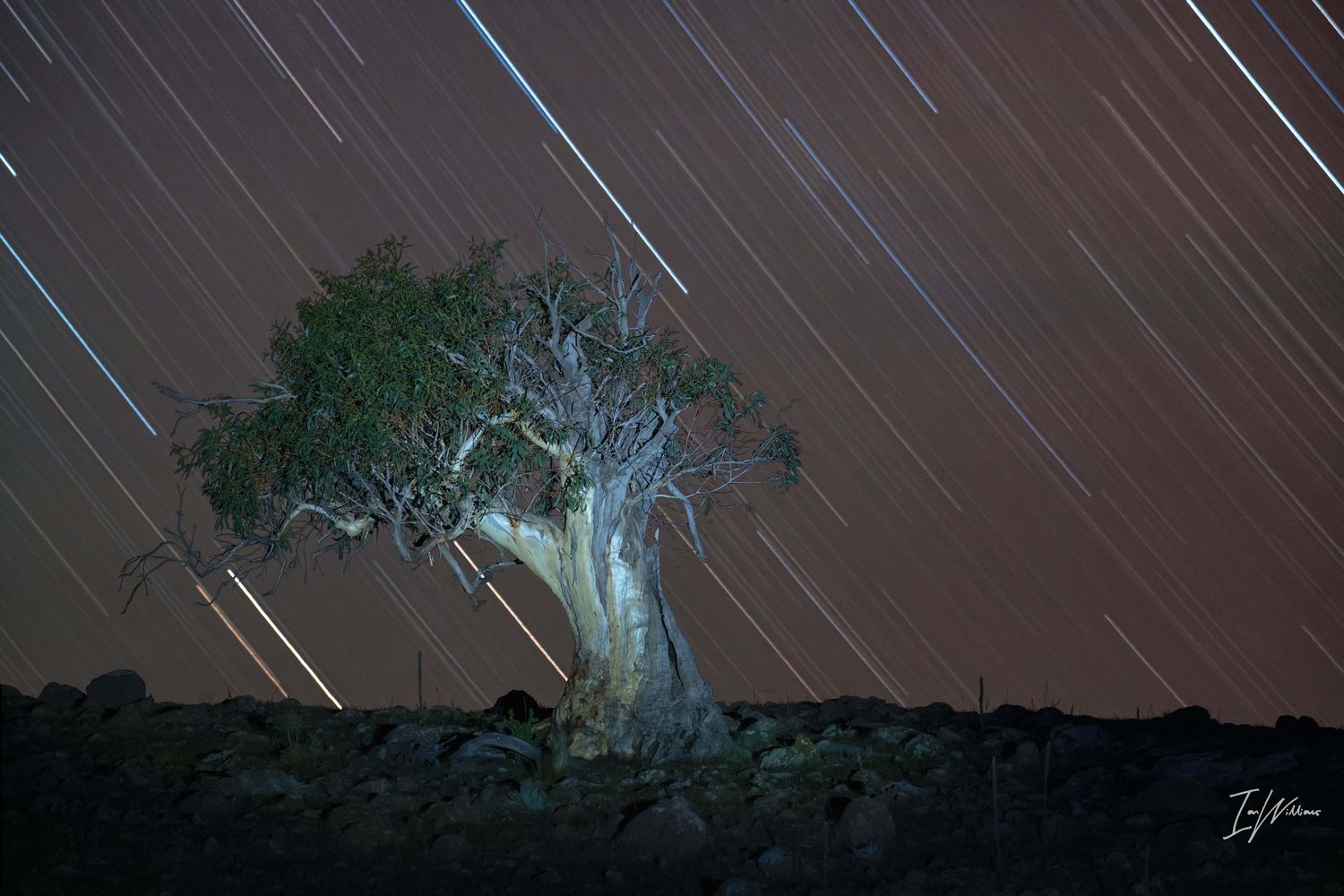
Folder 258 Magnificent Snow hum against a clear dark sky, 30 May 2025
Iconic Horse Head Rock, Bermagui, New South Wales, Australia, 3 May 2025
Adventure to Horse Head Rock, Bermagui, NSW, 3 May 2025
Doug Ingram of Nightscapades (https://nightscapades.com/) and I had long discussed the idea of imaging Horse Head rock. Doug had joined me for a few days and was the last guest my father received at his home in Dalmeny before he went into aged care. At Bermagui, in 2023, Doug had skillfully flown his drone around Horse head rock from the lookout. I was itching to get down there but a chronic hip problem necessitated a hip replacement in December 2024 and I knew I was not up to the walk.
Fast forward to May 2025 and now five months after my hip replacement, I was confident I could do the walk from Camel Rocks to Horse Head Rock. Doing some research, I found two potential days where the tides were favourable; however, the Moon was waxing. On my preferred day, the Friday the Moon was 26% illuminated but I could not make the trip, do a scouting trip to the rock to familiarise oneself with the walk in due to work commitments. This left the next day, Saturday, with the Moon now nearly 37% illuminated or at worst the following night, the Sunday with a 50% illuminated Moon to do the shots.
We decided on Saturday.
I met Doug at his place and together we went down to scope the walk into the rock first before coming back later in the afternoon. We were glad we did as the tide was going down but we were there about 3.5 hours before low tide. We made it but noted at least three tricky bits where the practice in navigating these spots helped when we walked out later that night. The seas were quite choppy and thast was another factor to be taken into account.
The time for the excursion came, our packs full with photographic gear, sandwiches and water. The idea was we would image the rock taking advantage of the setting Moon to light up our foreground and then shoot our Milky way shots later when the Moon set just after 10 pm.
I was also aware that an aurora was possible due to the gauges and was hoping to image it to the right of the rock should it flare up.
This image was taken with the camera pointed at exactly the same spot, when the Moonlight was illuminating the iconic rock using the Sigma Art 14 mm lens at f3.5 for 30 seconds. I then stacked 5 shots taken at ISO 1600 using the same lens at f2.8 taken when most of the Milky way core had risen and just before we headed back to the car at around 8:30 pm to create the image.
The decision to leave at around 8:30 pm was a painful one but the waves were quite choppy and all the advice was that it was wise to do the walk while the tide was low. You need to go with your head rather than your heart in these situations! If we had stayed on until after 10pm, the water would have risen another 70 cm and together with the choppy water we felt discretion was better given our ages and in the interests of safety!
I was concerned when a guy in his 20s came around by himself and warned him about the rising tides. He was intending to stay on until morning.
It was after that I discovered that the aurora had in fact come on, but during the time when we were careful rock hopping our way back towards the car. Wwe actually met a friend of the solo adventurer who was concerned about his friend who had captured a nice moonlight aurora a bit earlier.
It was definitely an outing where I learnt a lot. First, the Moon at 37% is probably a bit too bright so my judgment was a bit out However, we would have to wait till next year to give it a crack again as the Milky way will have risen too high to have the ideal composition any later given moon phases and Earth’s orbit around the sun (the stars rise about 2 hours earlier after each month).
We will be back in 2026!
#Horseheadrock
#Bermagui
Ian
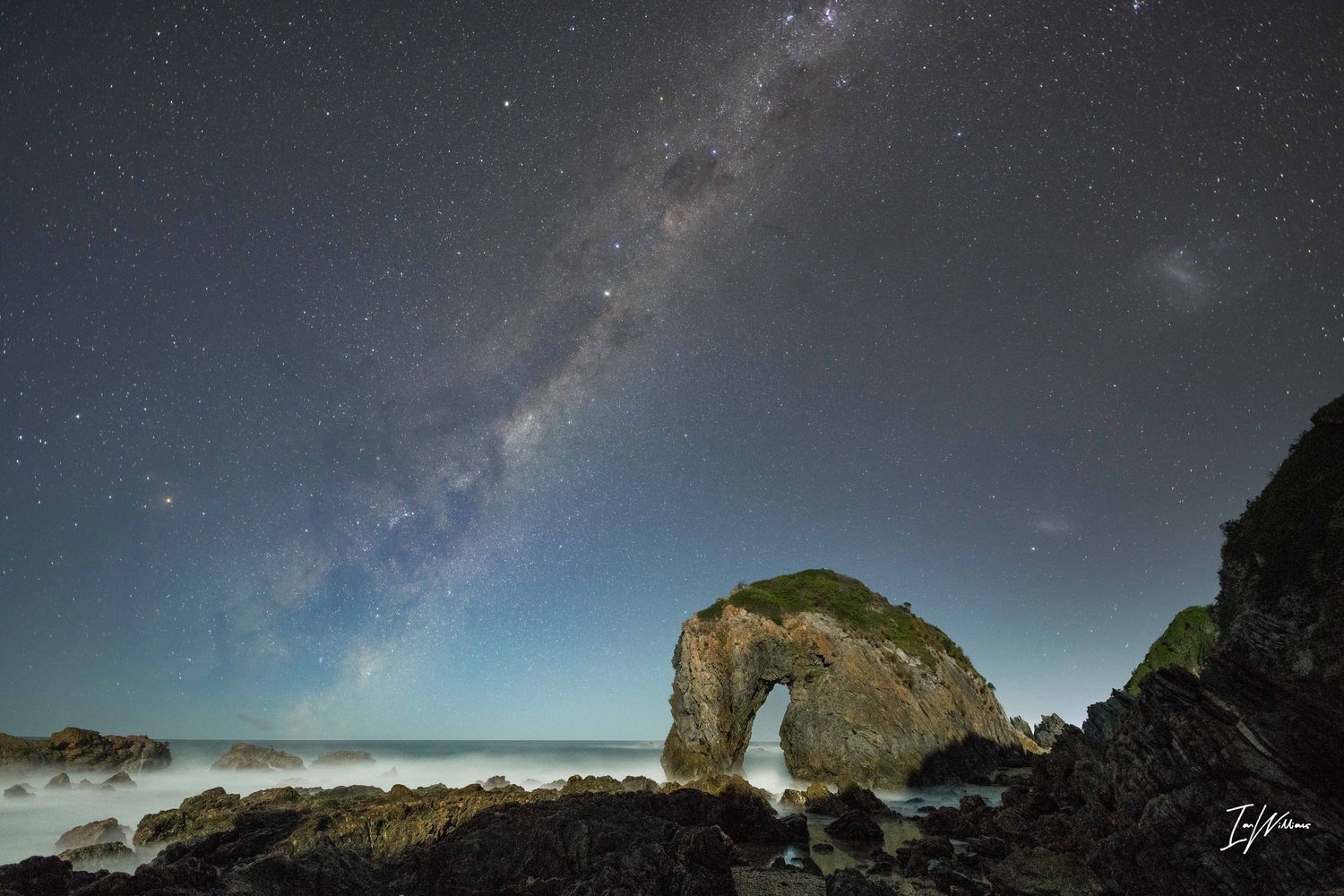
Folder 249: Moonlit Horse Head Rock and rising Milky Way 3 May 2025
Twisting to a spiral galaxy arm
This amazing twisted tree apparently reaching towards the centre of our Spiral galaxy! Image: 1 May 2025
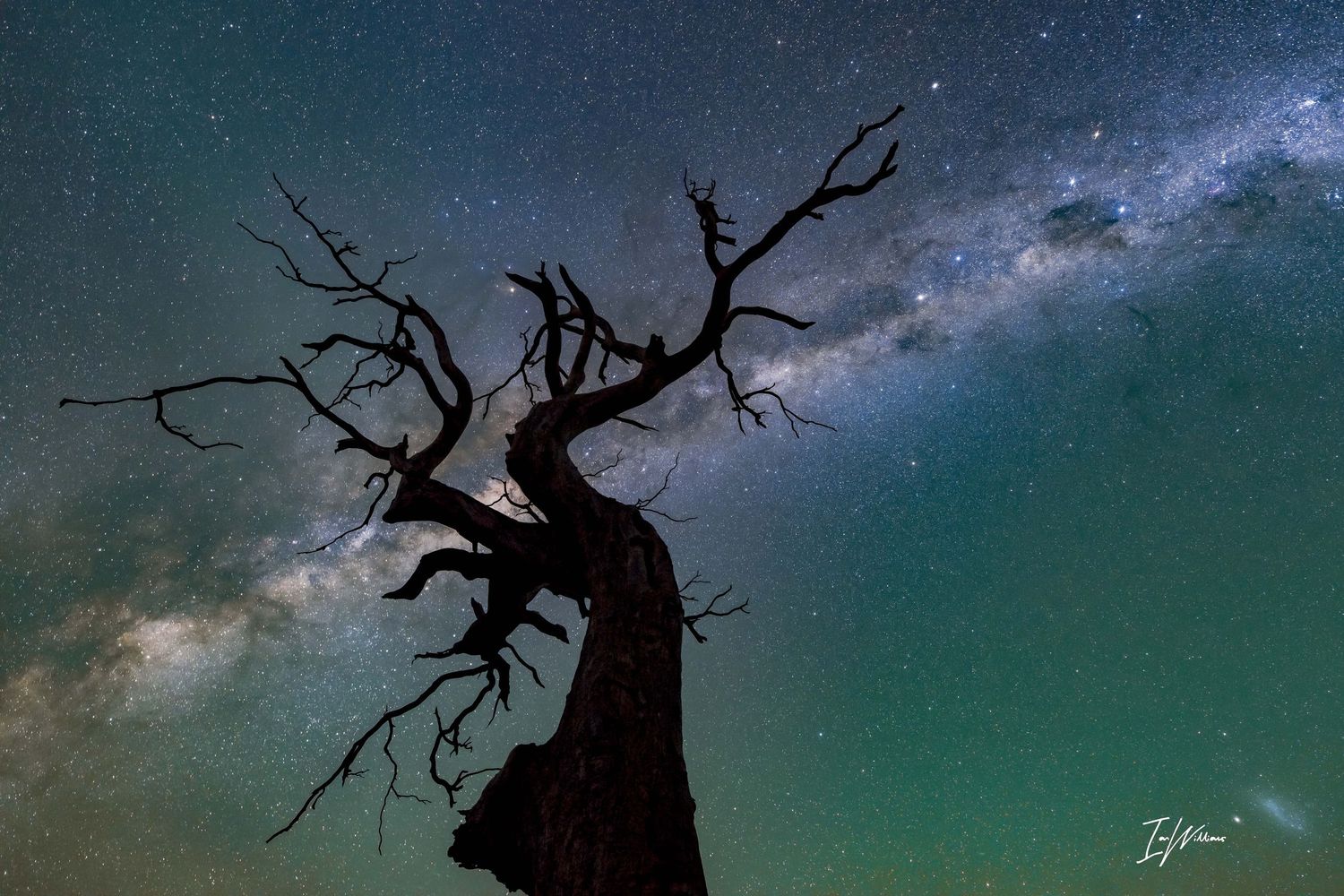
Storm star trails, Yass area, NSW, 27-28 February 2025
An awesome storm raged over the Gunning area, over the wind turbines for hours. I took 100s of shots exposed for 30 seconds at ISO 500 at f1.4. The stars we clear in the sky above and the stacked shots made beautiful star trails above the intense storm cell.
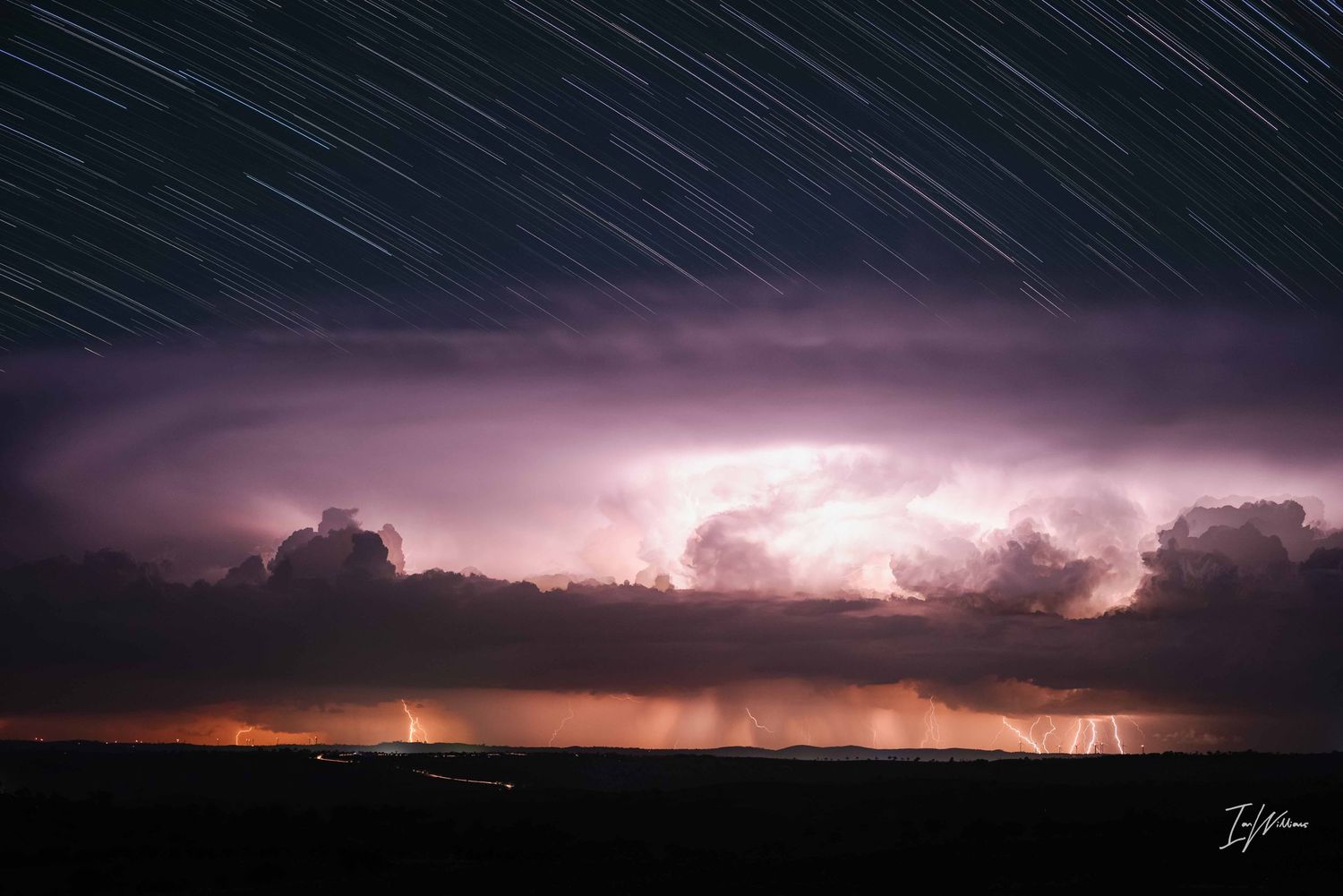
Intense storm cell, Gunning area, NSW, Australia, 27-28 February 2025
Monaro night scapes
I am fortunate to have a permission on a stunning property on the Monaro! watch this space for more shots from this amazing property!
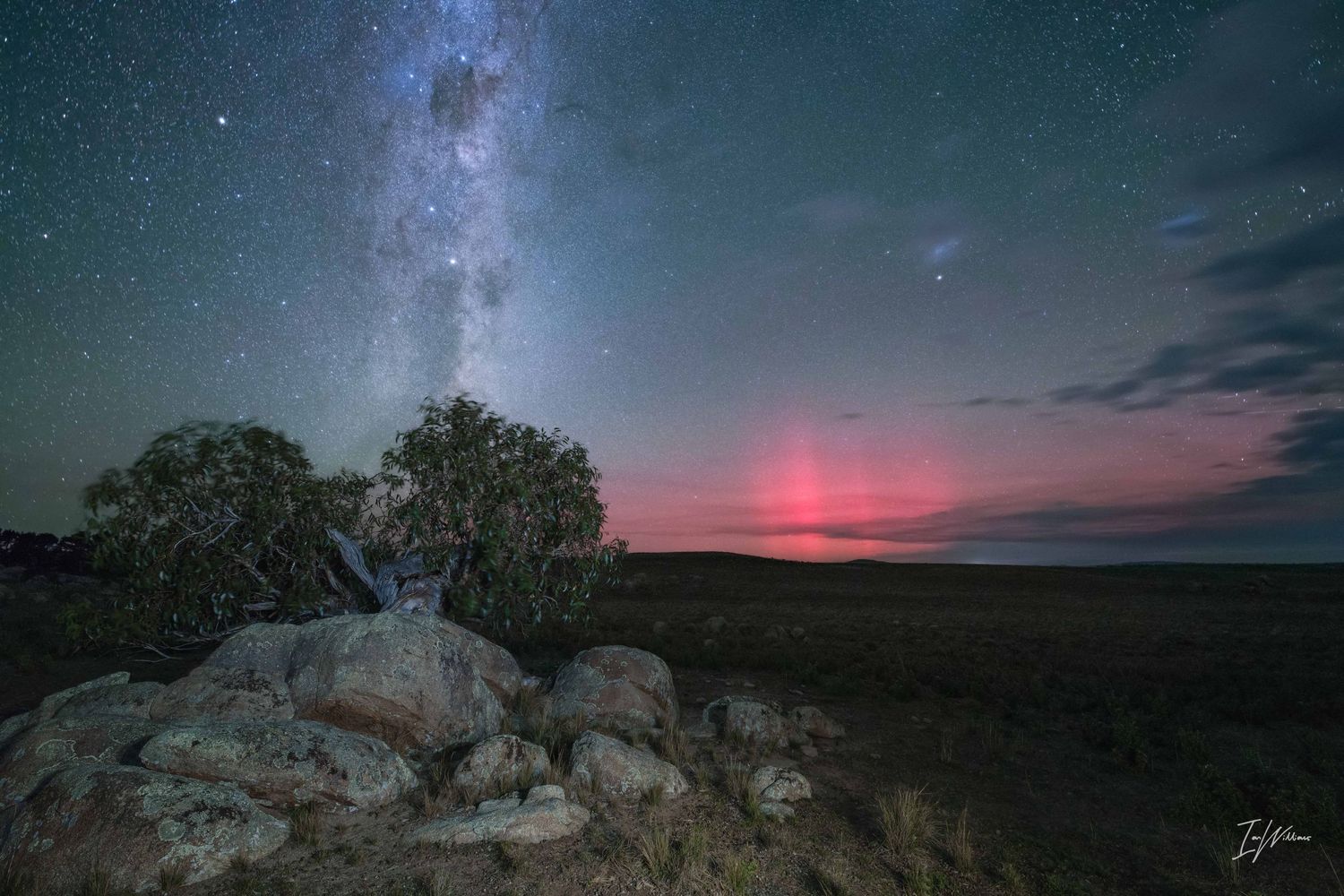
Small aurora on the Monaro, 1 March 2025
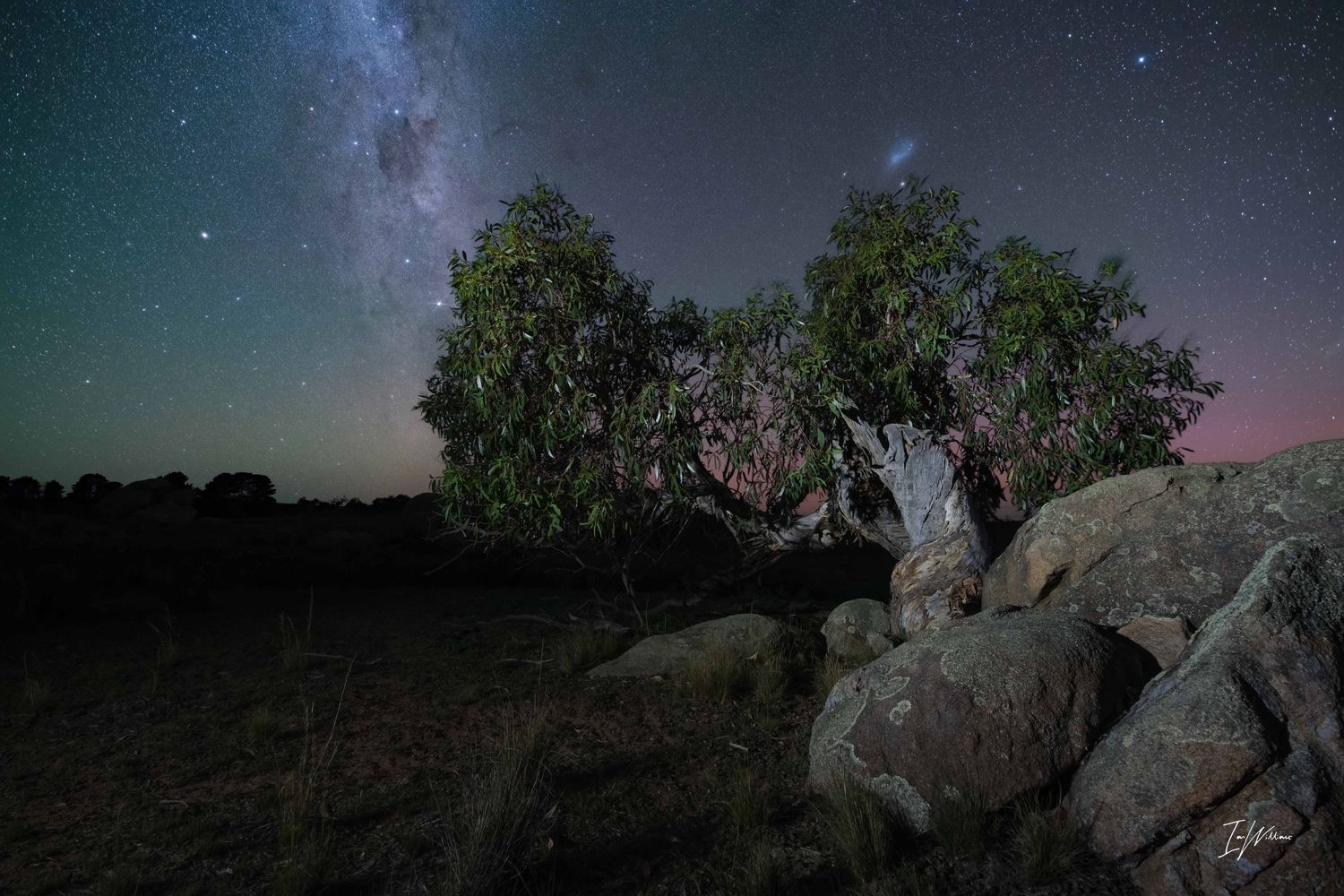
Southern Cross and souther stars with the pink red hue of the Aurora Australis
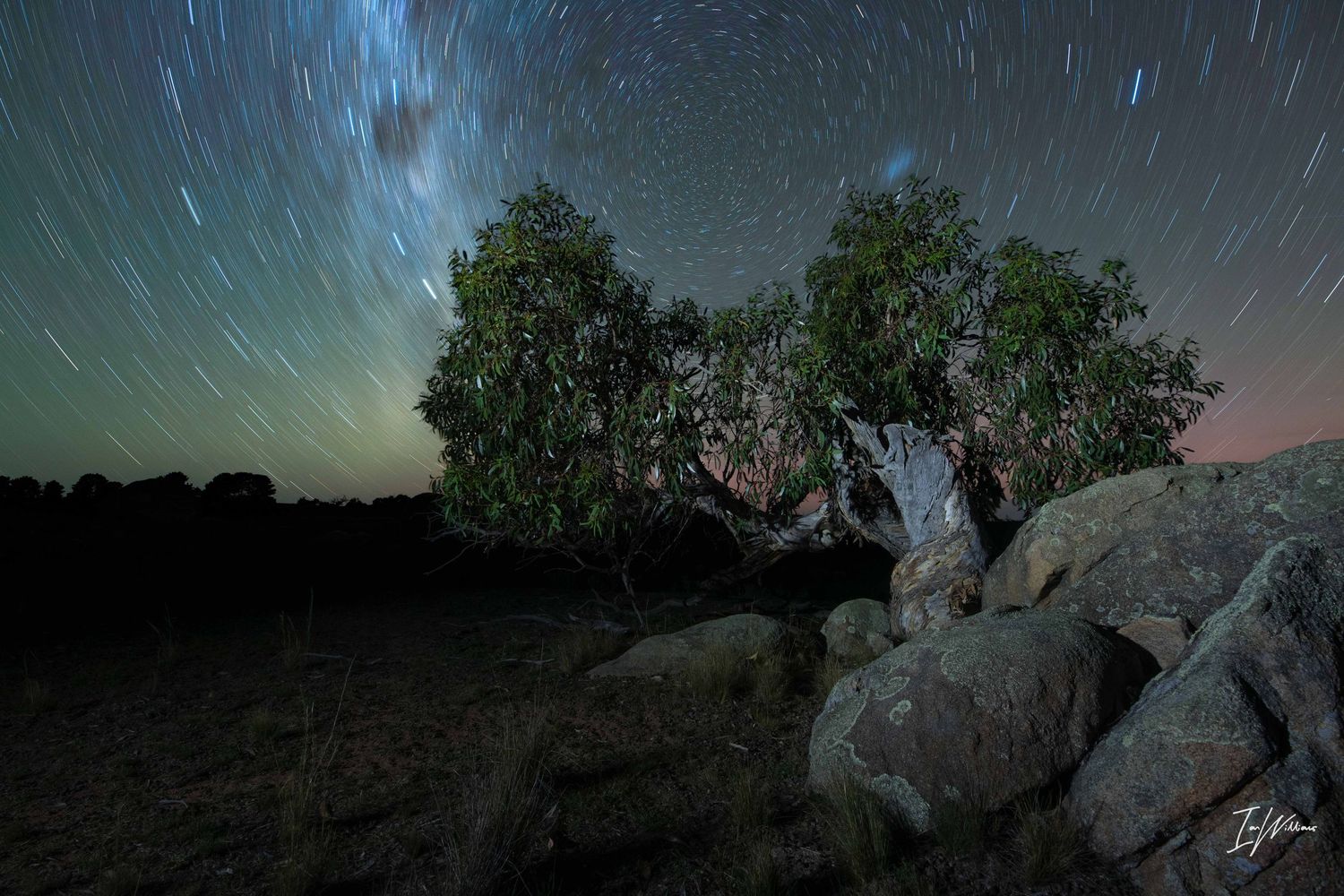
Southern circumpolar star trails at 36 degrees South, Monaro area, New South Wales Australia
Developing new techniques for taking star trails
I have devoted many evenings to mastering some new ideas for taking star trails. This is a shot of star trails over Castle Rocks in the southern ACT. I took advantage of a rising gibbous moon to light up the rocks after I had taken the star trails. A lovely night for it!
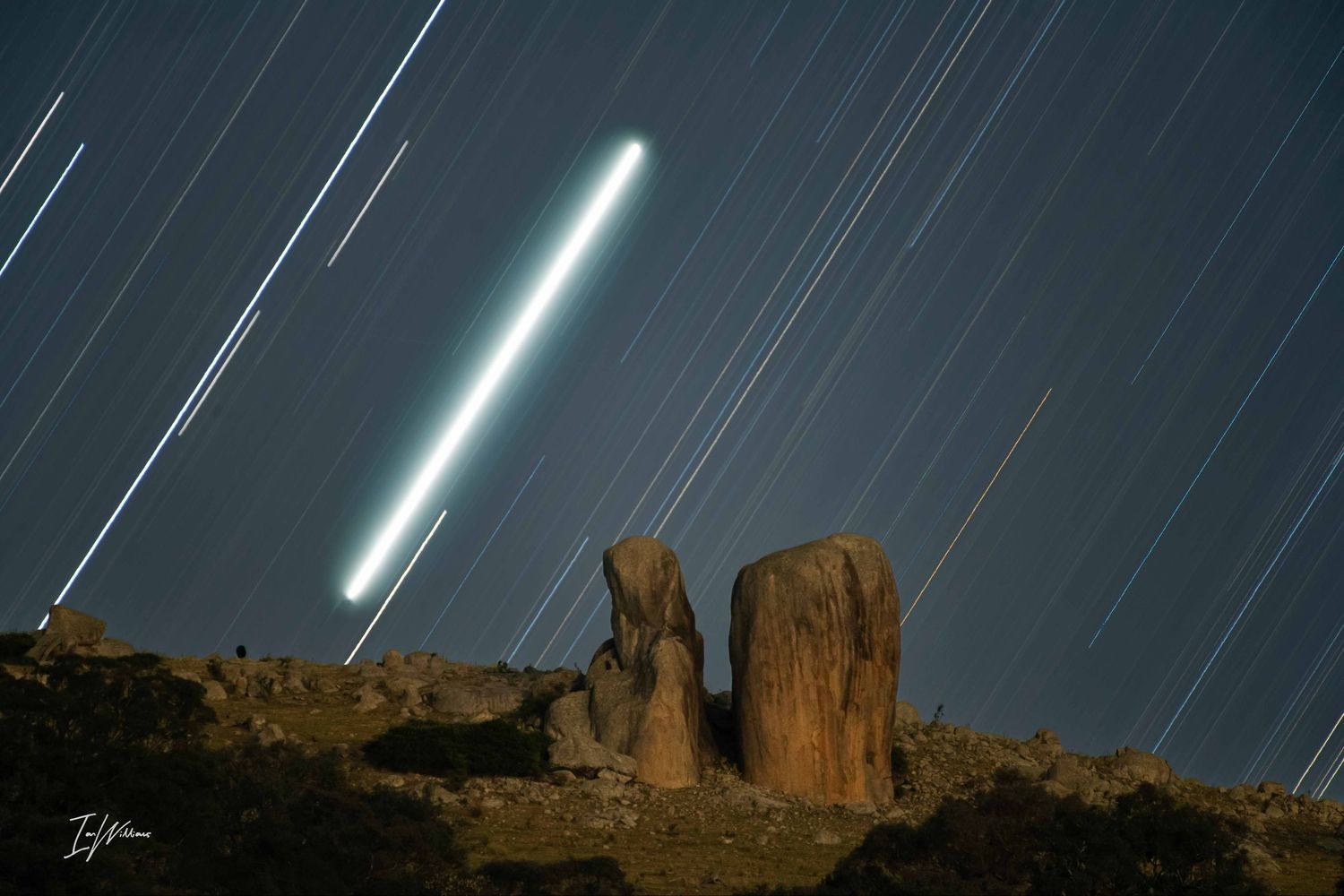
Venus setting over Castle Rocks, Australian Capital Territory, 19 November 2024
Seascape landscape Astrophotography and old fashioned sunrises! Eurobodalla Coast, New South Wales, Australia - Narooma area 26 & 28 January 2023
In Australia, the Milky Way core starts to rise in the predawn hours from around mid January 2023. Fro mid January through the month of February it I possible to combine shots of the Milky Way core with the colours that the transition from astronomical darkness through the various stages of twilight brings.
I was fortunate enough to be in the Narooma area from 24 to 29 January 2023. The mornings of 26 and 28 January were clear thus providing an opportunity to capture this with one of the stunning sea scapes that are available up and down this area of the coast.
On 26 January 2023, the morning of my Father's 91st Birthday I kicked off a happy day of celebrations with a session arising at 2:30 am in the morning. I took a 15 minute drive to my location, beginning my walk from a cemetery. The track goes through some undergrowth and under a marked leaning tree which if positioned alone would make an interesting foreground for a shoot. The track then descends through the bush for about 50 metres or so before arriving at the beach. It was then a 10 to 15 minute walk to access the best vantage points for the shoot.
The three shots show the rising Milky Way core before it started to get light, and then at two stages of twilight. On both mornings, a visible red glow was seen above the horizon which the camera accentuated.
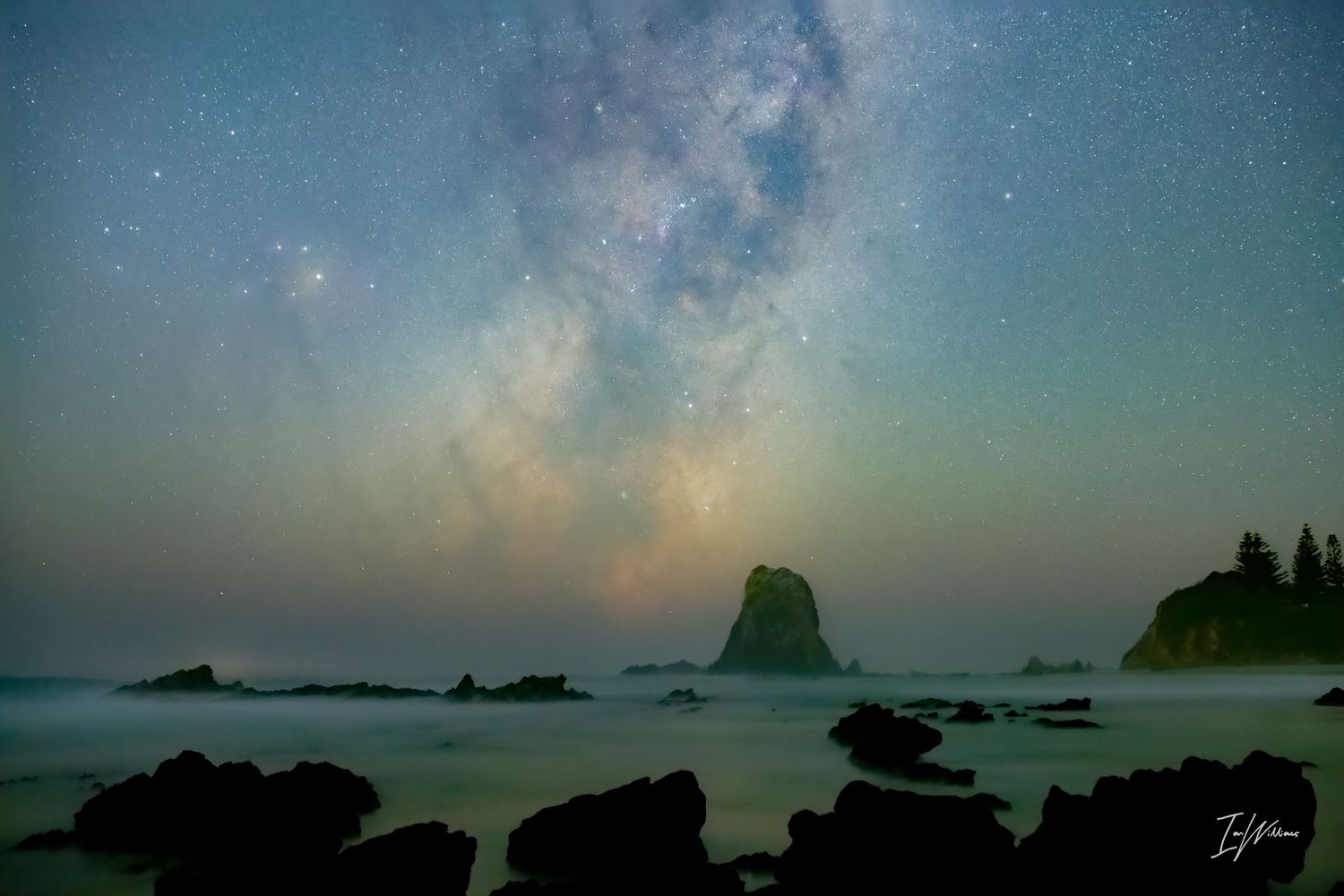
The "peachy" colours of the Milky Way core near the horizon, Narooma , NSW, Australia
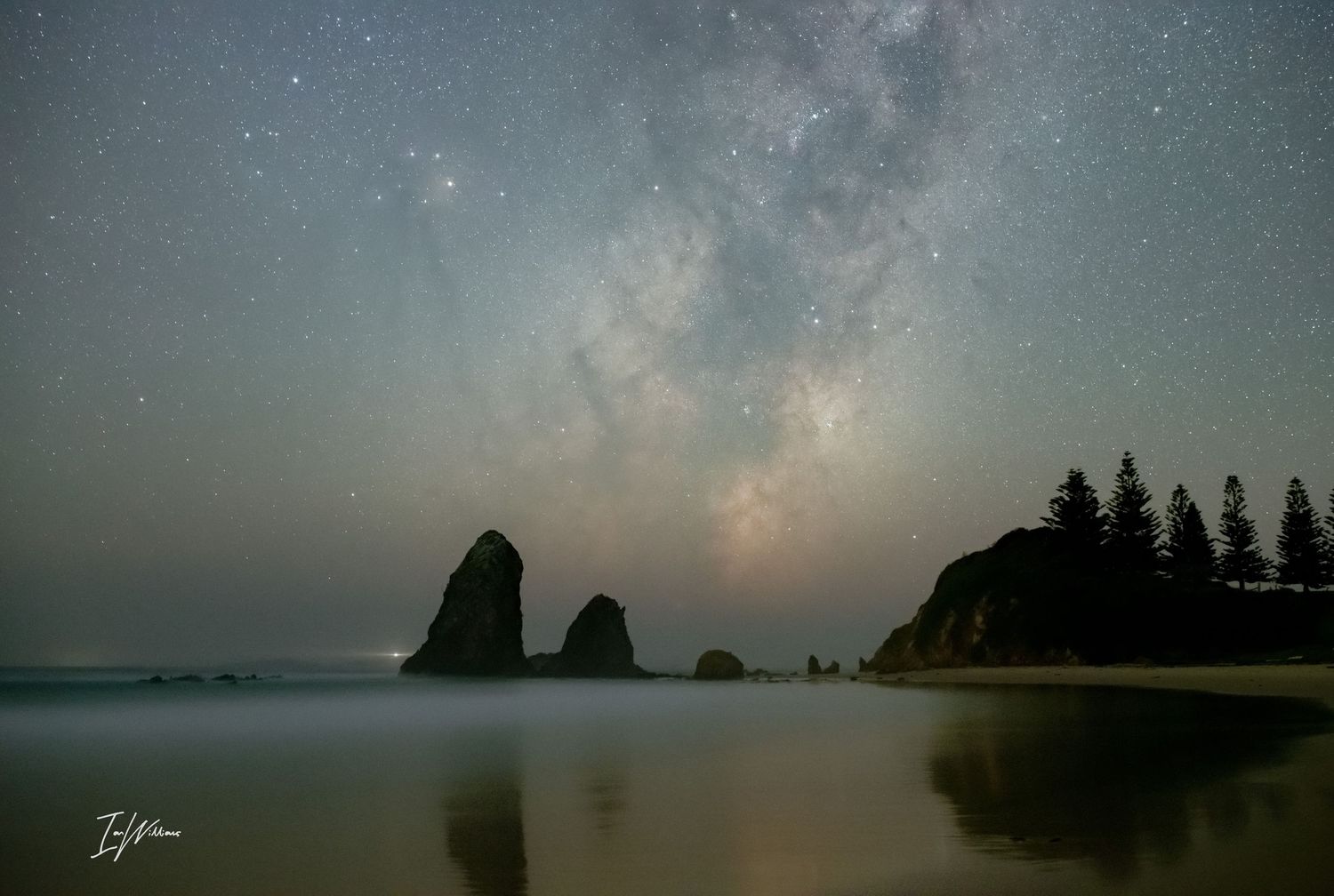
Milky Way rising over Glasshouse Rocks, Narooma, NSW, Australia
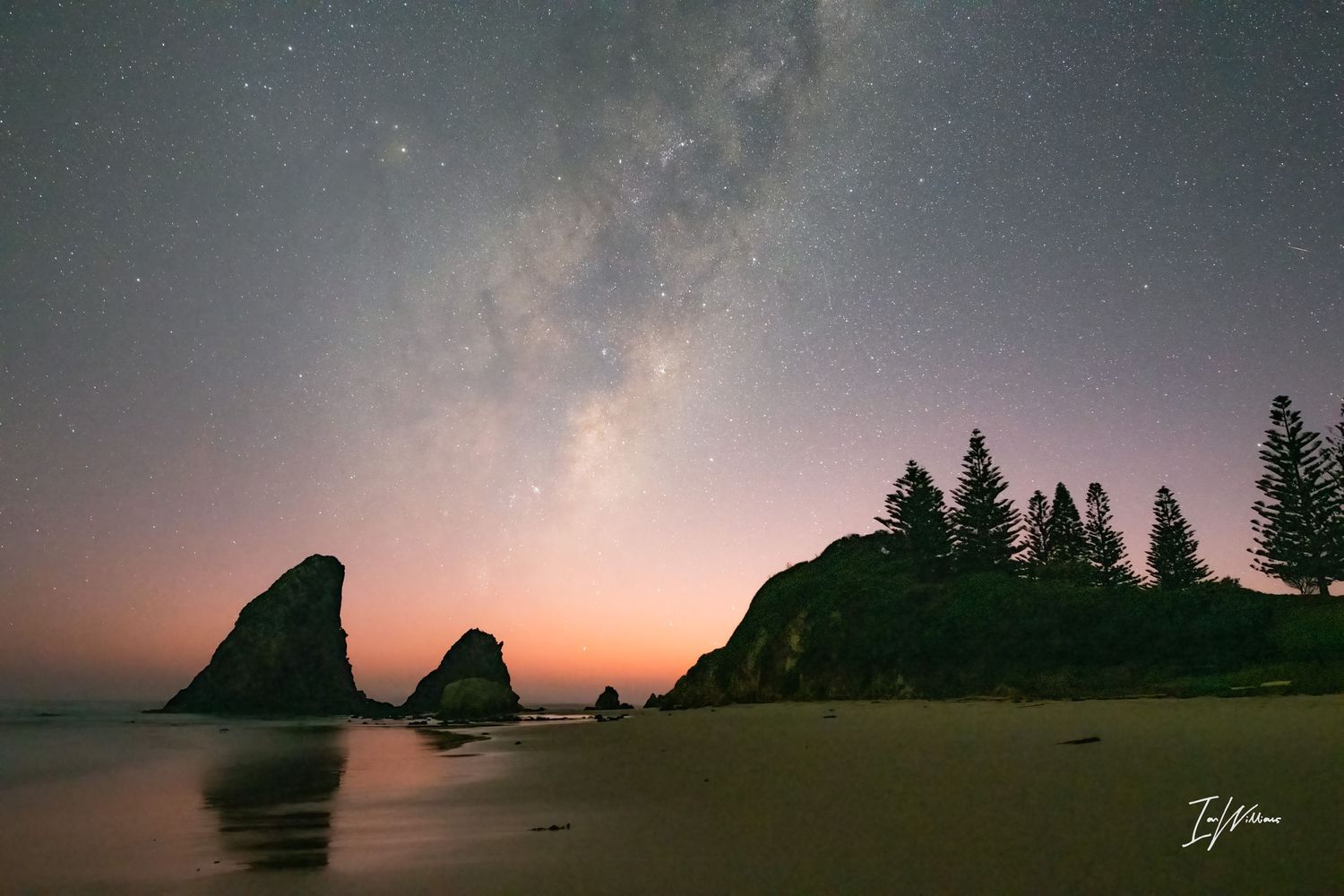
Milky Way and predawn glow over Glasshouse Rocks, Narooma, NSW, Australia, 26 January 2023
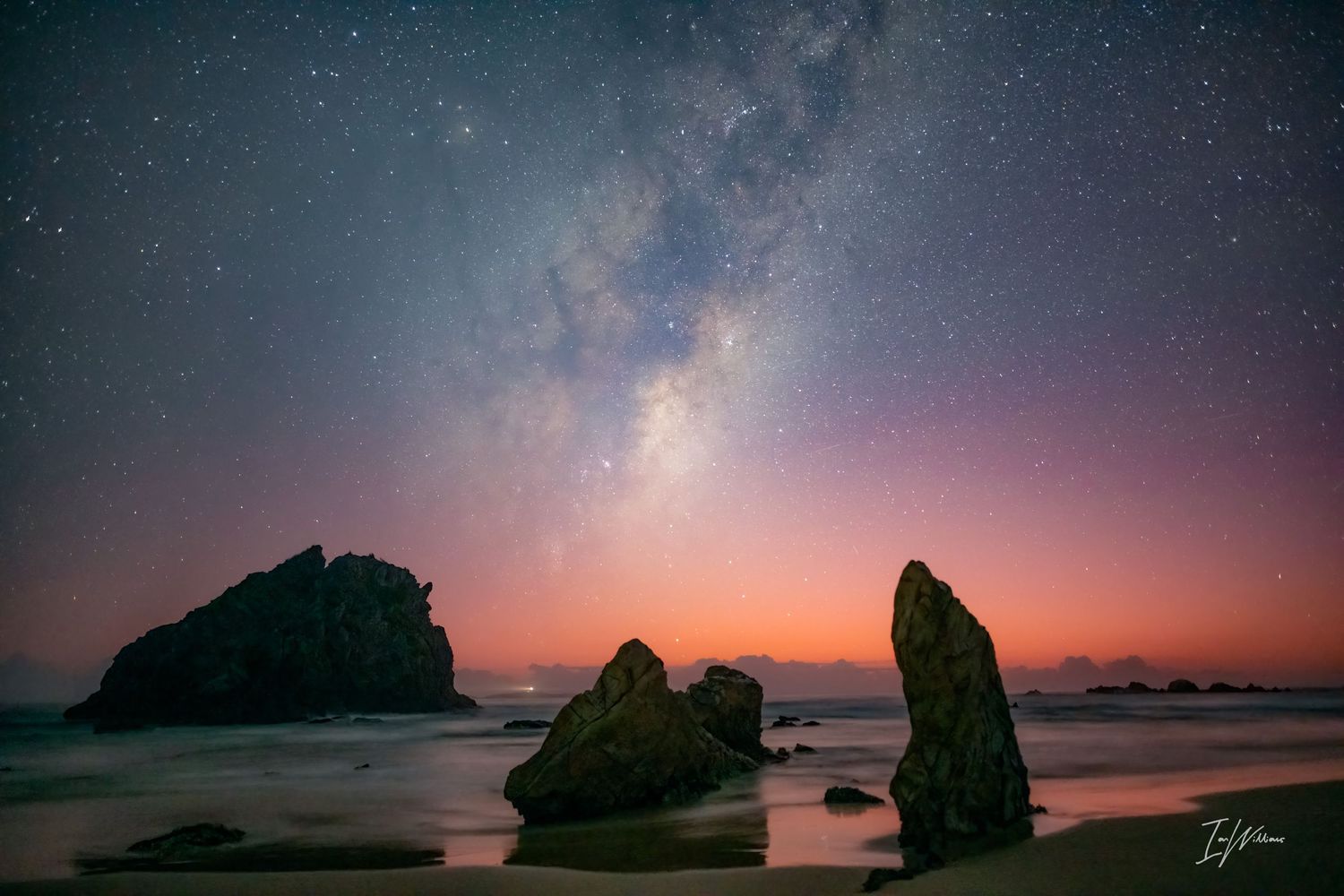
Milky Way and predawn glow near Glass House Rocks
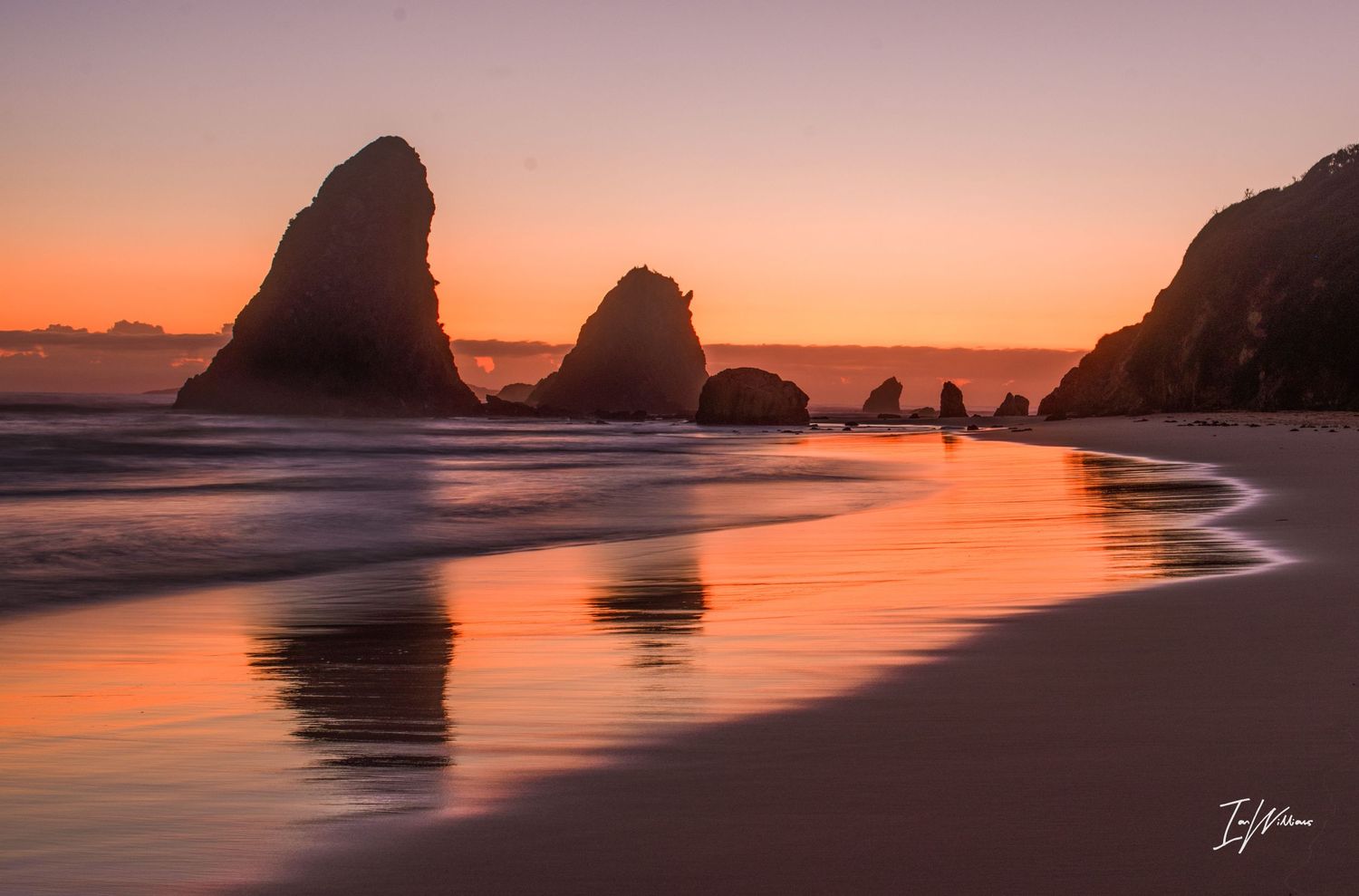
Dawn at Glasshouse rocks
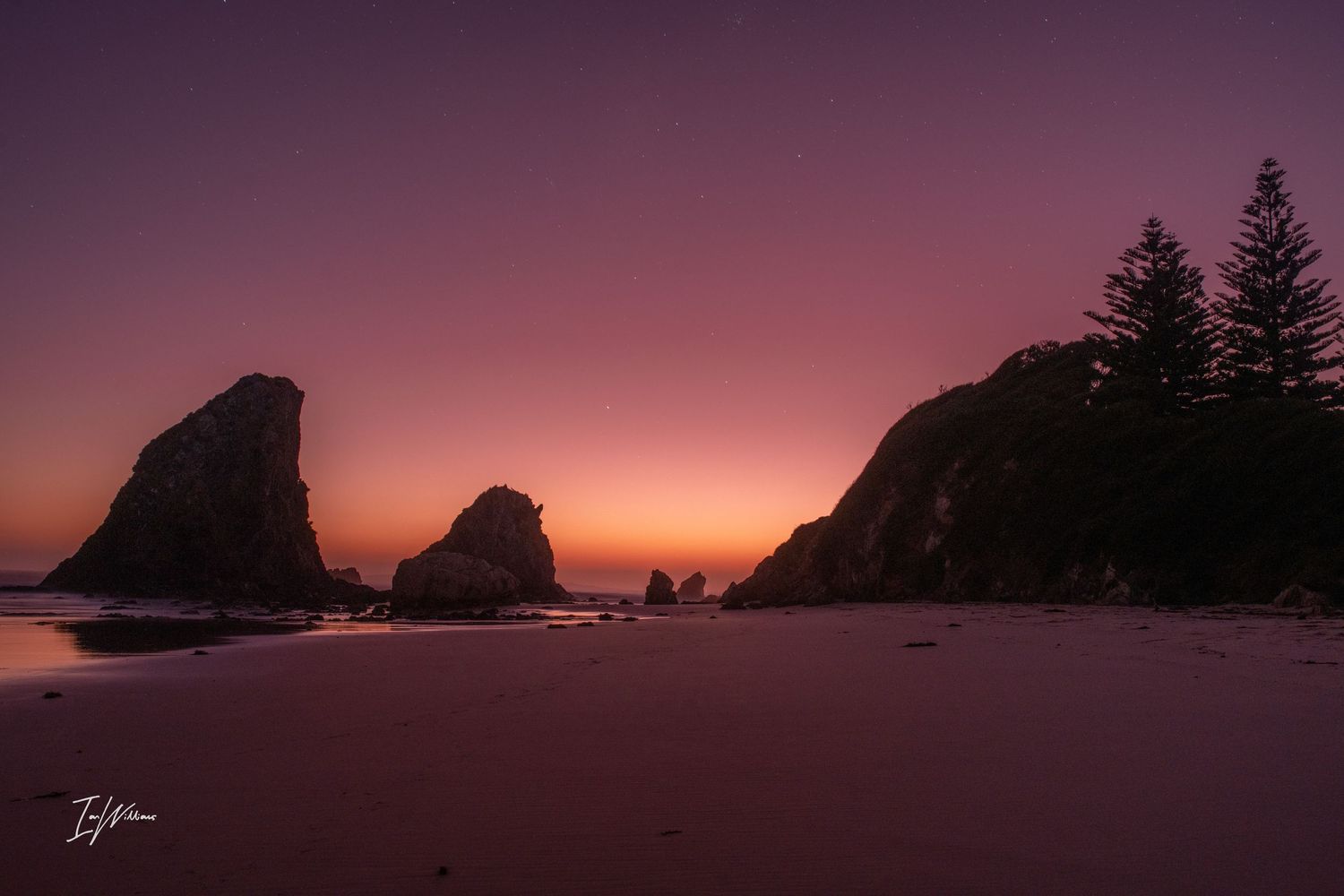
Dawn at Glasshouse rocks
Monaro wilderness - hidden corner of New South Wales Australia, road trip 20 October 2022
Wednesday morning on October 20, 2022 was a bright blue sunny day in Canberra, a real contrast from the cloudy conditions we are experiencing in the eastern side of Australia fuelled by our current La Niña conditions. I suggested to friend David Marriott that we take the opportunity to do some imaging of the Milky way core in the Cooma area even though it was mid week. At this time the core is setting at around 11 pm and the trip could be made without returning at a ridiculously late hour. David was happy to go on the trip even though there was a risk the clouds could prevent astrophotography.
By mid afternoon the clouds had built up again and I was concerned. I looked at the Bureau of Meteorology satellite images and noticed using a timelapse that the clouds had grown over the evening. Based upon previous experience, I thought there was a chance the clouds would clear on nightfall as it cooled again. Also, a clear corridor established over the Nimmitabel area seemed to offer much promise and possibly better chances for clear skies then the excellent suggestion made by David to try the Kalkite area which promised shots of the core with possibly snow covered mountains in the picture and lake reflections.
We left at 5:10 pm with cloudy skies over Canberra but as we travelled south it got clearer and clearer. We checked the clouds again and the corridor referred to above was still evidence so we headed to Nimmitabel. We ended up finding some great futures sites and started heading back to Canberra taking quiet side roads to try and locate some interesting foreground. I was also mindful of the large number of natural freshwater lakes in the Monaro and David wished to take shots of the setting Milky way core over one of the lakes.
We ended up stopping in two spots. It was quite cold and damp and I was glad I had brought two jackets. This is the first spot. It was a magnificent gum with white bark that lent in a pleasing way towards the Zodiacal light when photographed against the setting Milky way. There was a strong orange glow under the Zodiacal light but the stars were clear in the damp skies.
This image was taken by taking a number of shots of the same scene from the exact same position on the tripod, using six foreground light painted shots set at f8 and focussed on the tree at ISO 1000 and lit with a lorch from the side which were blended in with 8 star shots which were stacked in Starry Landscape Stacker.
The image and the colours were not what I was expecting but faithfully recorded what I was seeing on the back of the camera that night.
We did a quick check of the odometer after our trip and discovered we had covered 383 km in our trip just a few km before we got to my place.
By mid afternoon the clouds had built up again and I was concerned. I looked at the Bureau of Meteorology satellite images and noticed using a timelapse that the clouds had grown over the evening. Based upon previous experience, I thought there was a chance the clouds would clear on nightfall as it cooled again. Also, a clear corridor established over the Nimmitabel area seemed to offer much promise and possibly better chances for clear skies then the excellent suggestion made by David to try the Kalkite area which promised shots of the core with possibly snow covered mountains in the picture and lake reflections.
We left at 5:10 pm with cloudy skies over Canberra but as we travelled south it got clearer and clearer. We checked the clouds again and the corridor referred to above was still evidence so we headed to Nimmitabel. We ended up finding some great futures sites and started heading back to Canberra taking quiet side roads to try and locate some interesting foreground. I was also mindful of the large number of natural freshwater lakes in the Monaro and David wished to take shots of the setting Milky way core over one of the lakes.
We ended up stopping in two spots. It was quite cold and damp and I was glad I had brought two jackets. This is the first spot. It was a magnificent gum with white bark that lent in a pleasing way towards the Zodiacal light when photographed against the setting Milky way. There was a strong orange glow under the Zodiacal light but the stars were clear in the damp skies.
This image was taken by taking a number of shots of the same scene from the exact same position on the tripod, using six foreground light painted shots set at f8 and focussed on the tree at ISO 1000 and lit with a lorch from the side which were blended in with 8 star shots which were stacked in Starry Landscape Stacker.
The image and the colours were not what I was expecting but faithfully recorded what I was seeing on the back of the camera that night.
We did a quick check of the odometer after our trip and discovered we had covered 383 km in our trip just a few km before we got to my place.
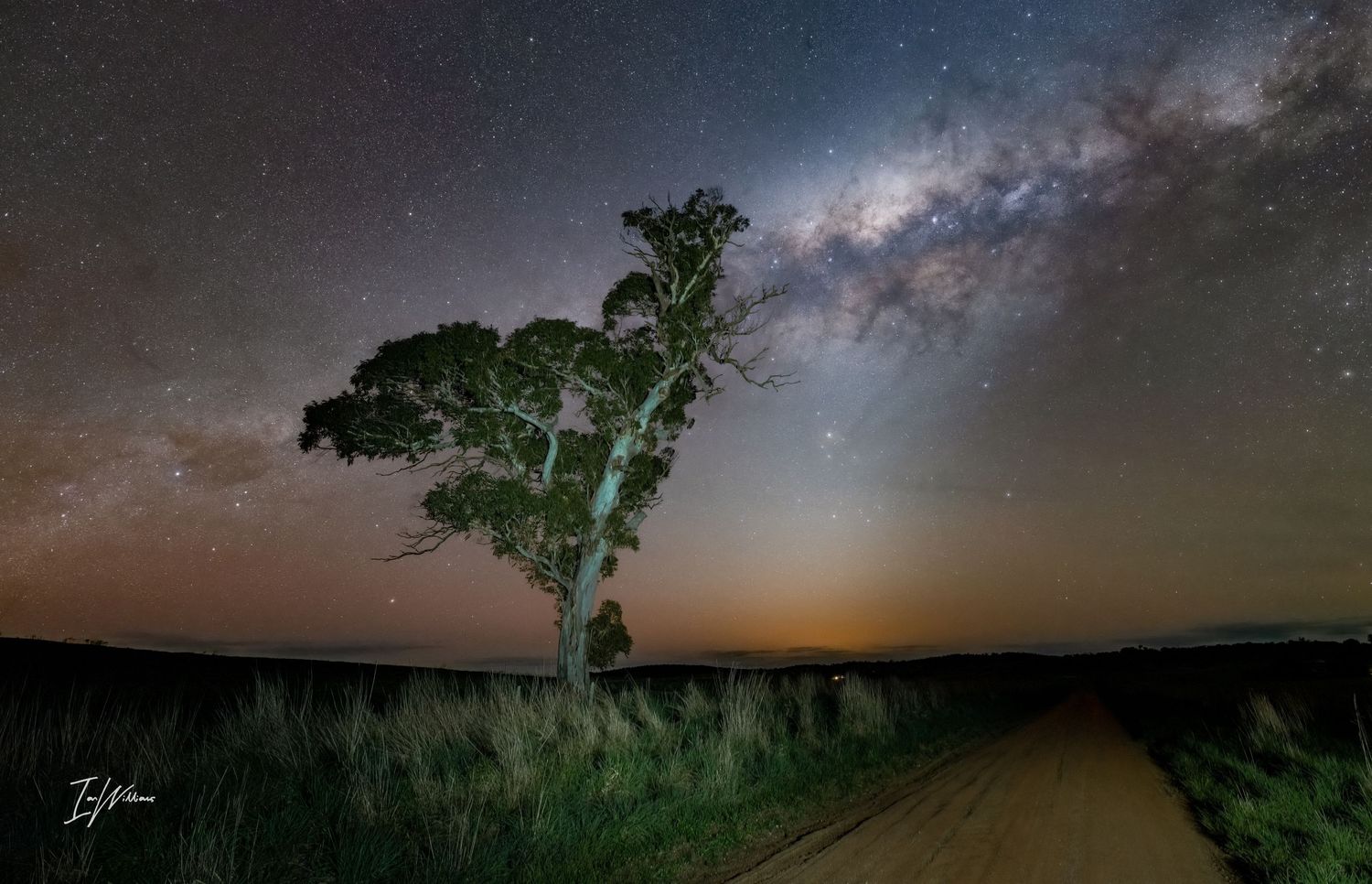
A fabulous big gum tree on a quiet road in a secluded corner of the Monaro High country
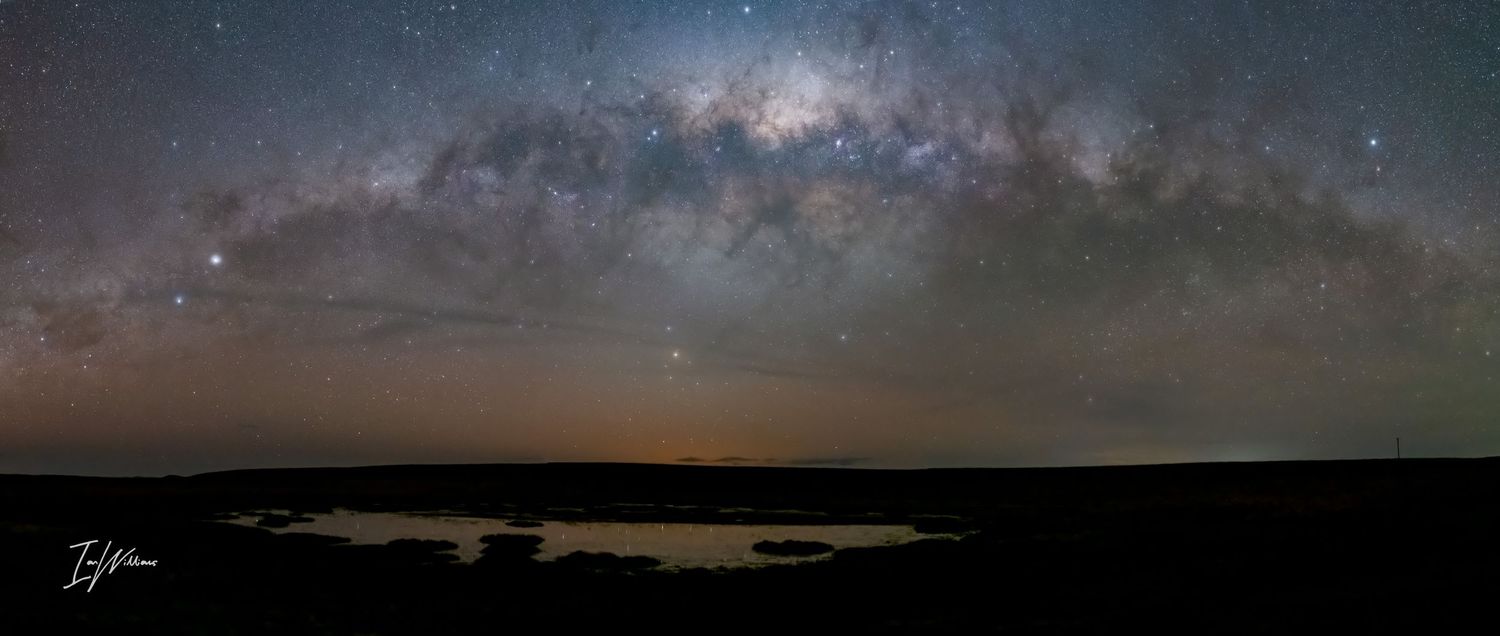
The Milky Way core sets over one of the Monaro's many natural lakes, filled to capacity by our big rains
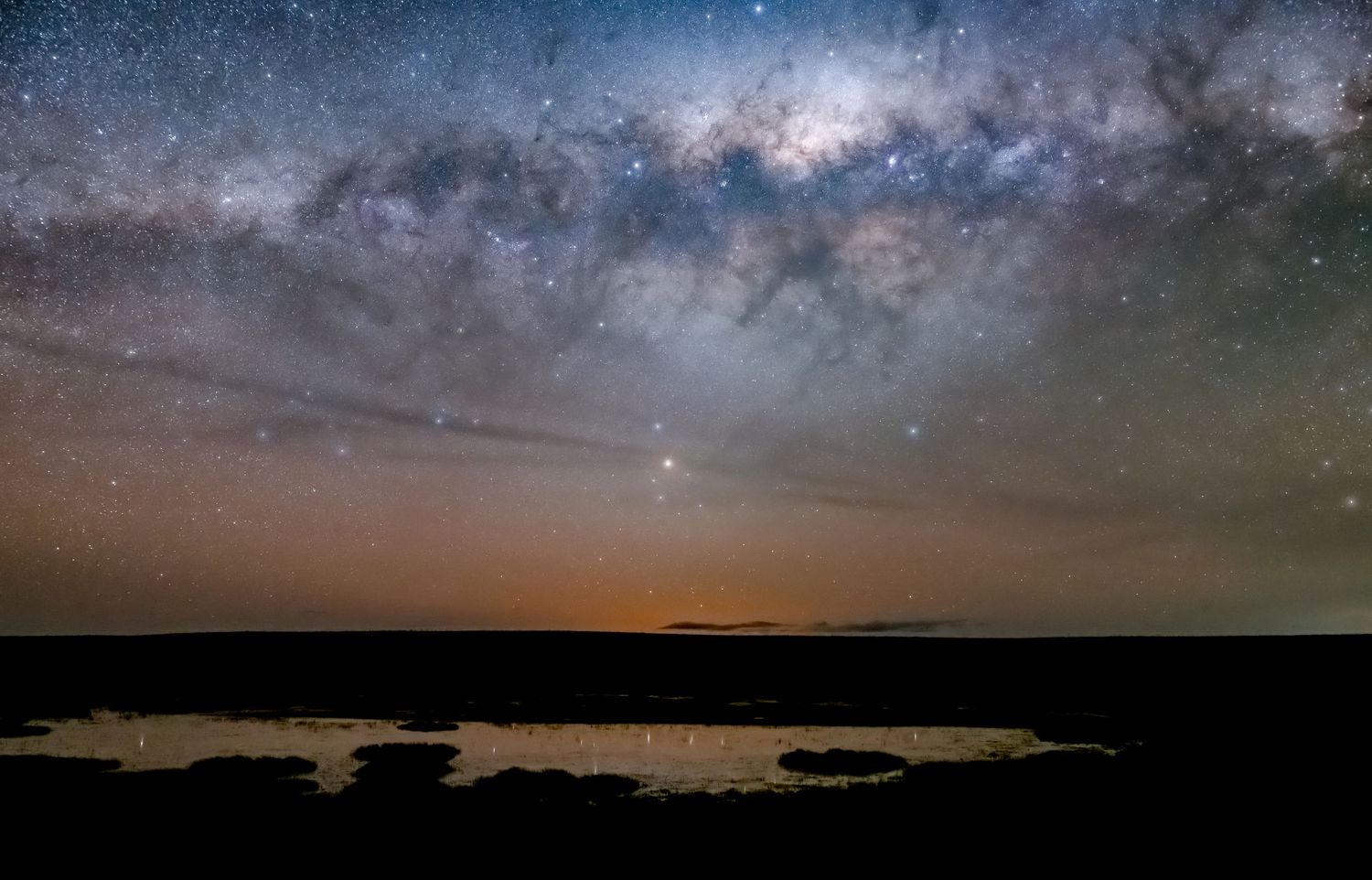
Milky Way setting over a natural Monaro lake
The rugged beauty of Namadgi - Yankee Hat area 17 September 2022
In 2022, clear skies have been rare. On this occasion, I headed out to Yankee Hat with a friend David fully expecting the high cloud to cover the night skies just on nightfall. In fact I had cancelled a workshop on this belief based on the forecast of various apps. The high cloud could be seen coming in but surprisingly I cleared to a beautiful clear night. I took the opportunity to image some gnarly Snow gums, one still clinging to life the other two still proudly reaching their branches to the heavens. I was delighted with the results, Leaving the camera on the same site I took foreground images focussed on the trees and then star shots (usually about 8) which were then stacked to reduce noise in the stars.
What do you think about the images? Would you like to see more? Then feel free to drop me a note via contact me.
Ian
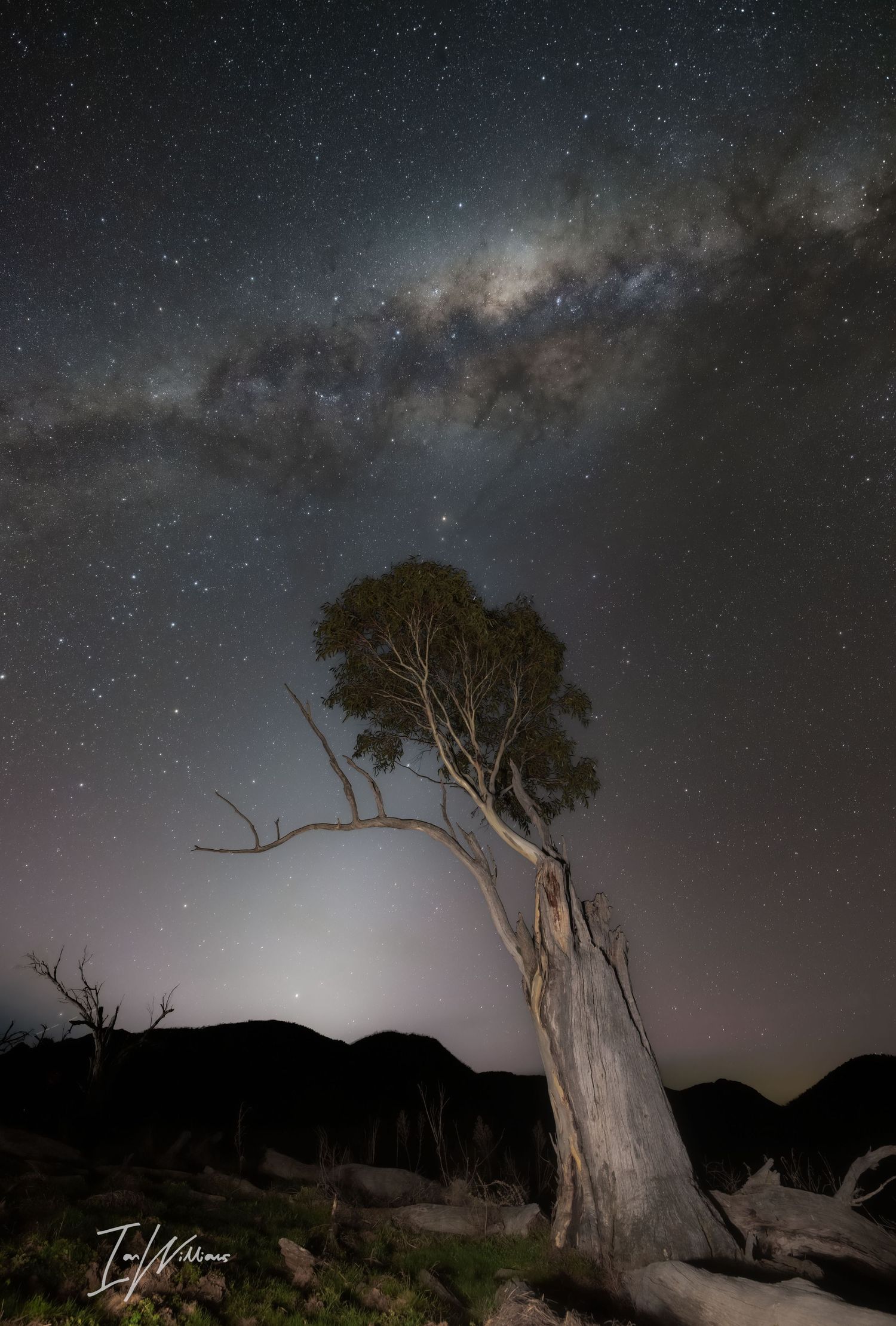
"Hanging in there"
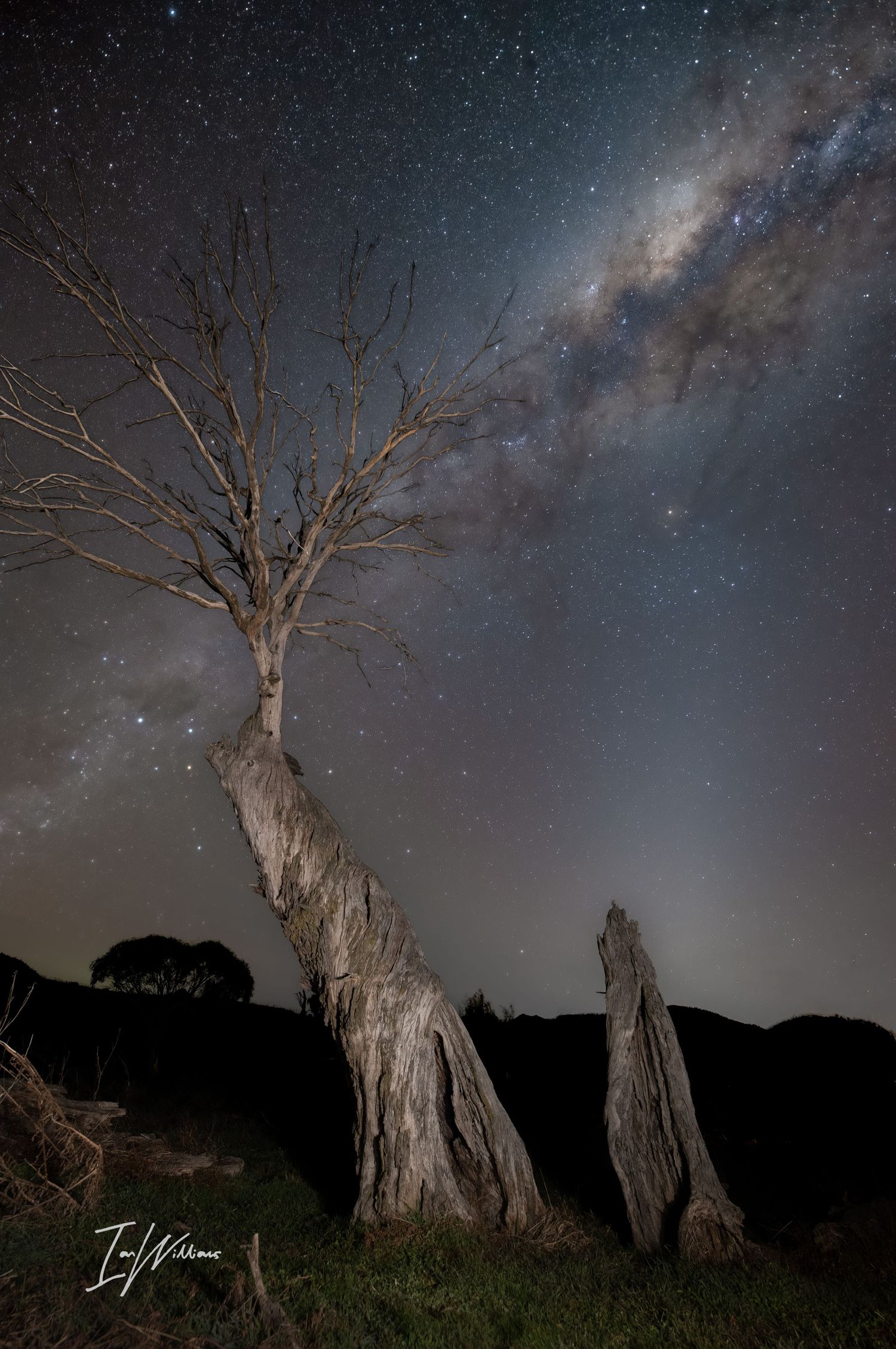
"Reaching to the heavens"
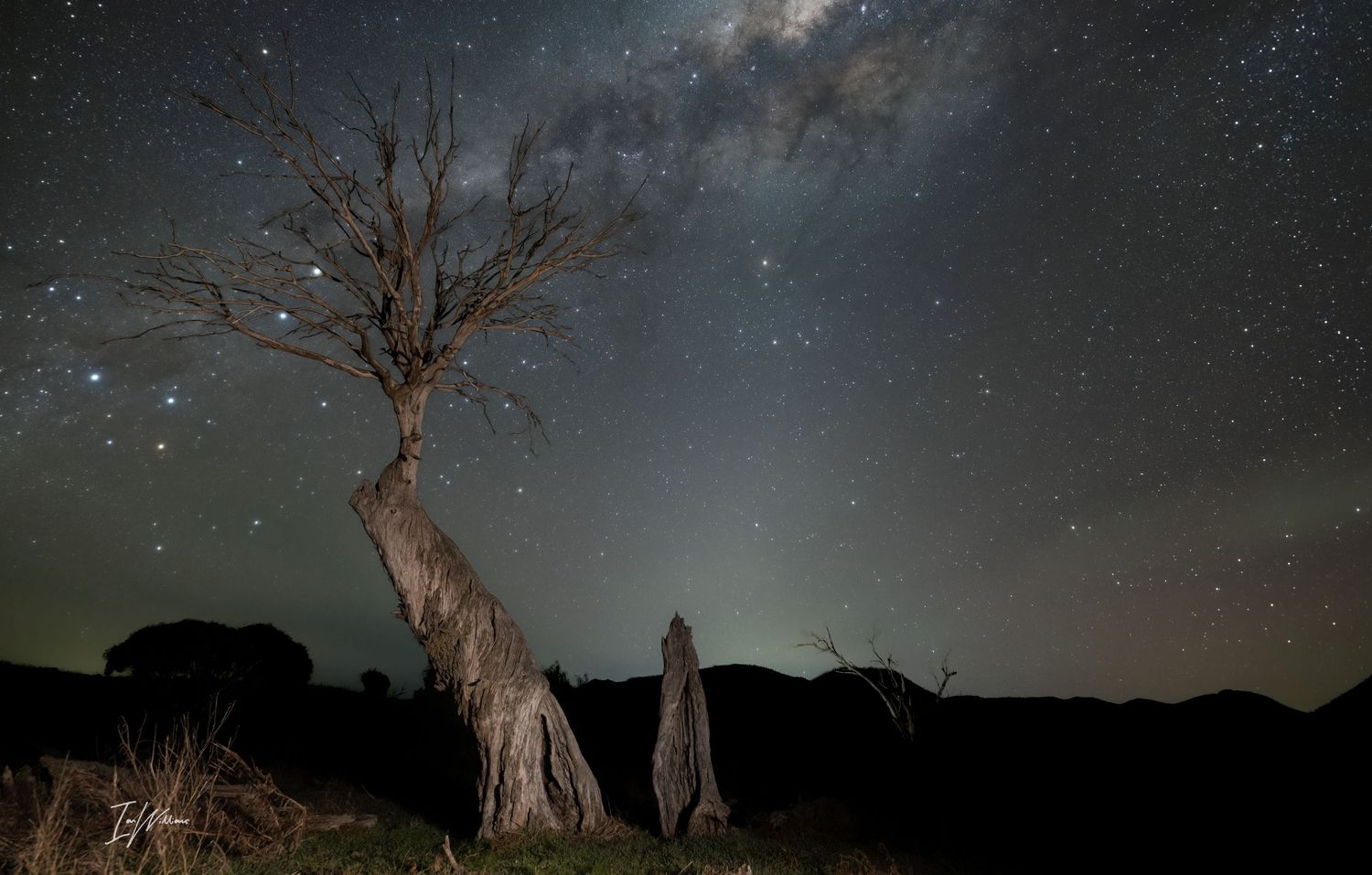
Granite Tors of Namadgi National Park and stars 17 August 2022
The Namadgi National Park occupies more than 50% of the area of the Australian Capital Territory. because there are no major towns to the south of it, the skies are very dark, Bortle 3 or better particularly to the south.
One of the features of the park are numerous granite tors, all uniquely marked with special patters of lichen etc. These make wonderful sillhouettes or foreground objects to be light painted according to taste.
These images were taken on the same night after a friend of mine David Marriot and I had enjoyed a dinner cooked on one of the rocks before starting our night shoot. It was cold dropping to minus 3 degrees and the coffee made a huge difference. We could hear the occasional ground from Kangaroos up the valley as we set up our equipment.
I was keen to image the Zodiacal Light together with the vivid orange red sunset colours caused by the volcanic eruption near Tonga. These are a selection of images taken on that night. The first image was taken using a Sigma 14 mm Art lens stopped down to f2.8 at ISO 1250. Four consecutive images were stacked in Starry Landscape Stacker to reduce noise for the background star shot. A single foreground shot of the rocks focussed on the rock was taken without moving the tripod at f8 (to increase depth of field of the rocks) at ISO 640. This image was blended in Photoshop with the start shot. The second image was created using 12 star shots taken using the same lens at f2.8 at ISO 3200 stacked for the star shot and then blended with a single foreground shot of the rocks focussed on the rocks at f8 to create the image showing the amazing colour of the rocks. In the third shot, no light painting was applied. Do you prefer the light painted rocks or the silhouette? I'd love to hear your comments!
#Namadgi
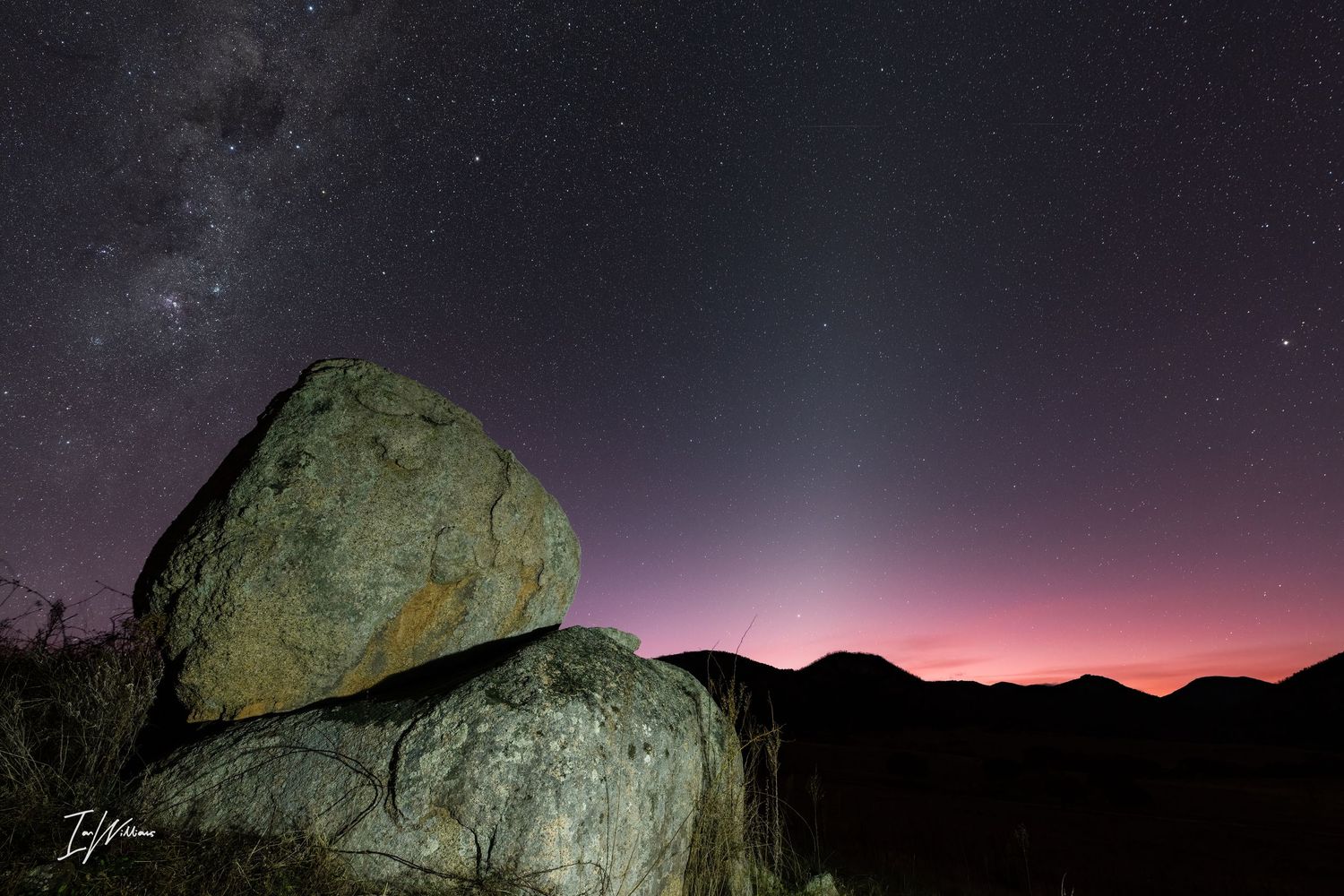
Display of the Zodiacal light
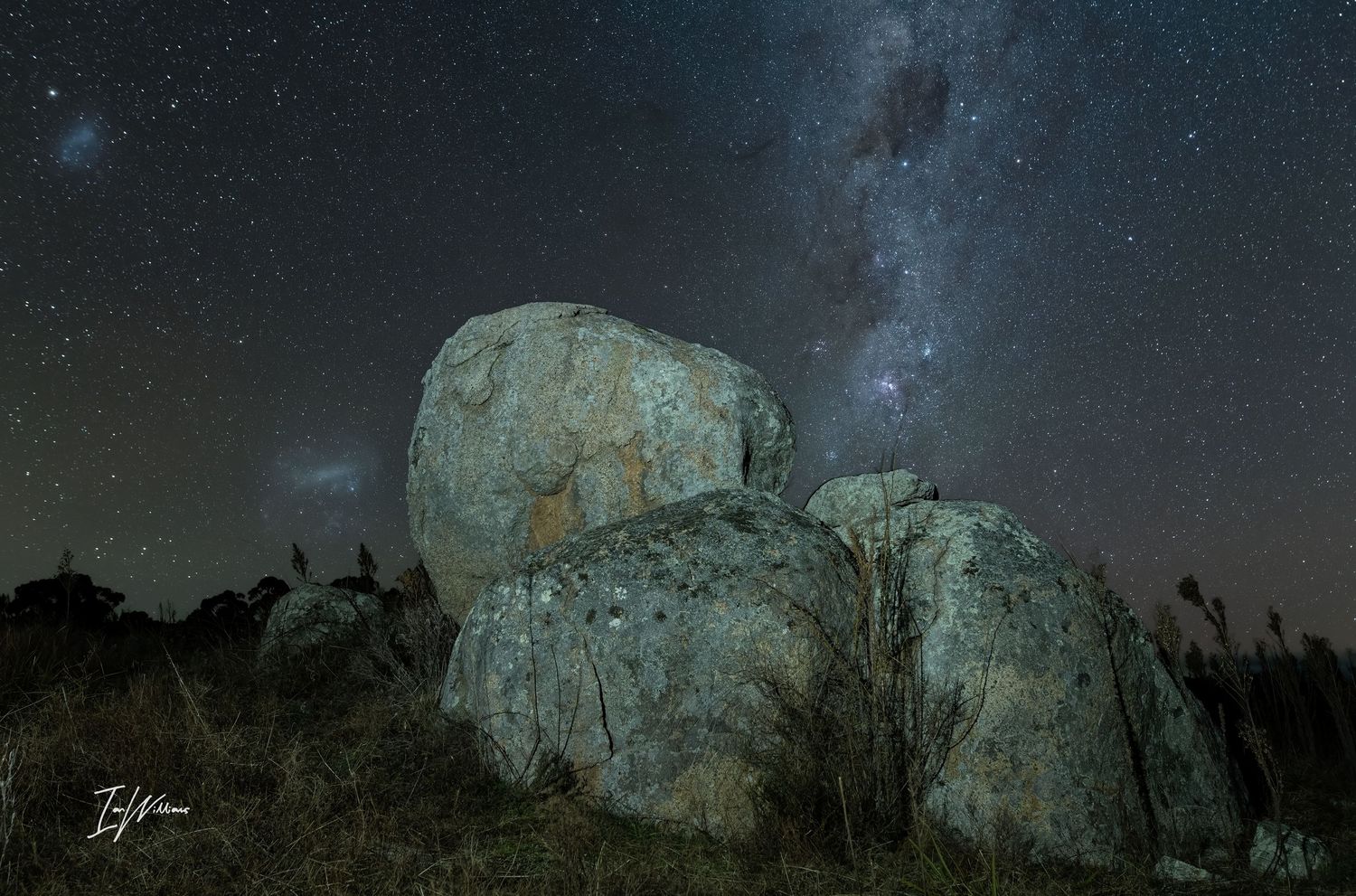
Magellanic Clouds, Yankee Hat Tors and Southern Cross
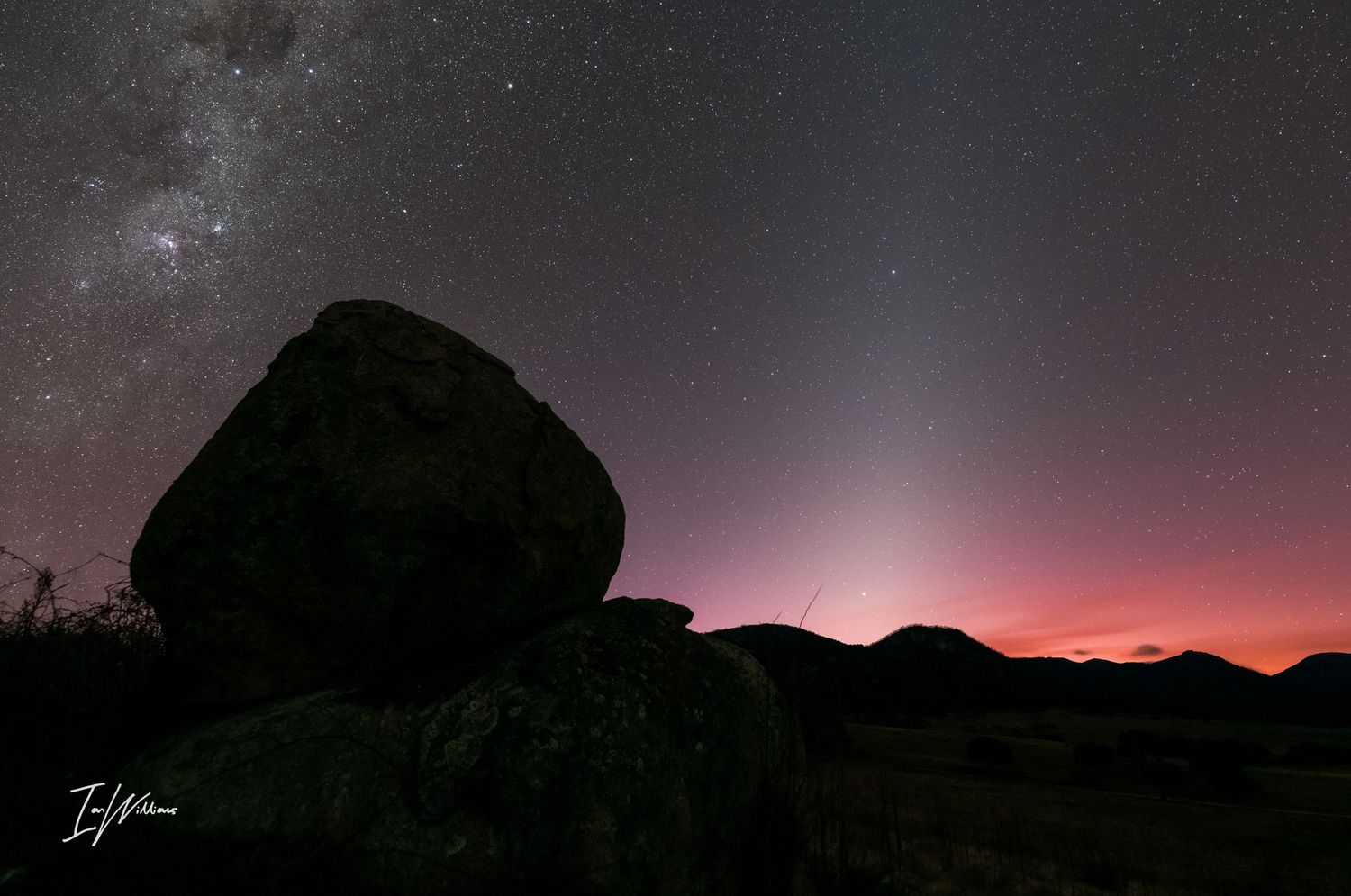
Zodiacal light
Moonset behind Castle Rocks 18 April 2022
Castle Rocks are granite tors that are about 10 - 12 metres high situated just off the Summit of Castle Hill which is situated on private property near Tuggeranong ACT. The rocks make a fantastic subject for astrophotography, particularly when the Milky Way Core sets behind them. The walk is a tough one involving an ascent of about 300 me from the parking spot with some very deep pinches.
The first image shows the setting Milky Way core over the rocks. 5 star shots were stacked which brought out the movement of high clouds. These were combined with 3 long exposure shots focussed on the rocks which were lit by the light pollution from Canberra's suburbs.
On 18 April 2022, David and I decided to try and capture the setting moon behind the rocks. David had taken a shot previously where he had done that the day after a full moon but this time we decided to try it with the full moon. I had utilised Photo pills to work out the place along the road where we needed to be to be properly positioned to image the full moon as it set among the rocks, suing a 200-500 mm lens at f8. At all times I maintained the exact same position with my tripod and using a remote so as not to introduce any vibrations.
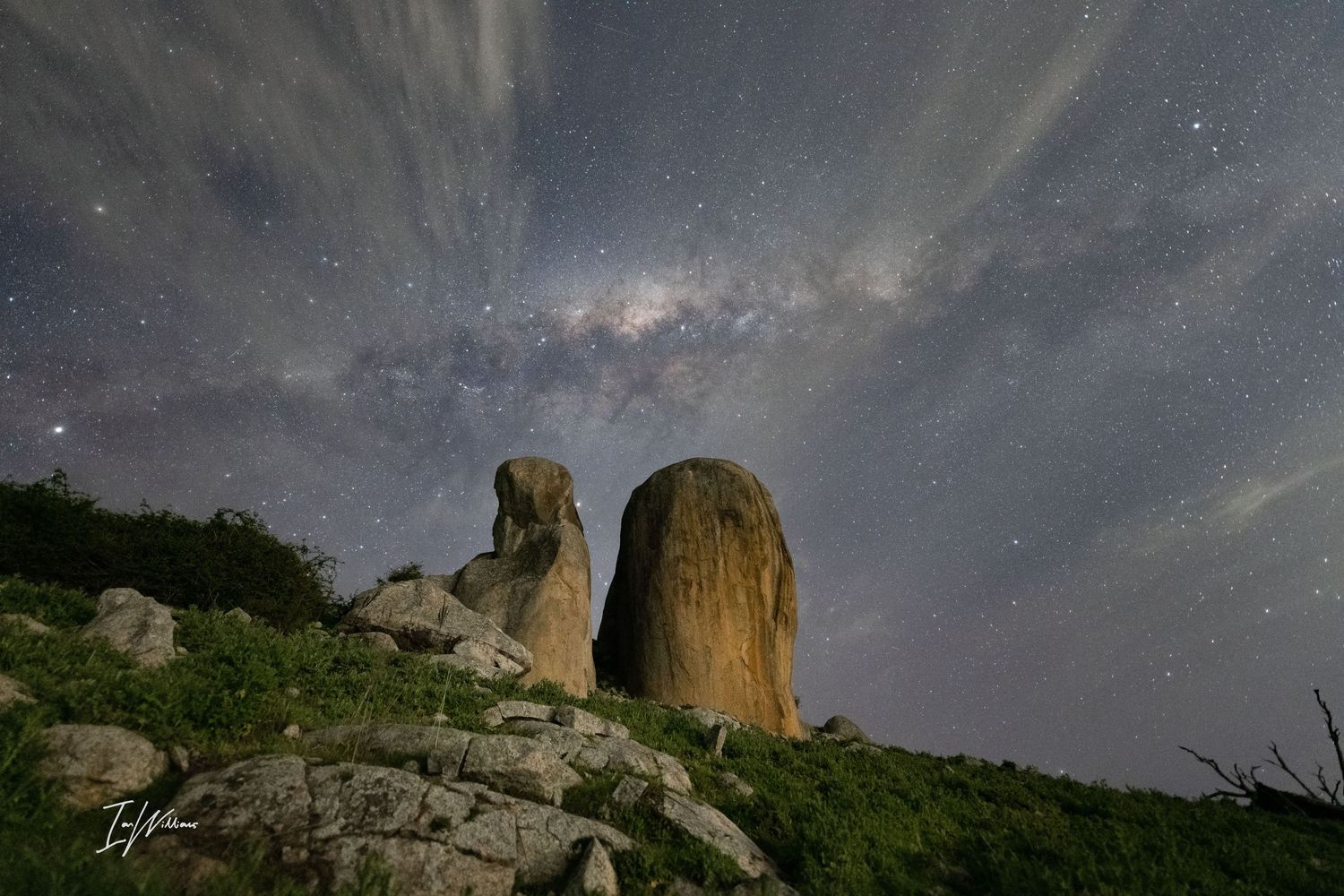
Milky Way over Castle Rock
The Milky Way core is setting over Castle Rocks. Five star shots were stacked which brought out the movement of high clouds. These were combined with 3 long exposure shots focussed on the rocks which were lit by the light pollution from Canberra's suburbs.
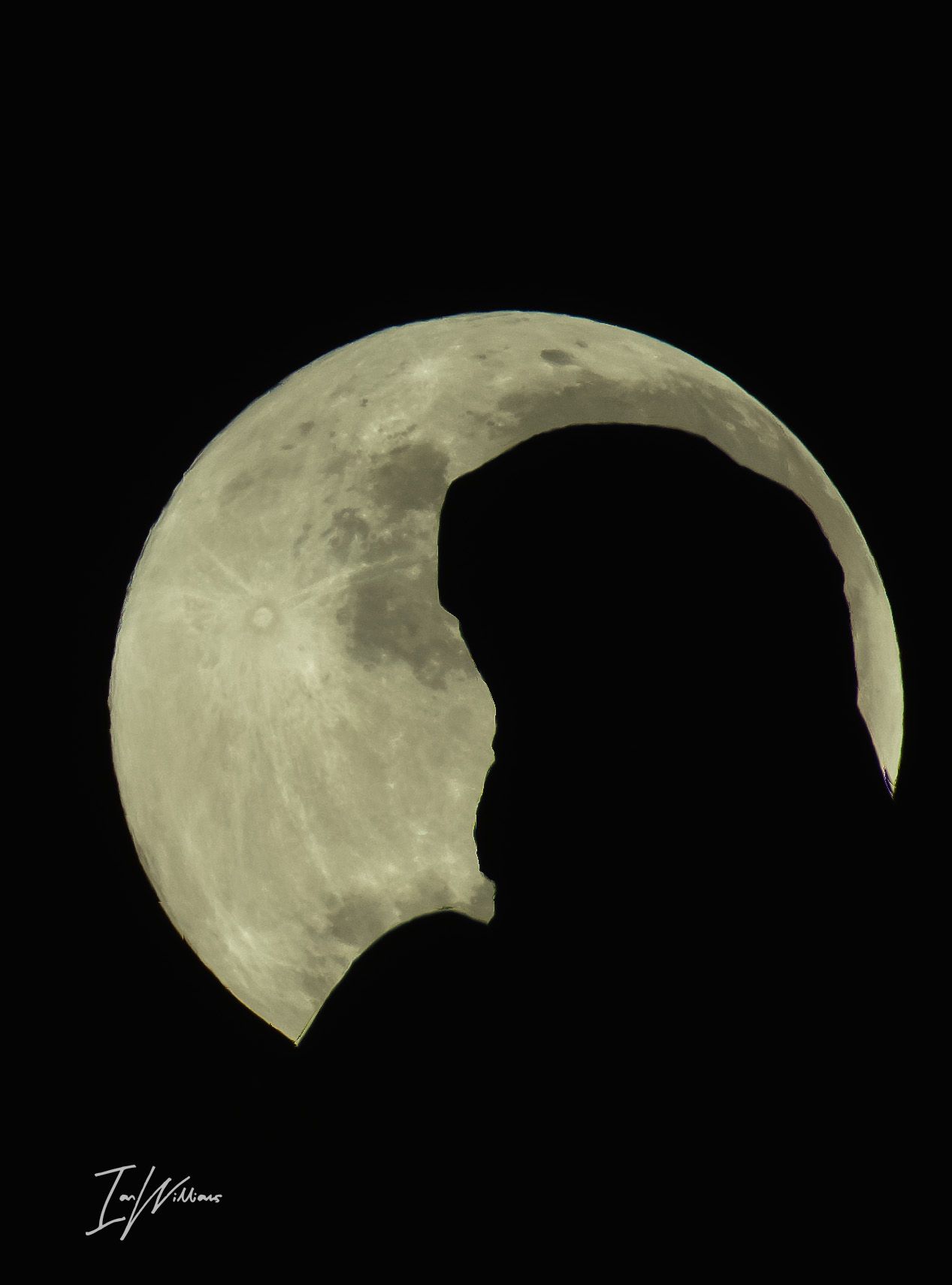
Moon setting behind Castle Rocks
The rocks silhouetted by the full moon. Single shot at 500 mm at f8 at 1/500th of a second.
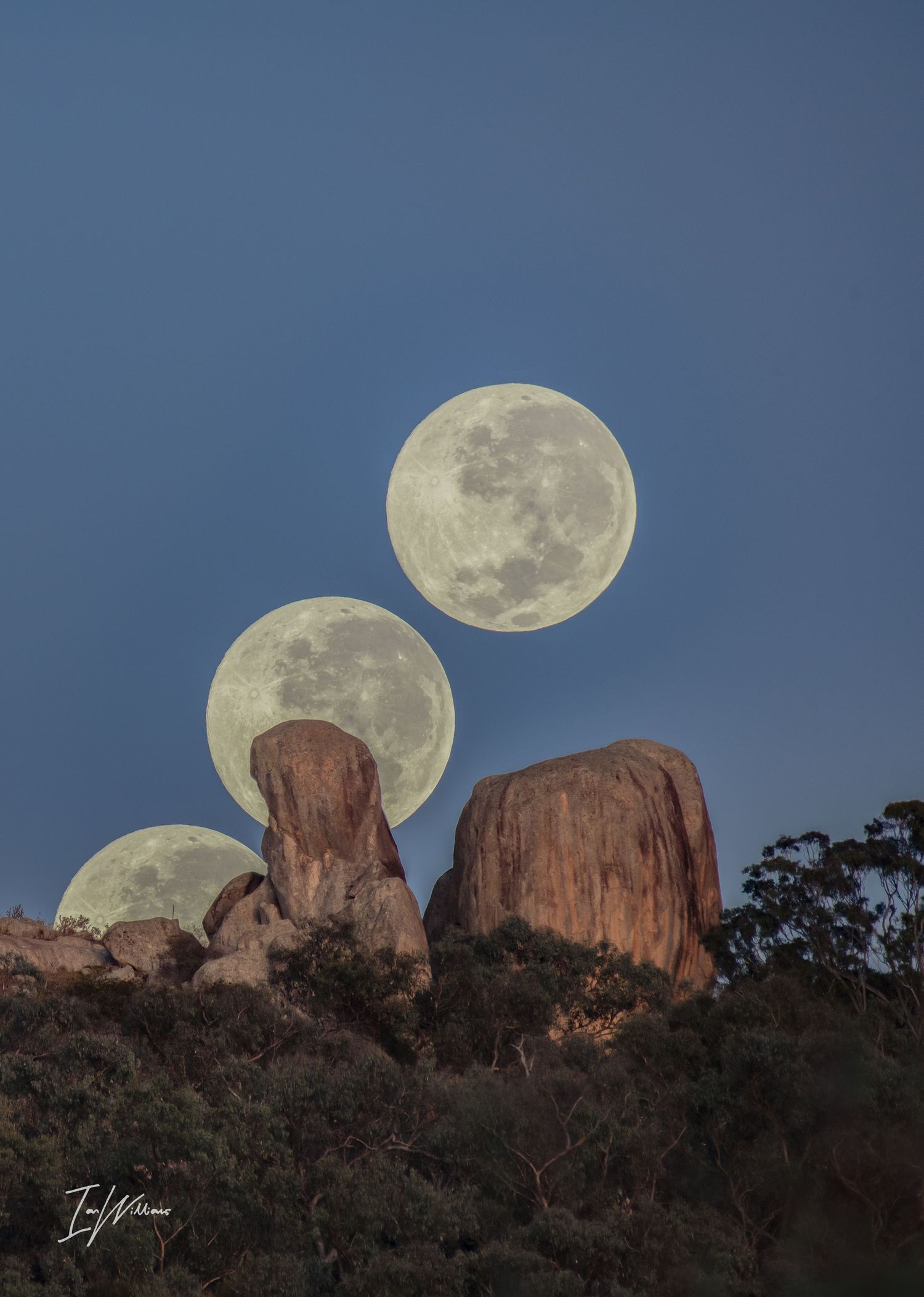
Composite shot of moonset behind Castle Rocks
In this image I have combined 3 images of the full moon were added in the exact position against a long exposure foreground shot which brought out the colours of the rocks in the increasing predawn light.
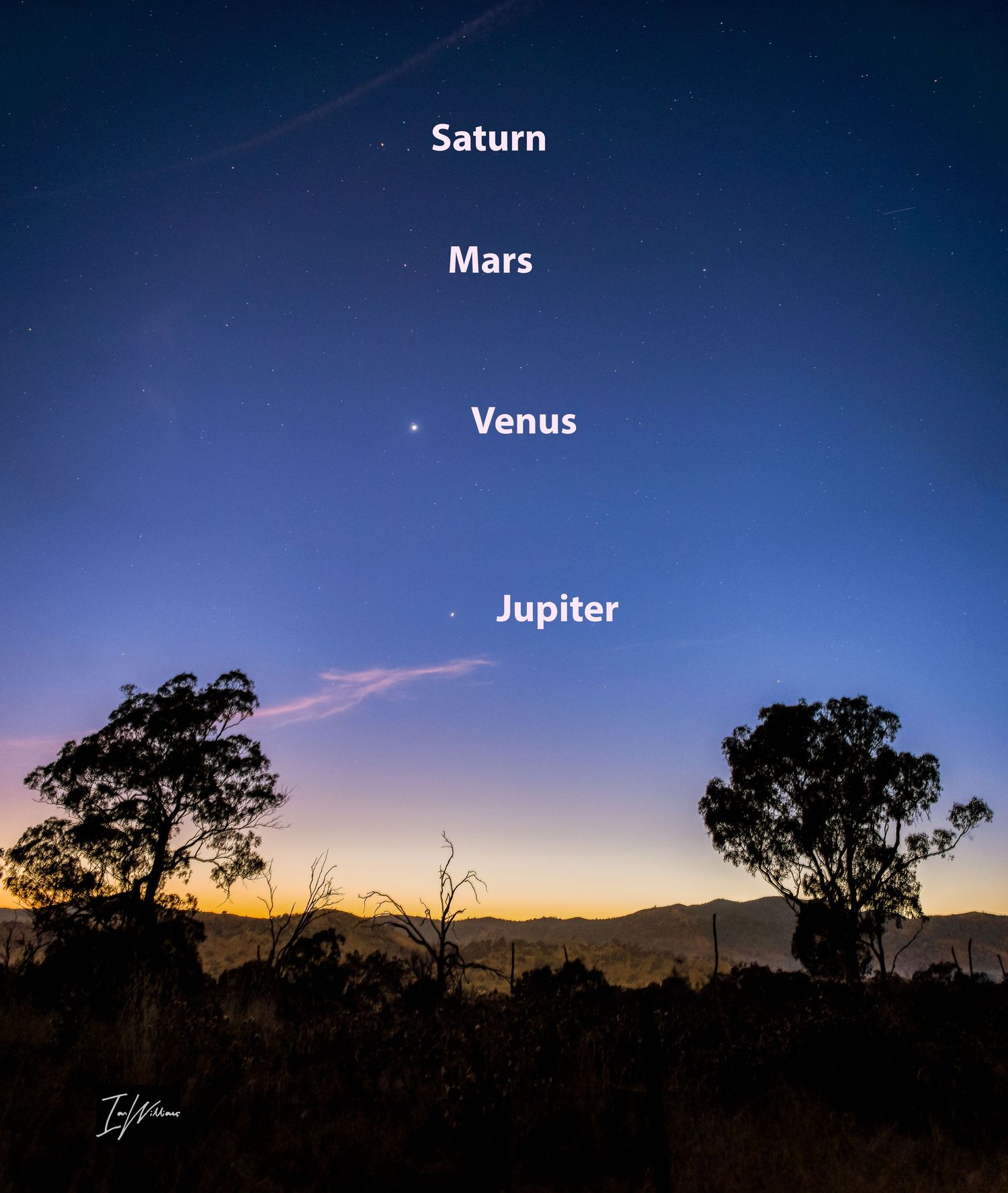
Planetary alignment
This image is a vertical panorama of four shots with a 24 mm lens at f1.4 and shows the amazing alignment of 4 of the naked eye planets viewed at around 5 am on 18 April 2022.
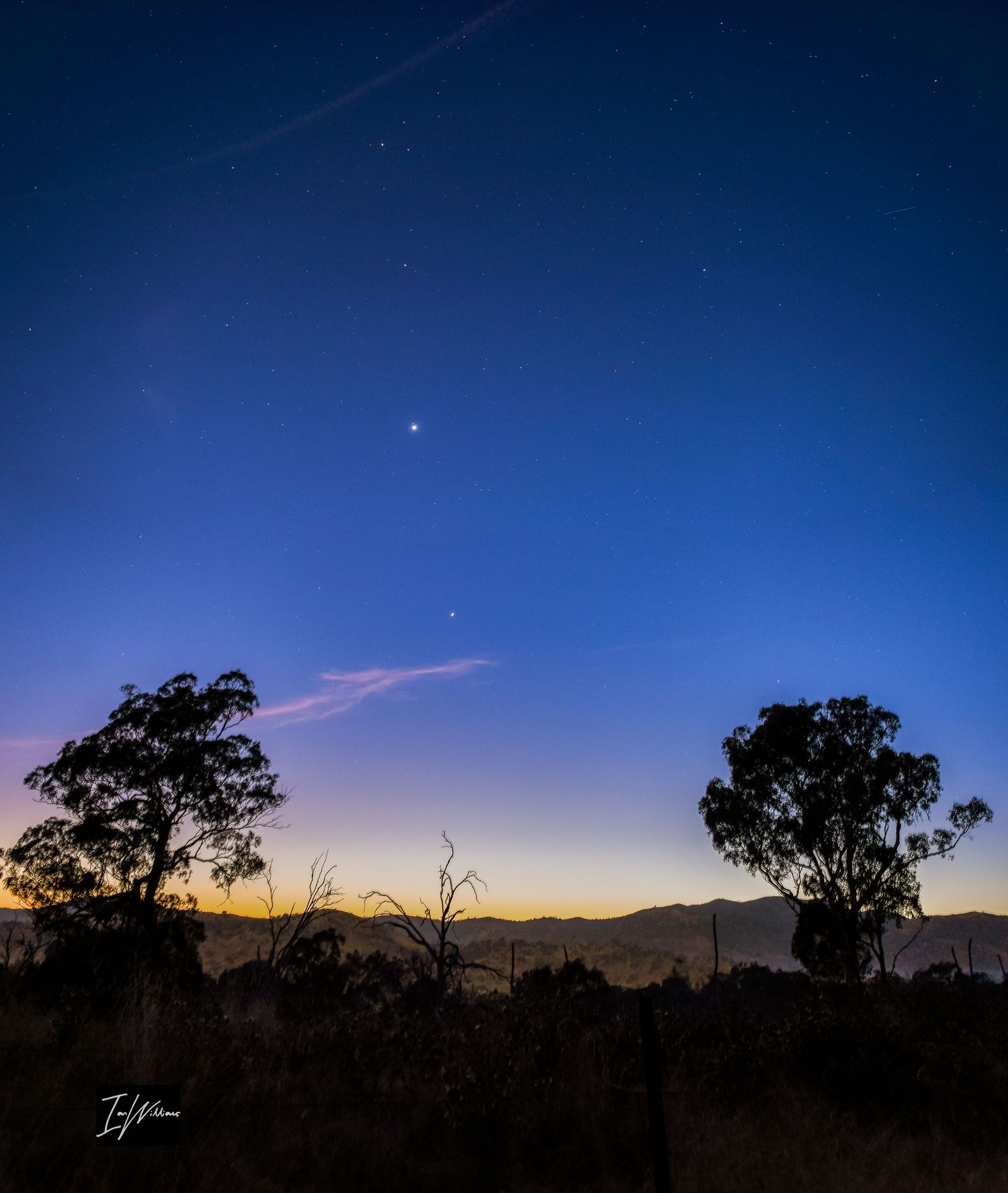
Planetary alignment 18 April 2022
This is what it looked like with the approaching dawn. No photo can do justice to what it looks like with the naked eye!
A near all-nighter at Mt Brogden, Cocoparra National Park, NSW 4-5 February 2022
On 4 - 5 February 2022, David and I after some difficulty located the start of the track, a 5 km round trip up Mt Brogden in the Cocoparra National Park. The climb involved a 200 m ascent, some involving steep sections with steps.
I decided to lighten the gear I was carrying including not taking a spare battery, a decision I was partially to regret later.
It turned out to be a bit of adventure. After locating the terminus for the track on the internet, we thought the track was pretty vstraightforward with the first bit around 400-500 m along the adjacent state forest to the south. The walk started well with davi locating a Southern Leaf-tailed Gecko as we walked along in the darkness. David managed to grab a shot of the lixard with his mobile phone.
We then started to hit a snag, suddently the track branhced into two with the right hand side a bigger track. I consulted my map and saw a line where out GPS put out location branching off the left so all good. Then about 150 m later we saw another fork in track which wasnt on my map, so we opted for the bigger one to the right. I rermarked to David, "surely we should be doing some climbing now". I noticed that we had been following an old fence which I thought was the boundary to the National Park.
I was getting a little concerned about getting lost so marked the return track to be taken with some sticks to form an arrow.
We kept on going. We decided to check out positon on the mark which seemed to correlate with a track we expected to start heading west back to where the track up to Mt Brogden went up but we encountered yet another fork which did not correlate to the map I had down loaded of the walk or our location on a GPS with the marked tracks.
I said to David, I think we should go back, the thought of spending 7 hours out in the dark fumbling around did not appeal. So we retruned following our direction sticks. It was then at this juncture, david showed me our position on the GPS, it appeared we had backtracked (we don't know how) to a point where the route up the mountain was supposed to start an yet on the way earlier we had not seen a track. By this time I was about 20 m behind David trying to look up my map again when suddenly I noticed a turn to the right and signage which indicated the start of the walk. It really needed to be marked on the track we had started on but I guess the assumption was that you would seee it - but not ncessarity if you had not done the walk before and decided to do it in total darkness! I said to David game on lets go so we took the hour to do the climb passing two fabulous lookouts lookouts, one showing Griffith and Yenda to the south and a sea of lights. When we reached the summit, I made out easily the lights of Leeton about 45 km to the south east.
We set up our gear on rocky ledges near the lookout and started taking photos. David has a timelpase of about 3 and half hours of the rising Milky way, my one is much shorter as I wanted to take the rising Milky way with first light but my battery ran out just before 5 am.
This is one of a number of shots showing the full extent of the Emu which encompasses the Milky Way core with the Southern Cross to upper right. Venus can be shown rising just above the horizon to the lower left. It is a single image as I did not want to loose the detail of the delicate cloud patterns. It was quite misty in the sky and incredibly windy which blurred some of the tree branches in the image. It was getting cold I estmated at around 15 degrees but upon relfection it was probably closer to 13 with it sittig on 17 degrees down at Griffith. Unseasonably cold conditions fort early February.
It was an epic night and we were stuffed retiring to our tents to be woken up by the heat at around 9:30 am.
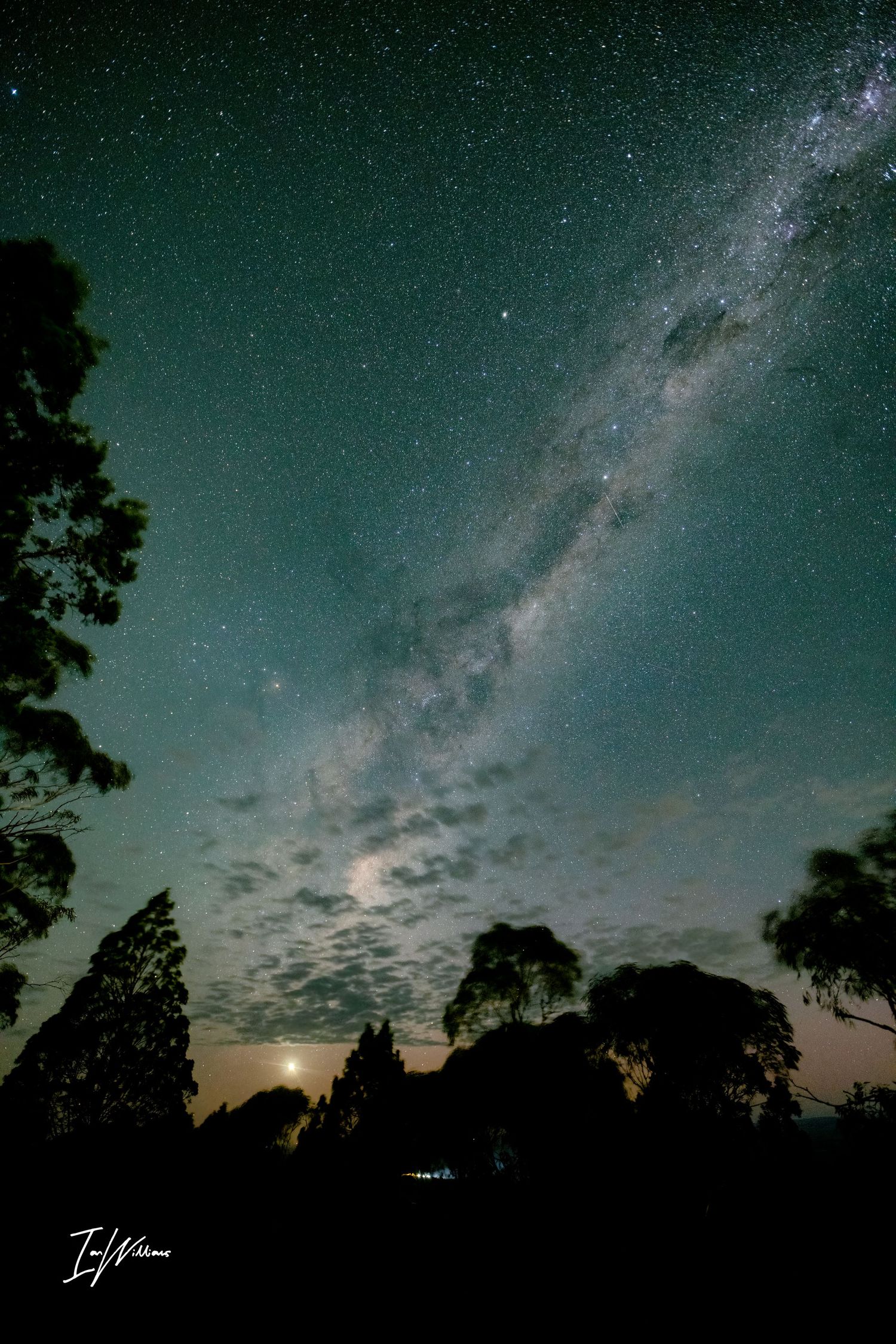
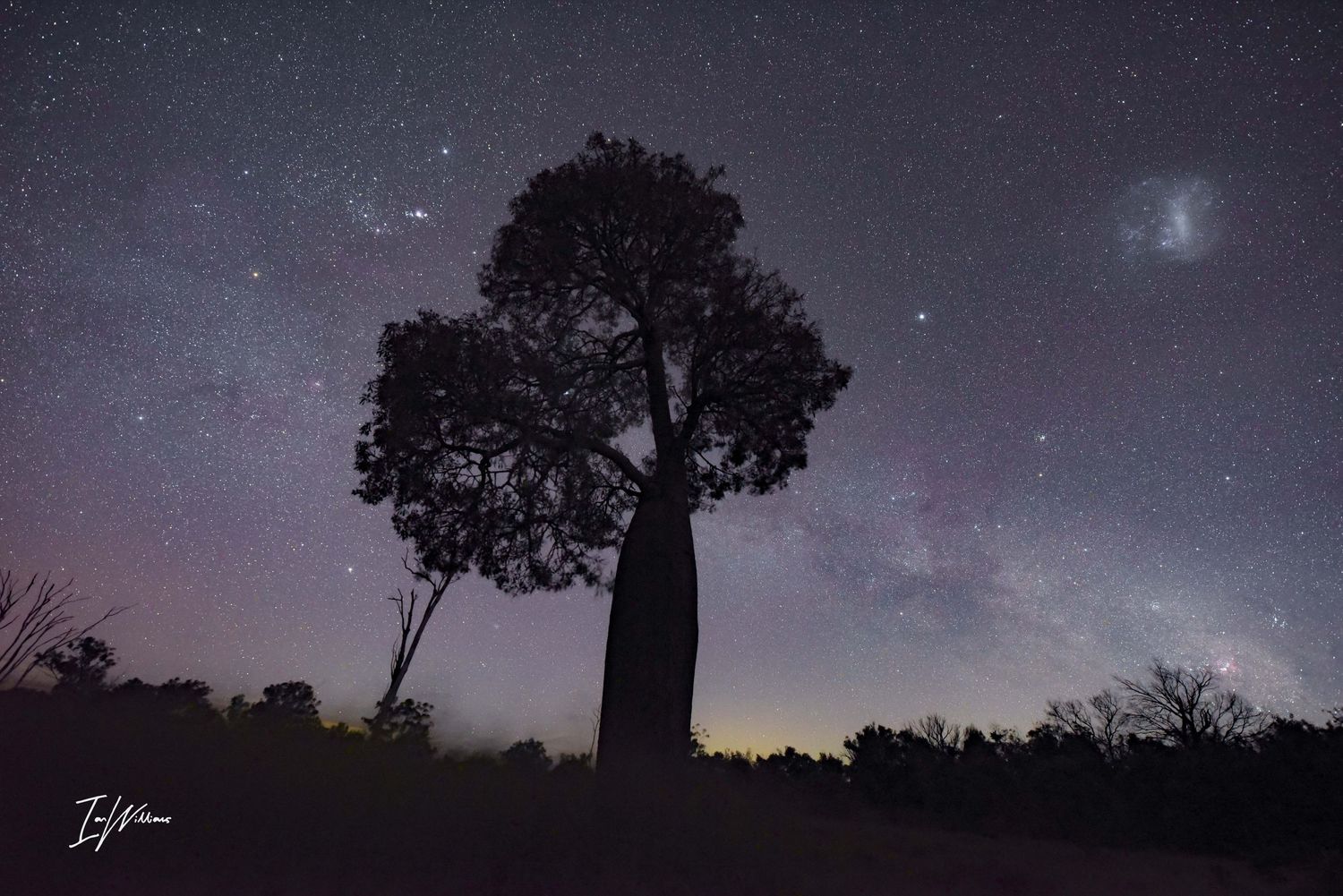
Queensland Bottle tree, Orion, Larger Magellanic Cloud and Eta Carina

A beautiful bottle tree stands proudly against the majesty of the night sky in Summer
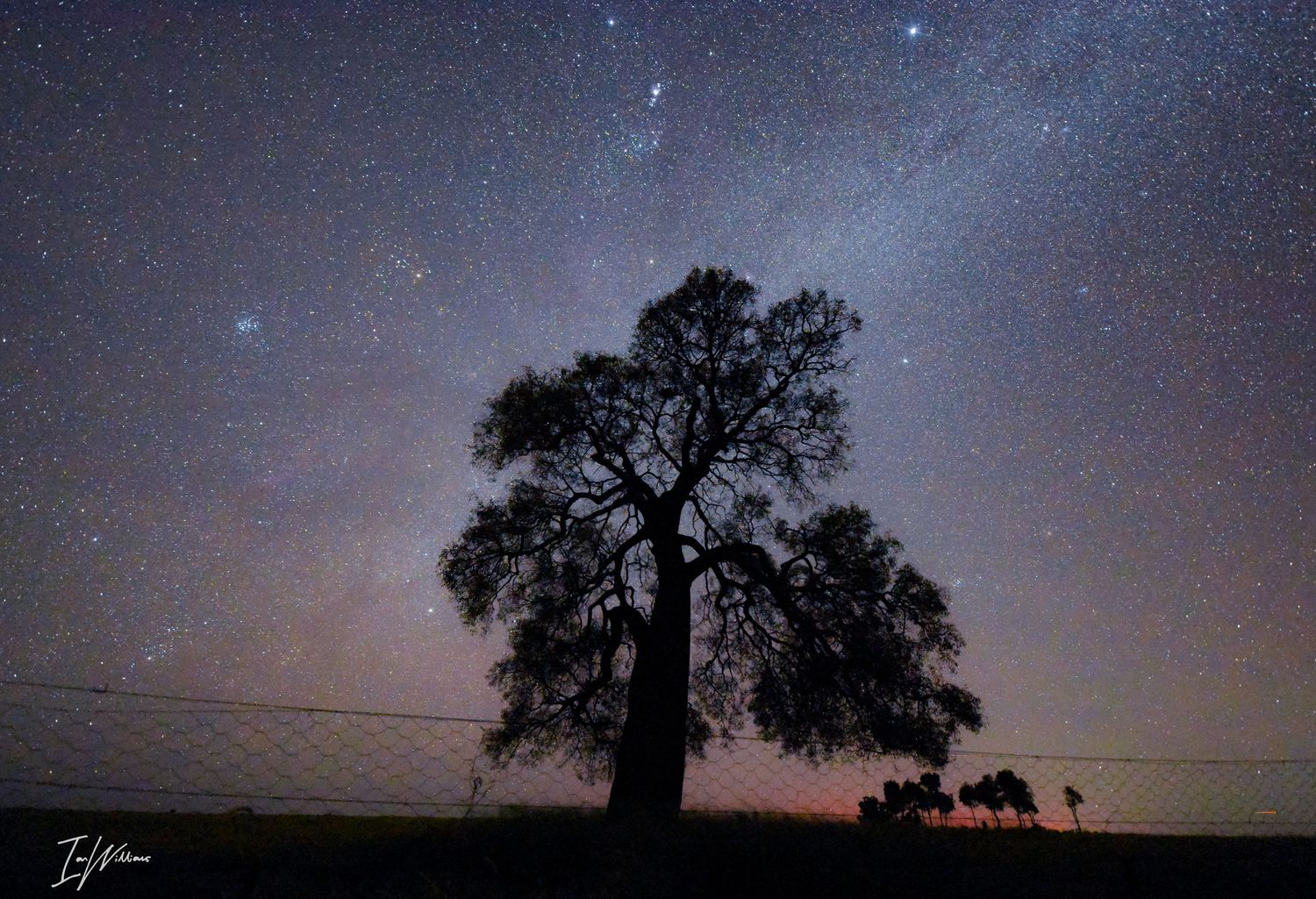

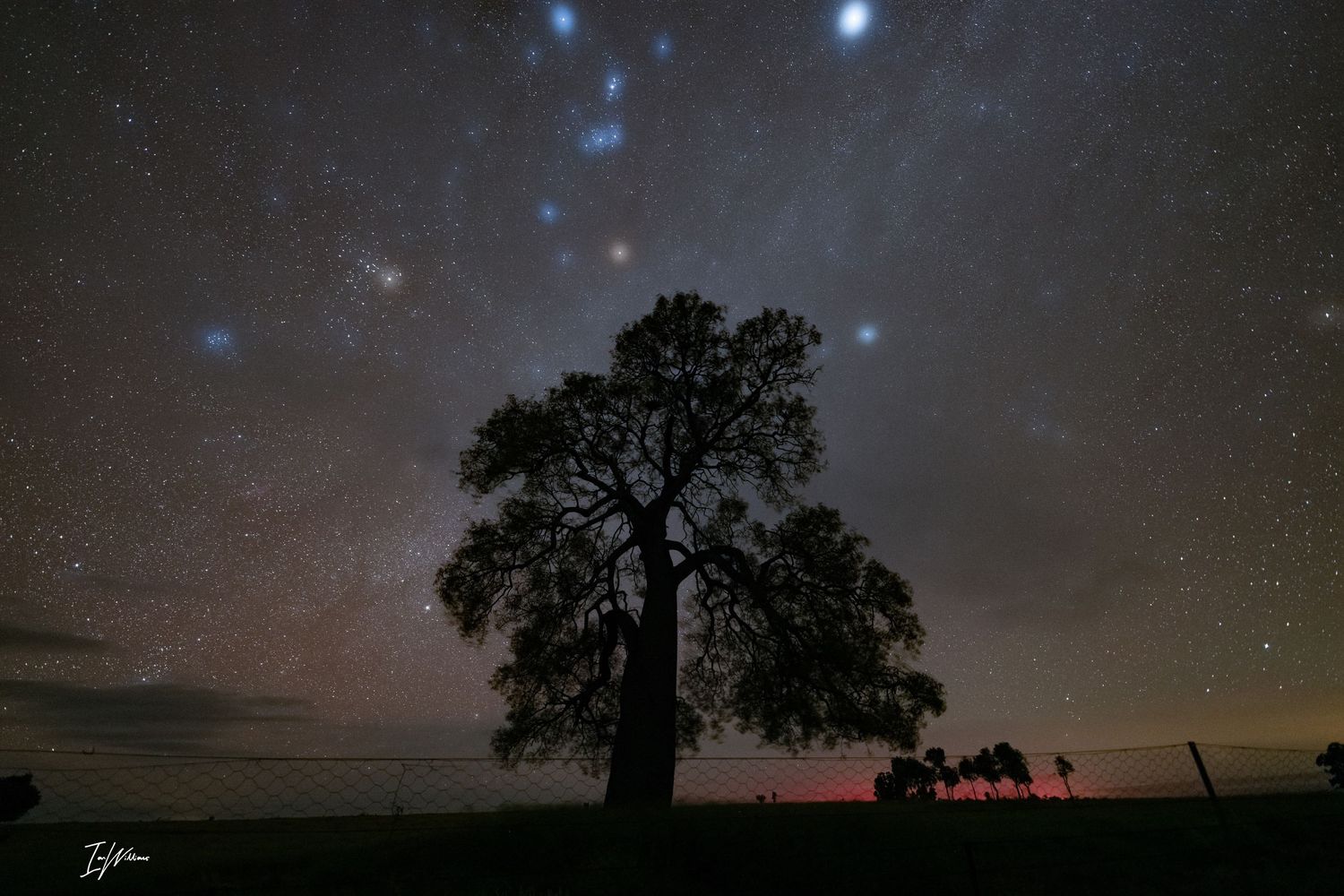
Bokeh Bottle Tree,and Dingo fence, Jimbour area, Queensland

Blue hour at RedRock Gorge
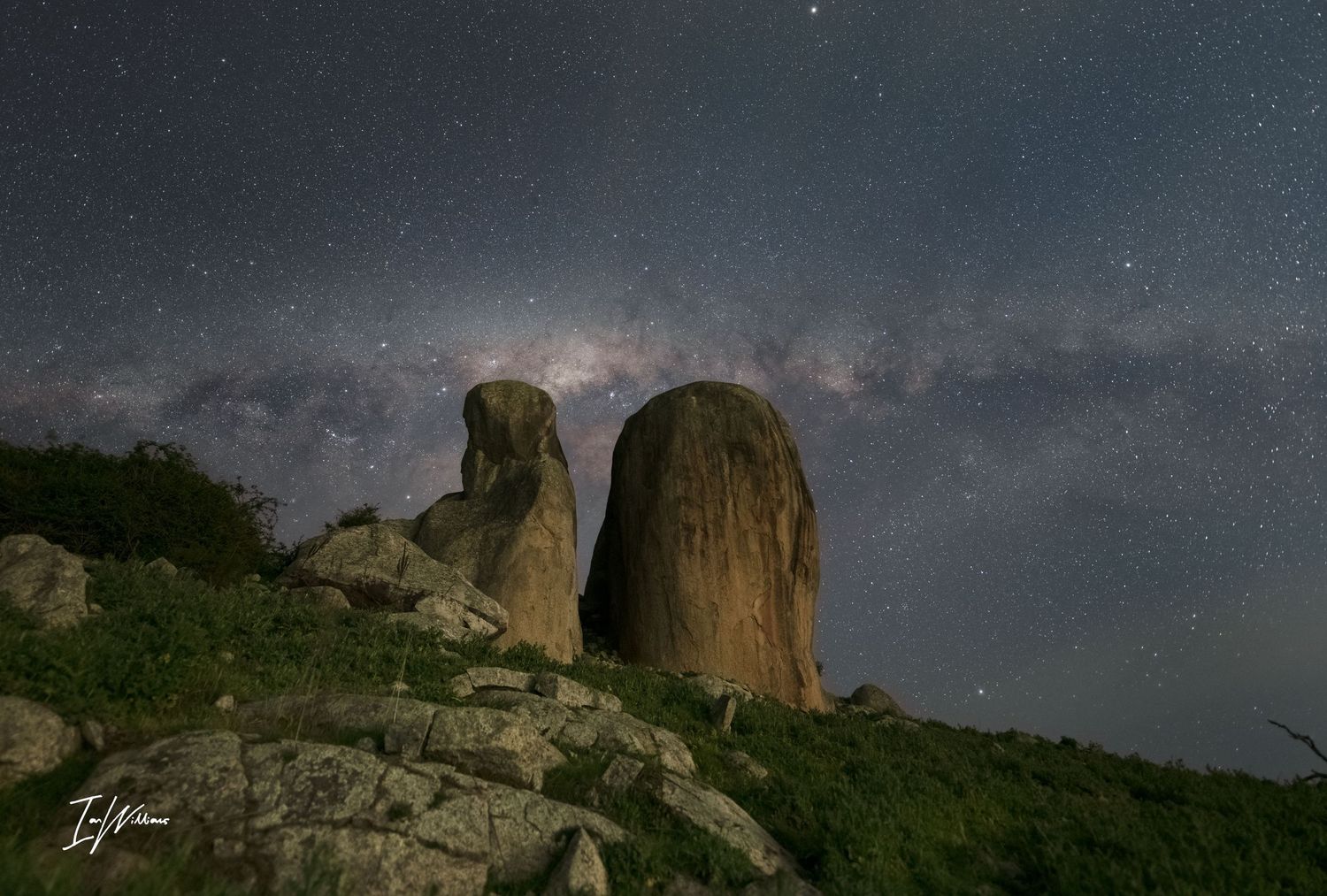
The MilkyWay core with its distinct glow sets over Castle Rocks, Australian Capital Territory, 7 October 2021

"Resilience" A Gnarly Snow Gum clings tenaciously to a west facing rock ledge in Australian's High country
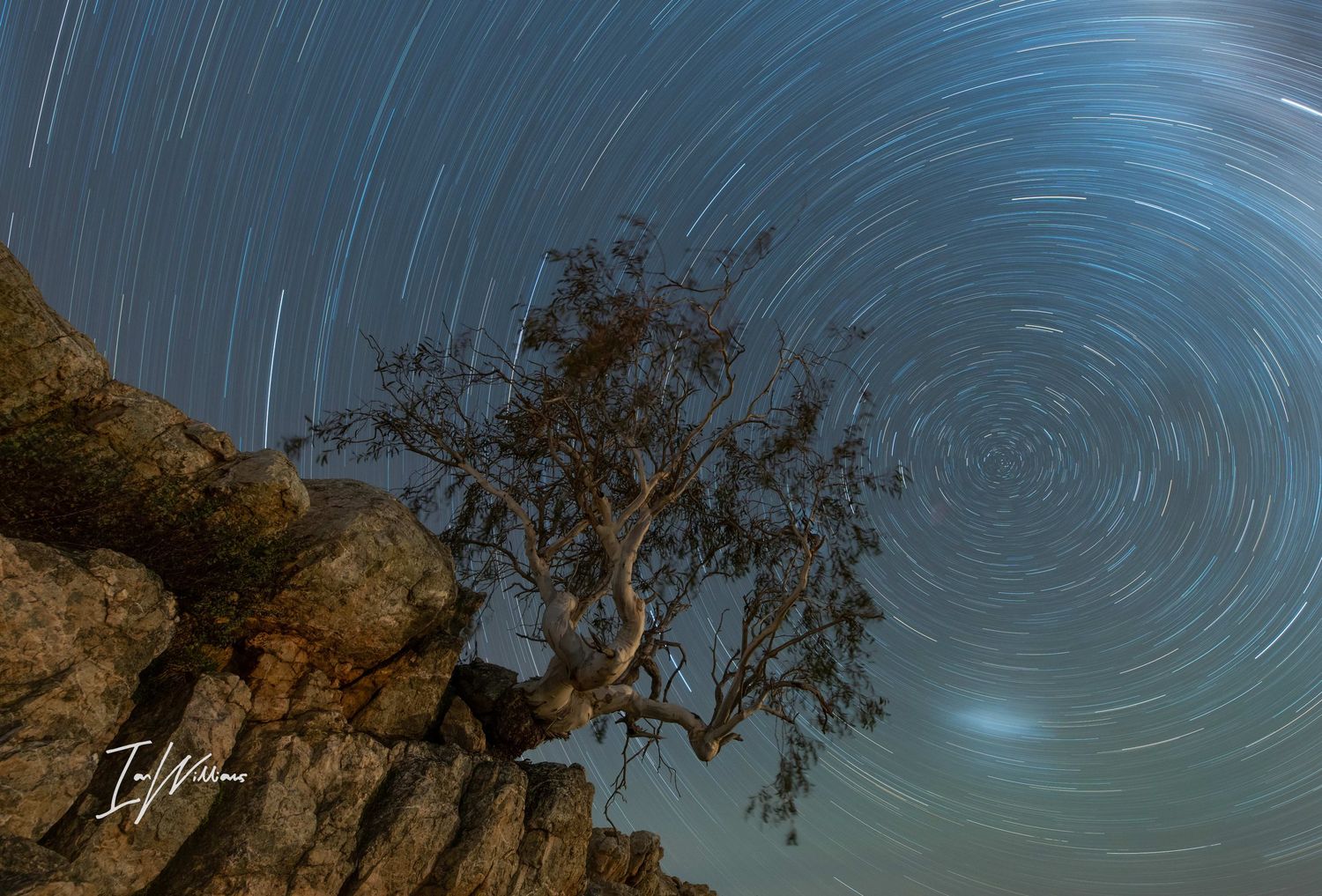
Gnarly Snow gum (Eucalyptus pauciflora) and star trails of southern sky

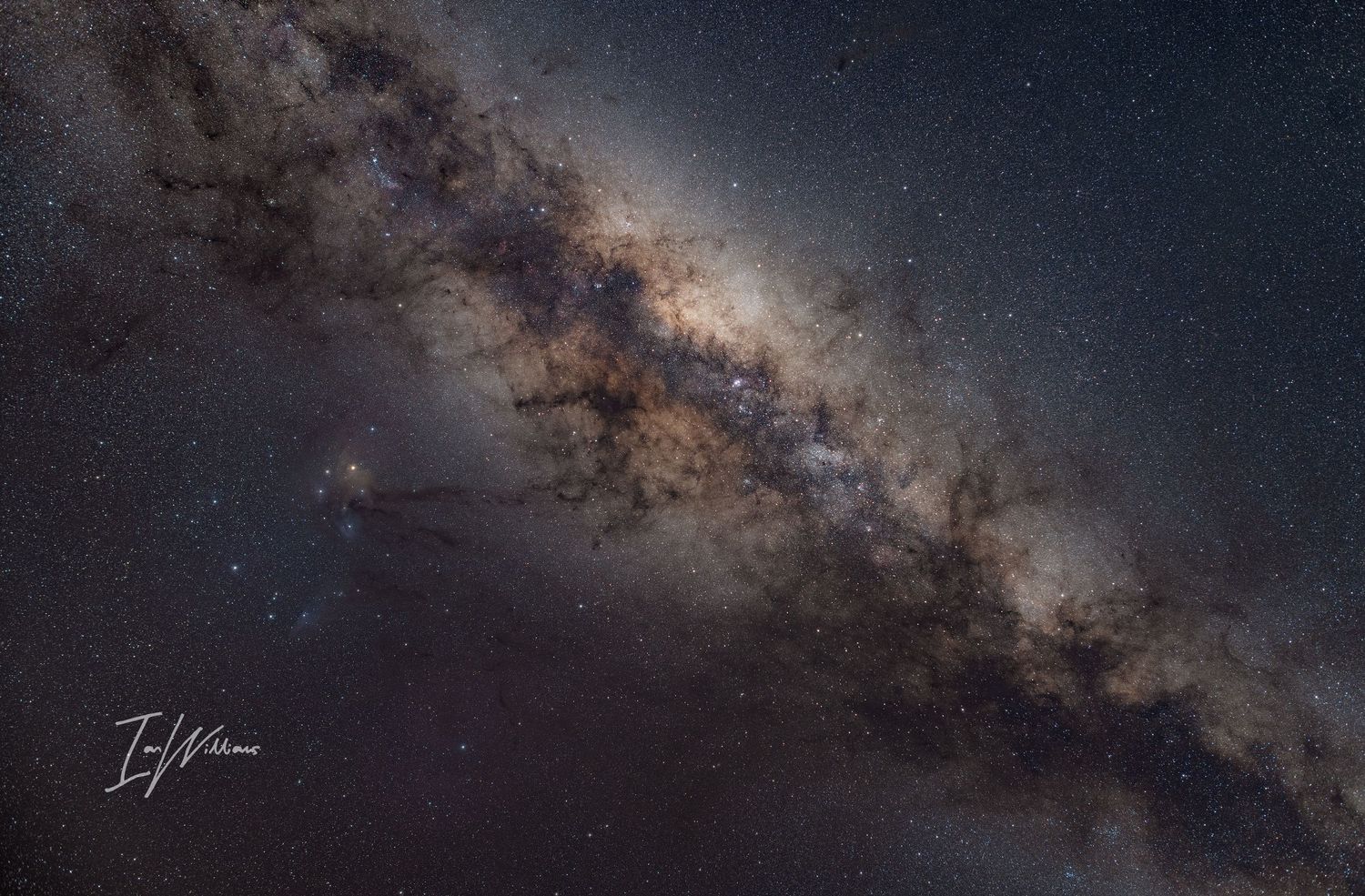
The sweep of the Milky Way 1 August 2021 Namadgi National Park

Moon and Milky Way rise over Glass house rocks, Narooma, NSW

The delicate patterns of the the Milky Way core near Scorpius as it rises over The Rock, NSW on 28 May 2021

View of a bushranger - Melville Caves, Victoria

Milky Way, Jupiter and Saturn and Zodiacal light over the Molonglo River, NSW

The Grass Tree (Xanthorrhoea australis) is unique to Australia. This group is ideally placed to silhouette the rising Milky Way despite its location near a busy road.

Old shed, Milky Way rising and Venus, Narooma area, New South Wales
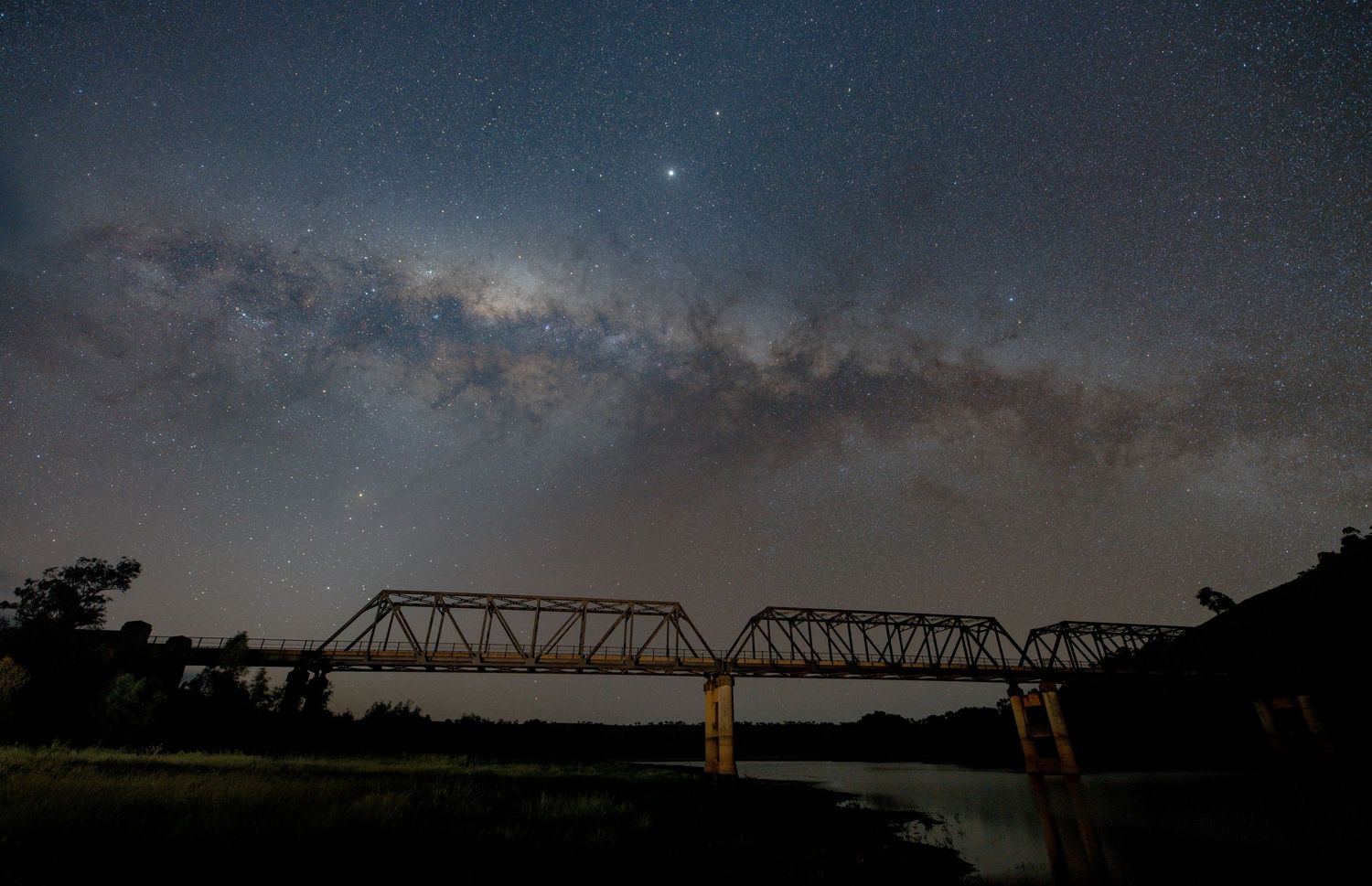
Jupiter, Saturn, Milky Way, Zodiacal light over Taemus Bridge, Yass area NSW

Summer star trails above Taemus Bridge showing stars north and south of the celestial equator (the opposite curves seen north and south of the constellation Orion

Rising moon and Milky Way rising over 1830s dairy, Braidwood area, NSW
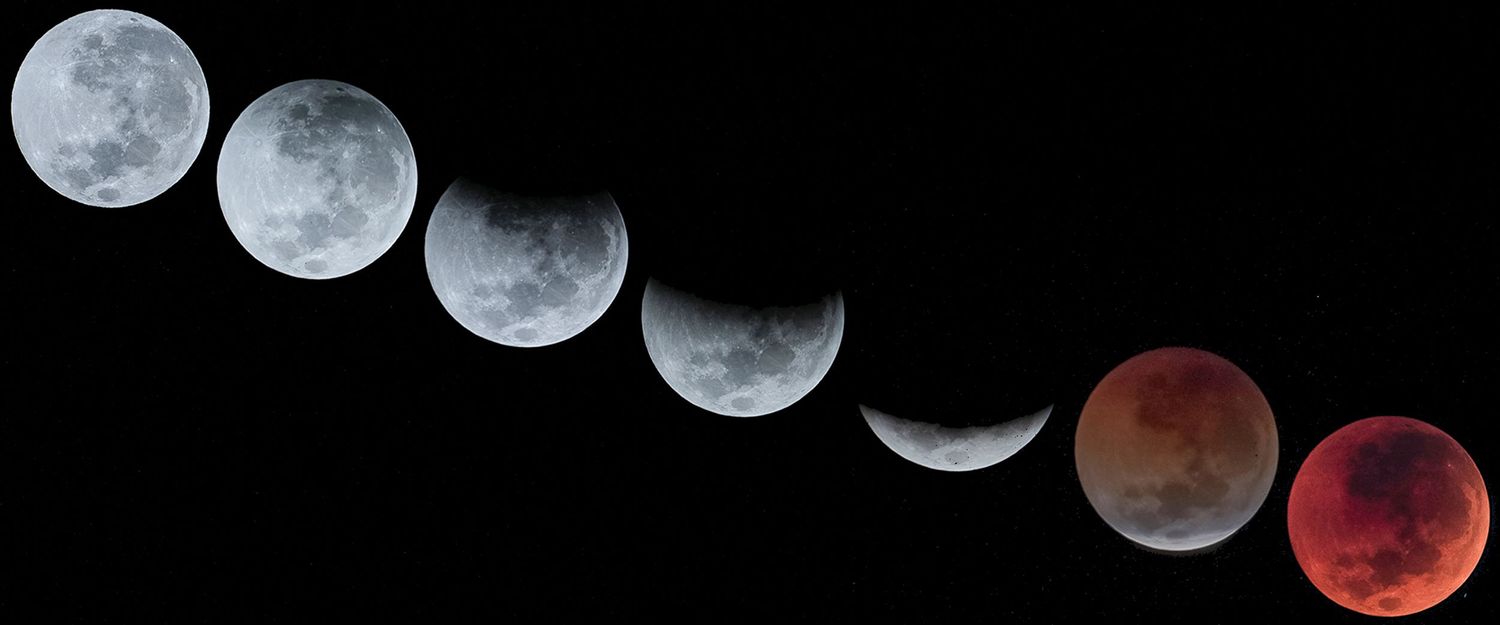
A composite shot showing seven stages of the total lunar eclipse in 2018
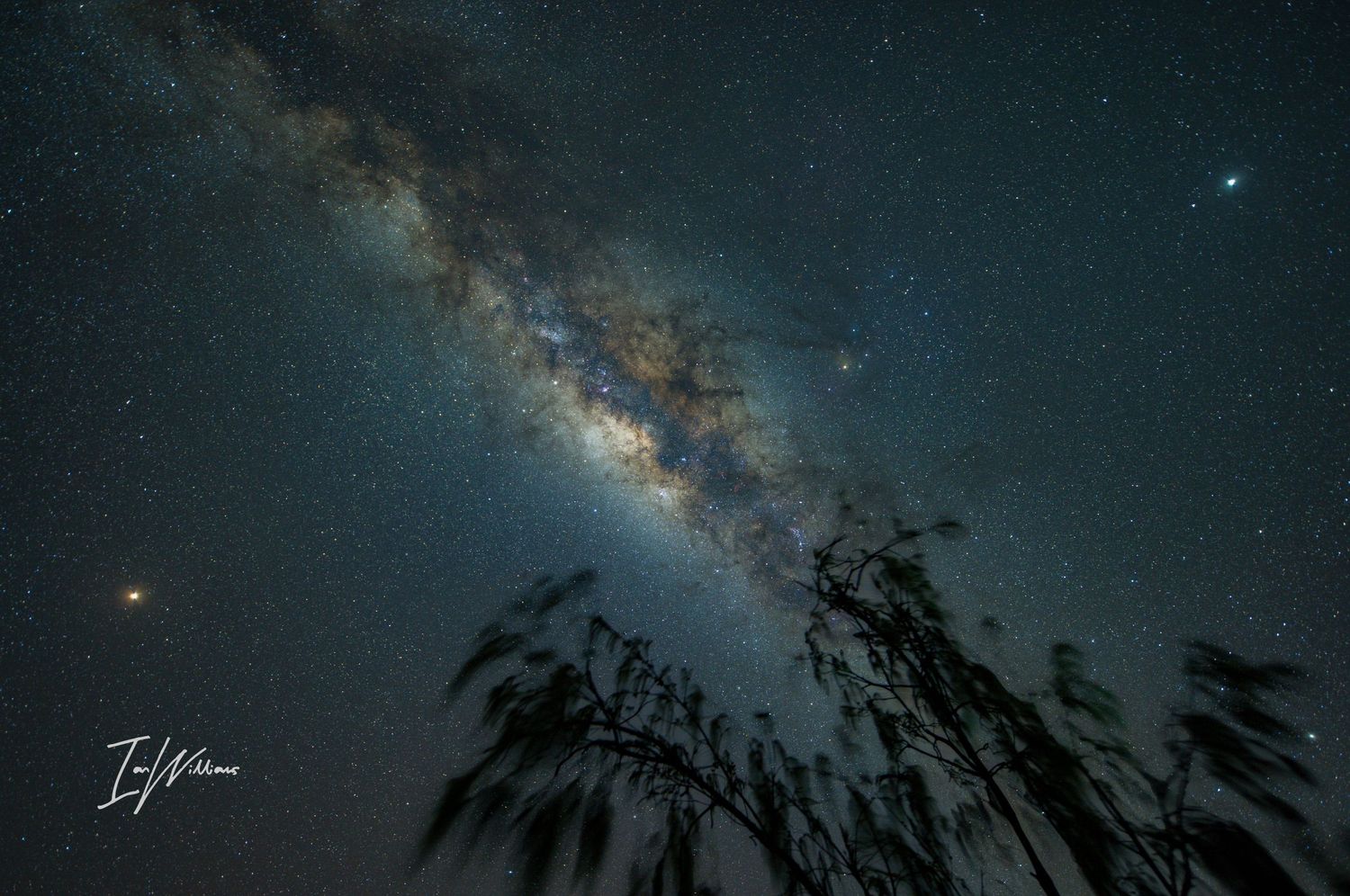
Mars (to left), Milky Way and Jupiter (to right) Thala Beach, North Queensland