Aurora Australis
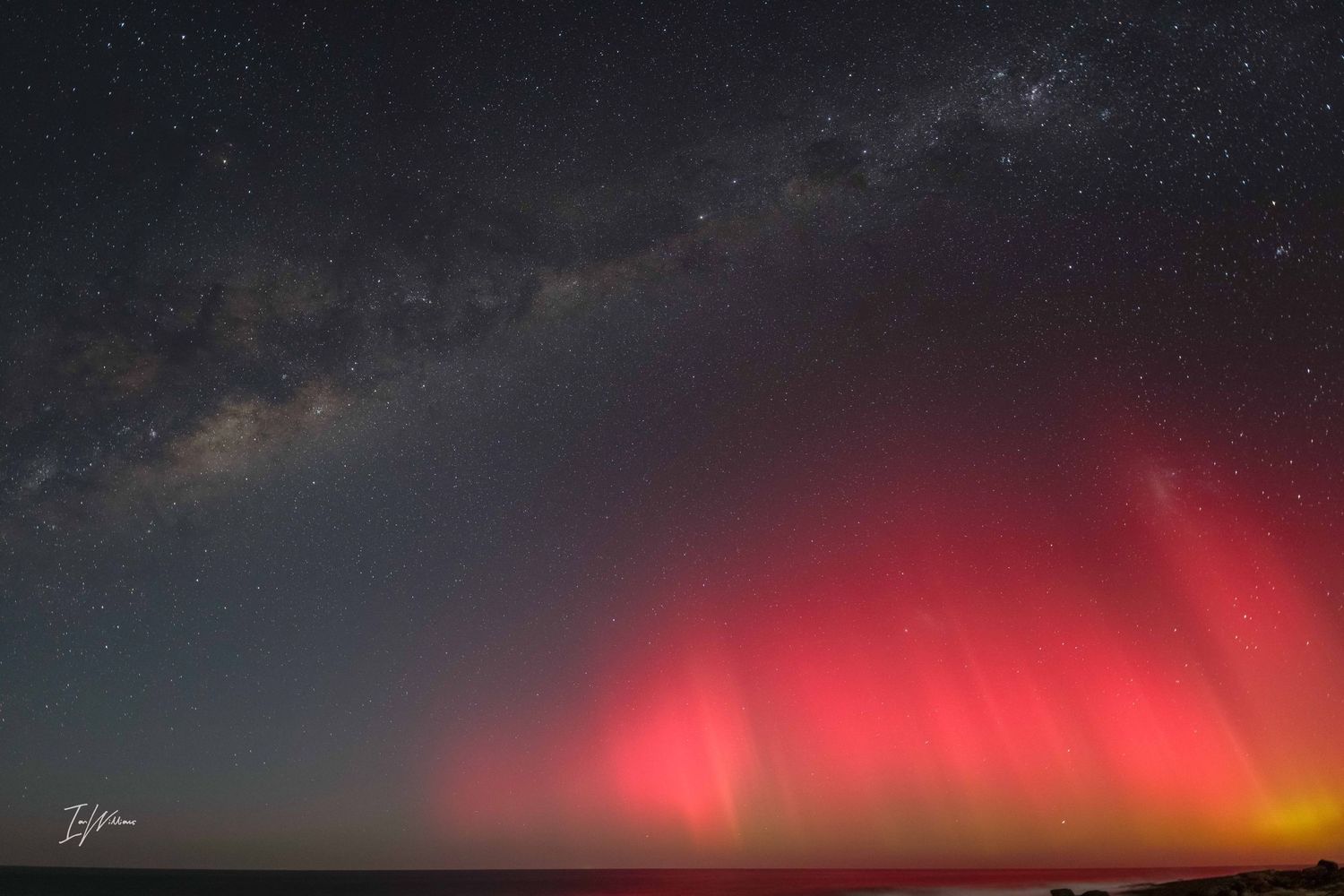
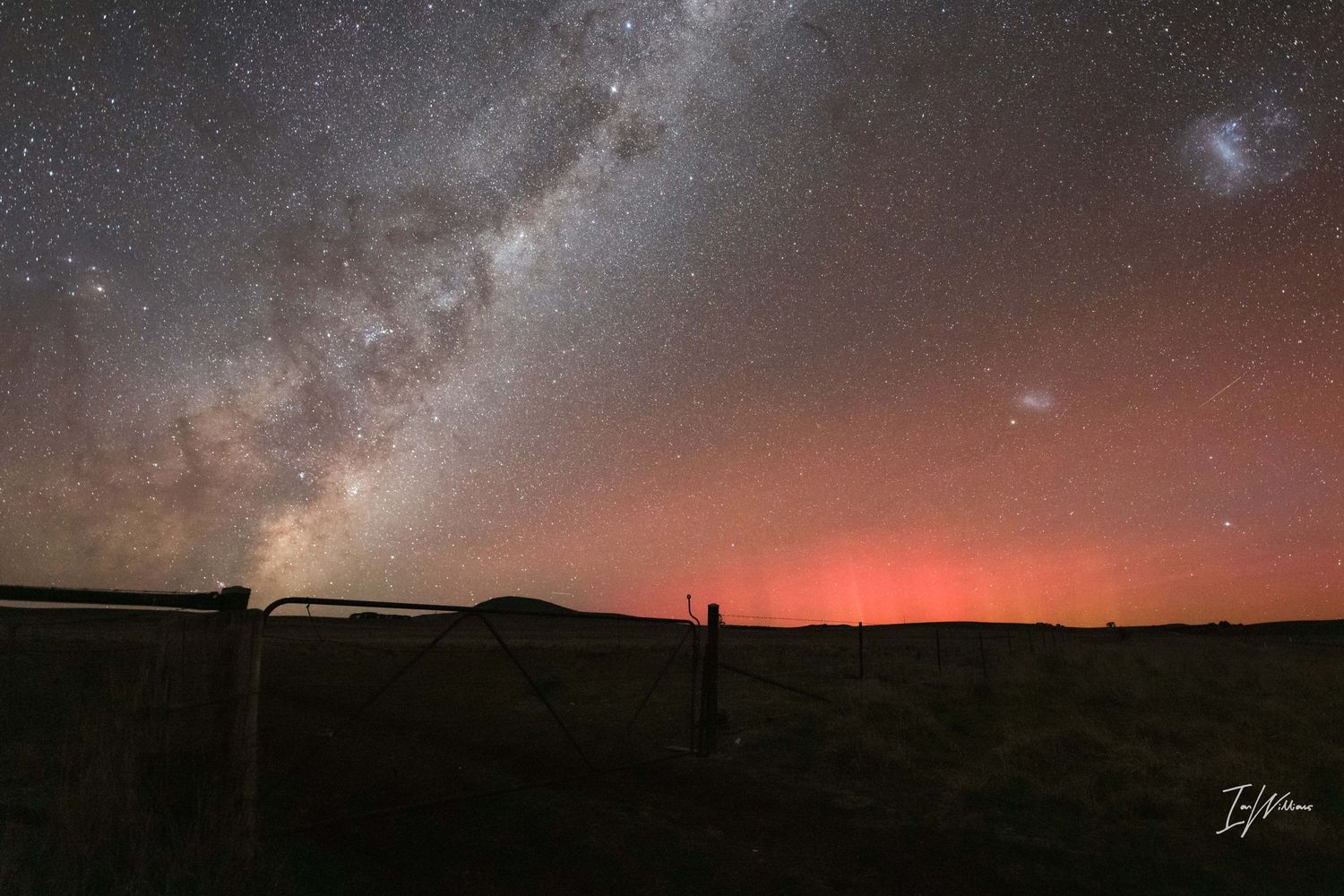
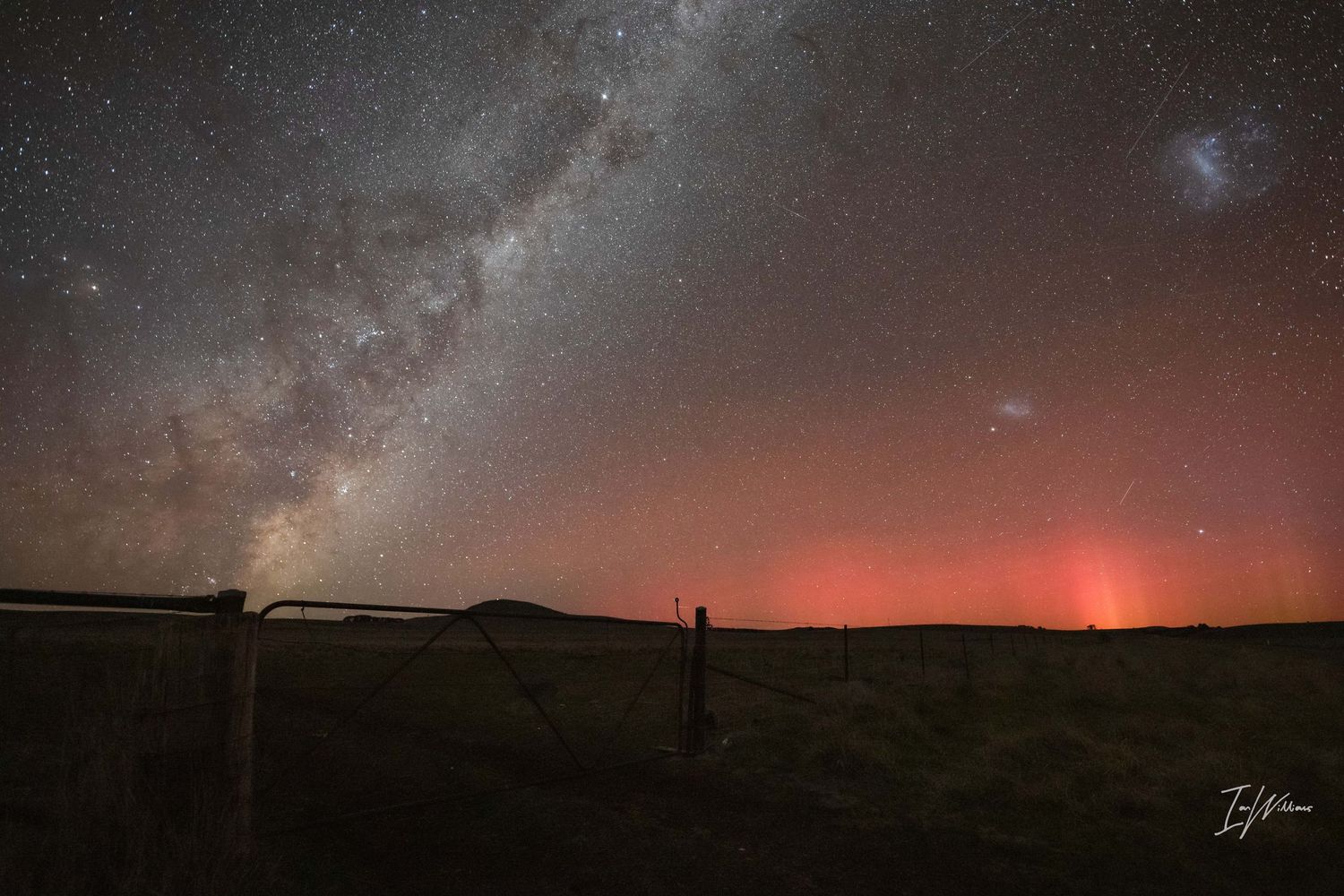
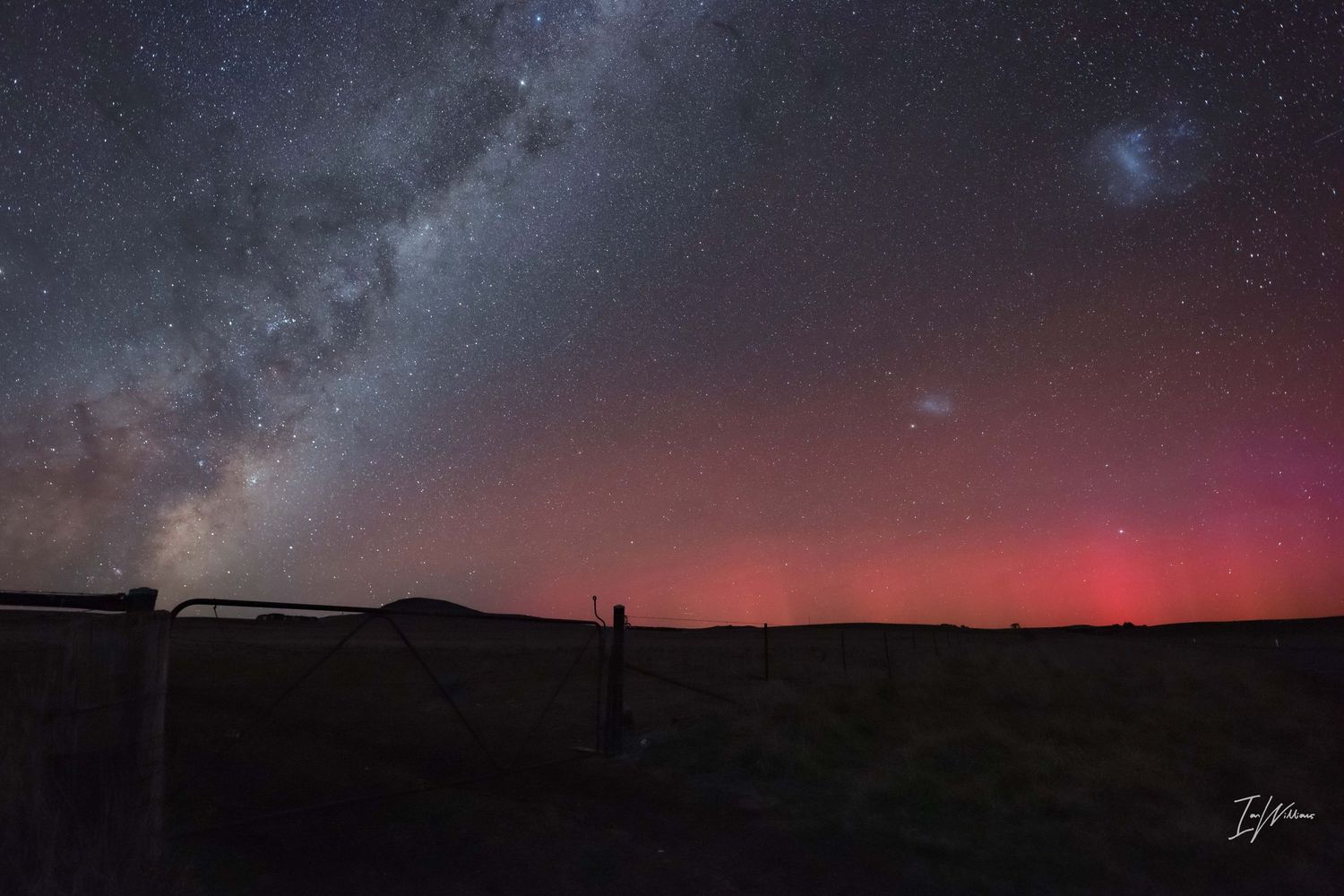
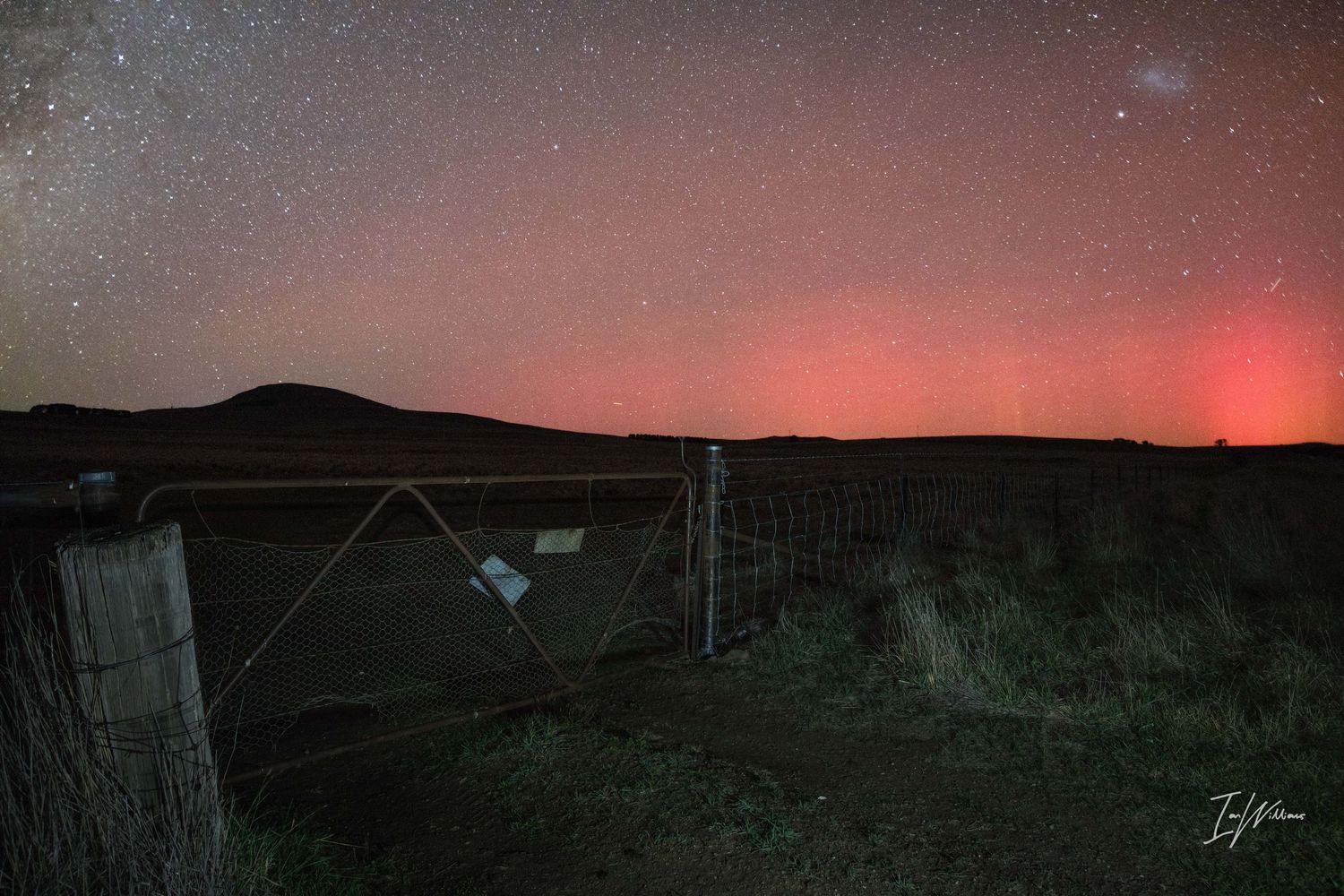
Encore after a G3 storm that occurred during our daylight hours - 11 October 2026.
This aurora was a real surprise because the figures and simulation of the auroral oval showed no auroral activity at all. The magnetic orientation of the solar wind was all wrong. Despite this, there was a residual auroral display which was crimson in colour to delight me.
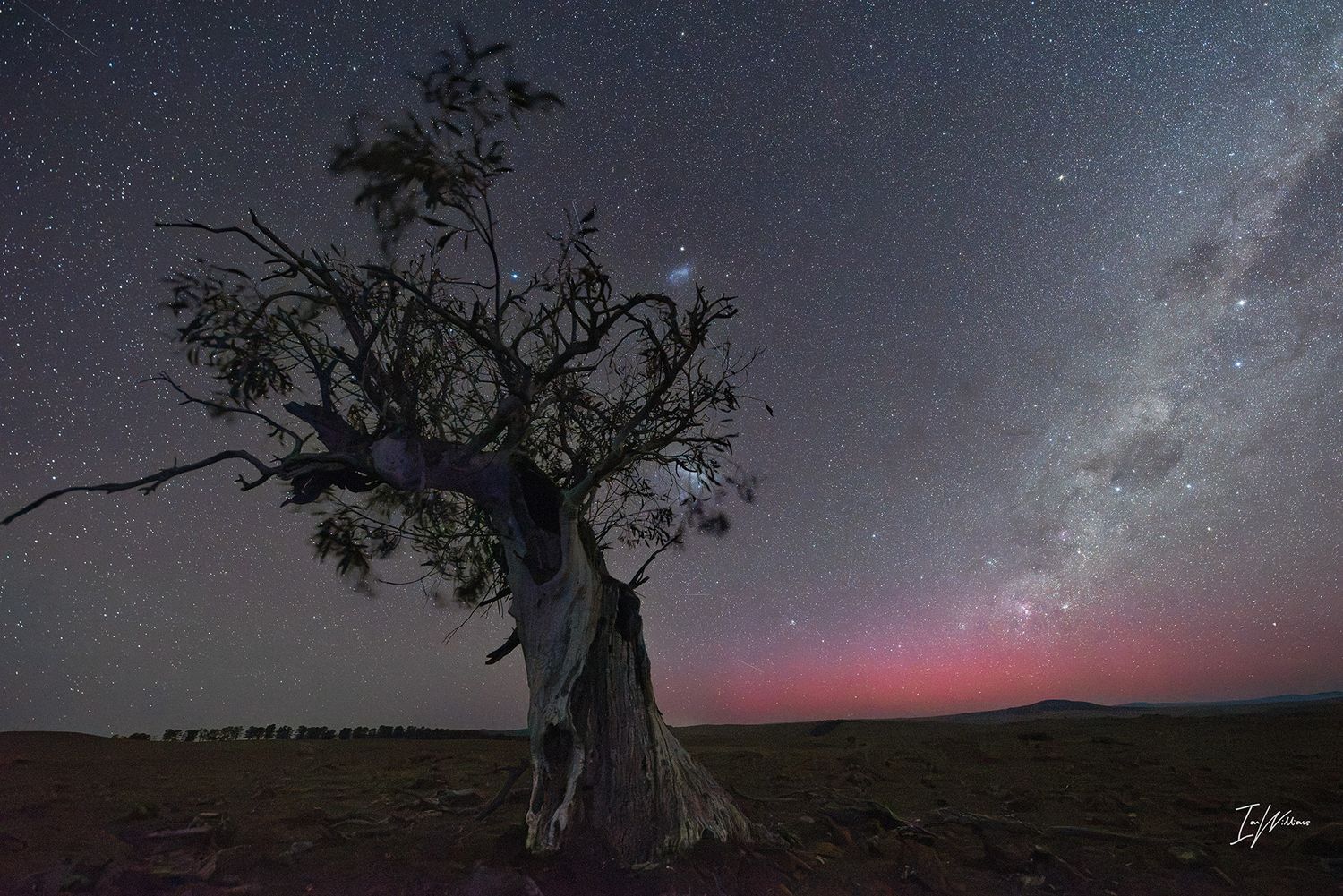
A display of the aurora always delights. Loved the colour of this one!
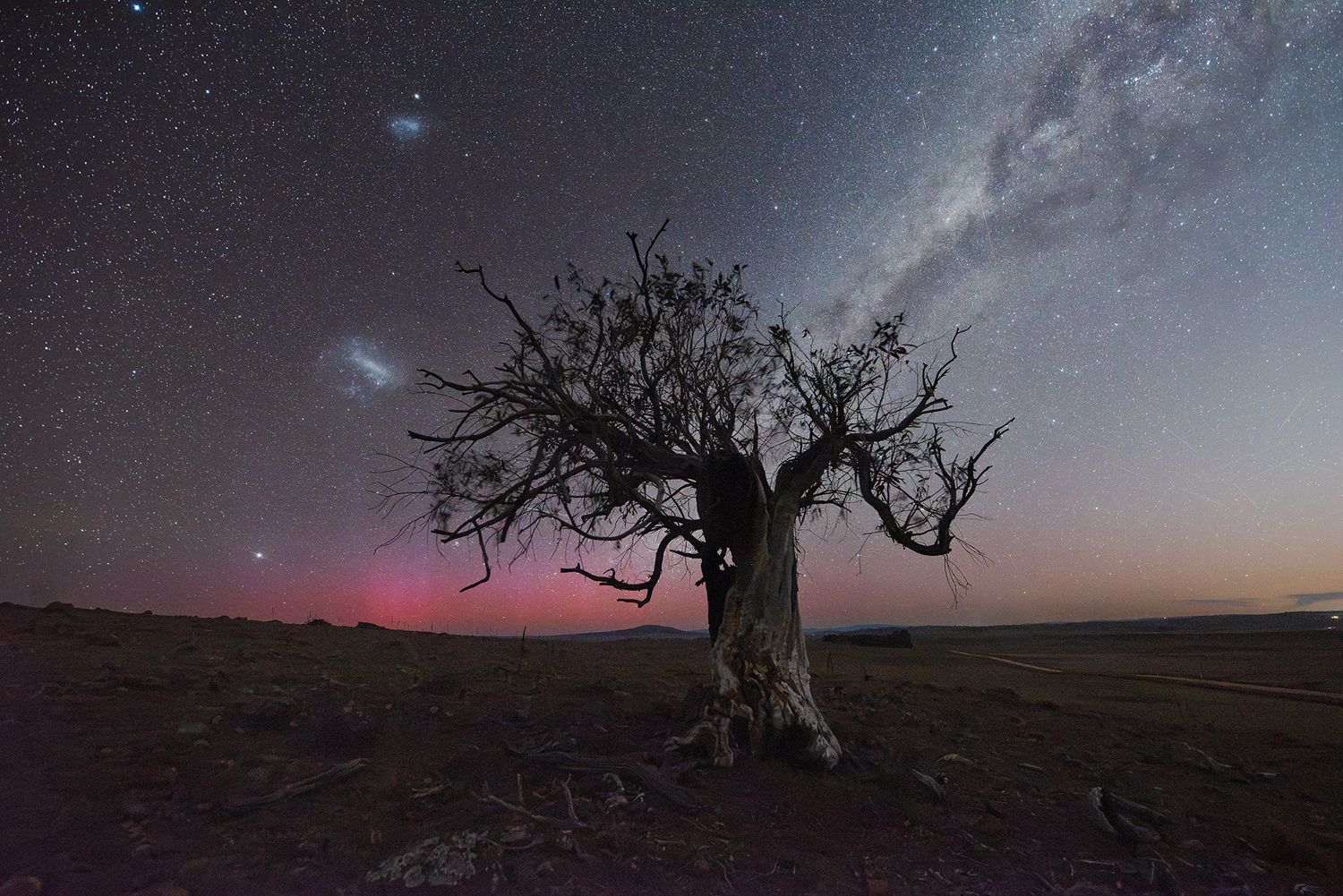
A small display of the aurora at the very tail end following G3 conditions
Some minor displays in August/September 2026
Whilst there is no doubt solar activity is tapering off, there are still some nice little displays to be captured for those that are content to put in the hours and wait for favourable conditions. Often the period of activity is short but some nice flare ups can occur.
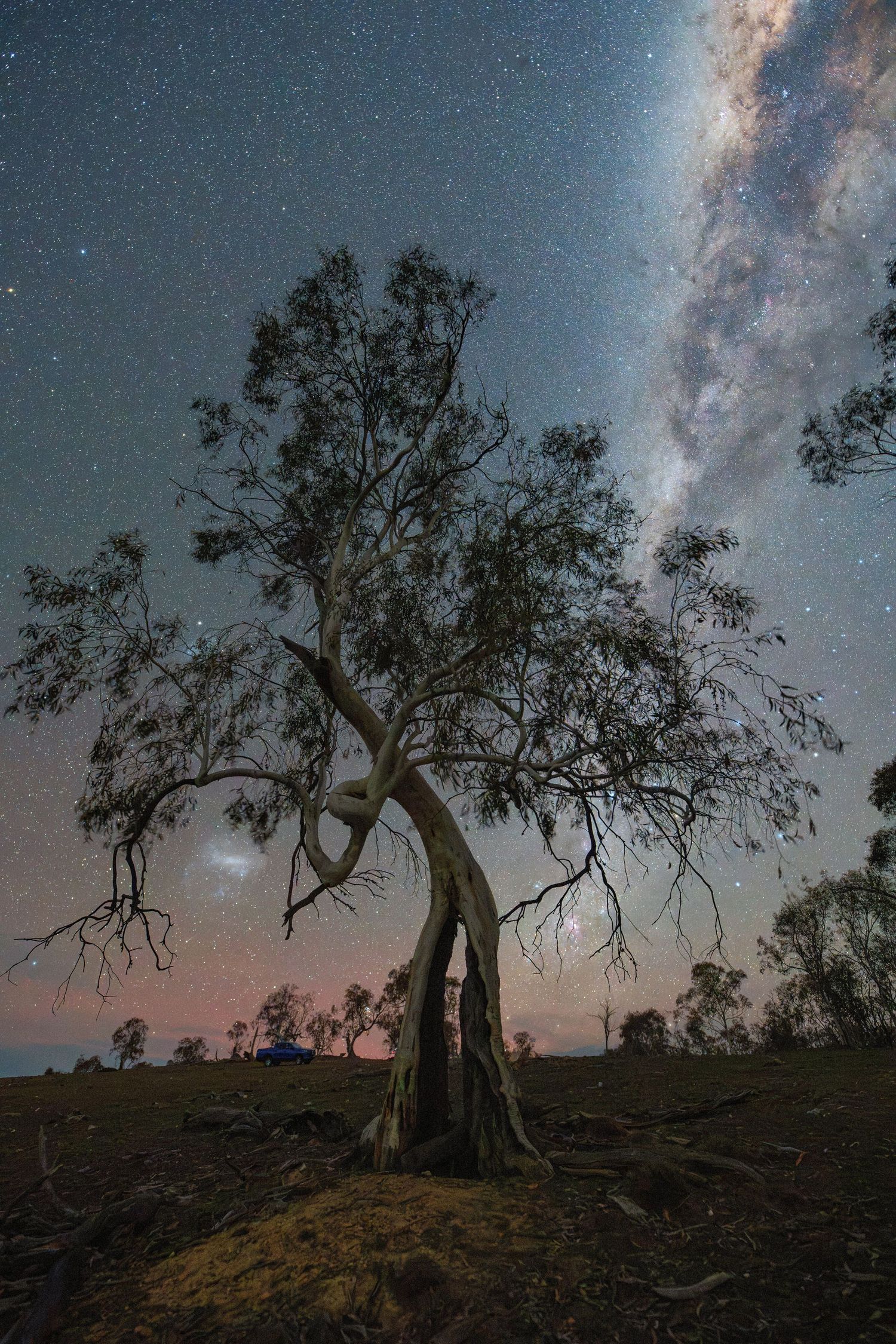
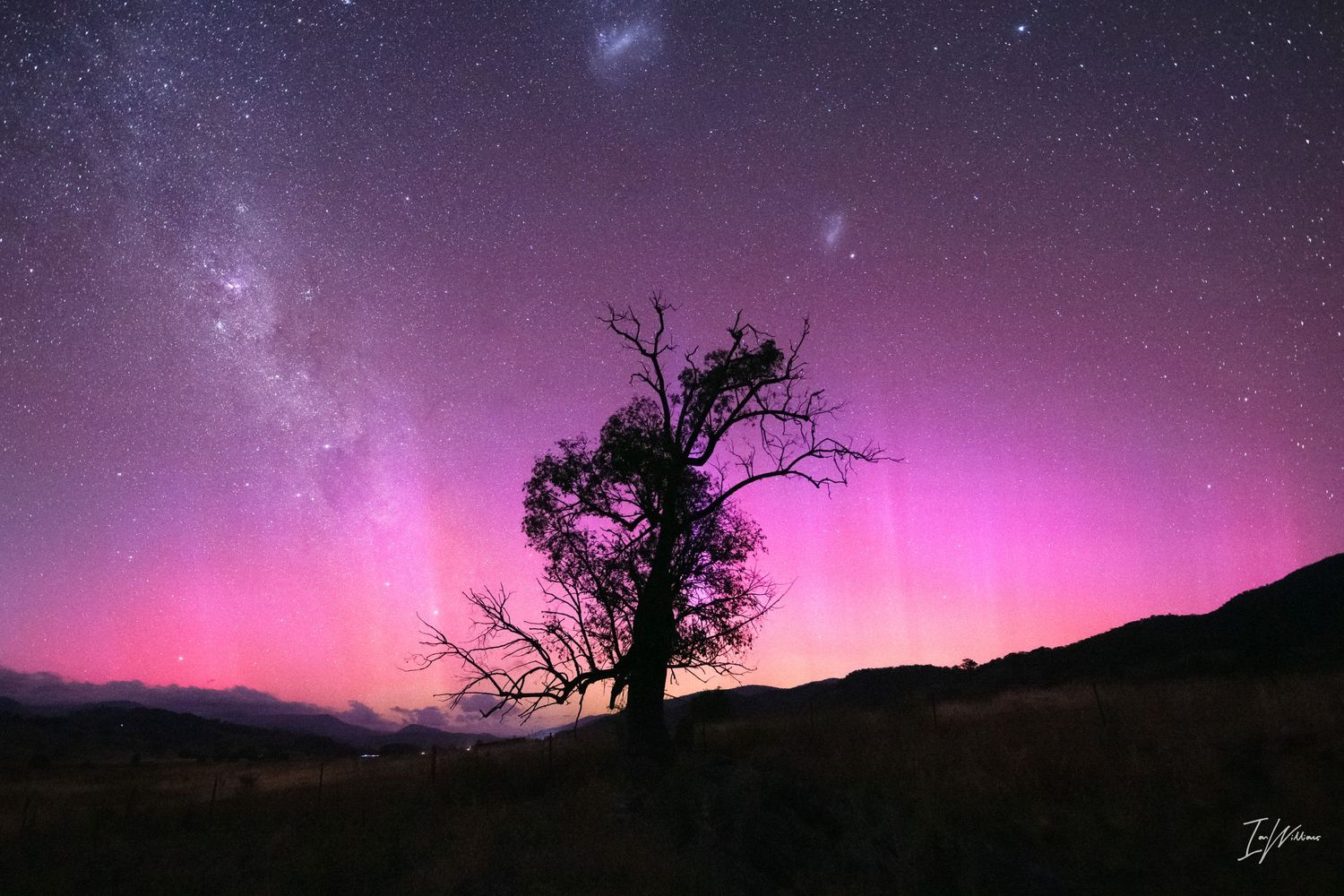
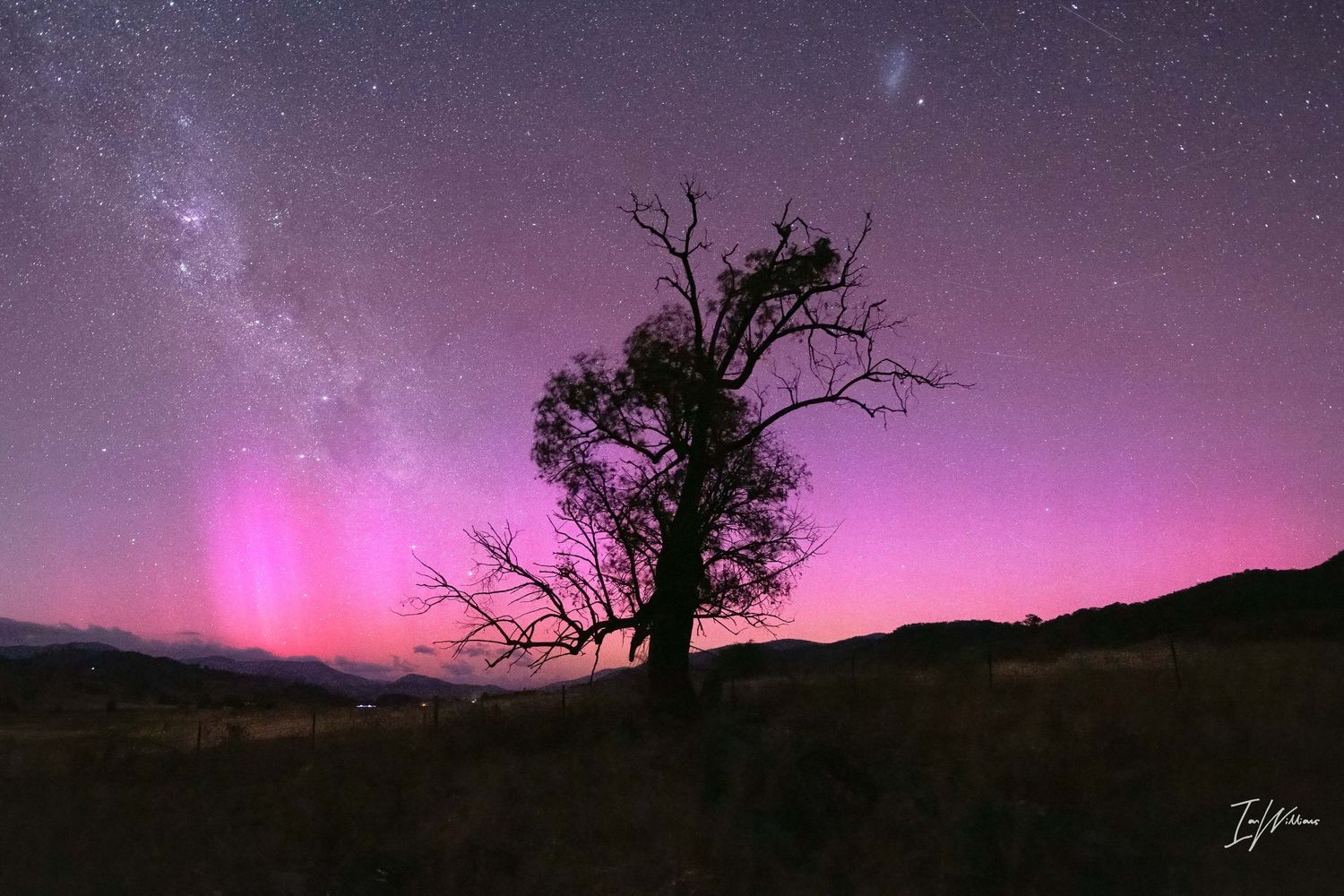
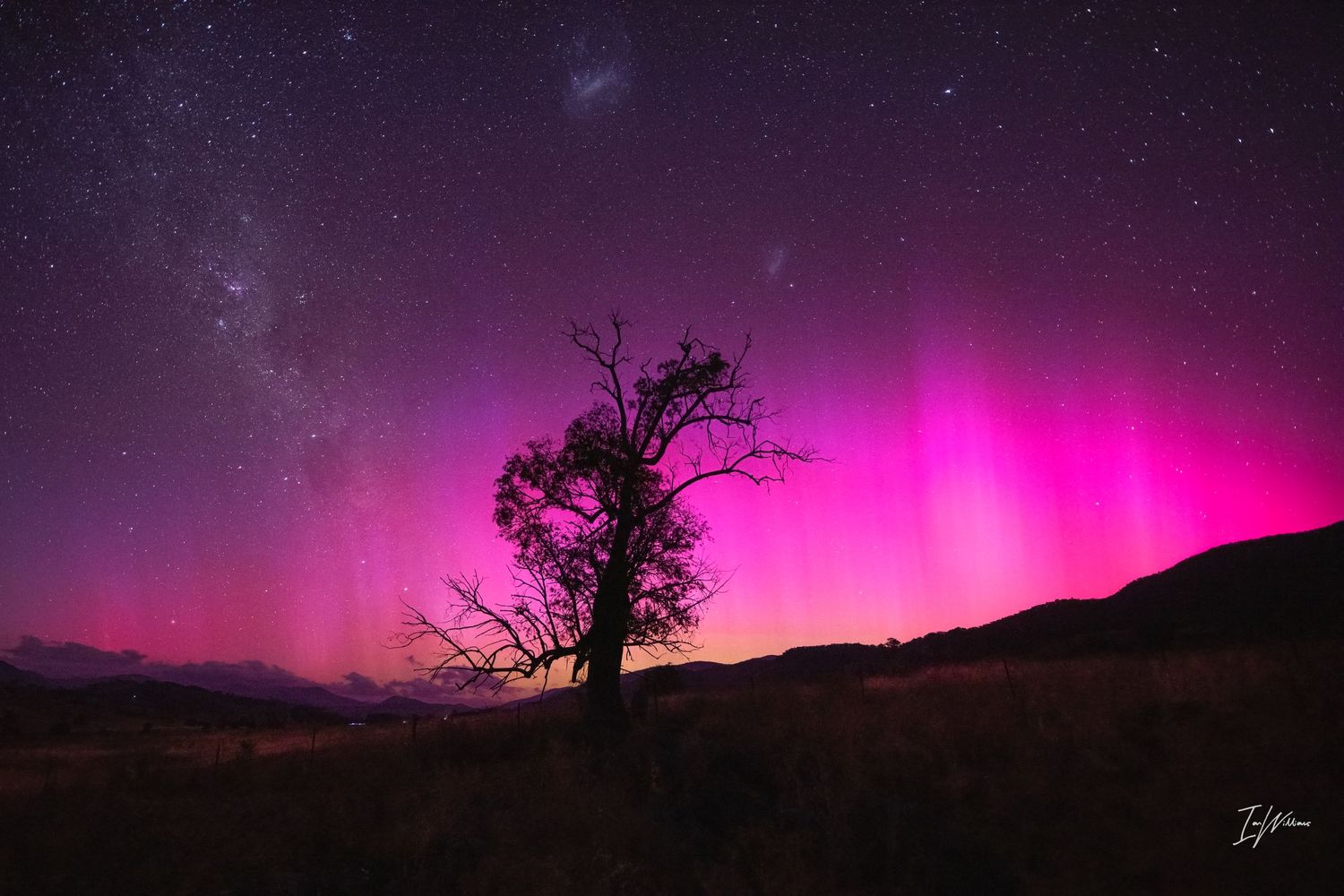
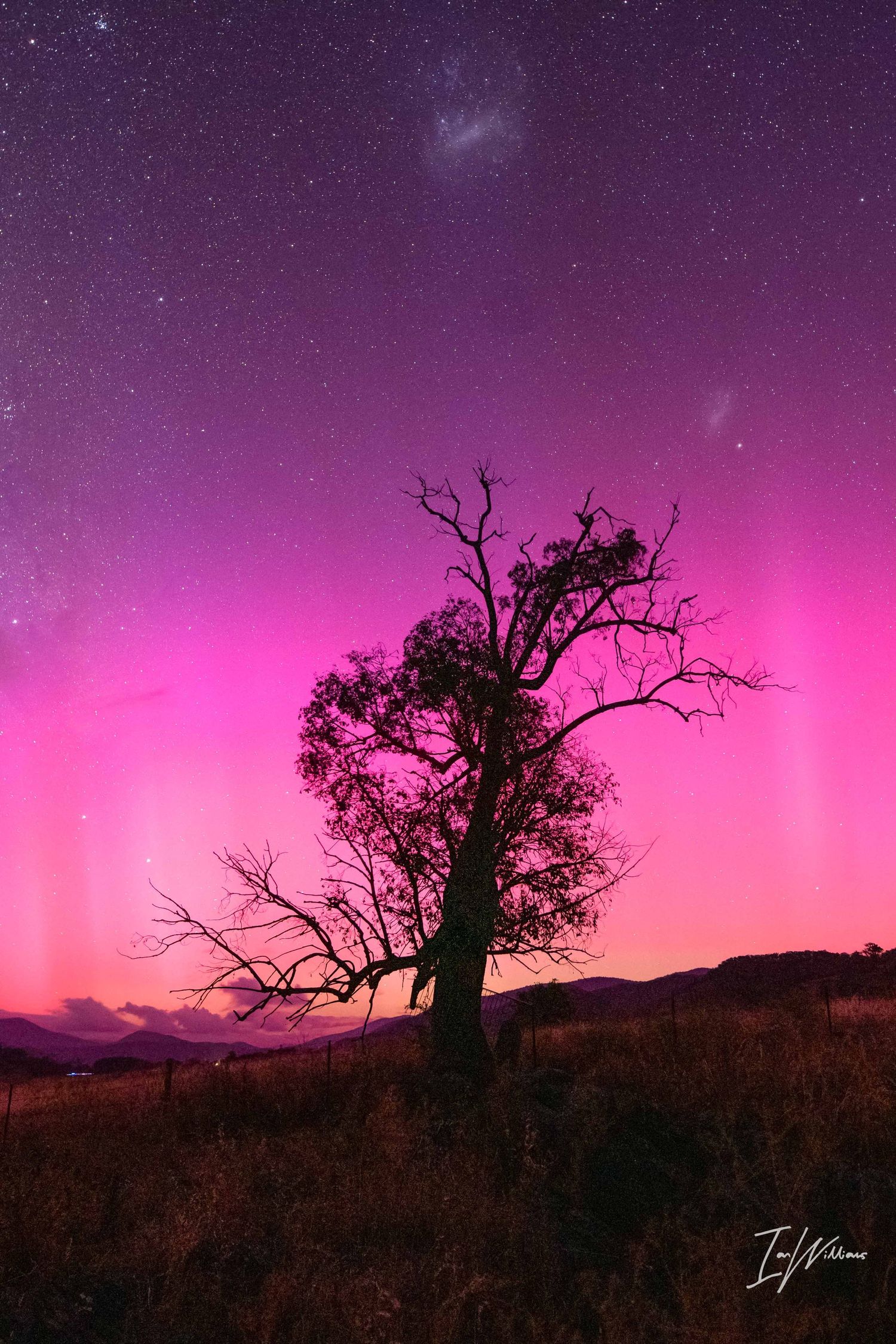
Aurora behind striking gum, Monaro area, September 2026
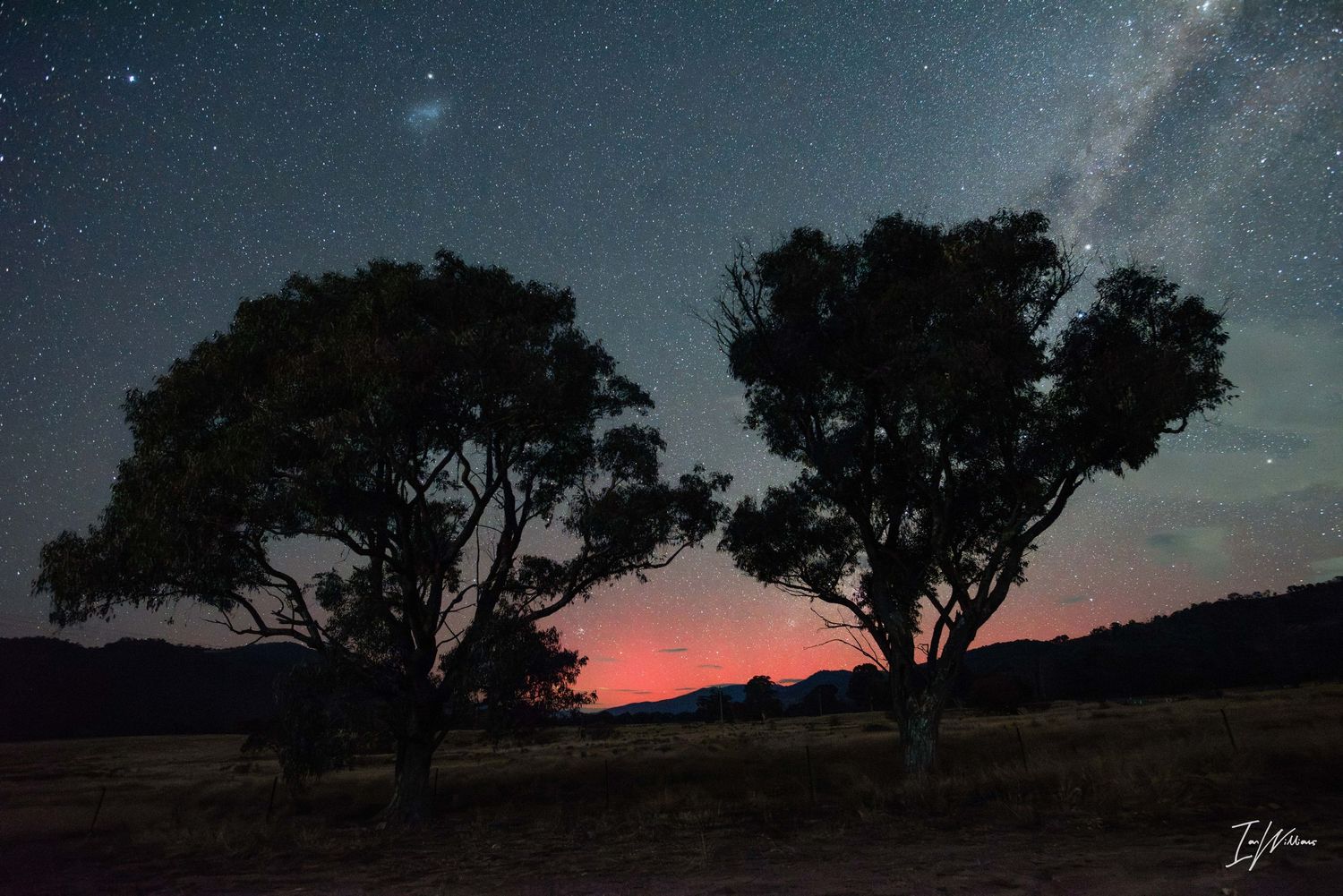
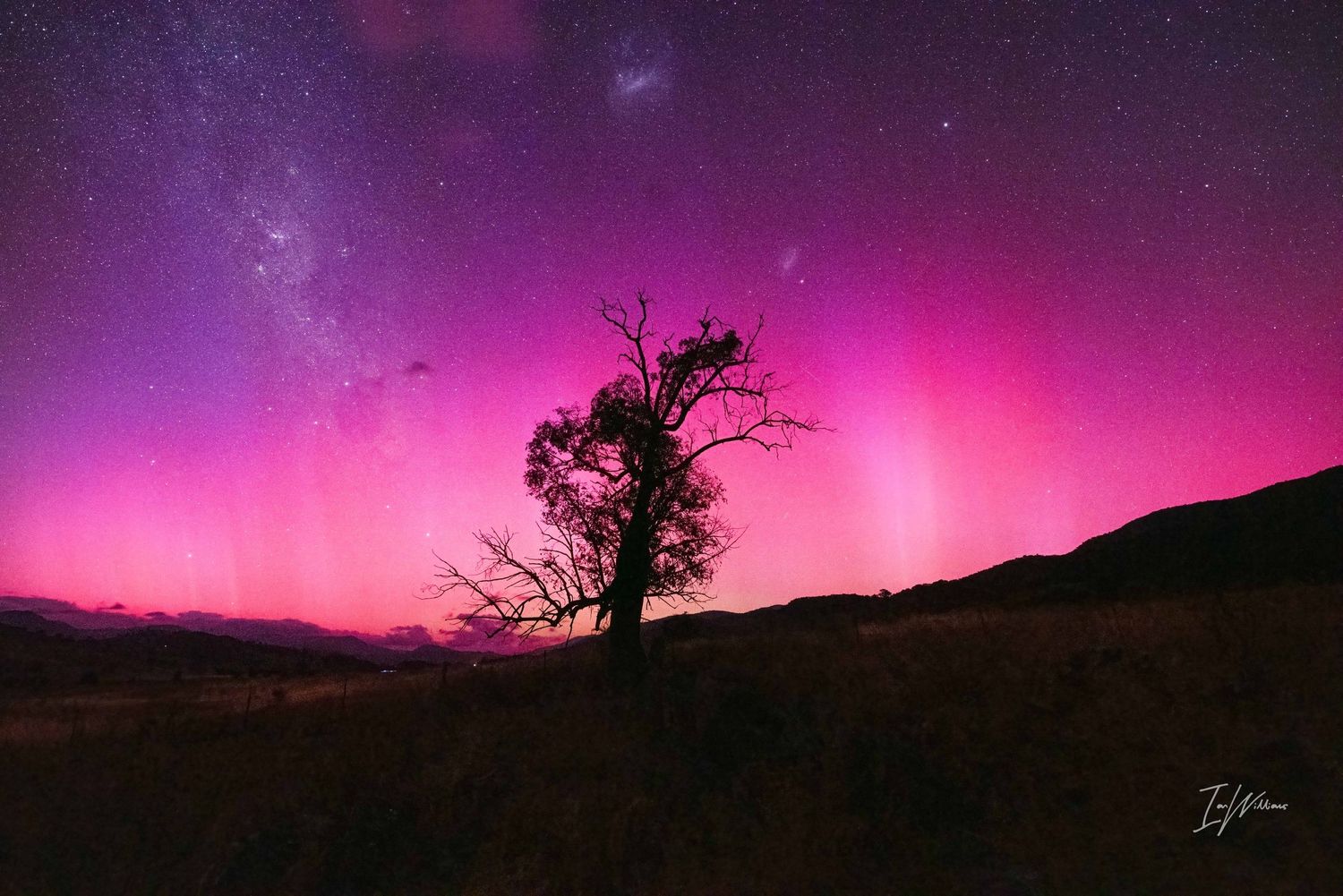
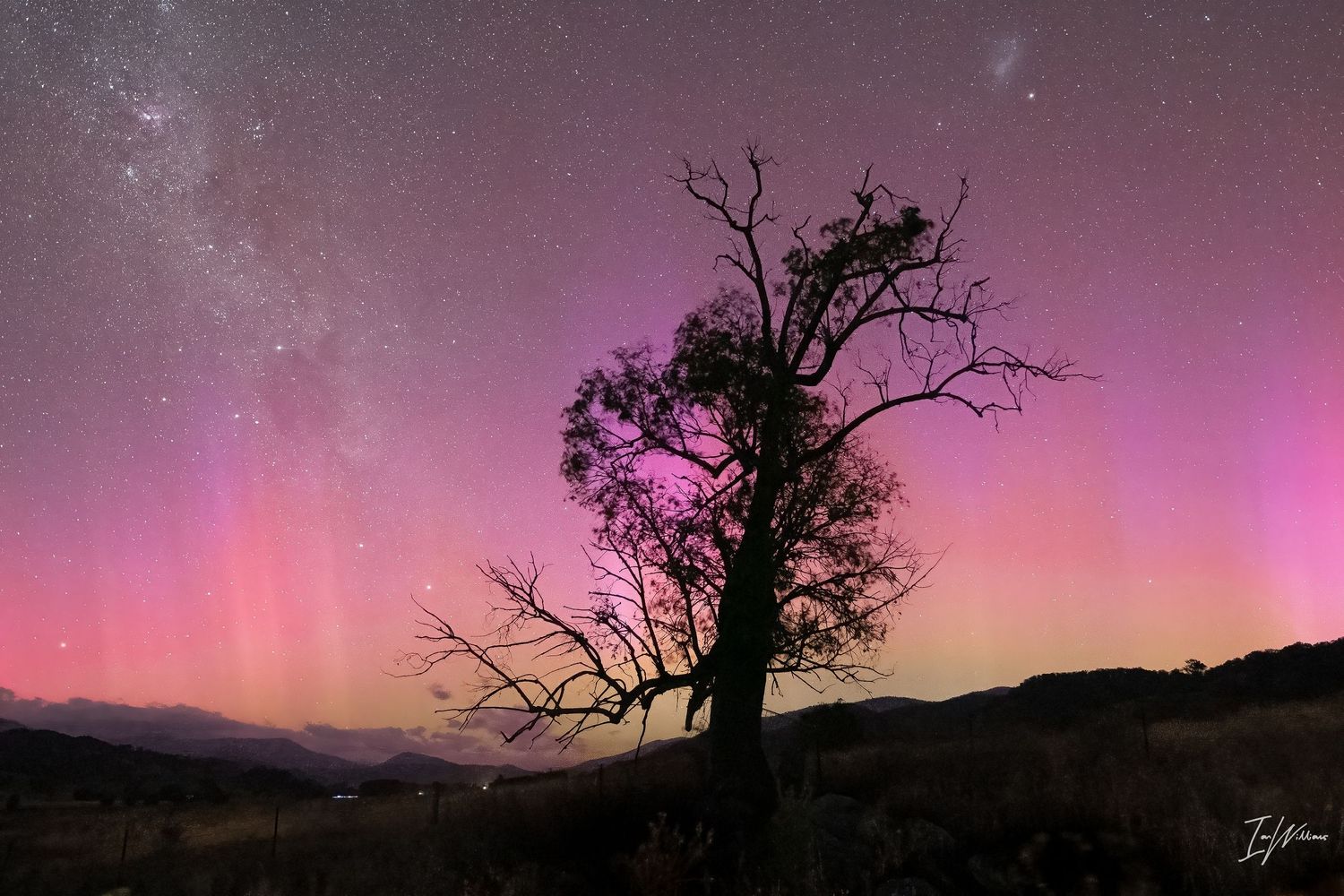
Aurora Australis, Tharwa area, ACT, Australia
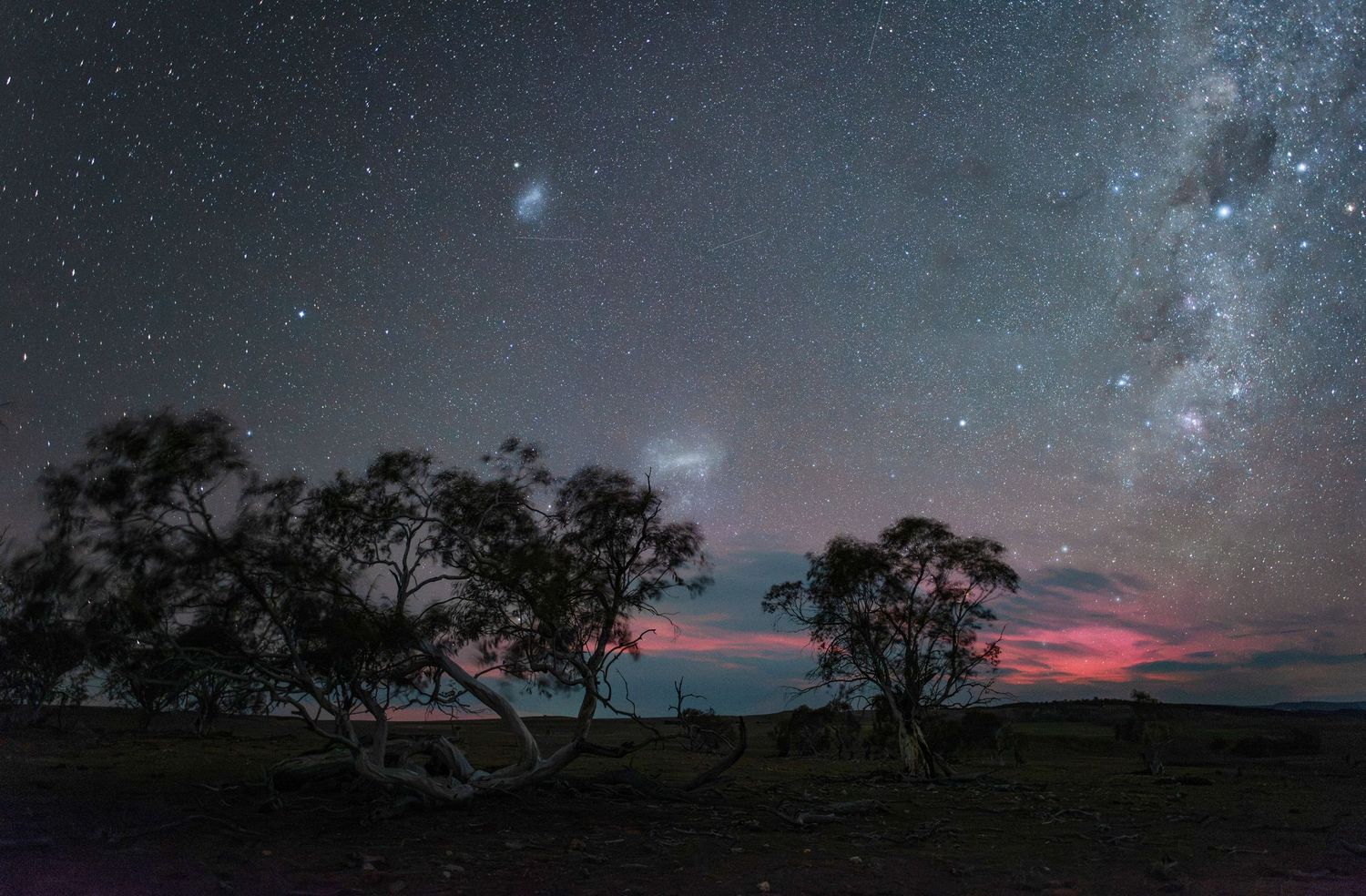
A little display of the Aurora over some nice gums, Monaro area.
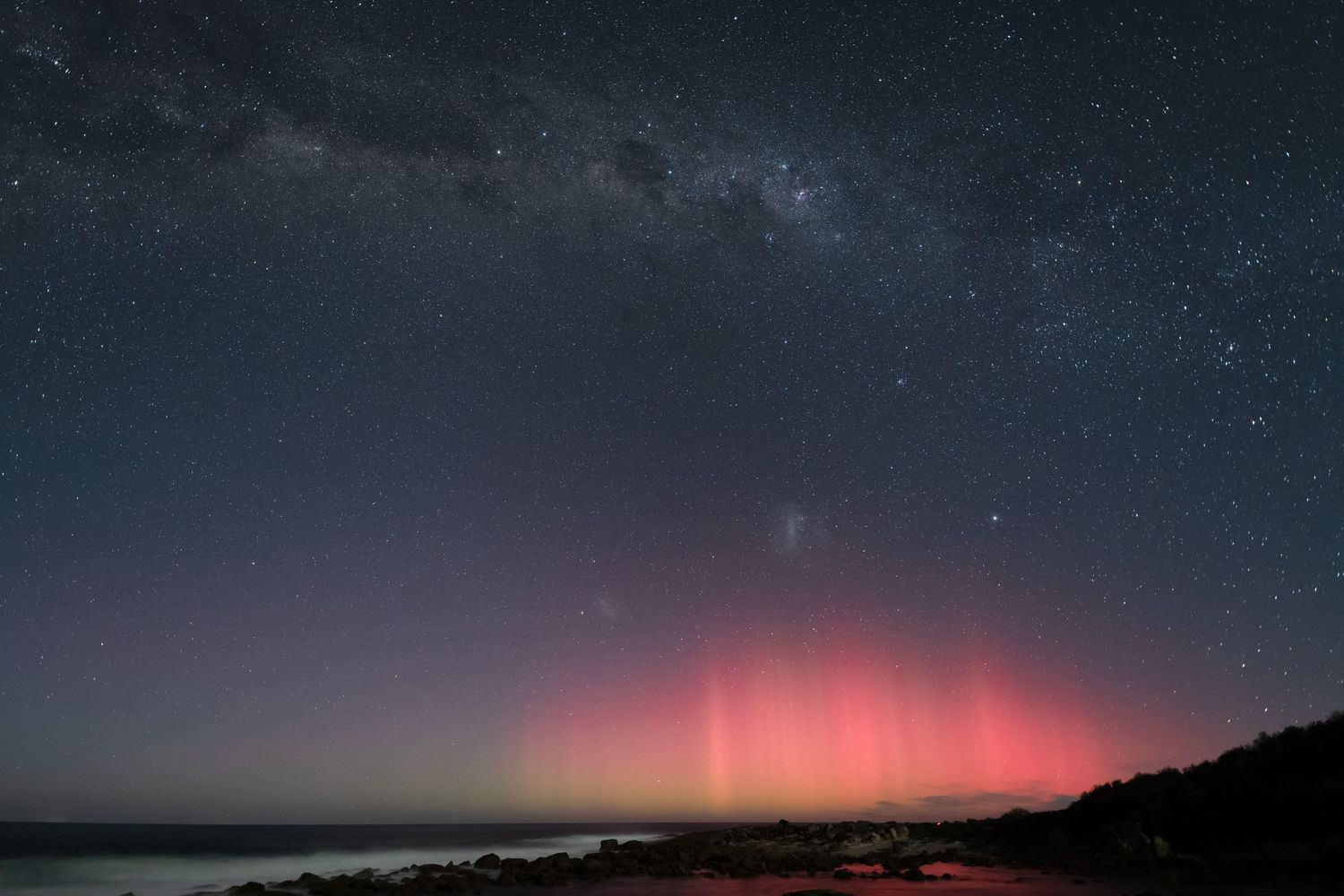
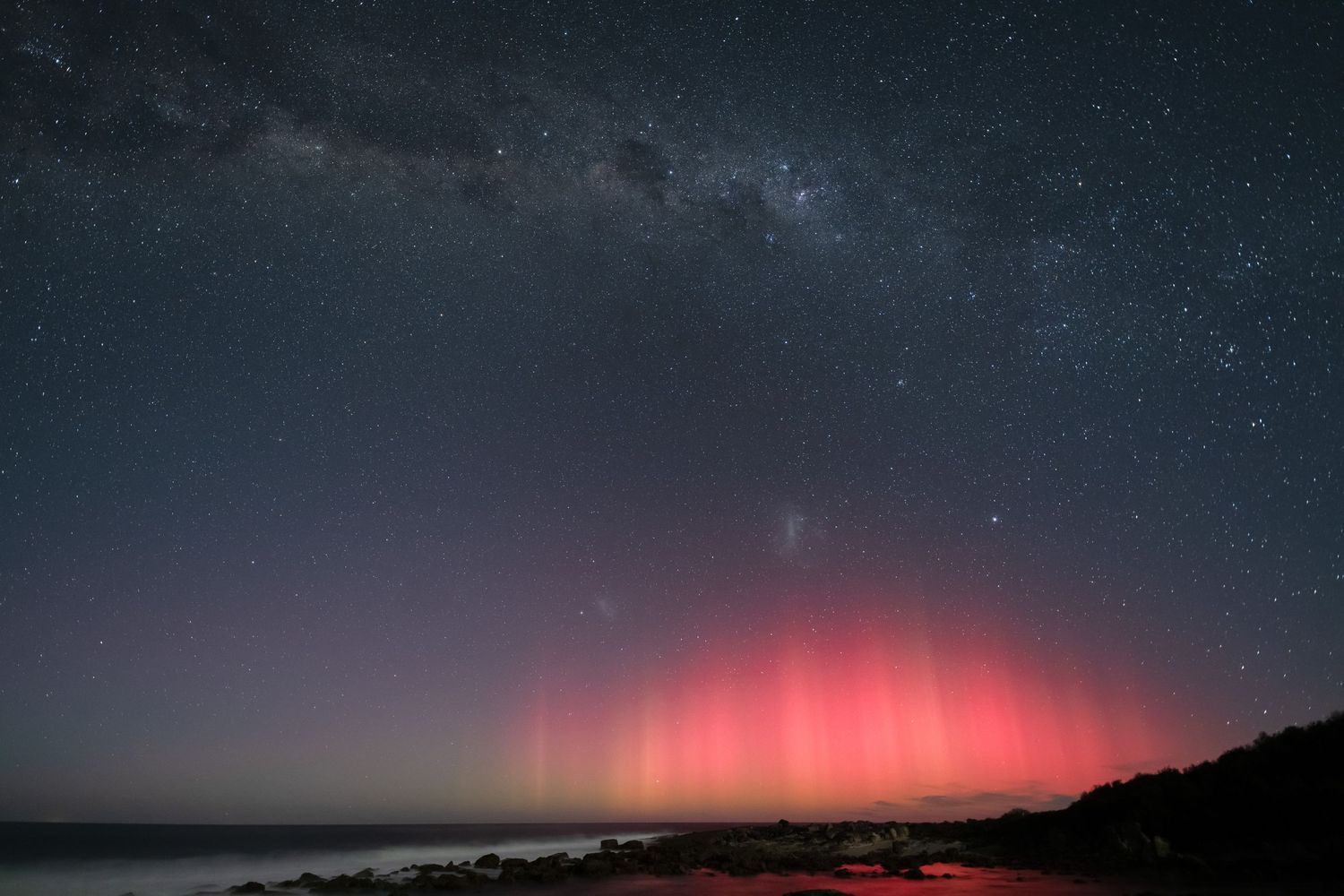
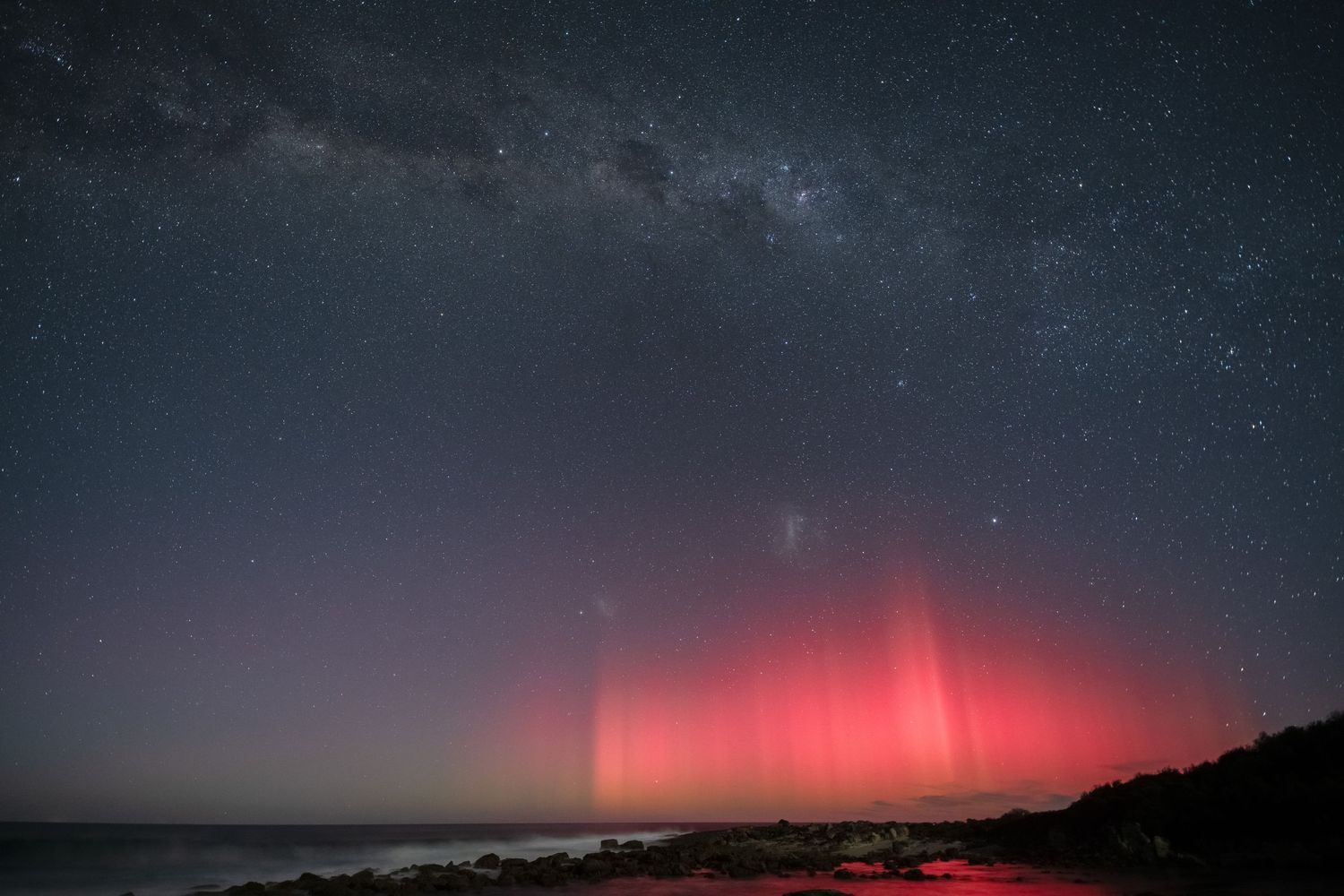
Aurorae during a fortnight trip to Tasmania in 2026
Over 13 nights there was some degree of auroral display on 6 nights during my visit. That's almost 50%. Two were note worthy.
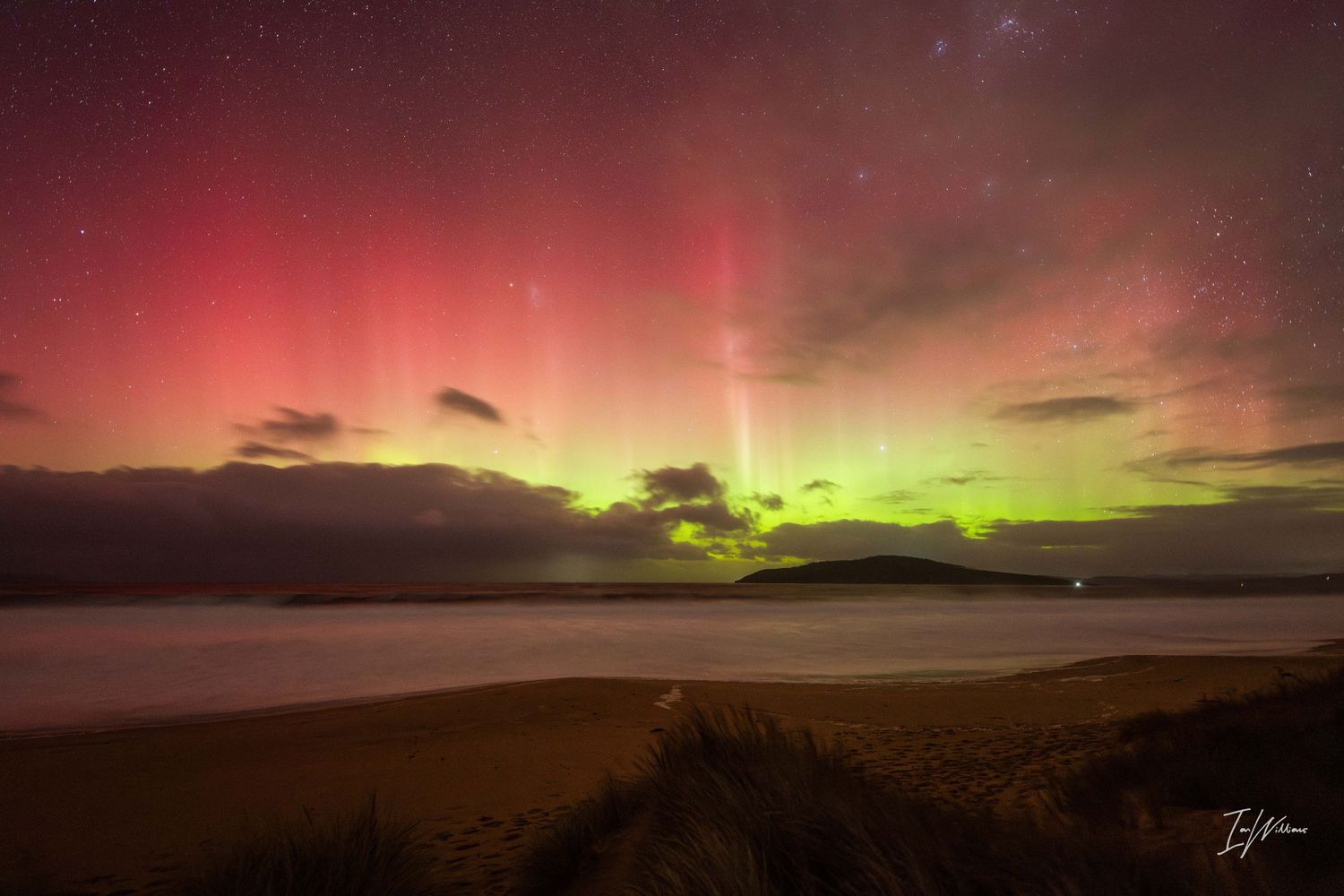
July 4 fireworks, South Arm
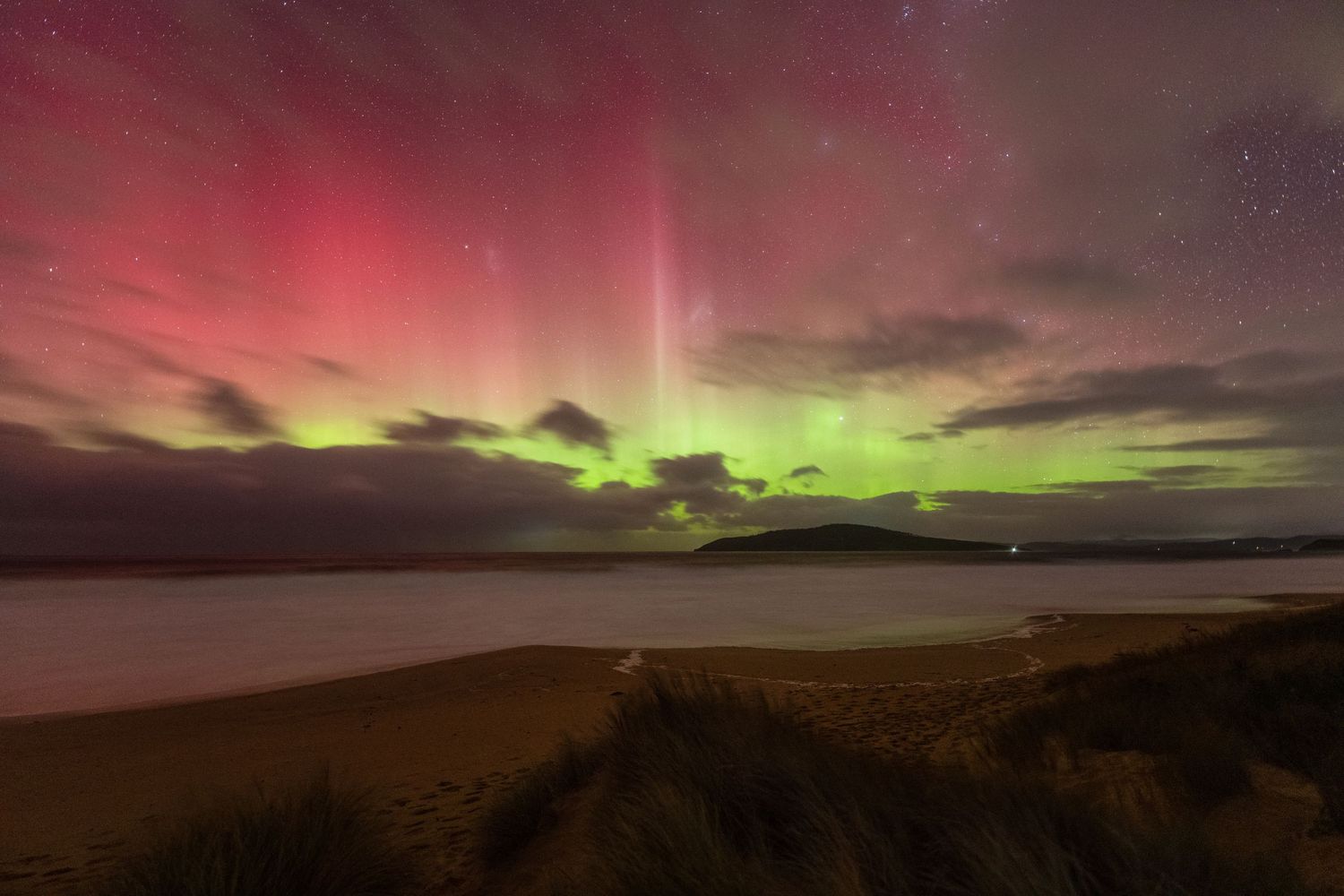
July, 4 fireworks down under style
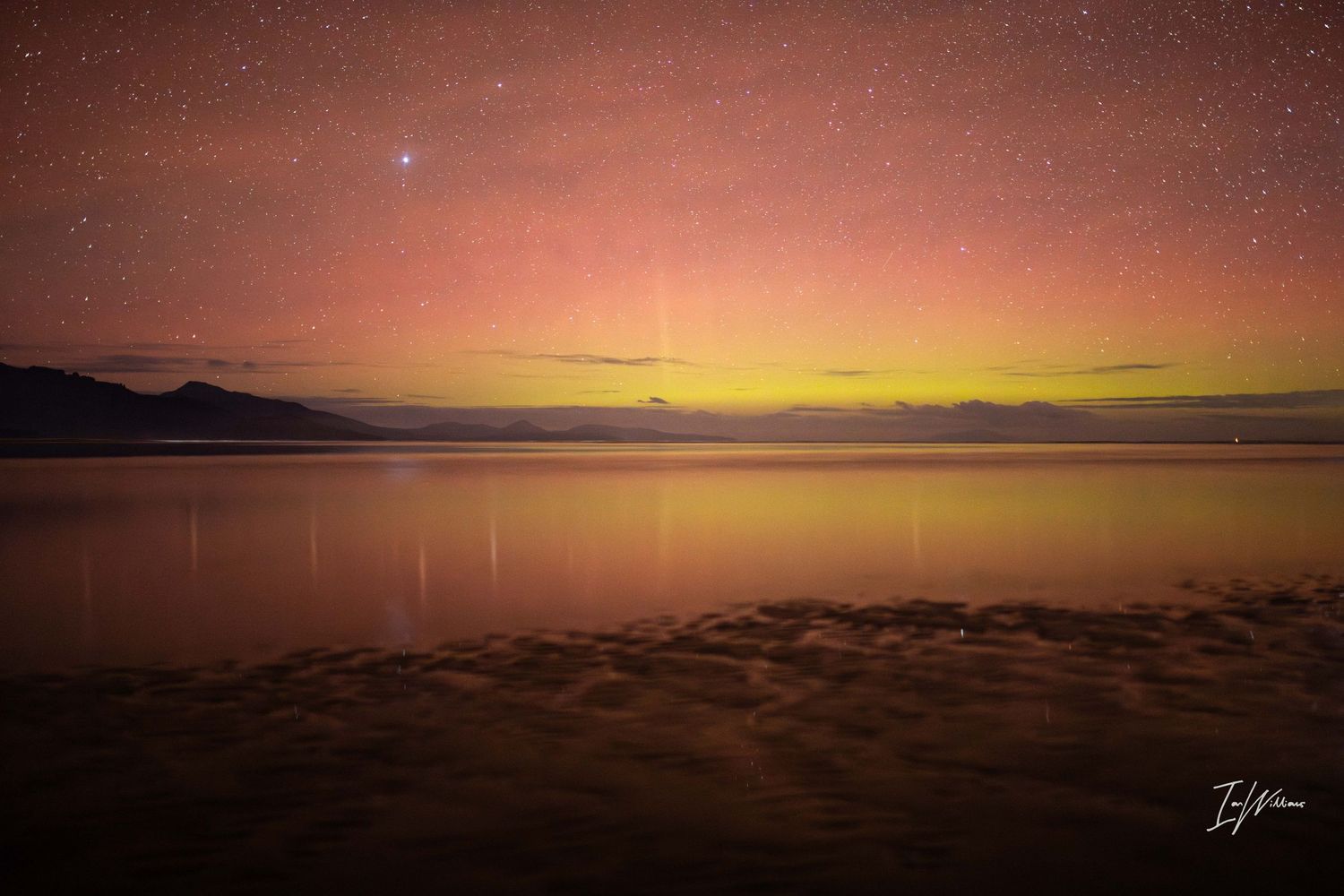
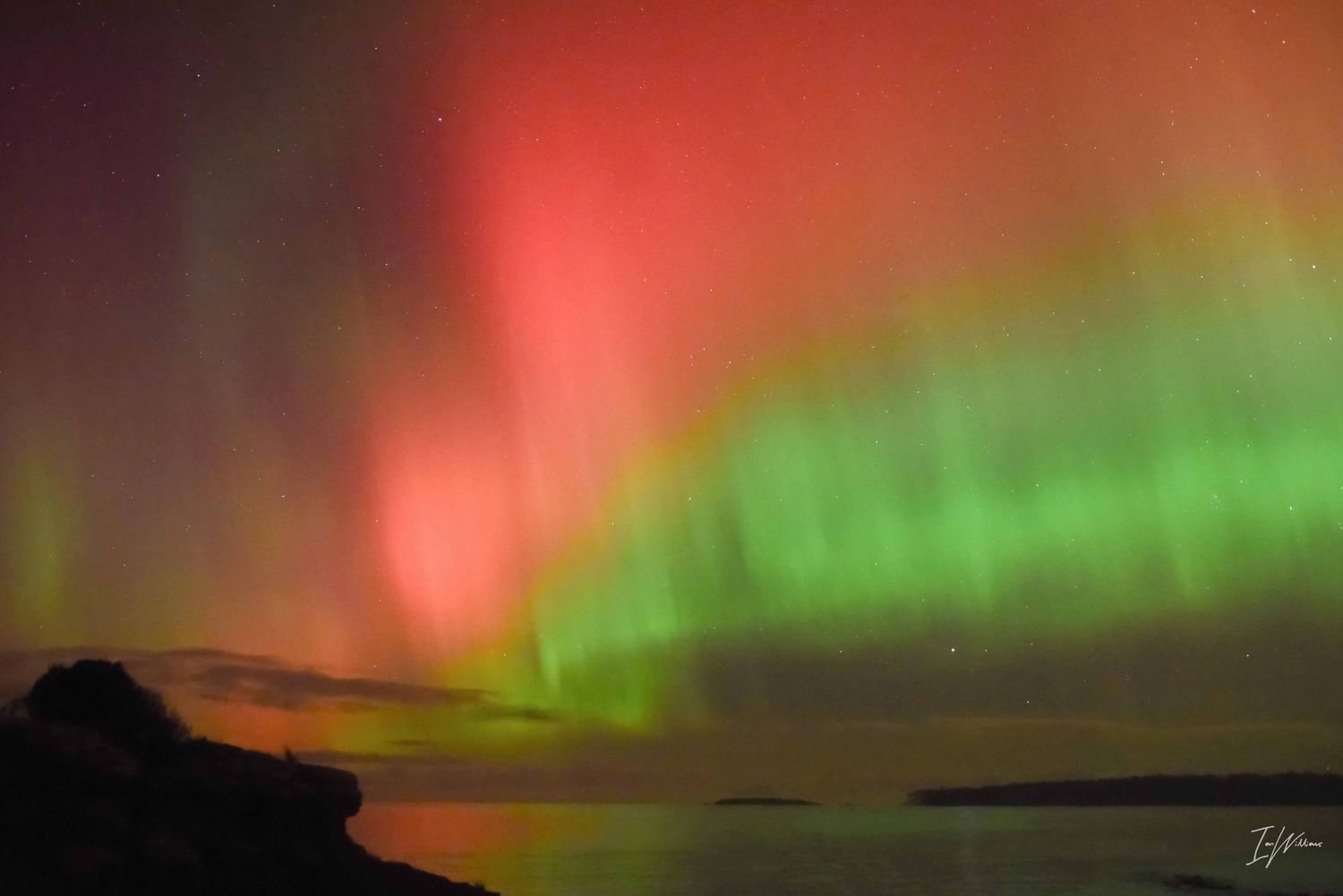
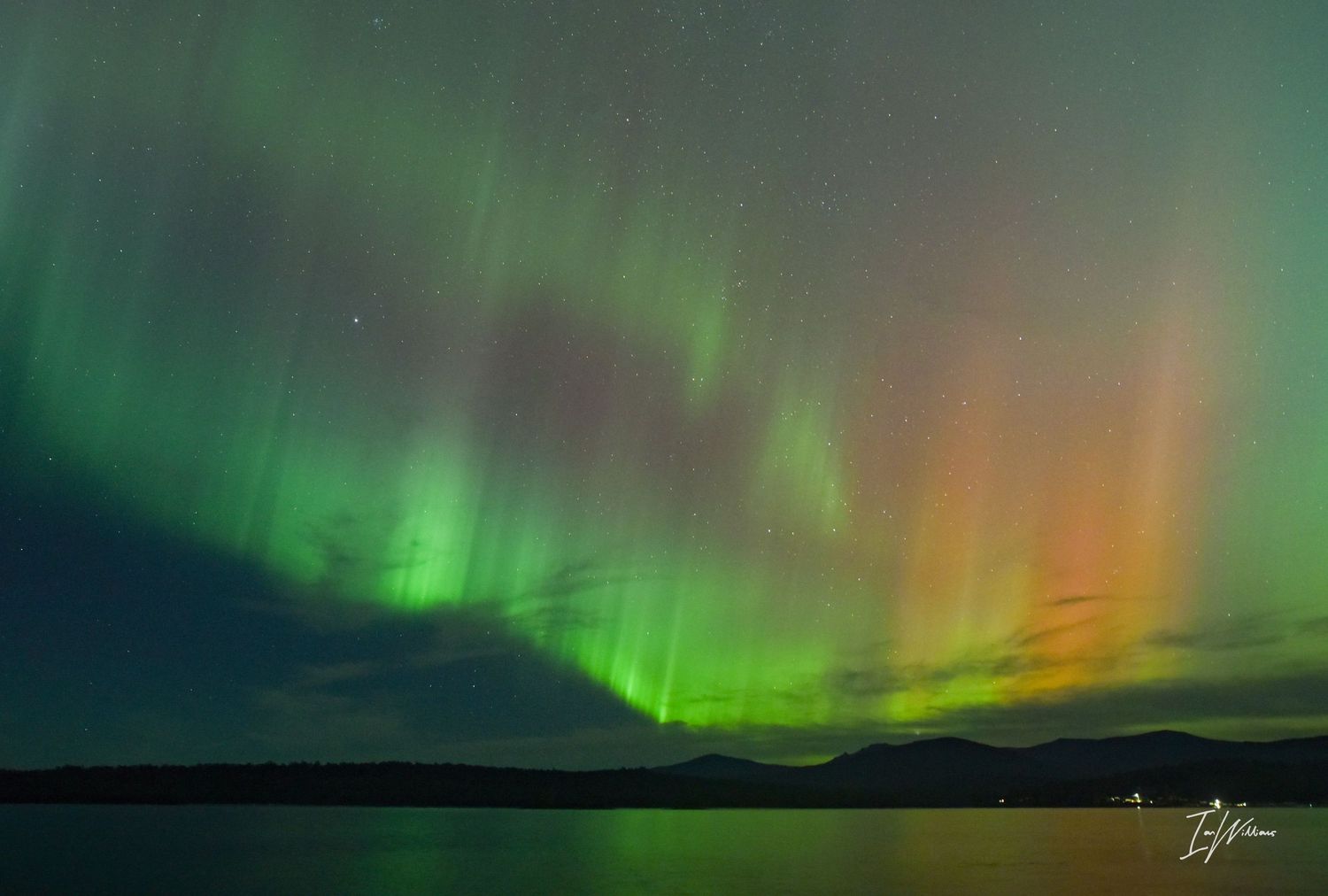
Small aurora and airglow, Great Oyster Bay, Tasmania , 8 July 2026
STEVE puts in another appearance at the end of an auroral show down near Michelago
It was pretty cool to capture a STEVE ( Strong Thermal Emission Velocity Enhancement) again on the mainland. STEVE is a narrow ribbon of mauve and purple light in the night sky that looks similar to an aurora but is created by a fast-moving river of superheated gas instead of falling solar particles.
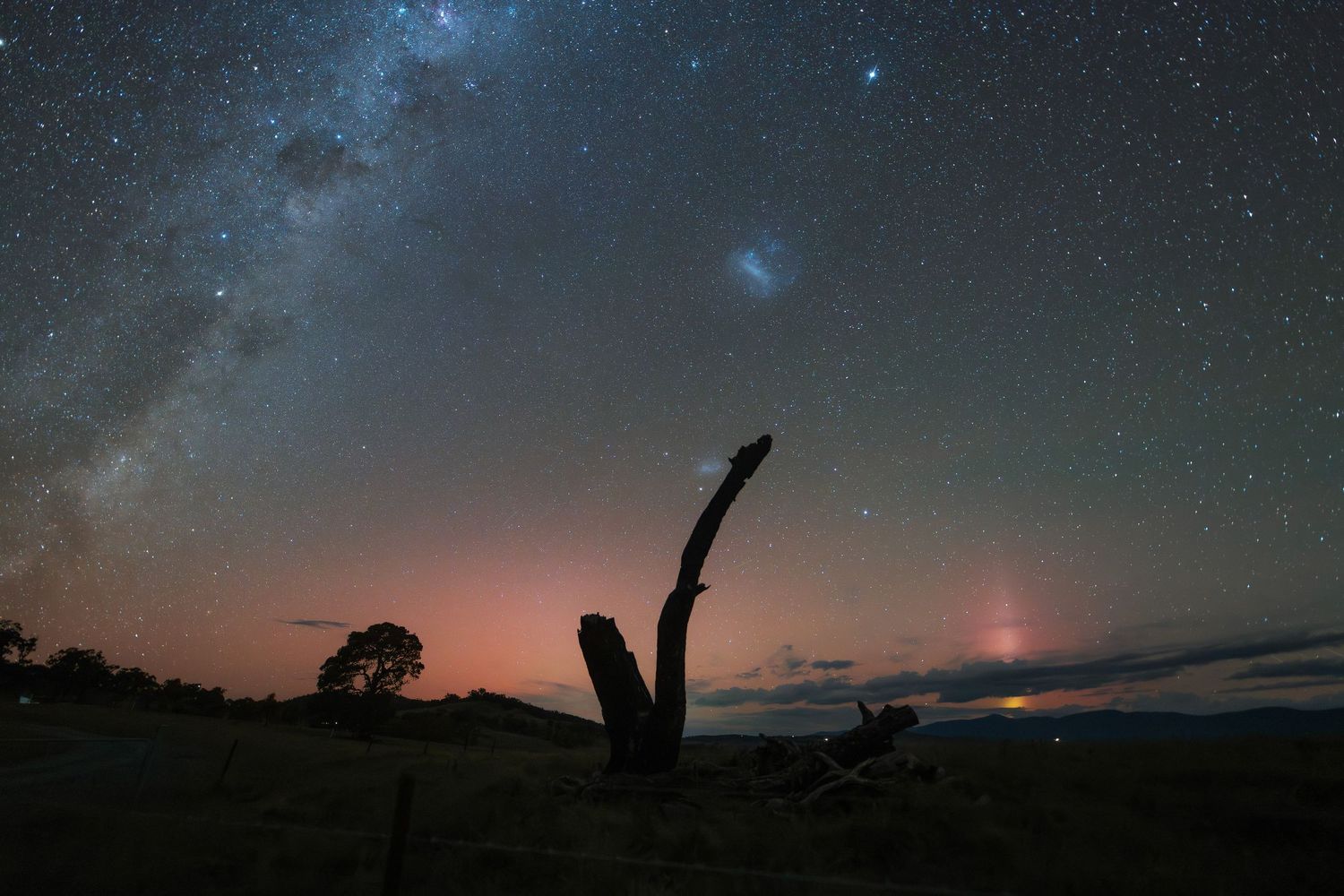
Like a weird search light, STEVE appears to the right of the frame.
Amazing colours produced by awesome mid-latitude show on 20-21 January 2026
I have not had to wait to long to get some fantastic auroral activity. A very strong show prodded a show with amazing colours and structures the whole night long. I had to bale at around 2 am! #GiantBlueRays #Hilltopscouncil #Jugiong
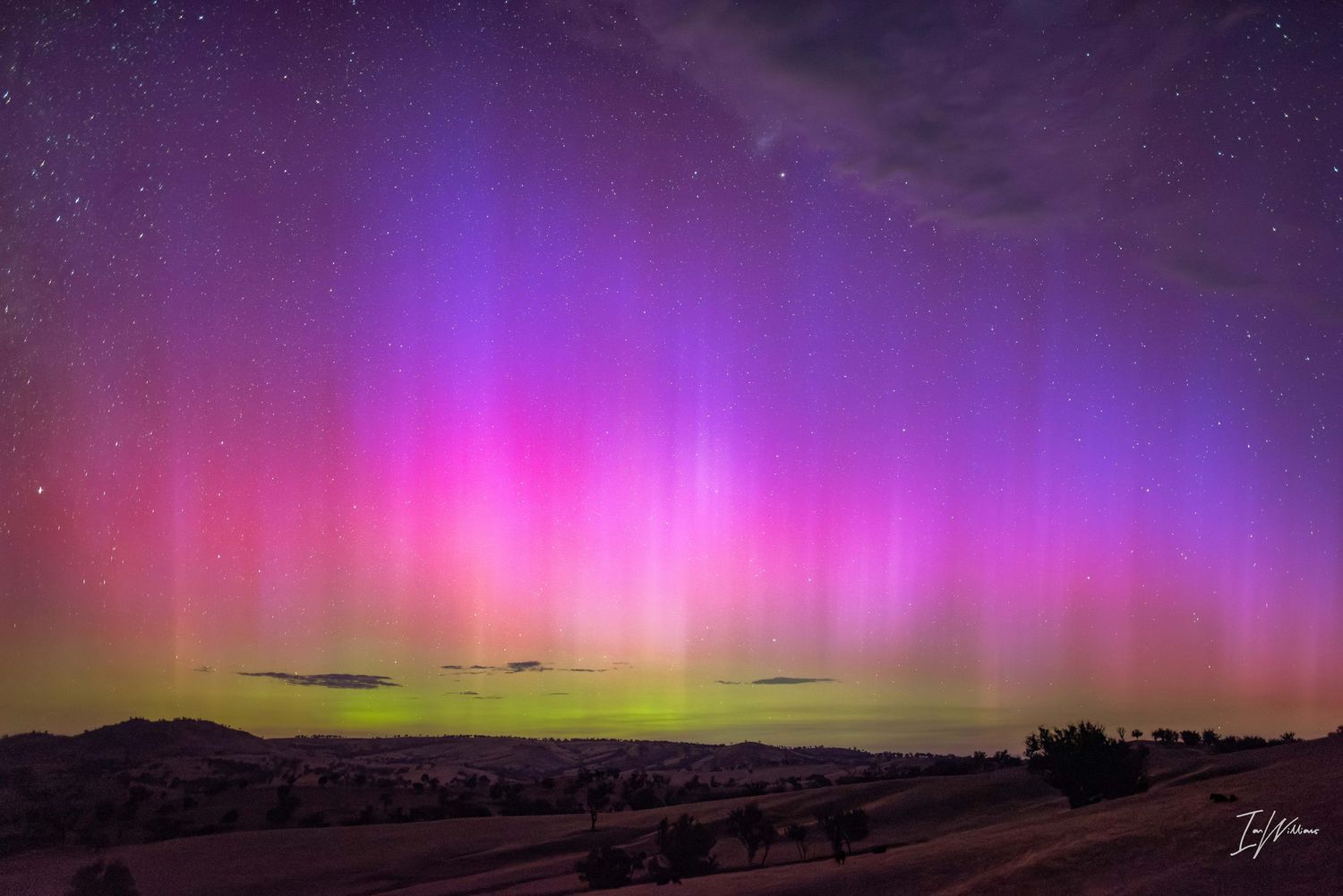
AA6345 - Tricolour aurora with the 24 mm lens, 6 seconds at f1.6 at ISO 5000
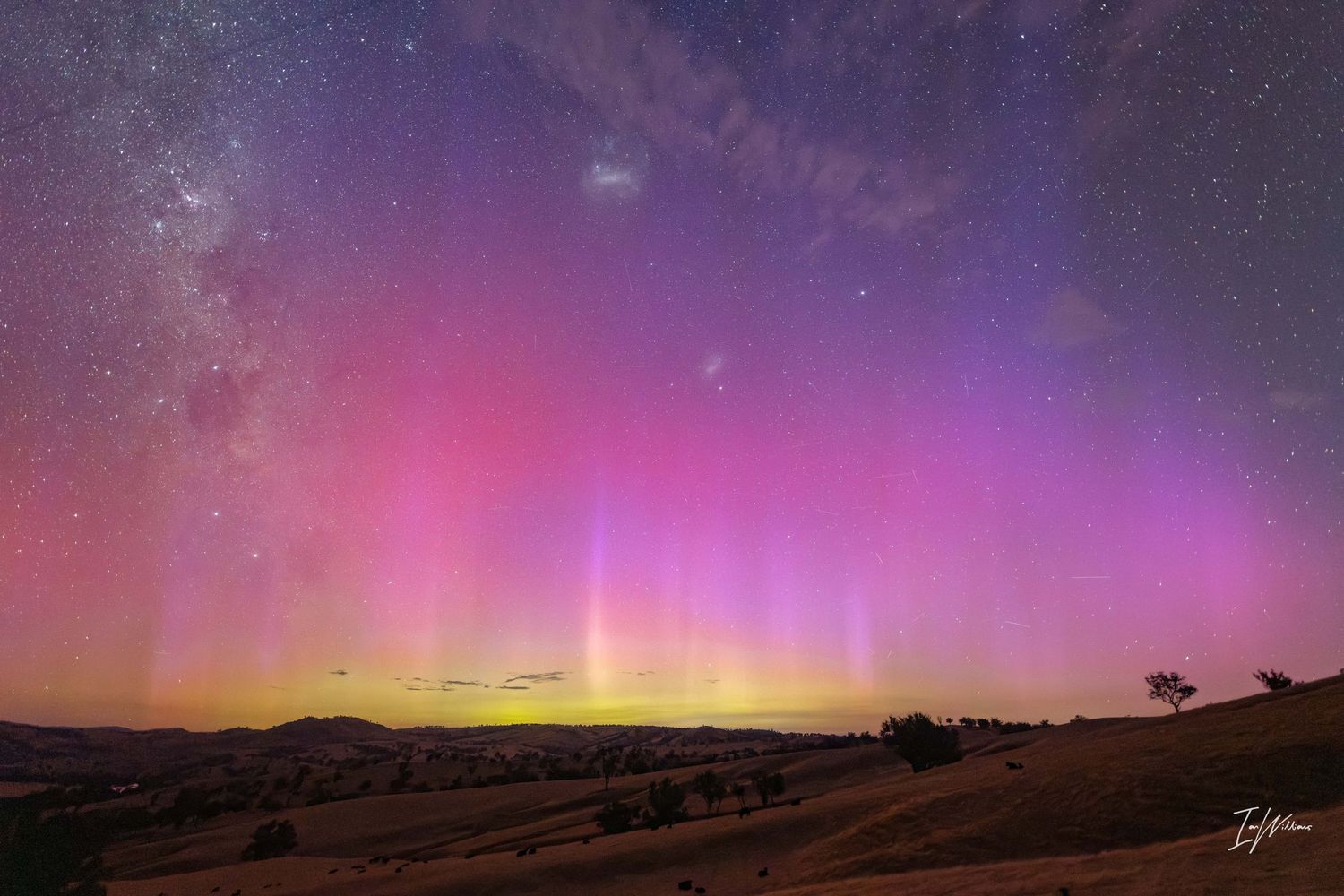
2873 - colours everywhere seen with the 14 mm lens
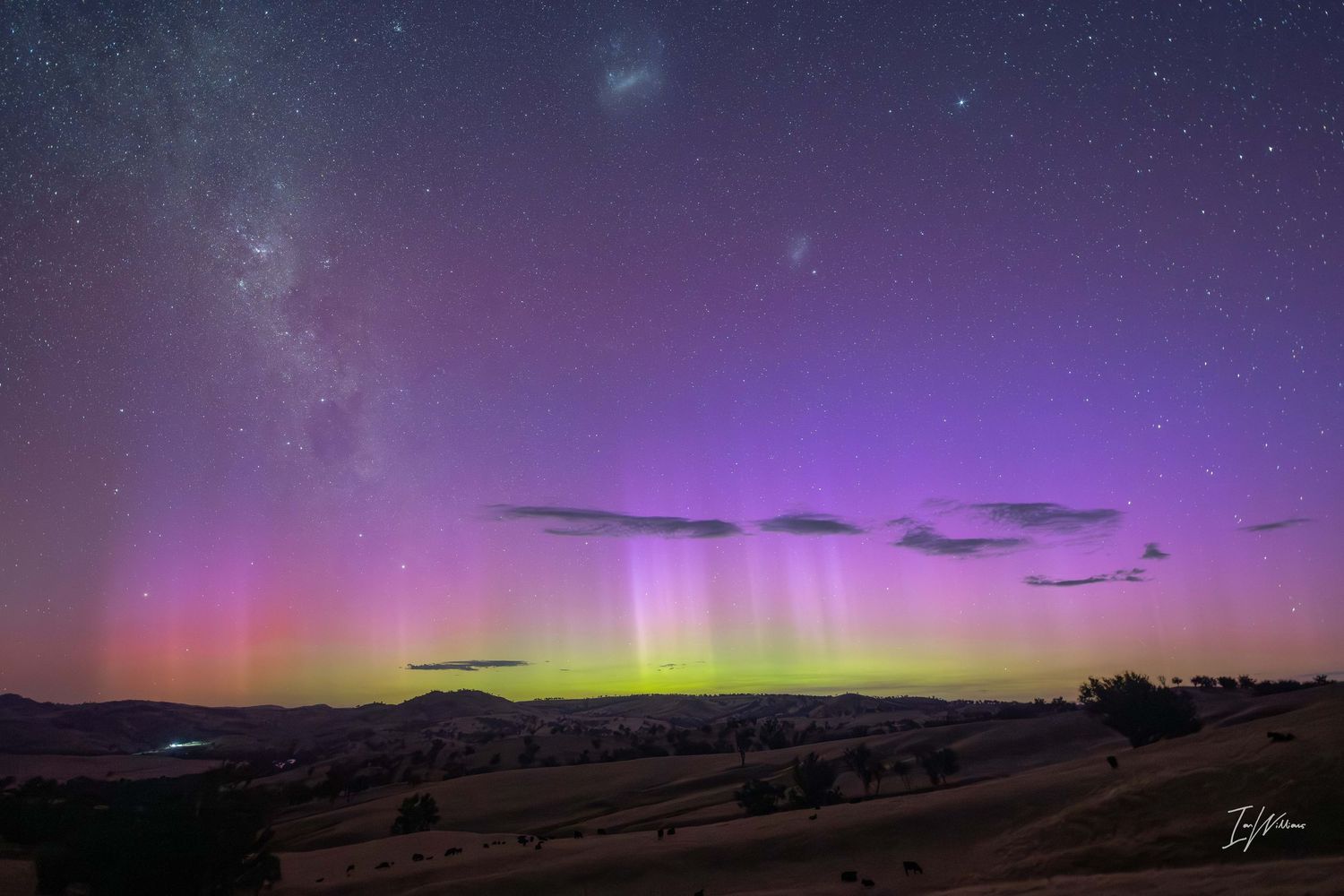
AA 2686
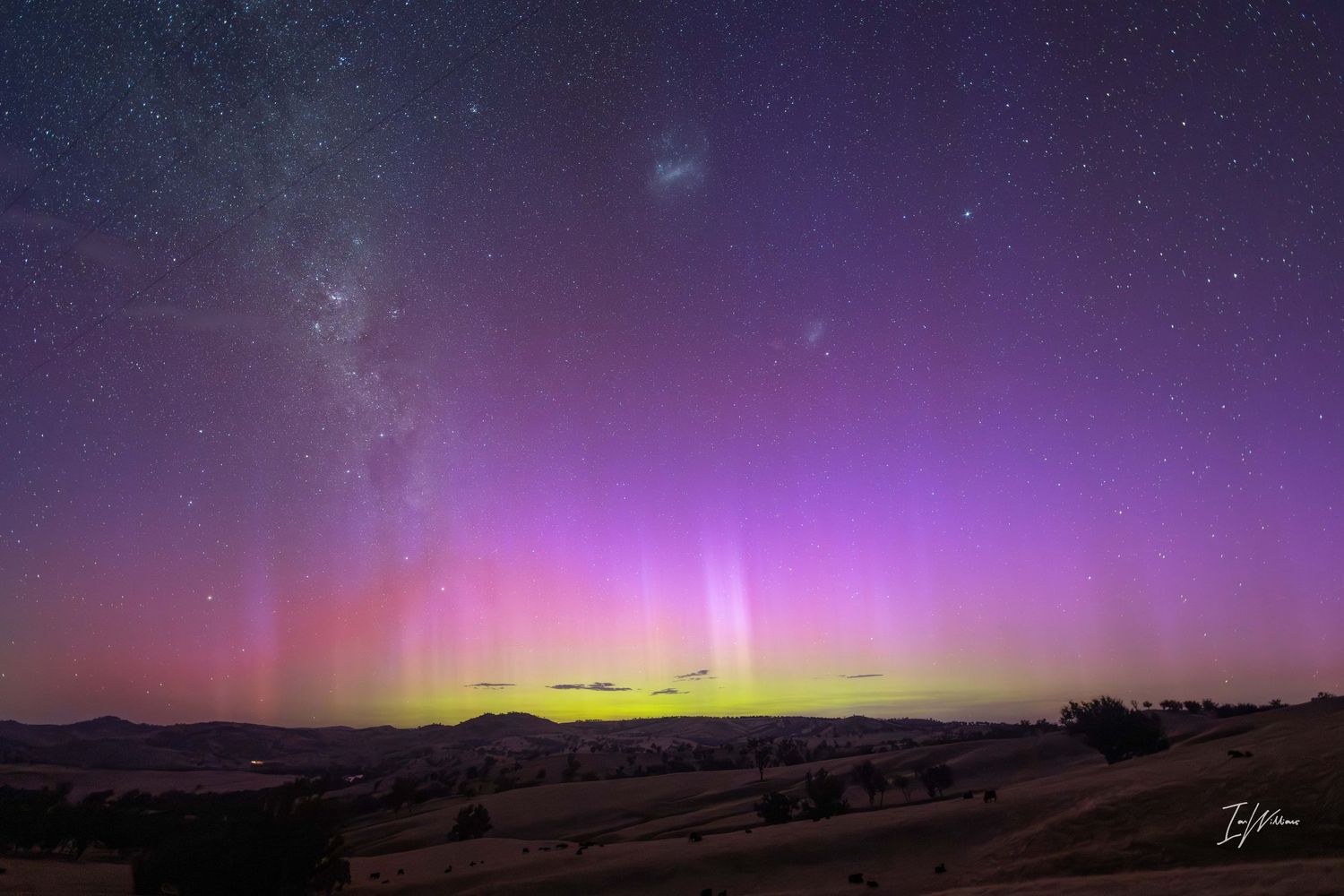
AA2785
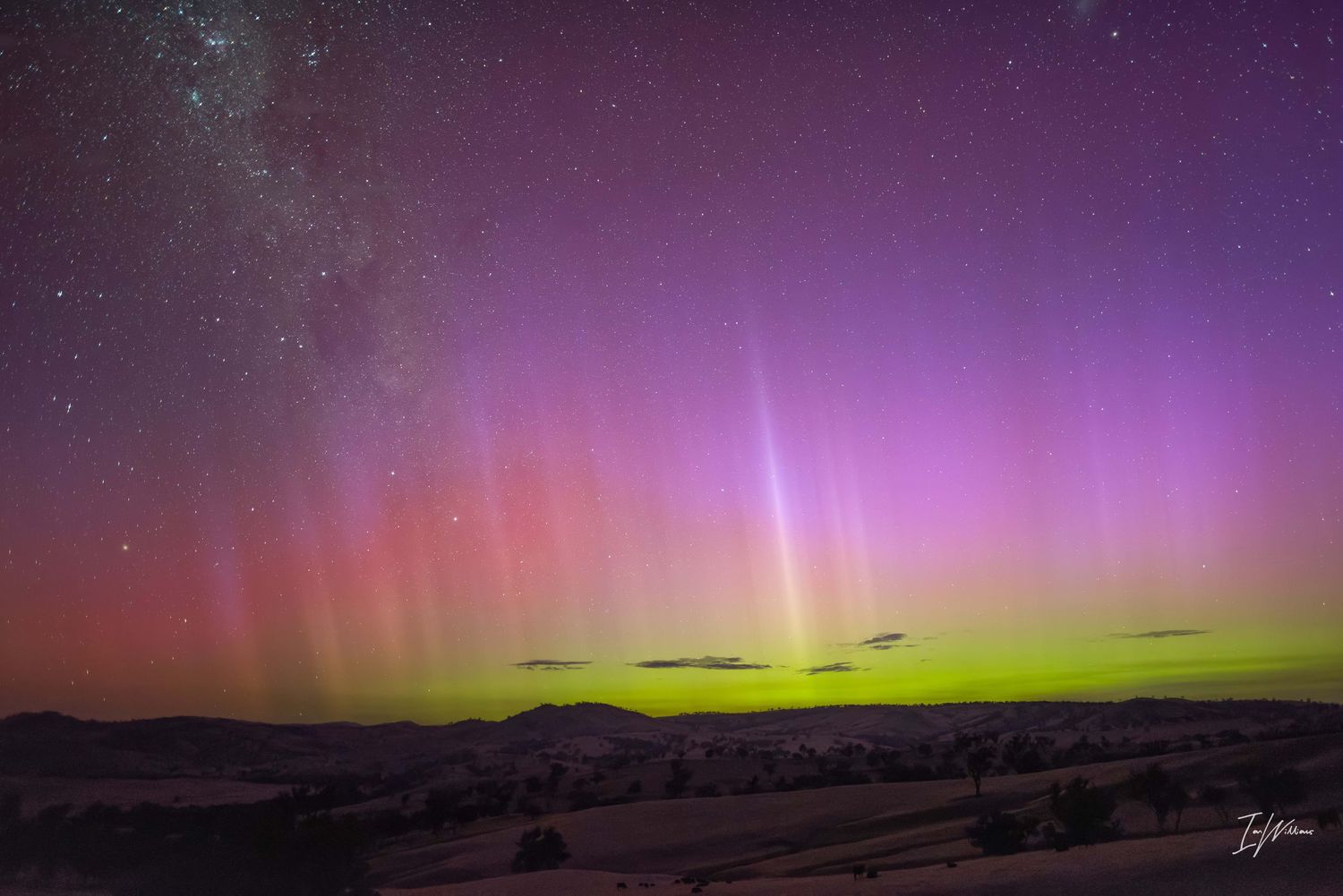
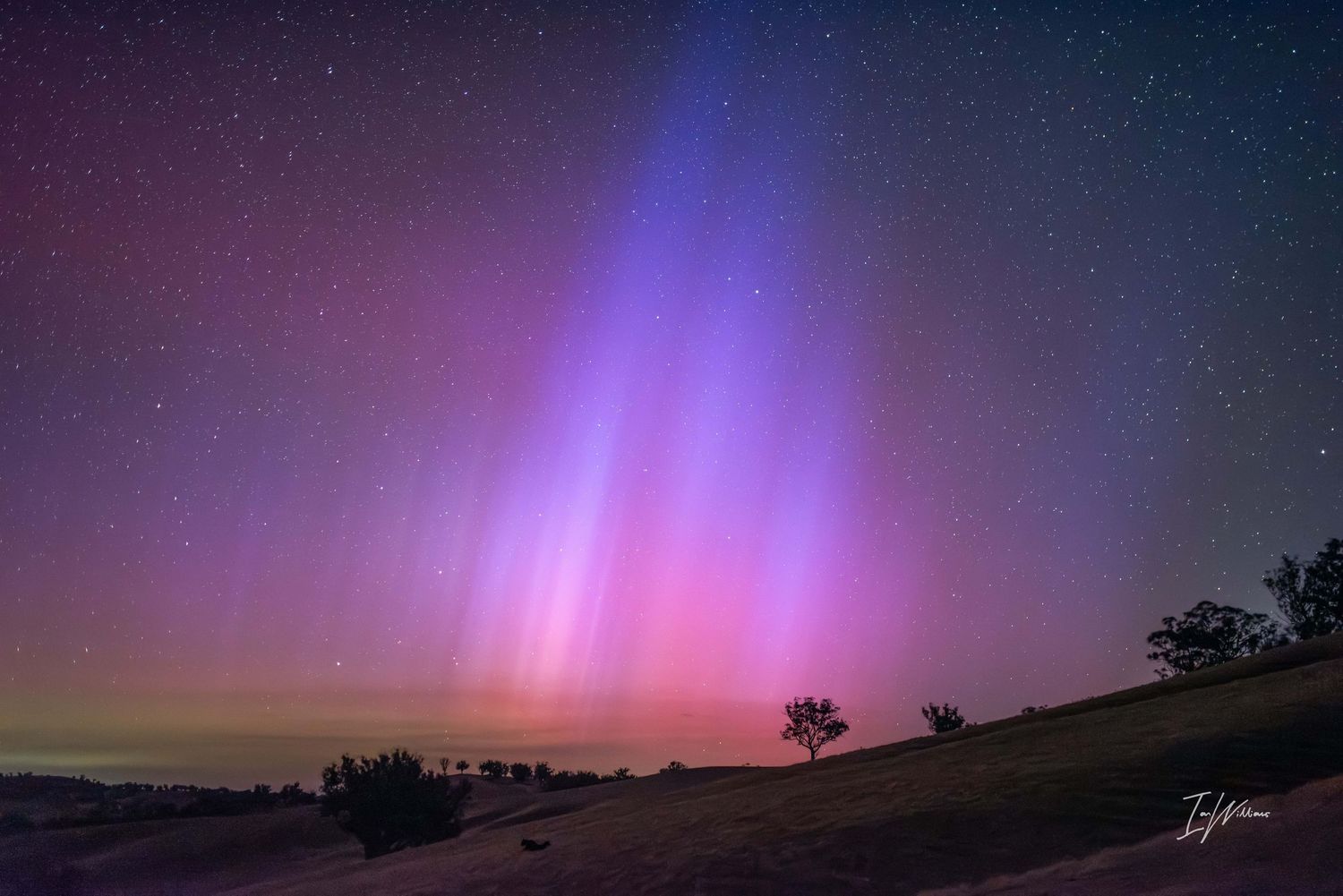
AA6483 - This amazing feature appeared and stayed for about 15 minutes, clearly visible to the naked eye, developed into giant blue rays
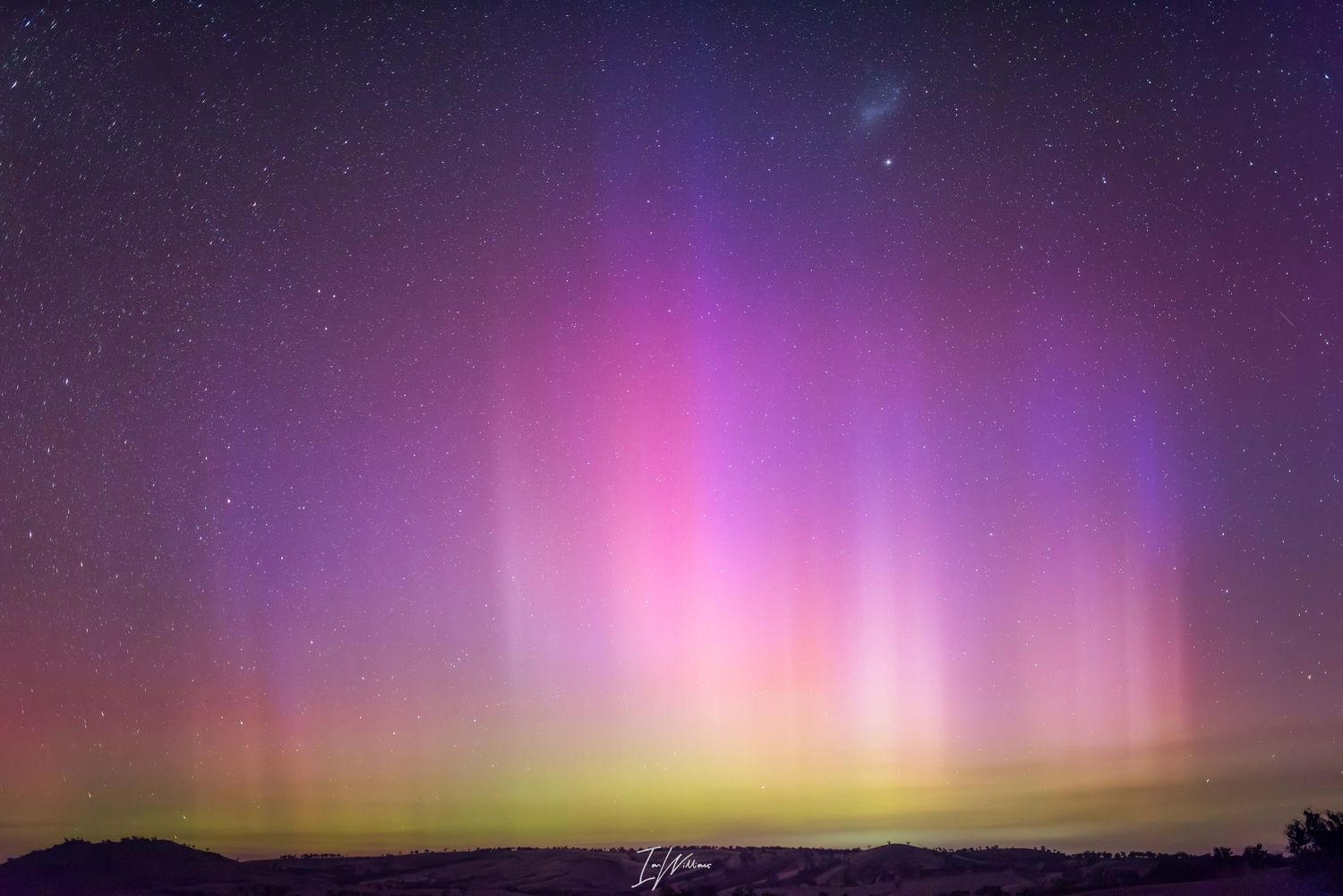
AA 6563 - Up close and personal with the Aurora Australis with the 35 mm lens.
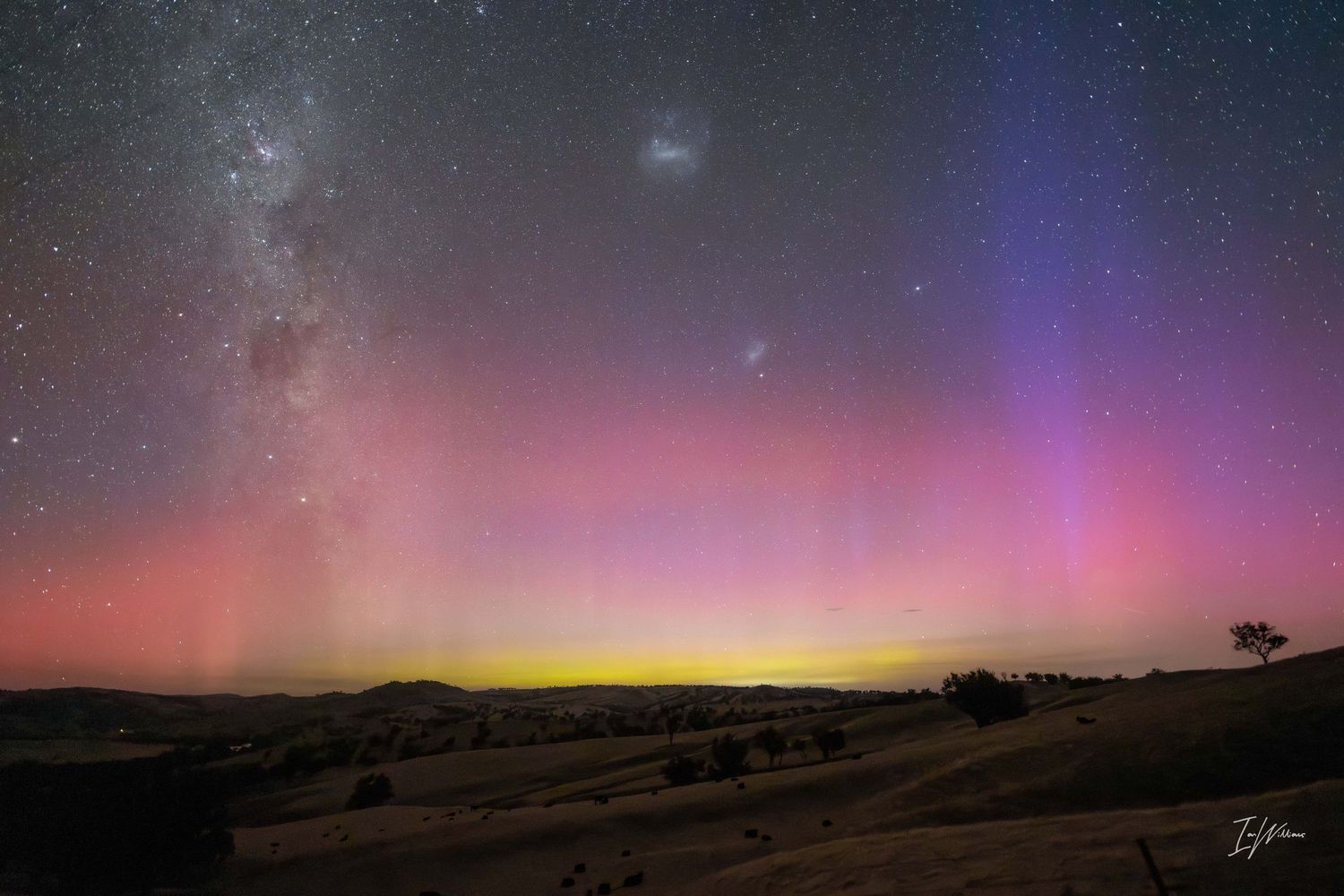
AA 2963 Giant Blue Rays!
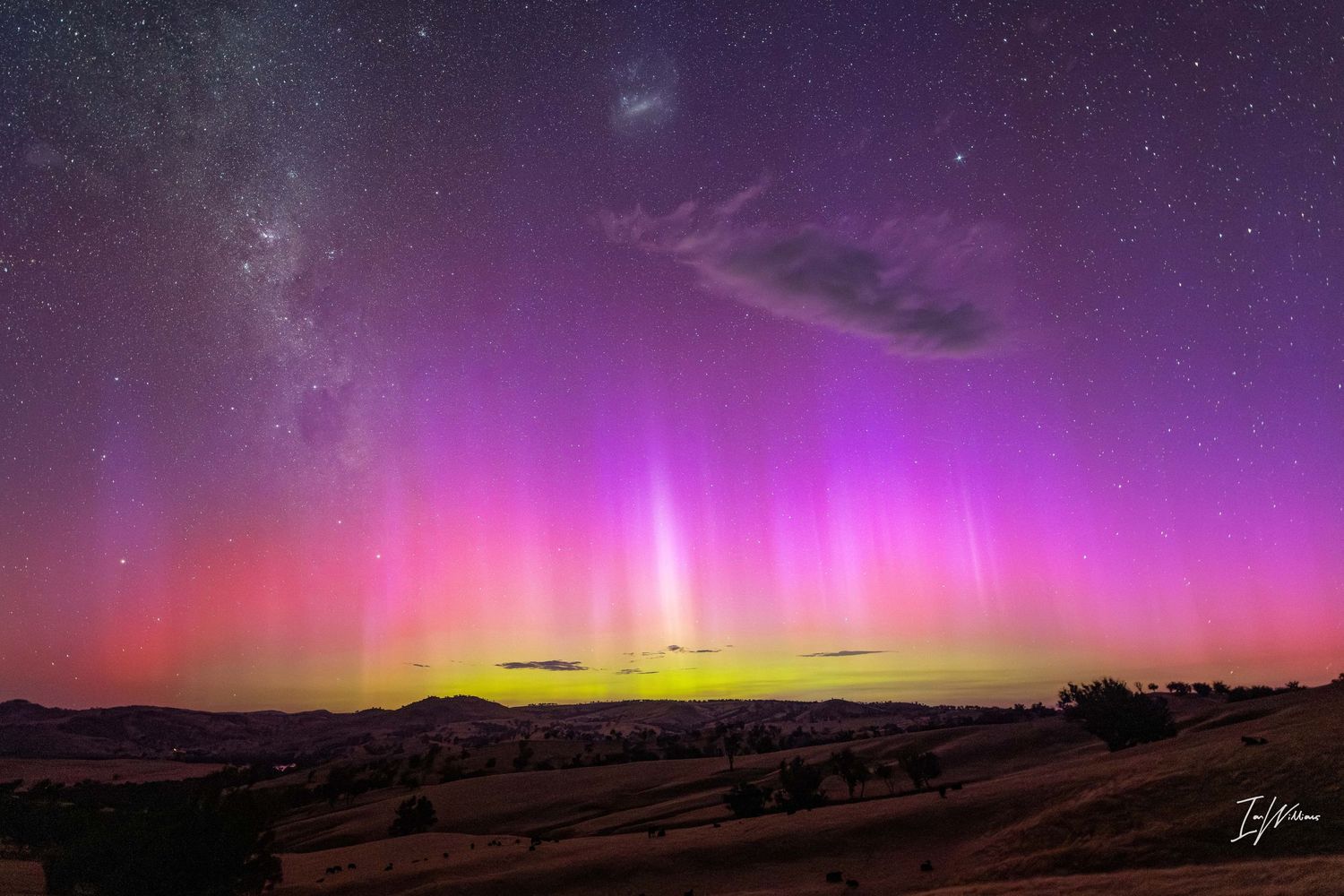
AA2811 - Crescendo!
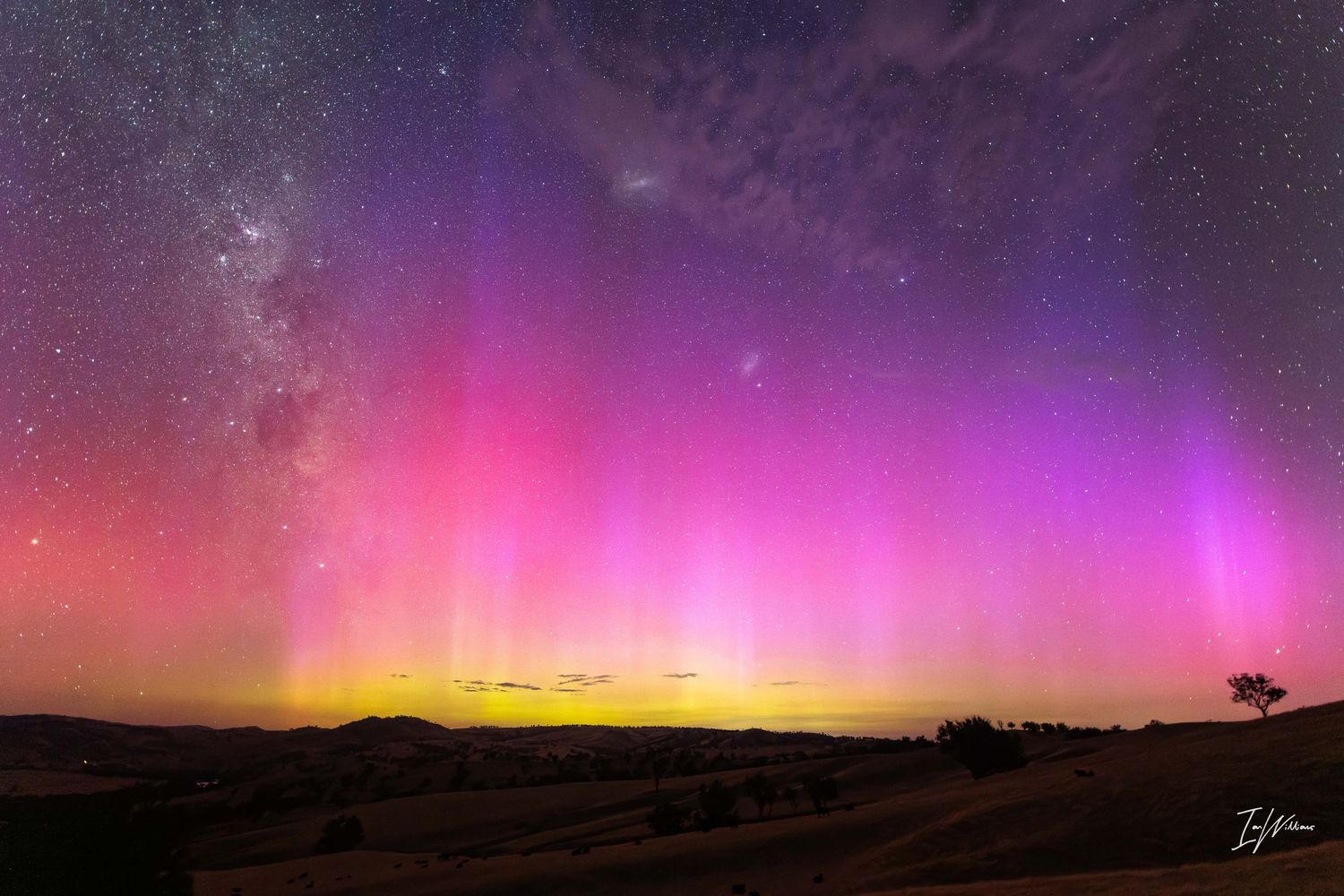
AA2863 - colours going crazy!
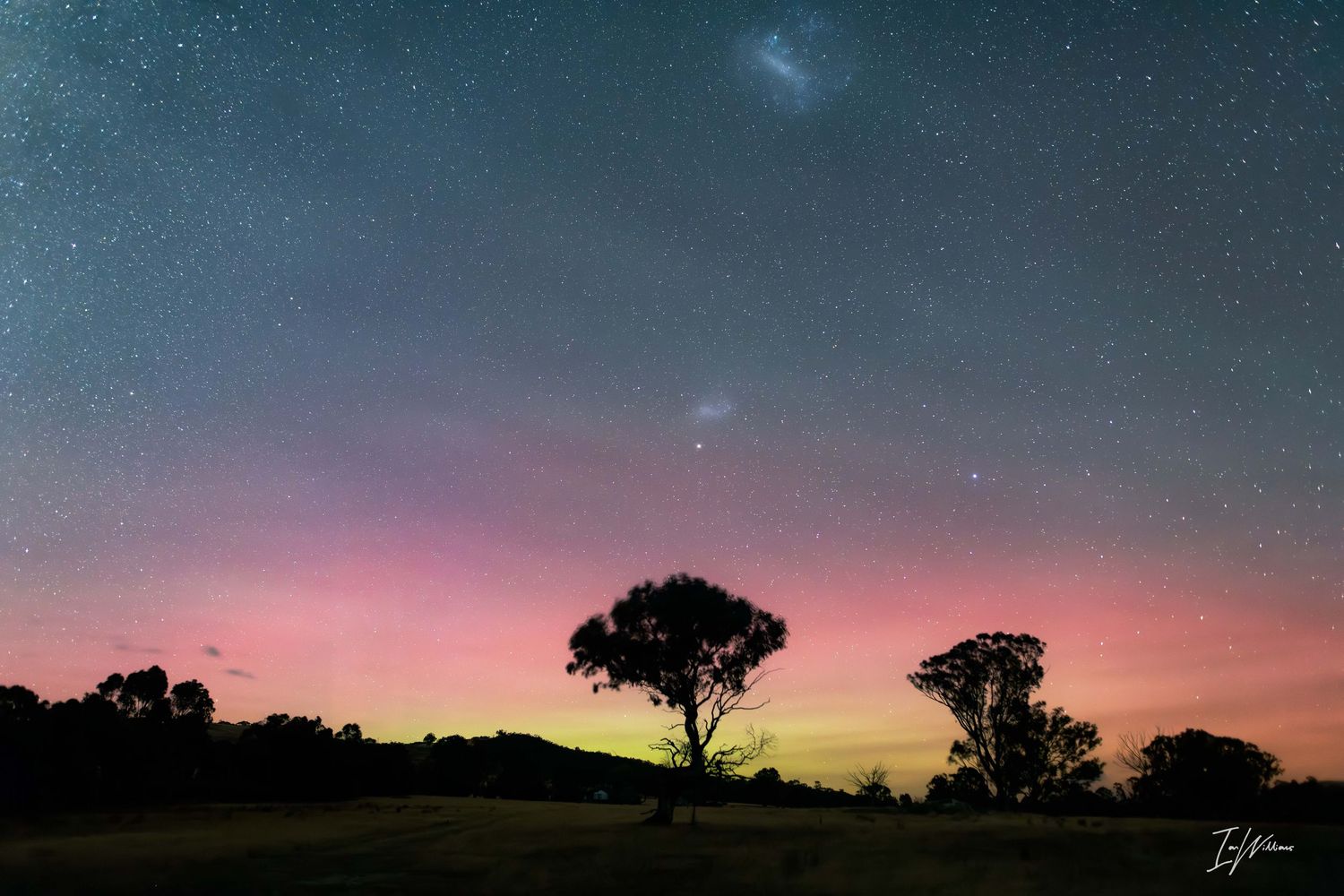
AA3015 - between flareups
Oh what a night! Incredible show down the Australian High Country - the Snowy Mountains: 12 November 2025
Two CMEs associated with two X flares in the preceding days that were Earth directed triggered G3 to G4 storm levels. Fortunately one of the peaks as it had started during the day was just on sunset on 12 November 2025. One of my dreams was to capture a really big aurora framing one of the iconic SNowgums of the Australian High Country. #Snowymountains #Cooma #AuroraAustralis
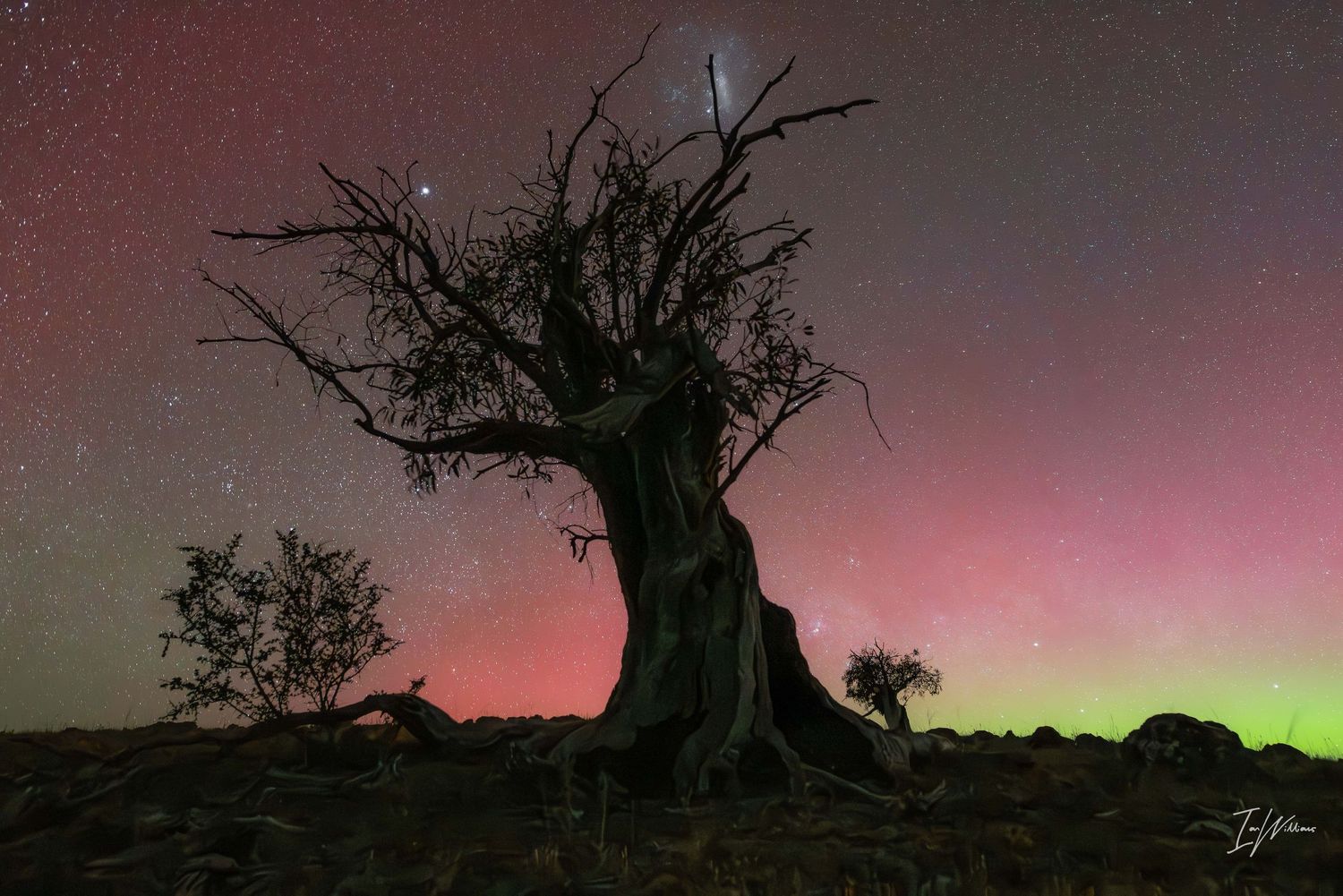
4921 - Holding a galaxy in its branches - the Aurora Australis backlights a gnarly old Snowgum on a high ridge over 1100 m high
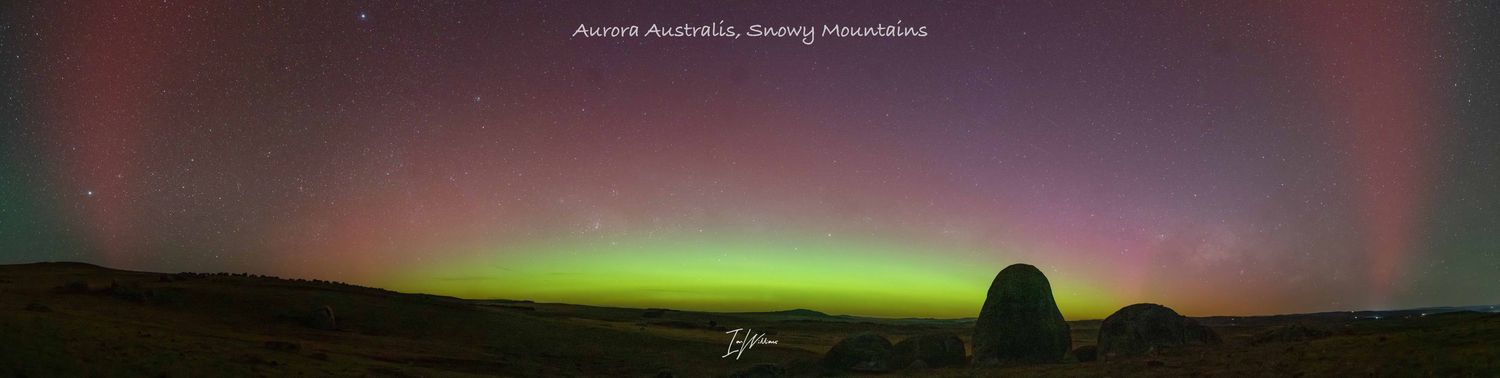
Symmetry

1292 - Twilight and the Aurora Australis
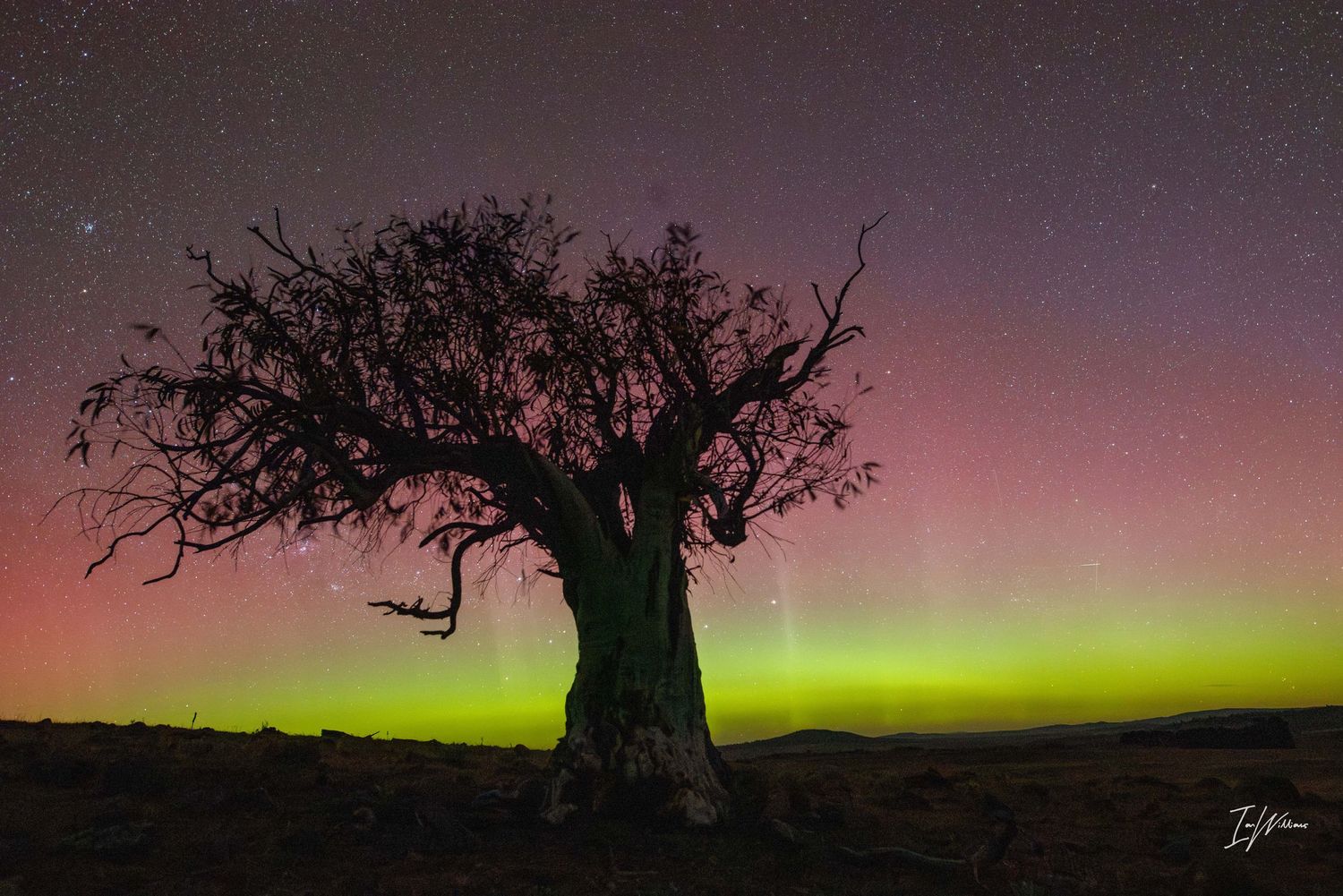
4926 - The Aurora Australis behind a stately Snowgum
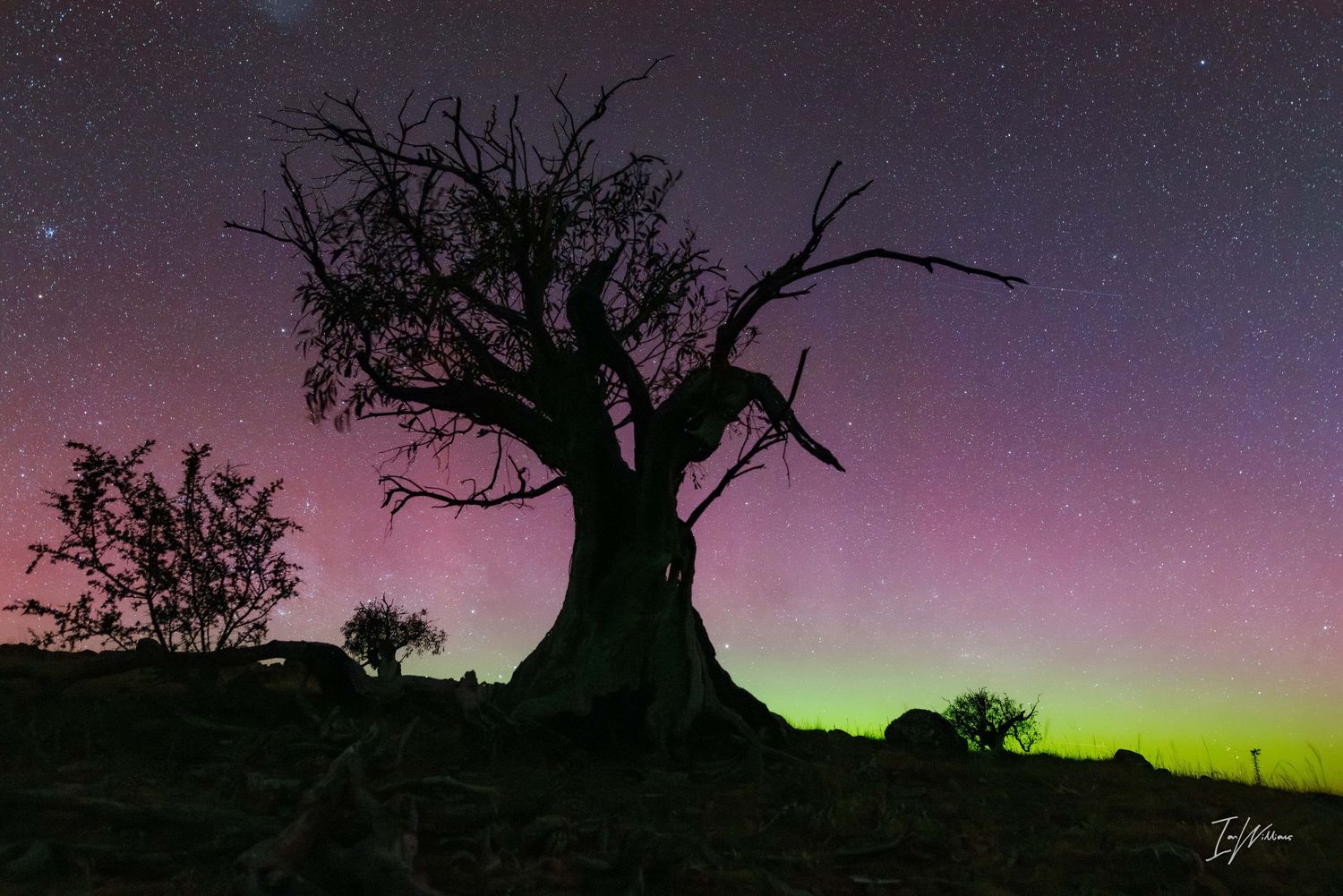
4920 - The harsh beauty of the mountains and the aurora
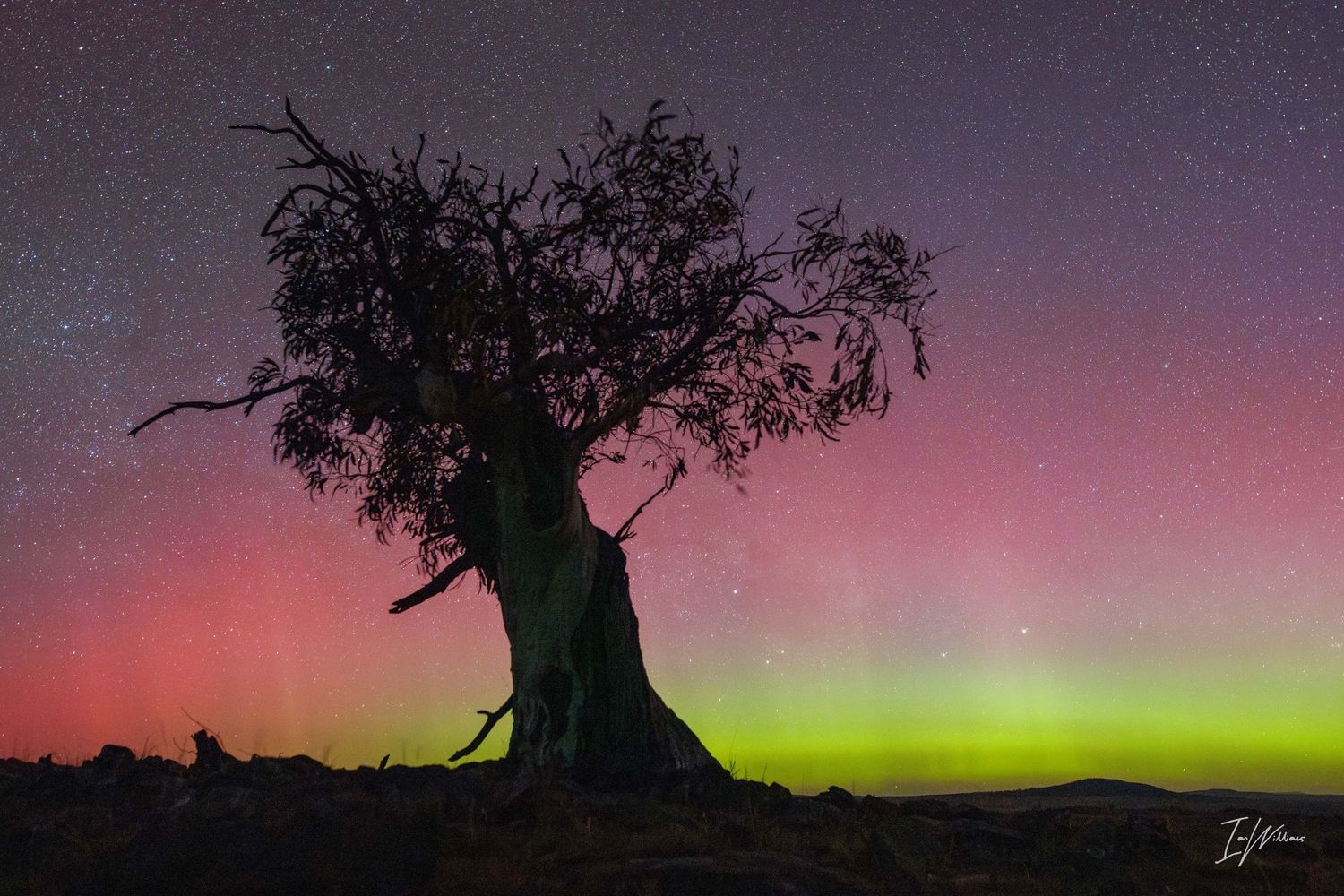
Aurora Australis and Snowgum
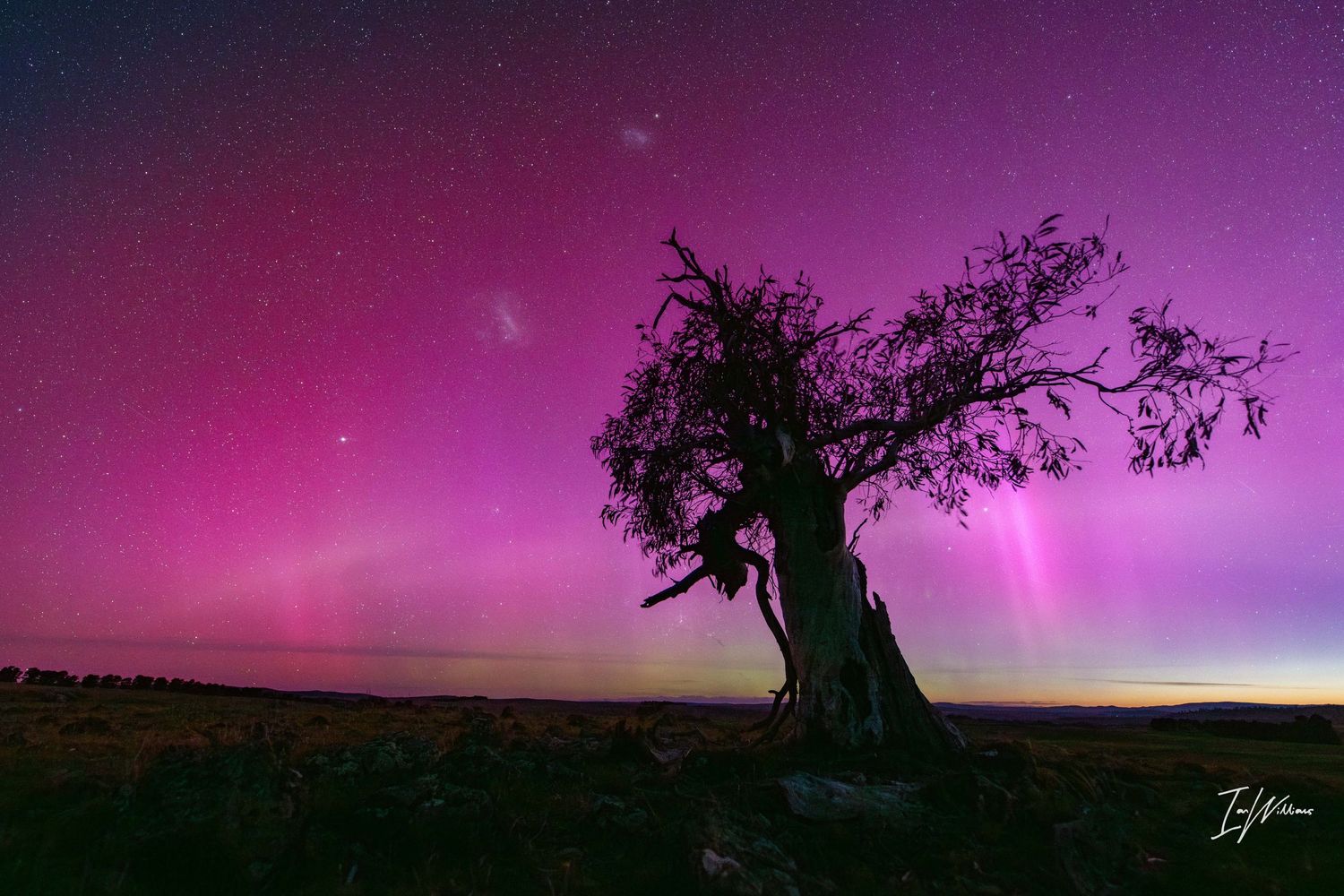
Purple colours of the aurora just after dusk
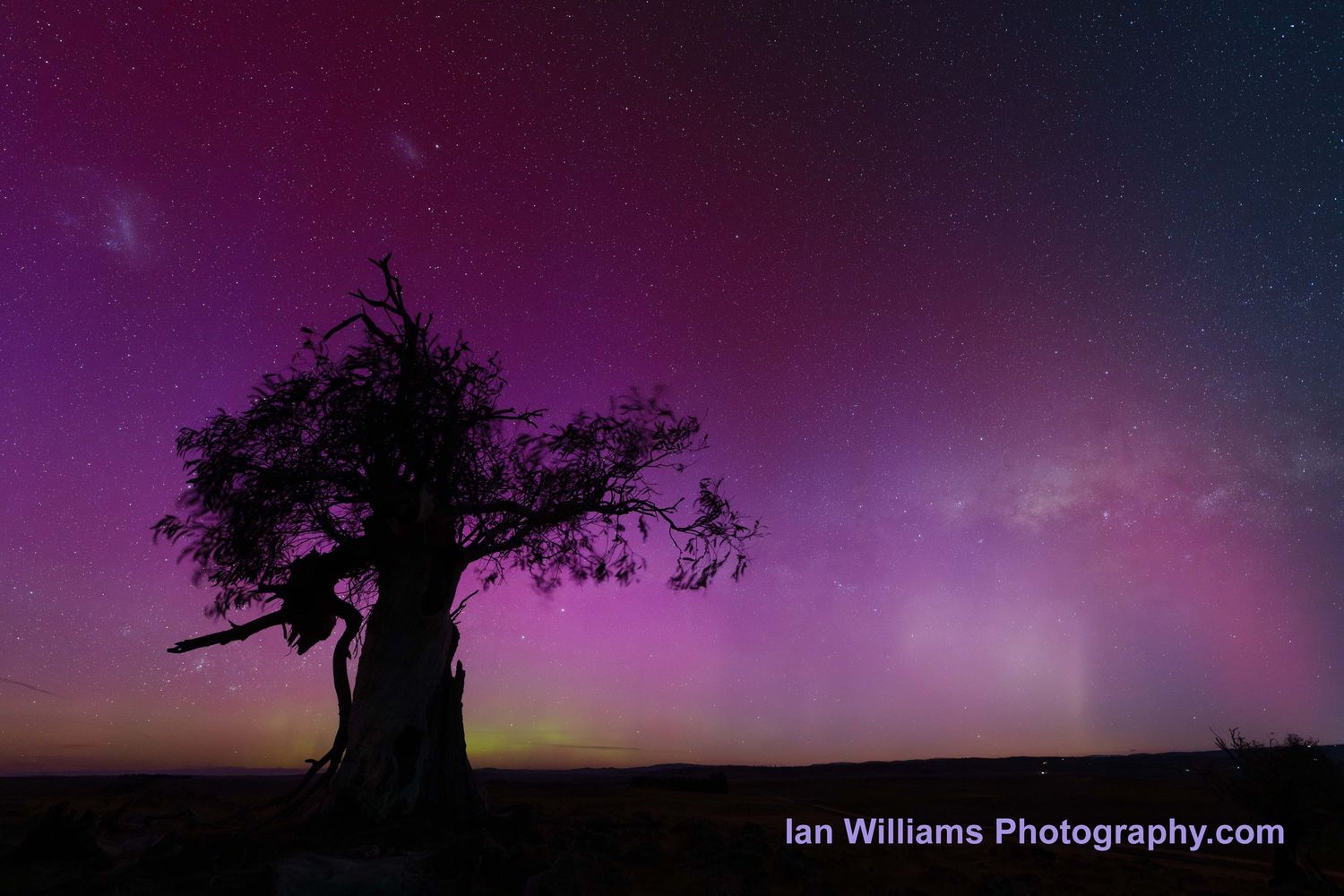
The incredible colours of the Aurora
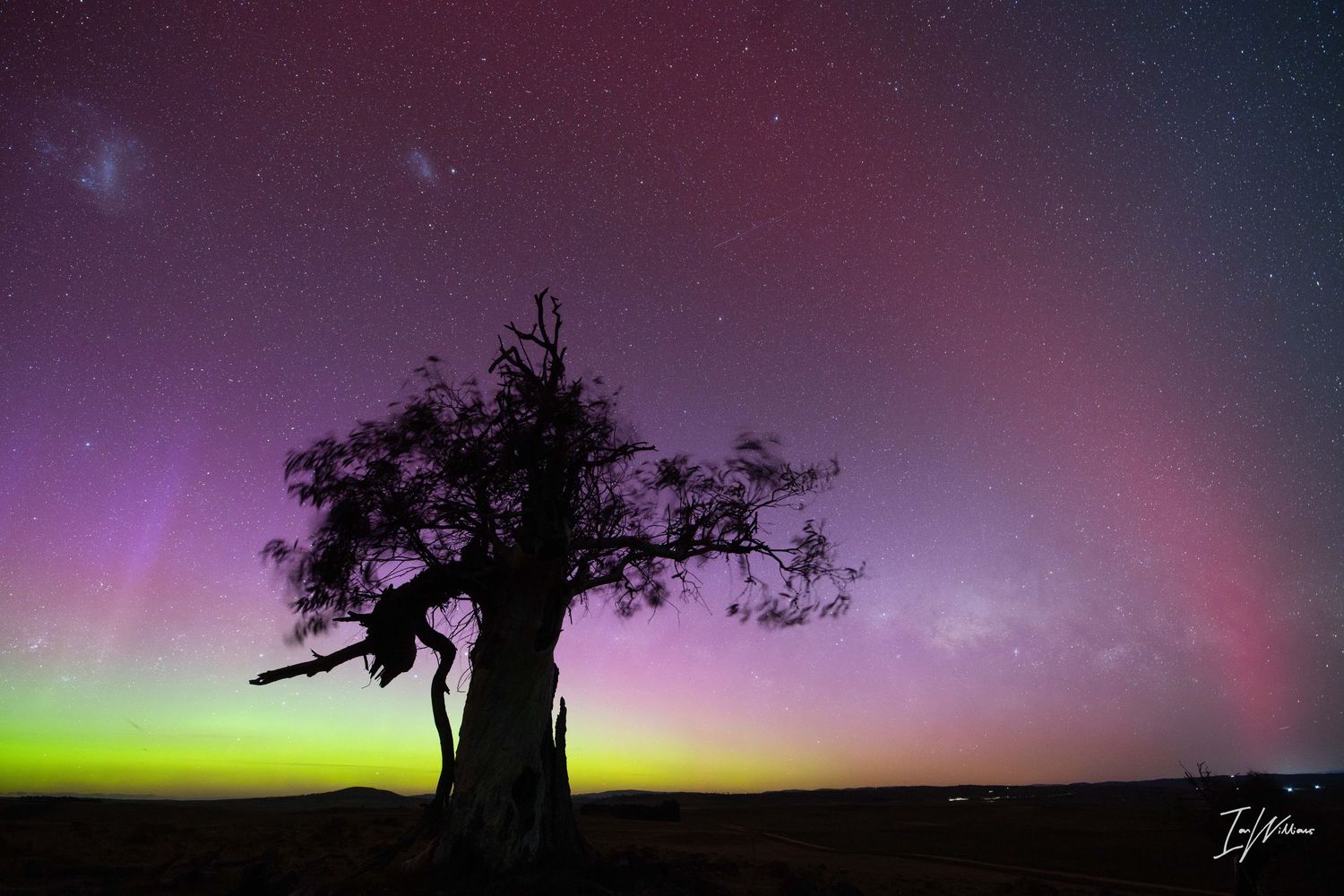
SAR Arc (to right) and aurora
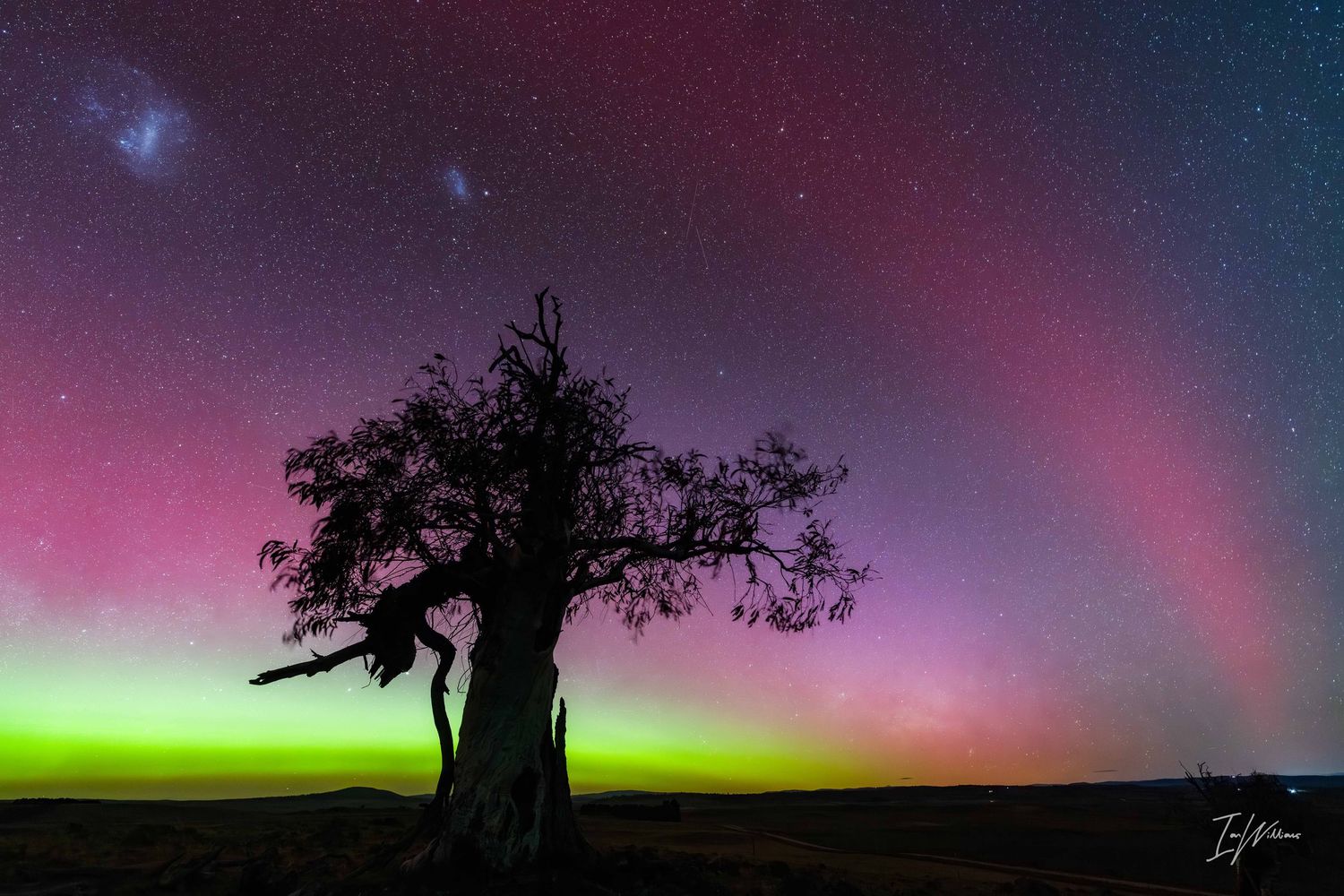
SAR Arc and aurora 2
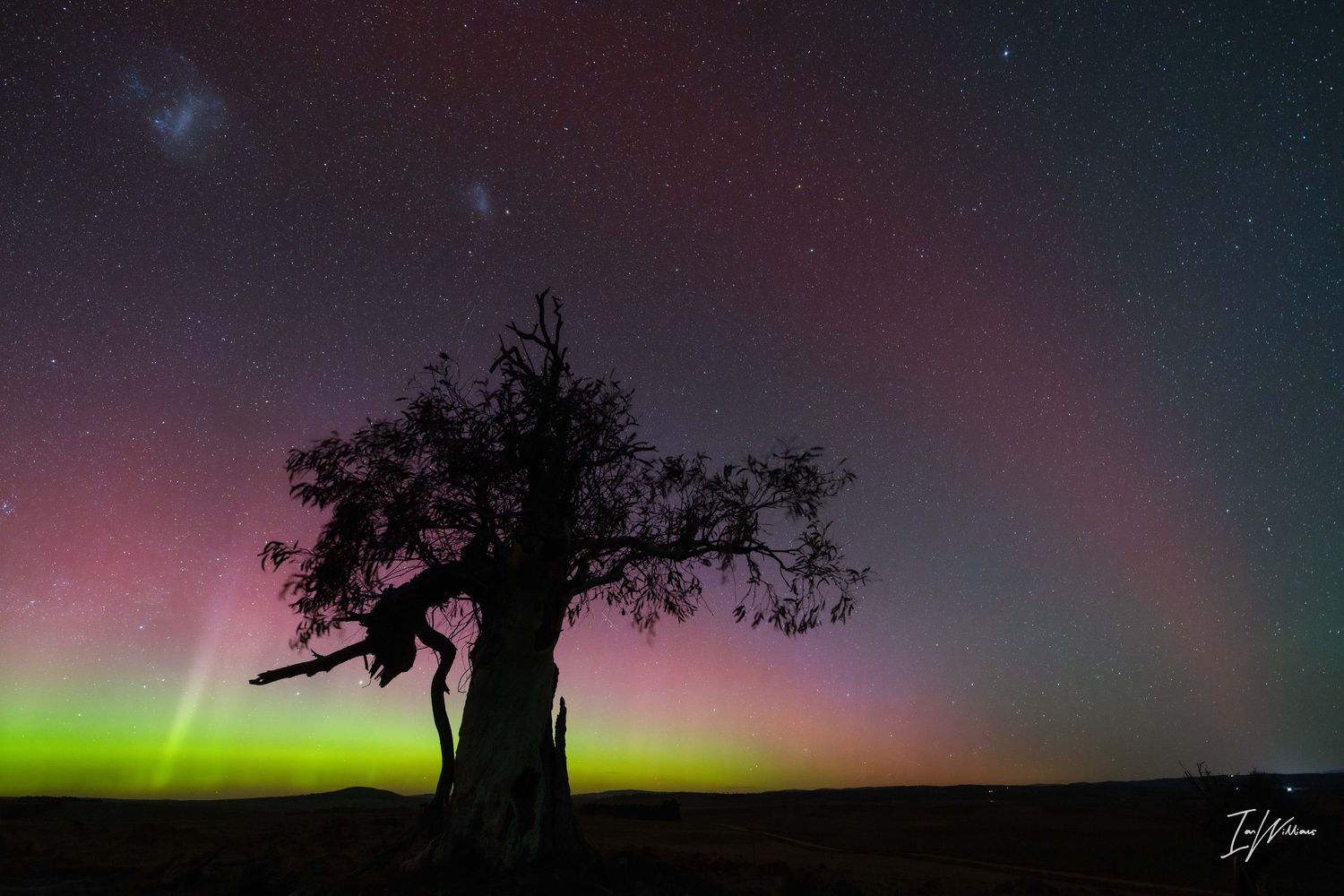
1365 - SAR Arc, Aurora Australis and the Magellanic Clouds behind an iconic Snowgum
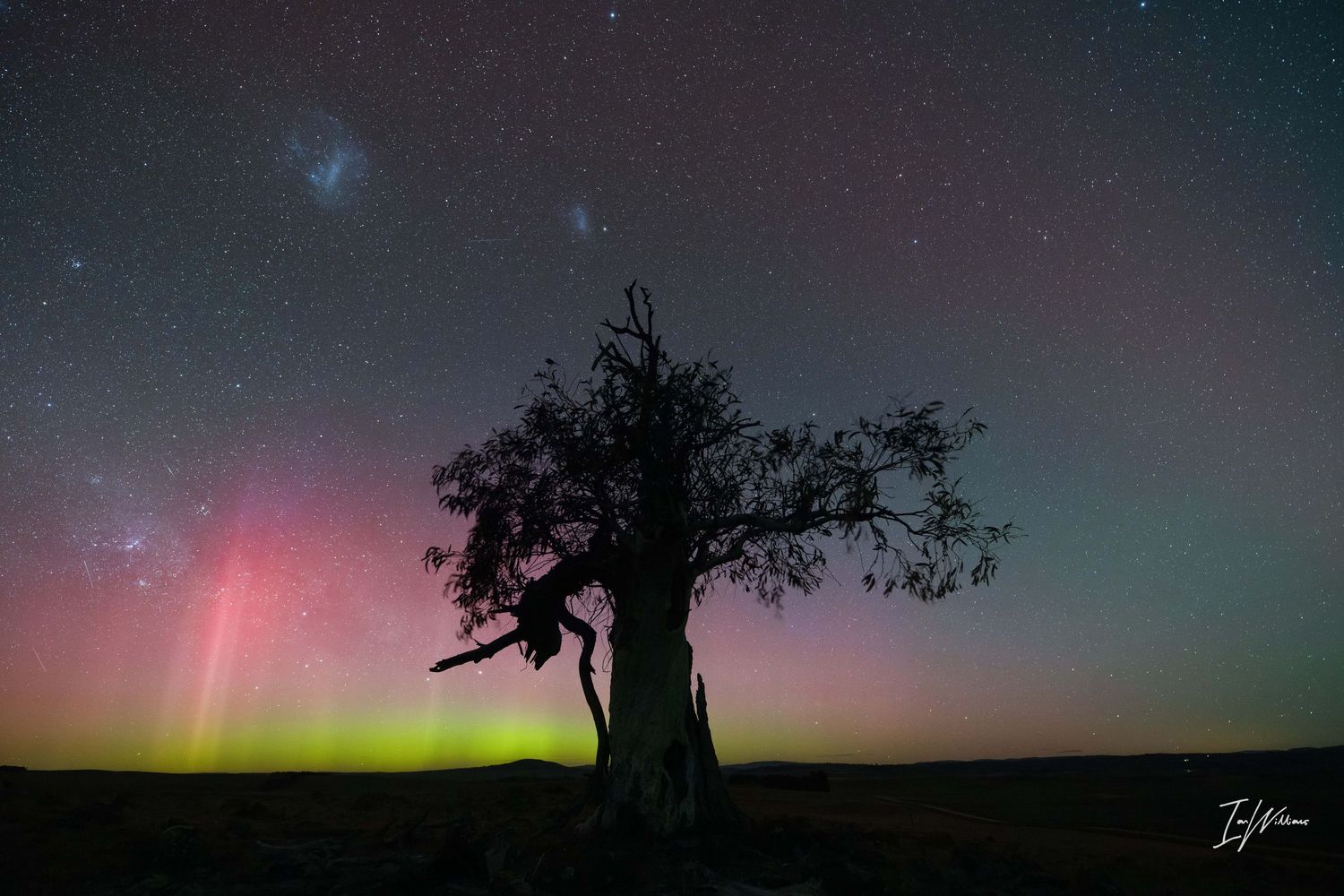
Lovely little display later on in the night
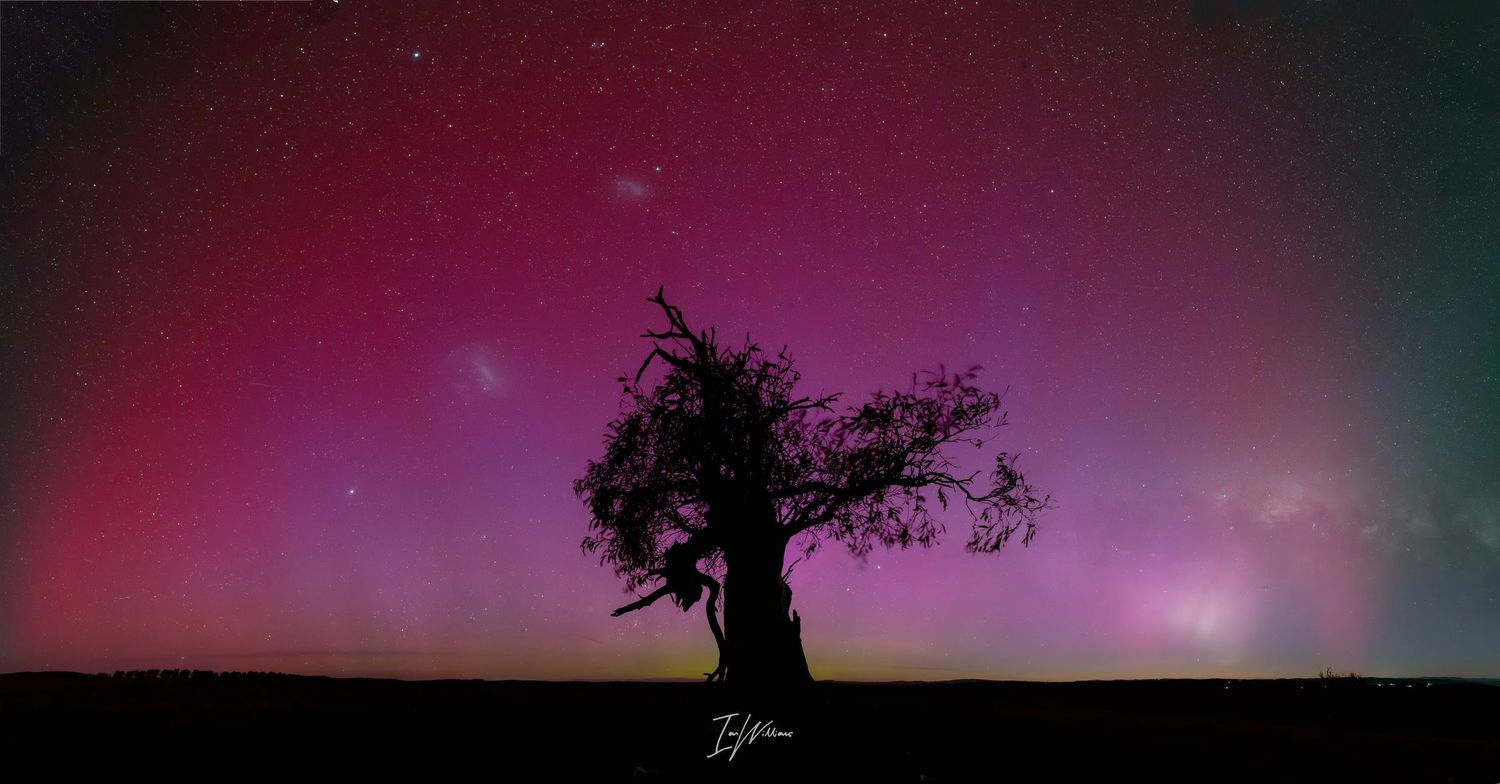
The full extent of the third most powerful solar storm to date of the 2024/2025 solar maximum
Another successful trip to Tasmania - 17 July 2025
I was fortunate enough again to make another trip to Tasmania from 12 to 20 July 2025. During that time we imaged three aurorae over three nights but the one on 17 July 2025 was far the bast. We had found a suitable south facing beach with Bortle 1 skies. Our expectations weren't high but due to the influence of a coronal hole, there was a nice flare up of activity about 90 minutes after we arrived. At its peak, the rays (beams) of the aurora could be seen flickering up to about 25 degrees above the southern horizon signalling a beautiful show!
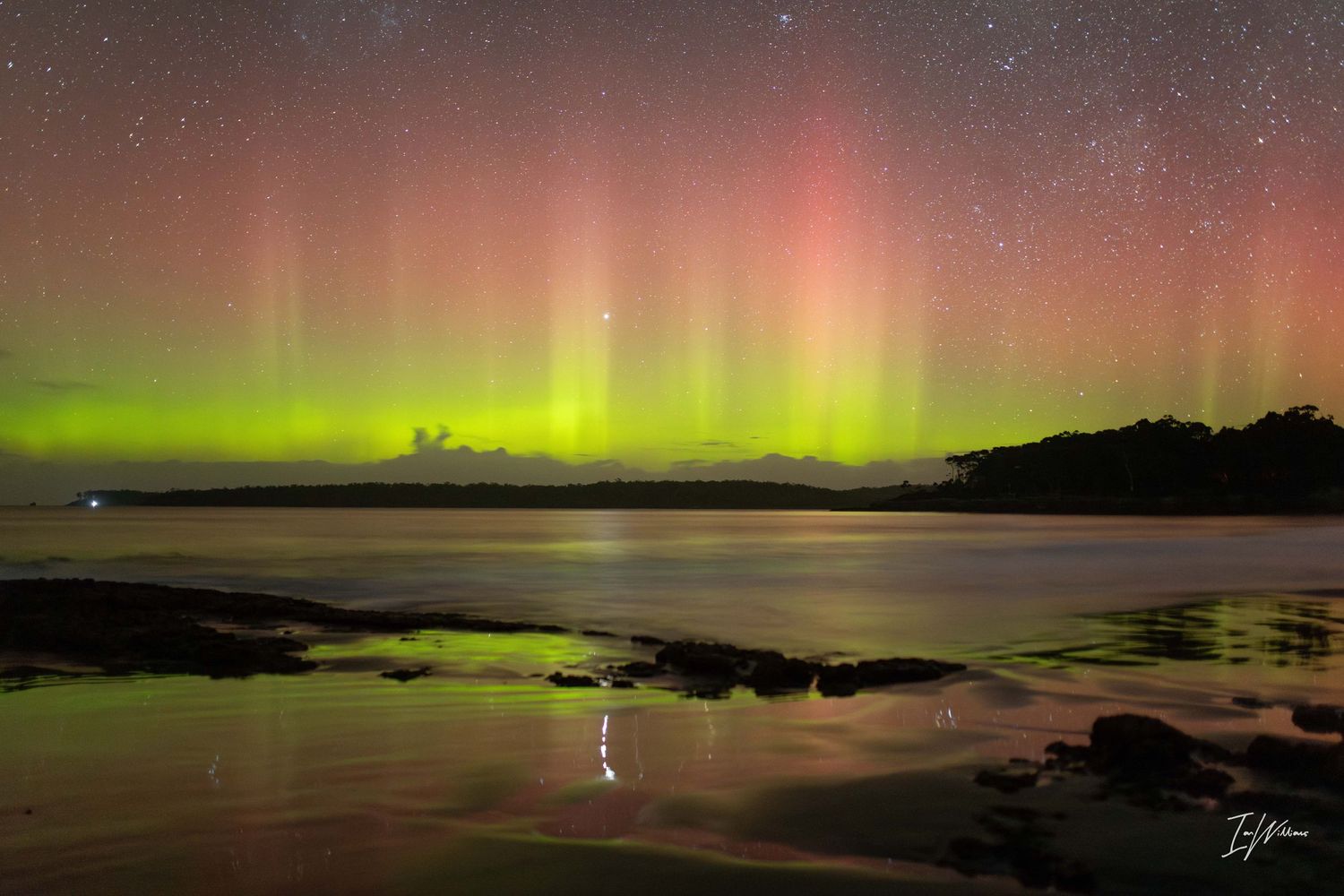
7503 - the Aurora springs to life!
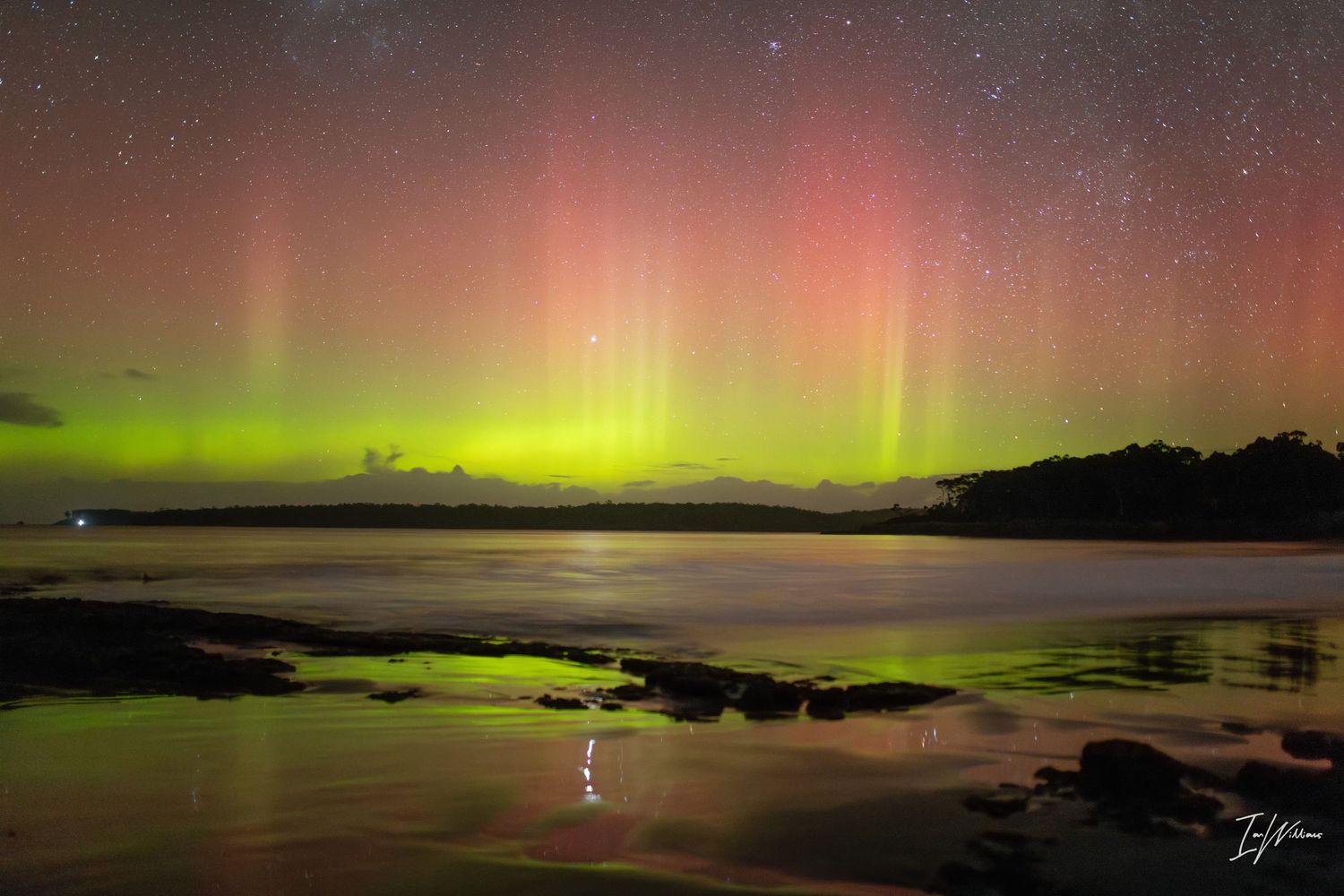
7506 - A delightful display of rays was seen in our cameras!
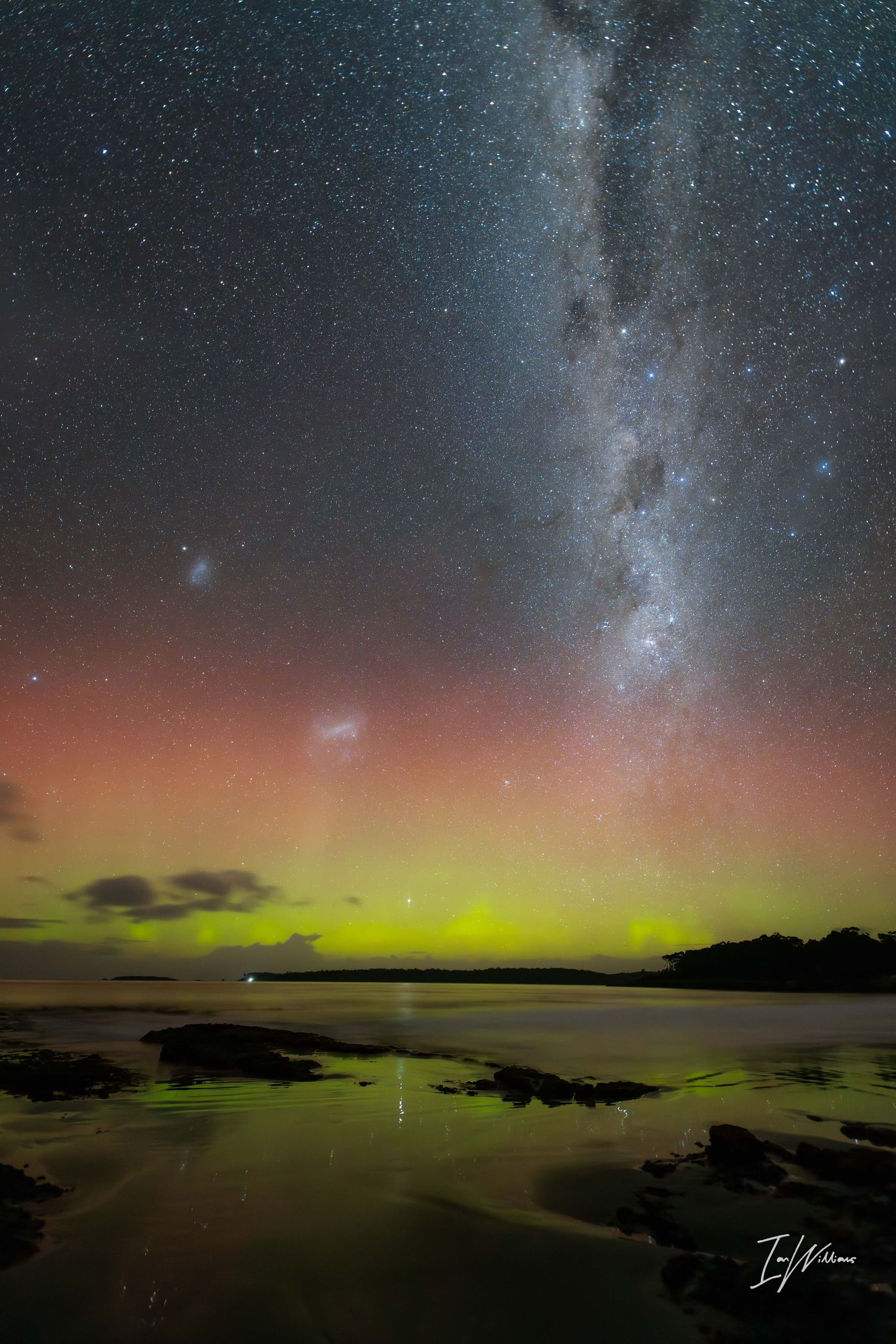
7595 - Our amazing southern skies - the two Magellanic Clouds and the Southern Cross with Aurora Australis below
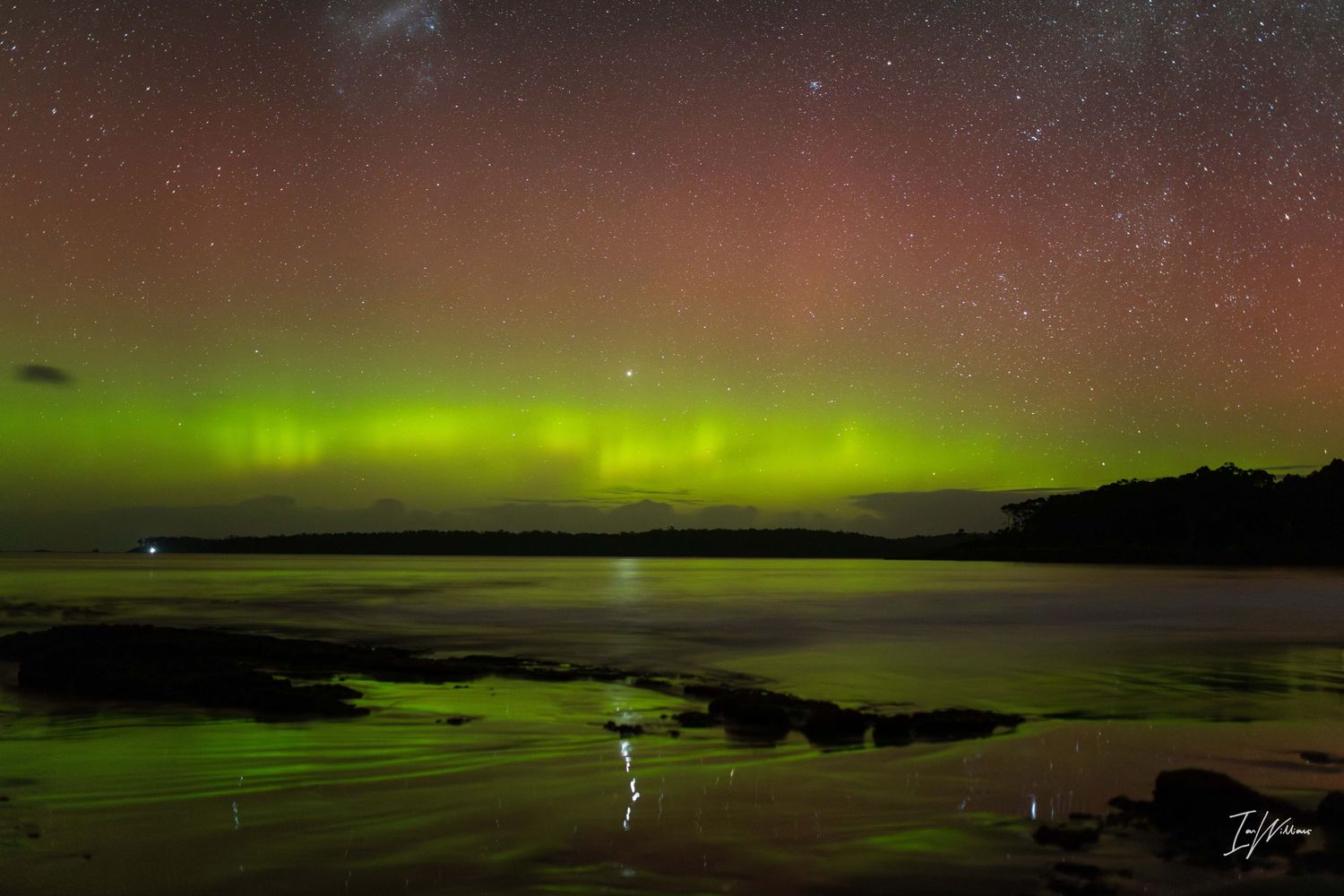
7527 - after the peak, beautiful green curtains continued
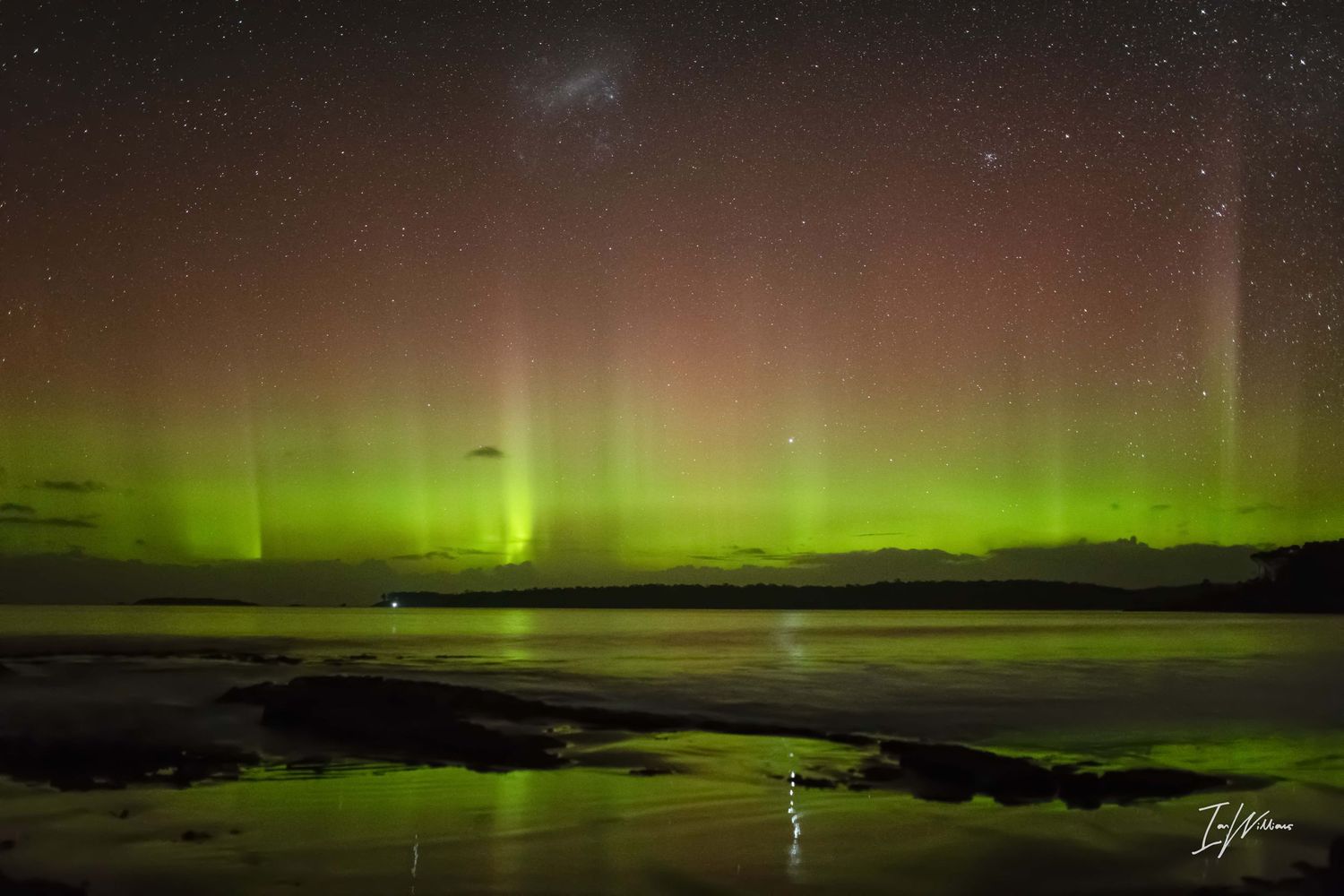
7570 - A lovely display of rays from the Aurora Australis
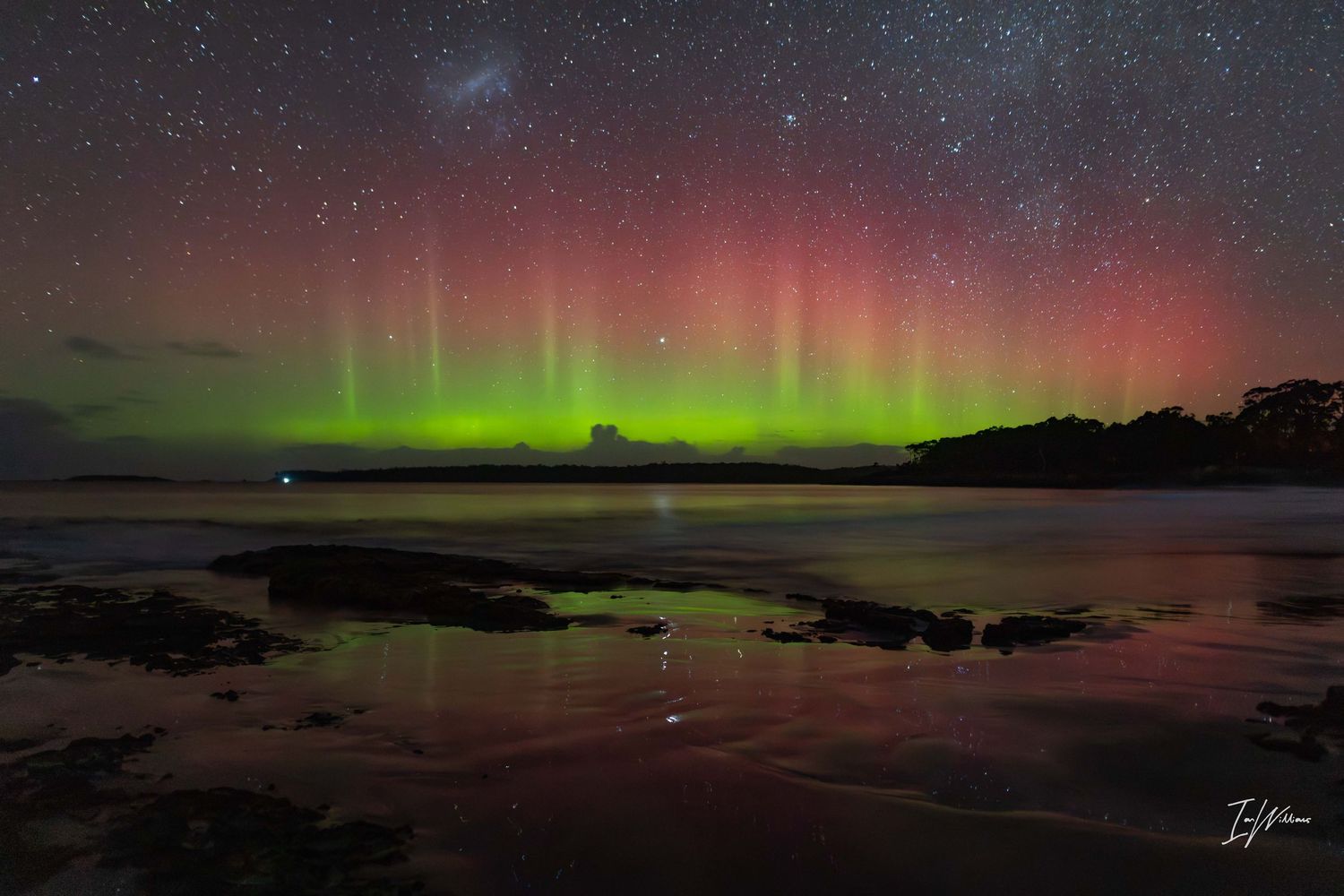
2214 - The Aurora takes off!

7584 - A wide view showing the extent of the aurora that night
G4 solar storm - 1 June 2025: An epic Aurora chase to Jervis Bay, NSW, Australia
David Marriott and I set out on a brilliant clear sunny Winter afternoon for the 3 hour journey down to Jervis Bay from Canberra. The reason - the cloud forecasts showed clear skies down there until midnight whereas the forecast was for the cloud to move into the Canberra/Snowy Mountains area around 9 pm.
We didn’t want to miss this event.
As we neared Bungendore I got a notification from Space Weather Live that the Coronal Mass Ejection (CME) which was forecast to trigger very major auroral activity had arrived at the DSCOVR Spacecraft. The solar wind speed was a staggering 1002.8 km/second! I had only seen this once before - the huge aurora we imaged in Tasmania on 11-12 May 2024.
Was this event going to be as good as the incredible show we photographed in Tasmania both AM and PM on 11 May and into 12 May 2024? We thought it looked good and we were glad that the CME had arrived earlier than forecast.
At around this time, I received a message from Doug Ingram in Sydney asking about the aurora. We agreed to meet Doug down at Jervis Bay at our chosen location so that we could photograph the aurora together.
When we arrived on location at around 6:30 pm, I was struck by the clear skies, but also the brightness of the waxing Moon which was illuminated 31.6%. We had previously photographed a bright auroral event in the Snowy Mountains with a Moon at about 50% so felt confident.
Initially our shots showed a nice subtle purple. About 45 minutes to an hour later, the green yellow started to appear and Dave remarkled, "I think “beams will start soon”. He was right and the aurora developed beams which then went away. A short time later it exploded into a naked eye show where we could see beams and the aurora clearly against the moonlight sky. It was a special moment for Doug Ingram as he had never witnessed a naked eye auroral display before. It was great to be with him when this happened.
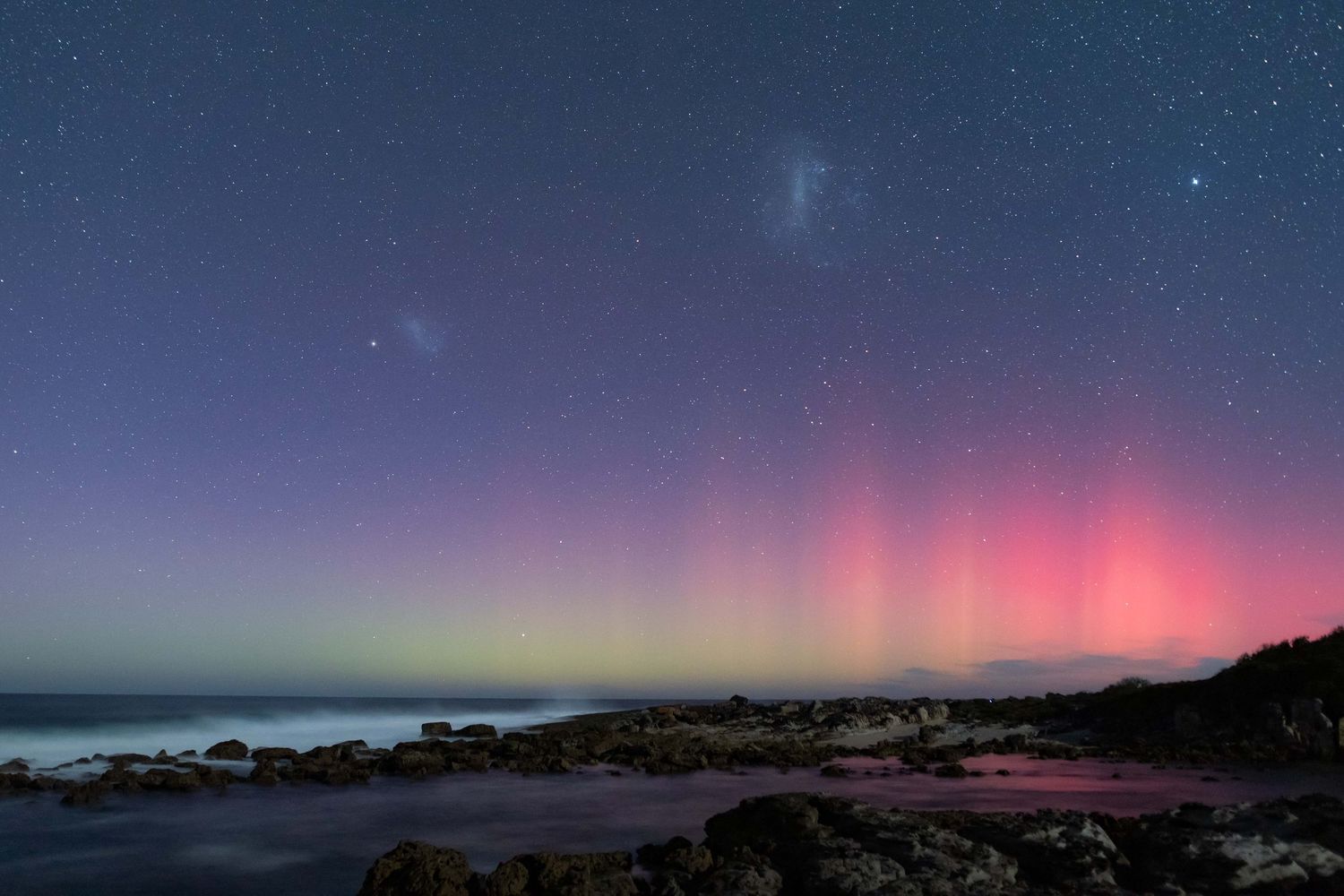
The first shot, at 14 mm, shows the peak of the aurora together with the Emu. The rays (beams) I estimated were about 35 degrees up into the southern sky.
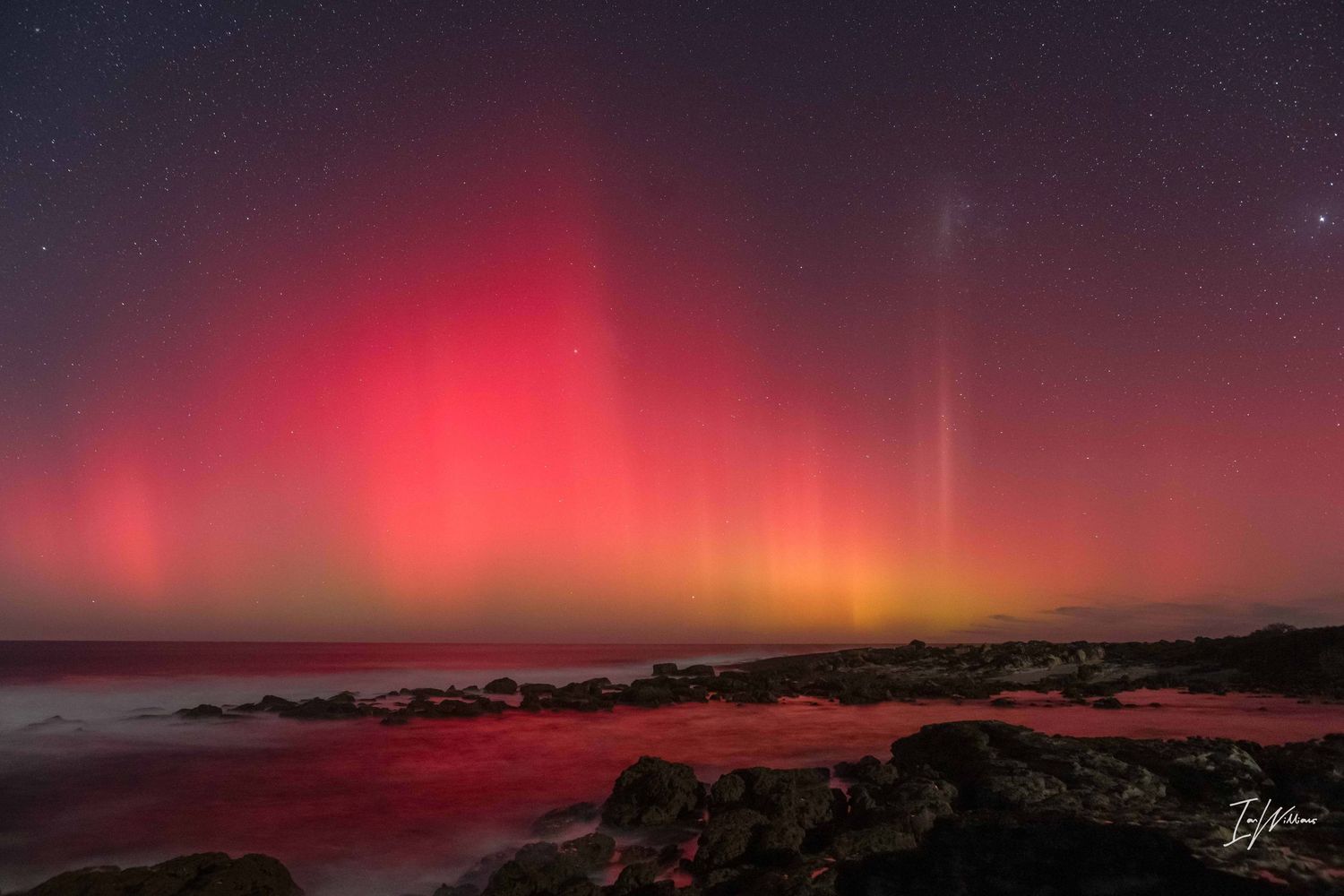
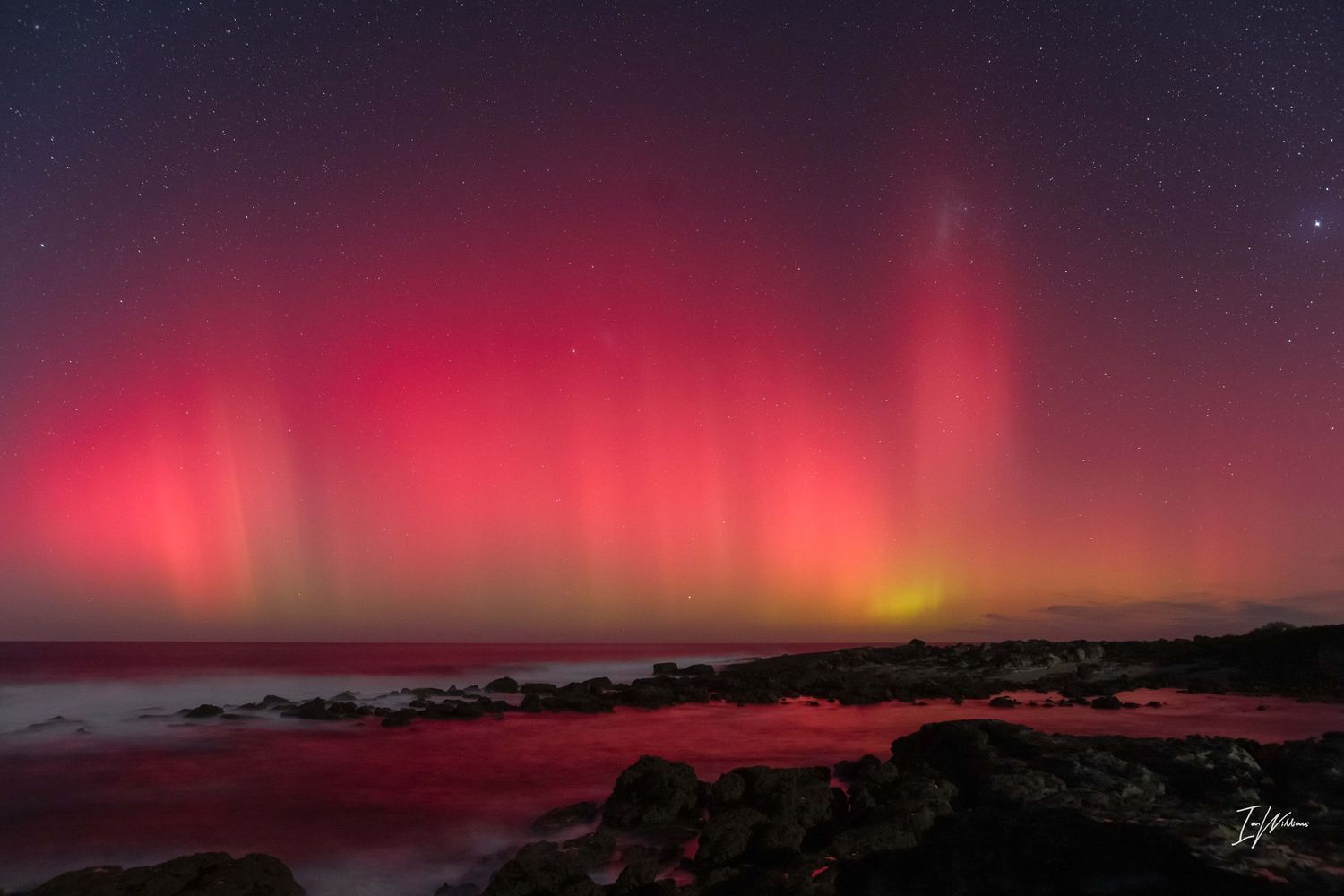
The second and third shots are 24 mm shots which show two stages of the most intense period of the aurora. It was a stunning display! The colours were reflected on the rock pools very brightly, we could see it lit up with the naked eye! In the third shot you can see a pencil like ray (beam) that appeared to point to the Large Magellanic Cloud (LMC). This feature appeared several times and was clearly visible to the naked eye.
It was a great evening out with friends in the great outdoors.
What a way to start Winter!
Ian
#visitshoalhaven
#boodereenationalpark
#jervisbaynsw
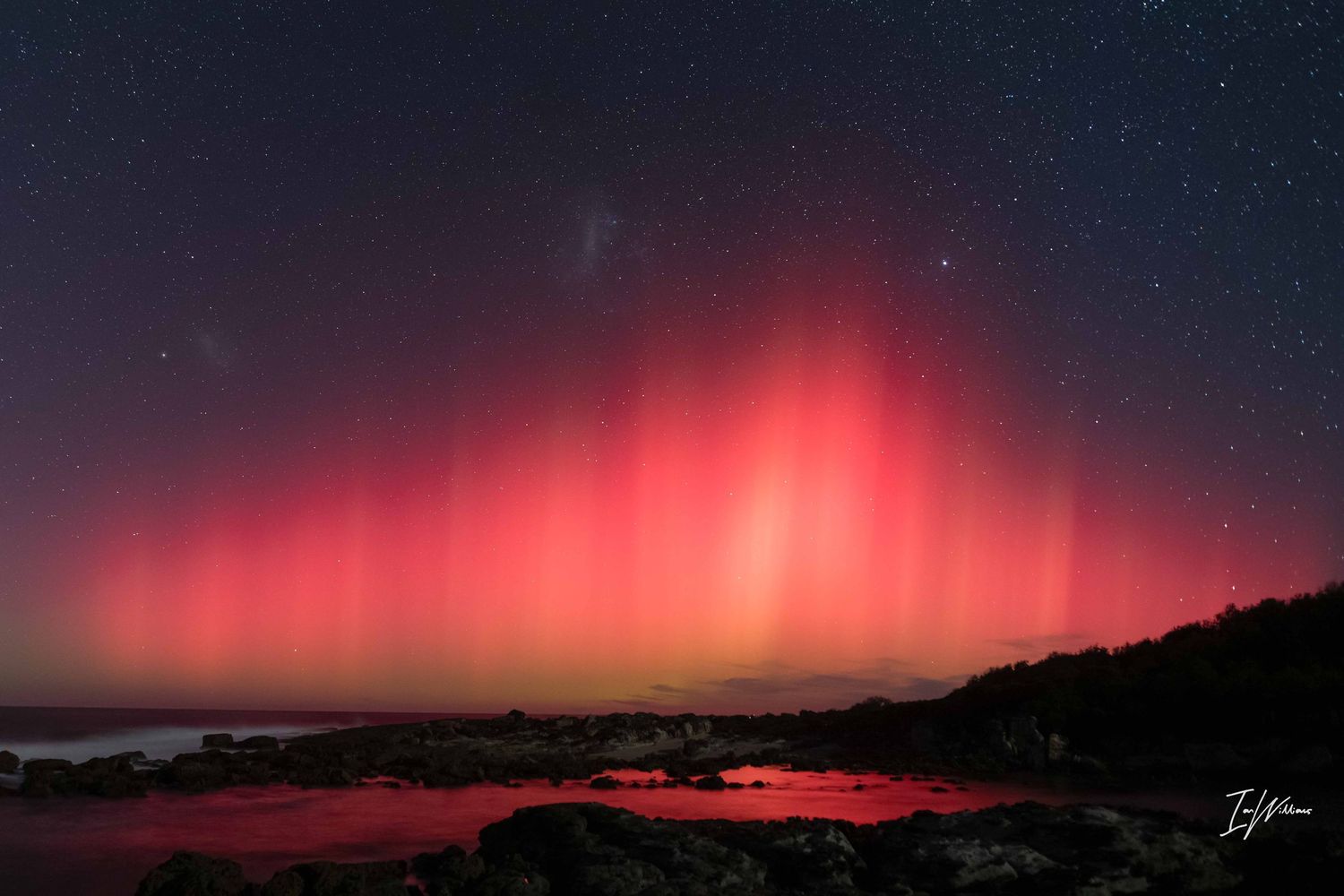
Aurora Australis, Jervis Bay, New South Wales, Australia
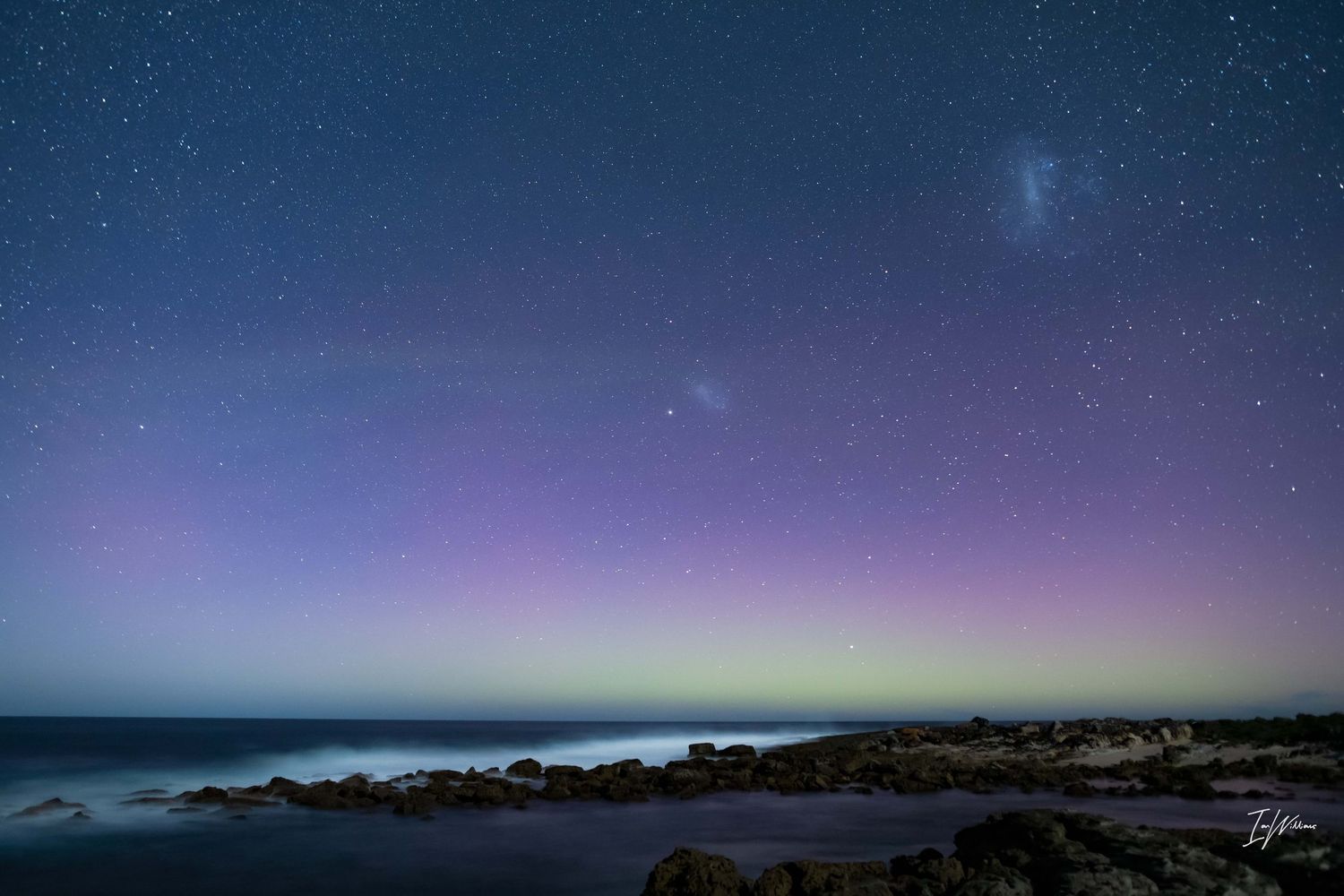
0954 - Just before the beams (rays_ appeared)
0987 - the first beams appear!
Aurora Australis, Jervis Bay, New South Wales, Australia
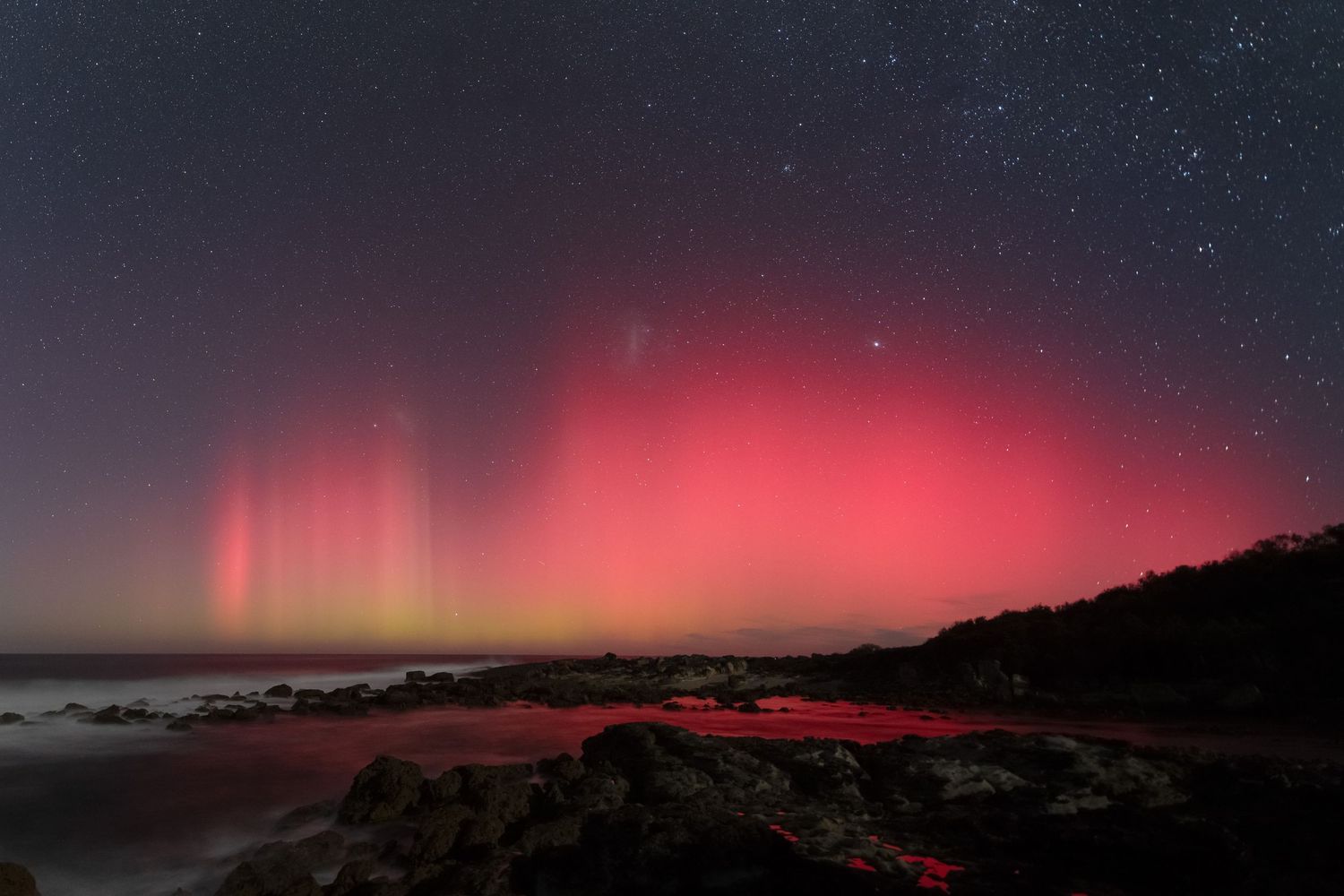
The Emu and the Aurora Australis
5756 - Rapid build up of the aurora!
5757 - Build up 2
5758 - Build up 3
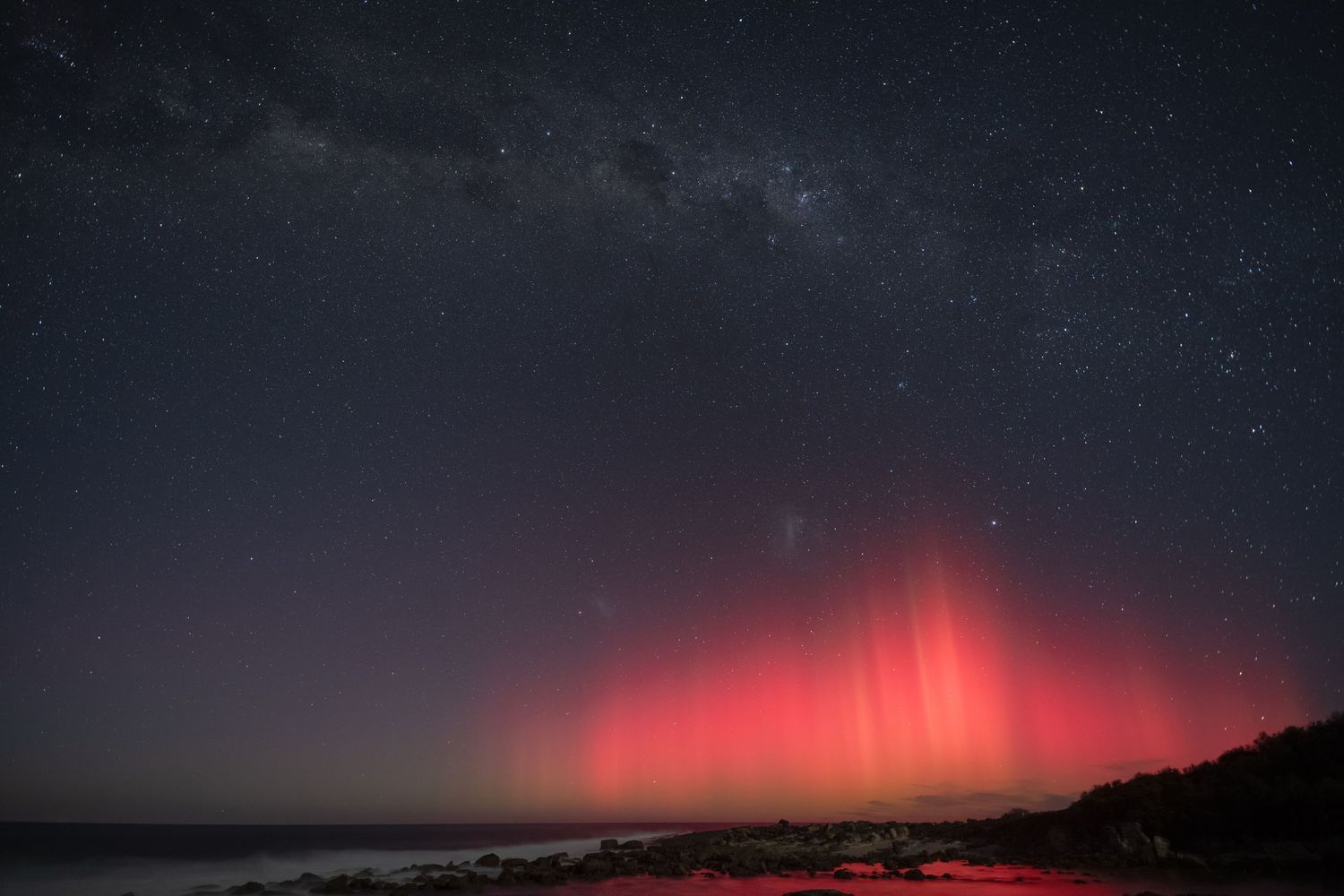
5760 Bright aurora under the Southern Crosss
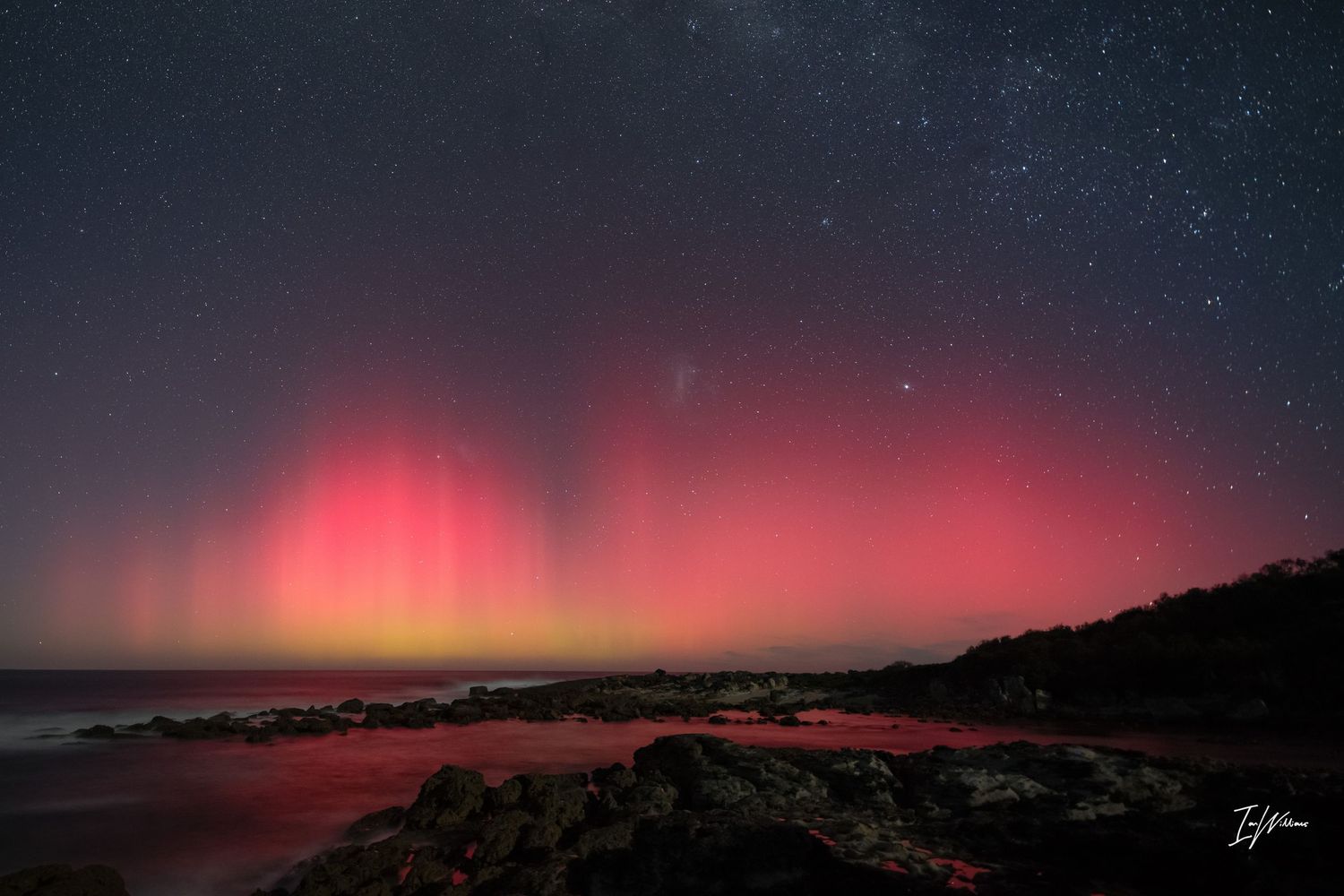
At its peak!
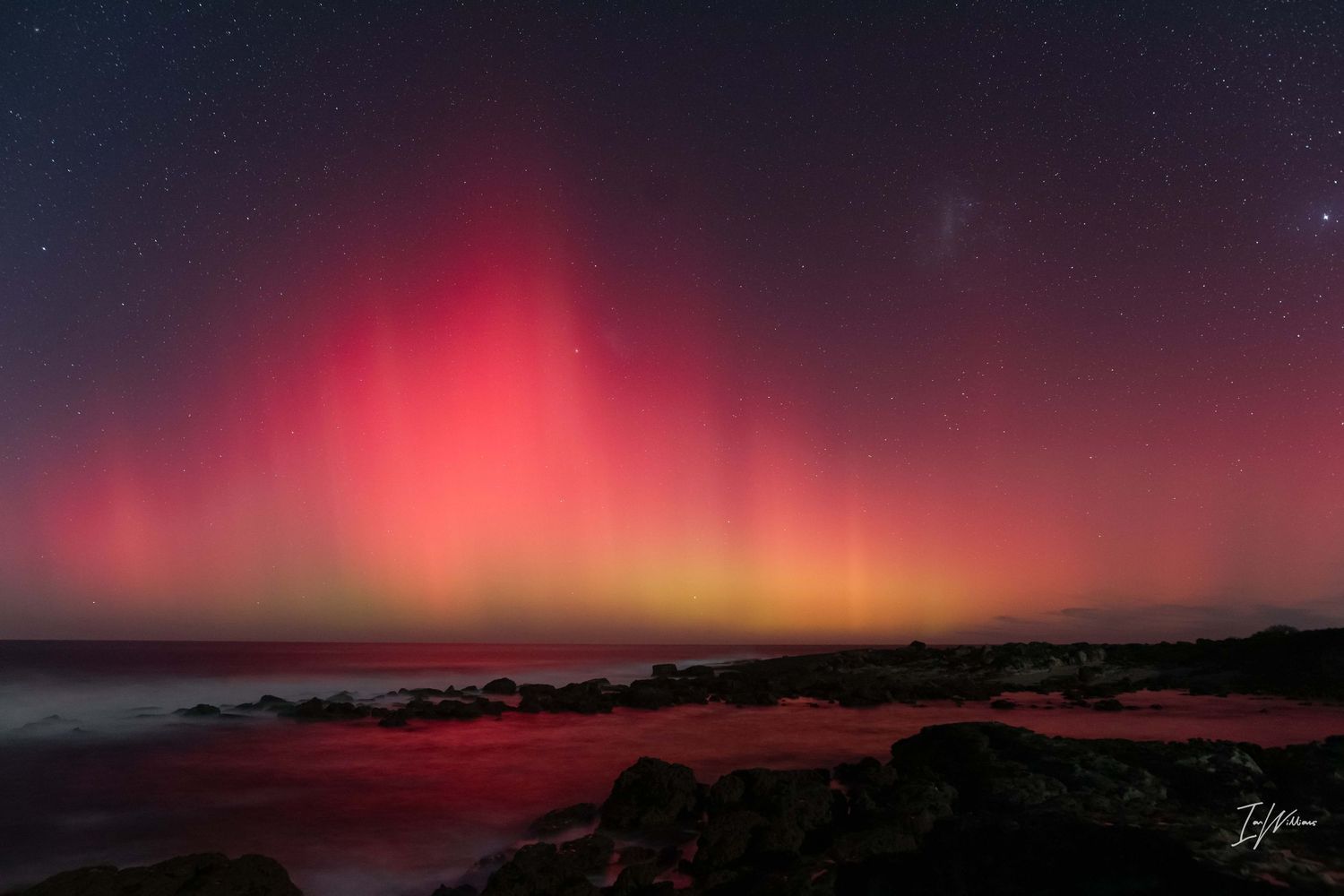
1010 - A bright auroral explosion on 1 June 2025
A lovely little display down the Monaro, 29-30 May 2025 in freezing conditions
After finishing work, I travelled down to the Cooma area on a brilliantly clear afternoon. The conditions held and I shot right through to nearly 3 am at various locations with diffuse aurora present most of the time. According to the weather bureau it got down to minus 6.3 in the area, no wonder the grass was crispy and white with frost. Even pieces of frost fell off my tripod when moving locations. The aurora at time had small rays (or beams) and here are a couple of shots!
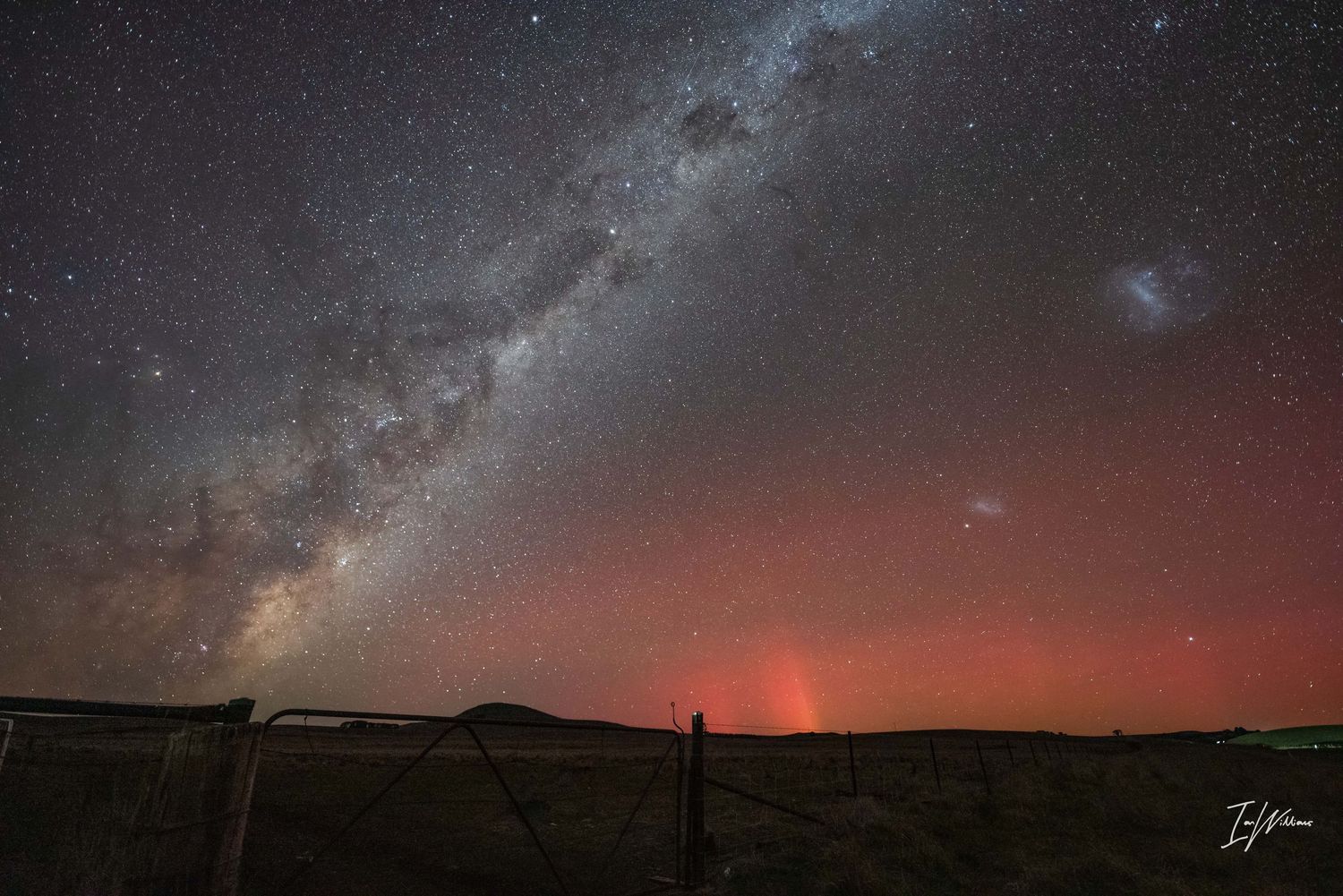
Aurora Australis and rising Milky Way core known to Australia's first people as "The Emu"
Aurora Australis, Cooma area
Return to an old spot and a nice little display 2 April 2025
Headed out to a spot I had not visited since the 2019-20 fires. Not much had changed. I hope to get out there more in the coming weeks to do some start trails!

The rising Emu, Magellanic Clouds and red of the Aurora Australis
The fantastic open spaces of the Monaro and beautiful little display
From numerous natural lakes, ancient Snow gums and Candle barks to rocky tors, the Monaro area of New South Wales , Australia nestled to the east of Australia's highest ranges has it all. Its amazing dark skies are a national treasure! On 1 March I ventured to the area to do so astrophotography on private property. A beautiful but brief display of the Aurora Australis occurred as a perfect backdrop to a composition of an ancient snow gum on granite boulders. #Monaro

Small red Aurora Australis forms a lovely backdrop to a typical scene on Australia's Monaro
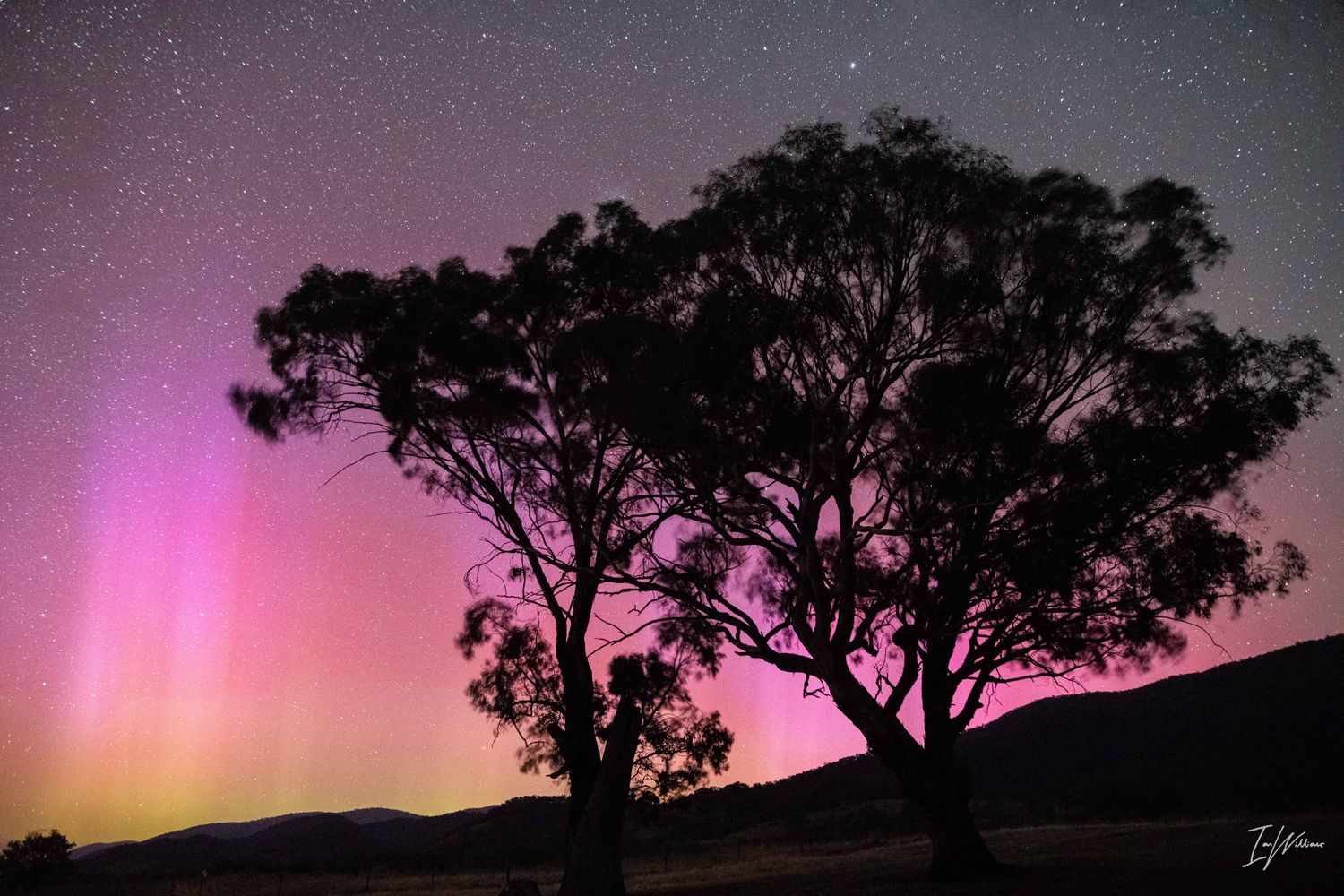
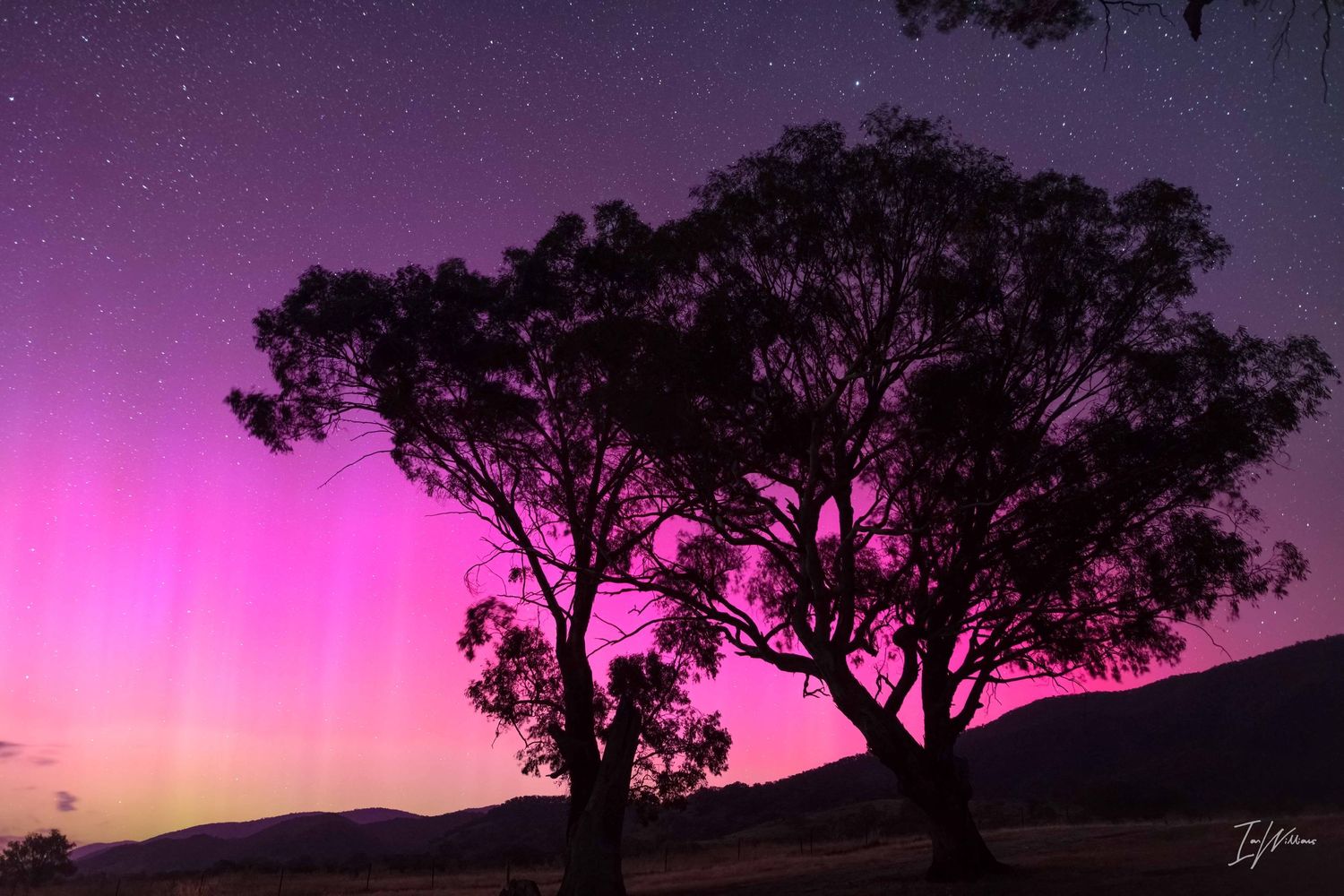
Happy New Year 2025 Aurora Australis
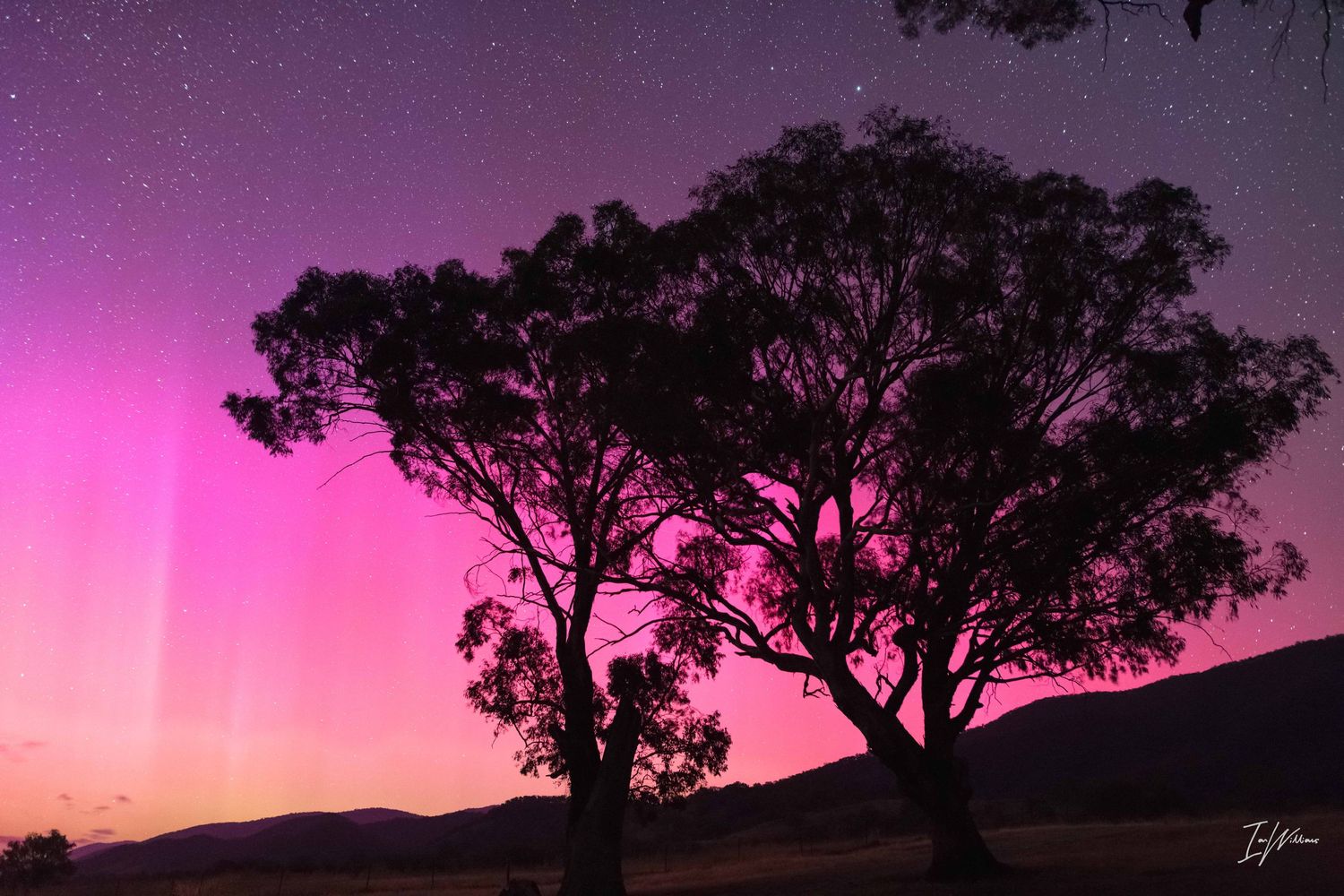
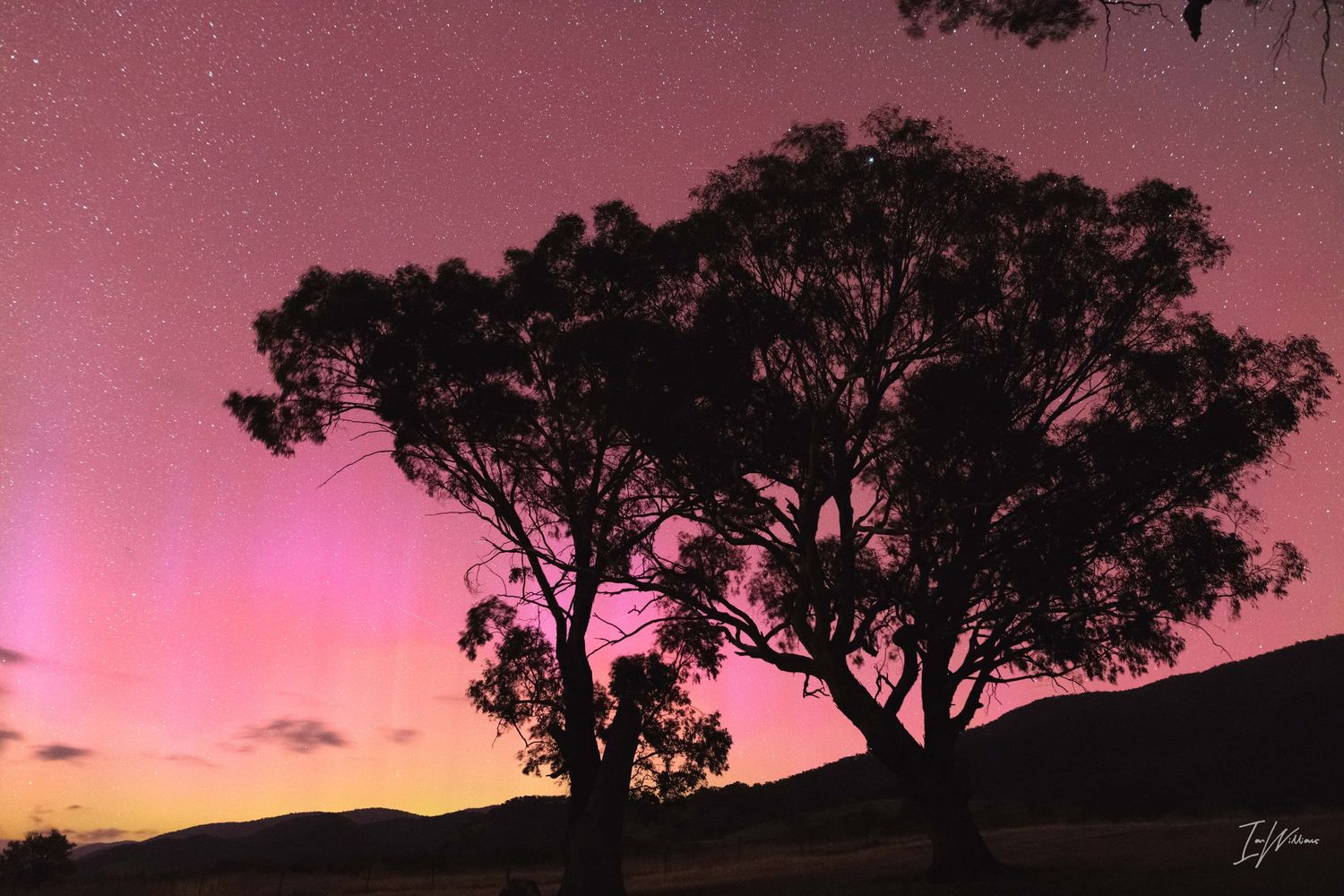
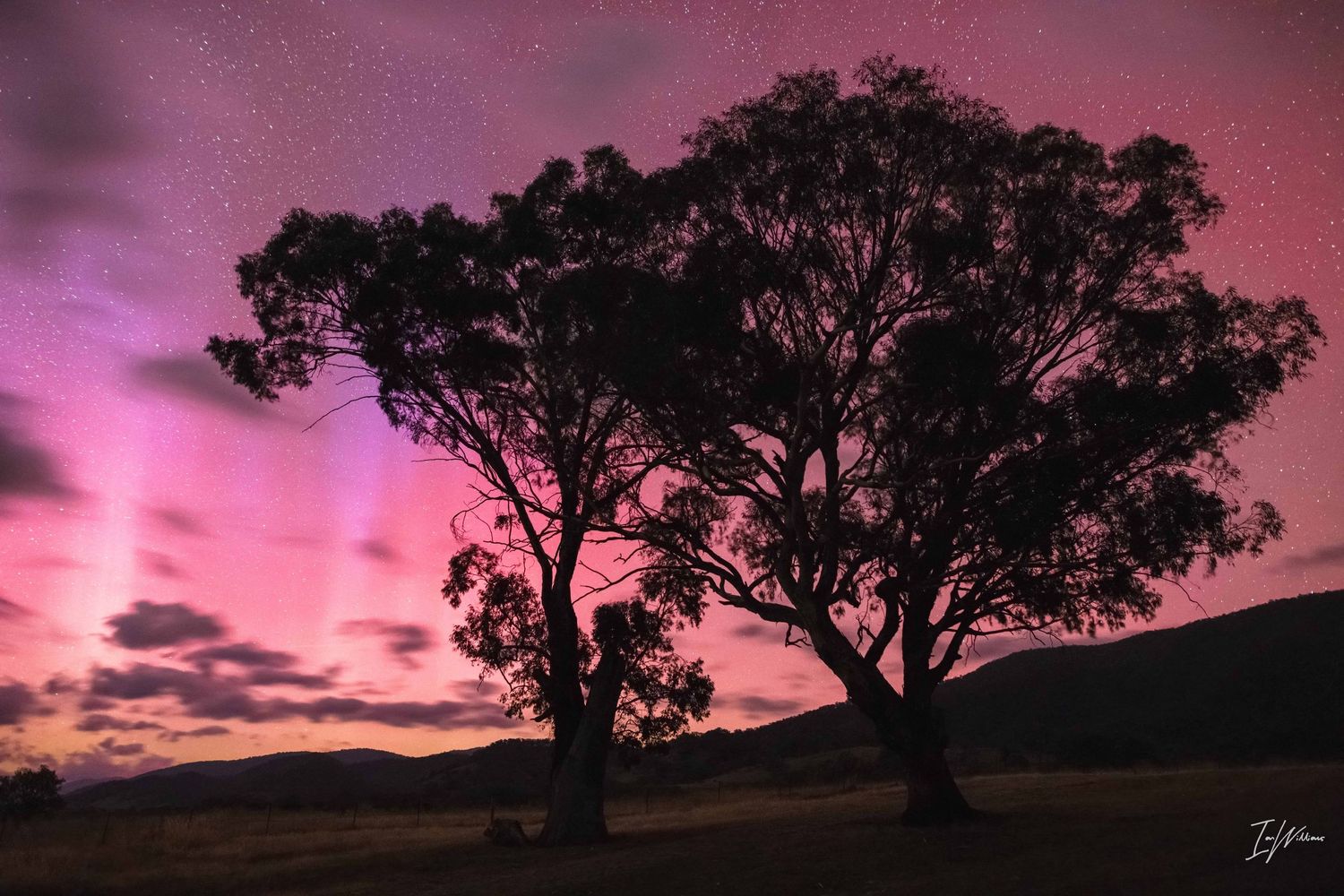
An amazing aurora was seen on New Year's Day. Due to cloudy weather coming into the Canberra area, I actually drove north and west to get on the other side of the ranges to avoid the cloud. There we imaged the aurora for about 3 nd half hours. As we had pulled an all nighter the evening/morning before we were tired and left whilst the aurora was still going.

8545
8529
8483
8567
8567
8542

9289
9304
9311
9313
9342
9372
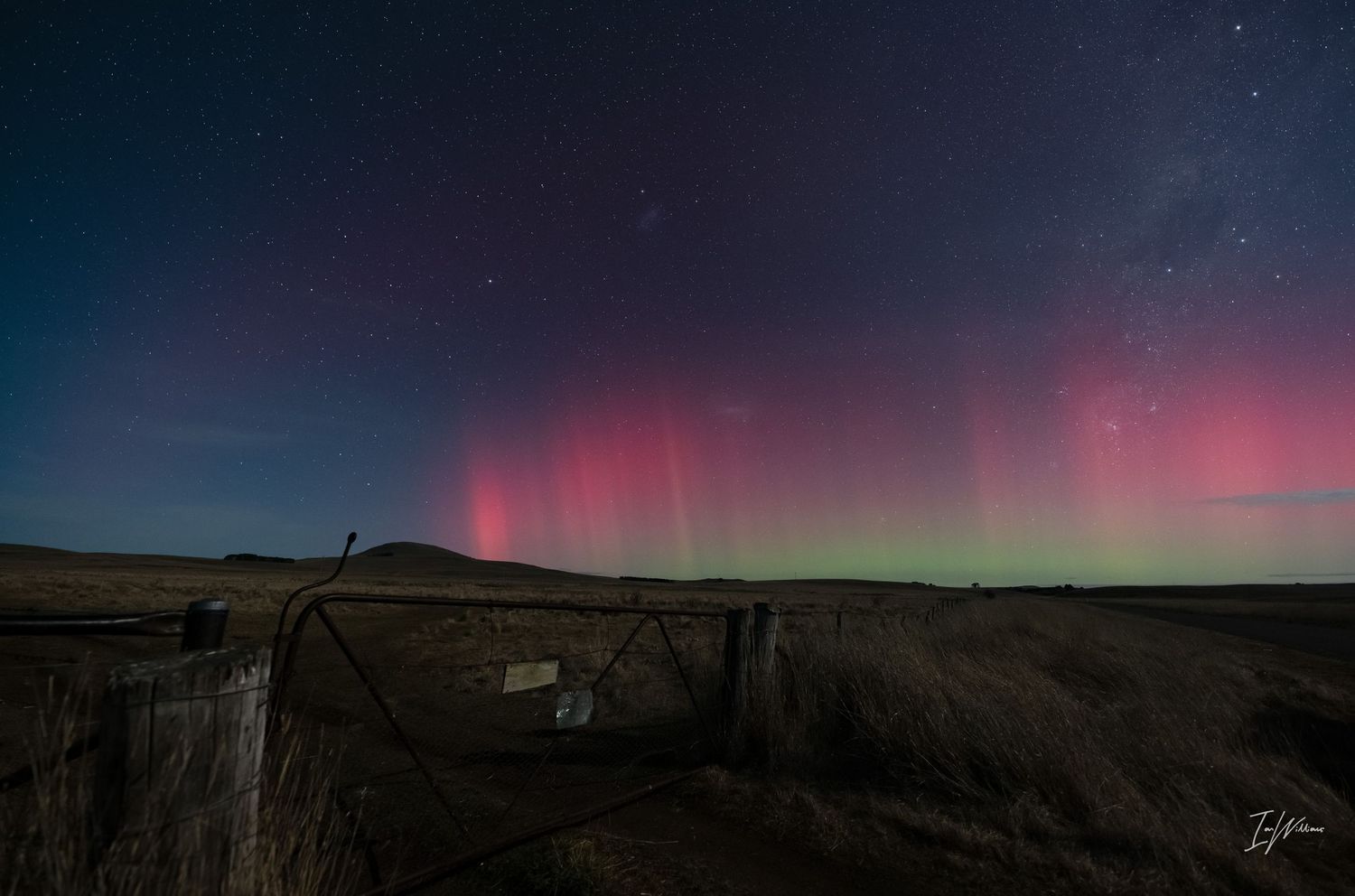
Monaro High Plains aurora, 12 August 2024 - the night the aurora went "Kaboom"
It was raining in Canberra where I live. However despite the rain and cloud pushing to the south, it remained clear down the Cooma area.
A friend David Marriott and I made the short trip to Cooma and elected a spot with good views to the south.
The auroral storm mainly due to a CME associated with an X class flare and a number of other CMES was strong and promised to overcome the first quarter moon.
Upon arrival at our spot, we started imaging and saw red pink beams of the aurora in our shots.
A moving area of cloud threatened to end our photography but it fortunately started to dissipate and we could see that we would enjoy clear skies.
We were sitting in the car to avoid the Winter chill (it was about 0 degrees, when all of a sudden David said look at that huge beam. We hastily got out of the car and despite the moon, we could easily see the red and pink of the aurora and its beams in the southern sky with the naked eye. It literally went kaboom like this, exploding into action at 10:11 pm that night!
#Snowymountains #Monaro #Monarohighcountry
5534 - The Aurora over the Monaro Plains
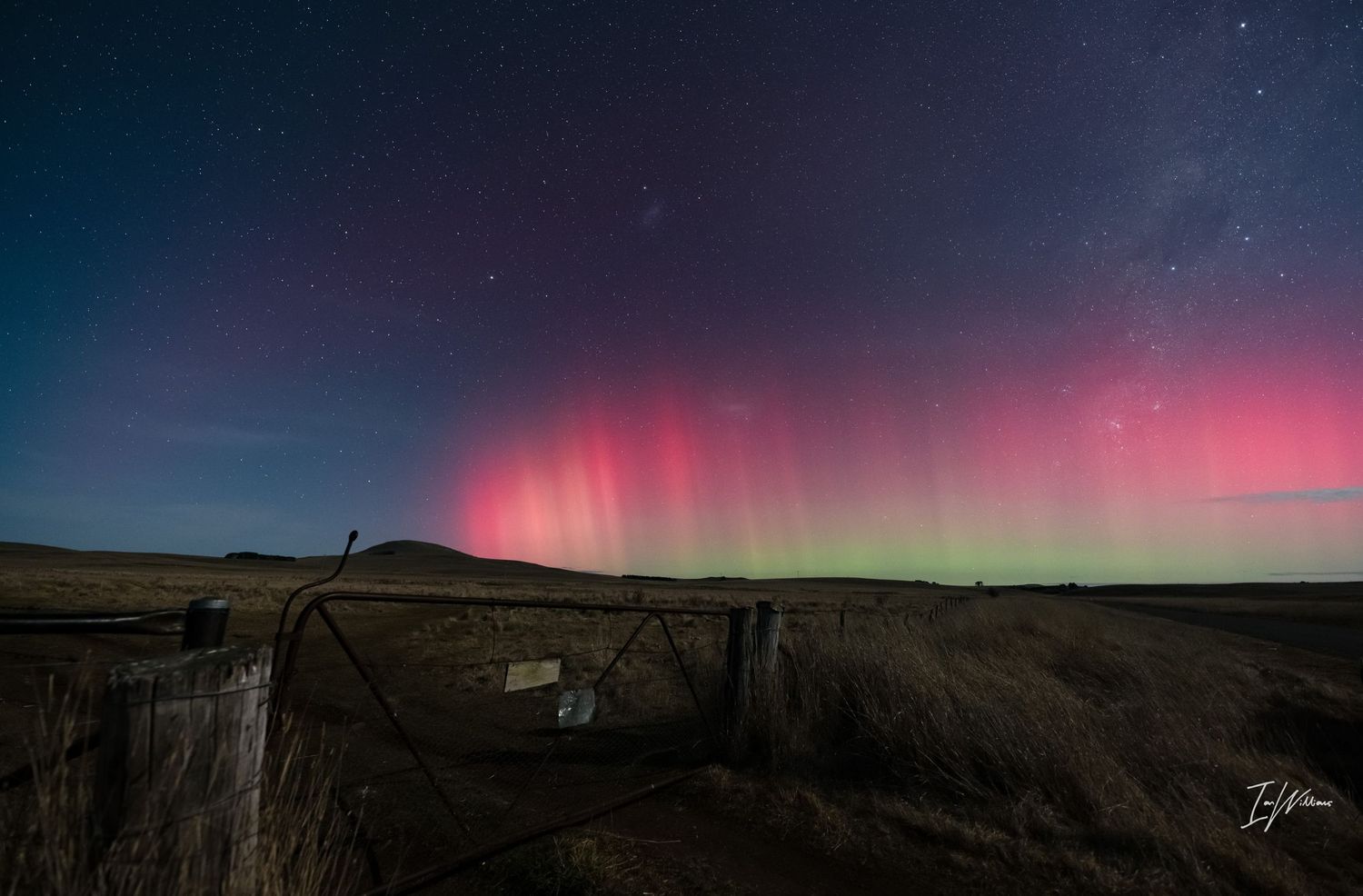
5535
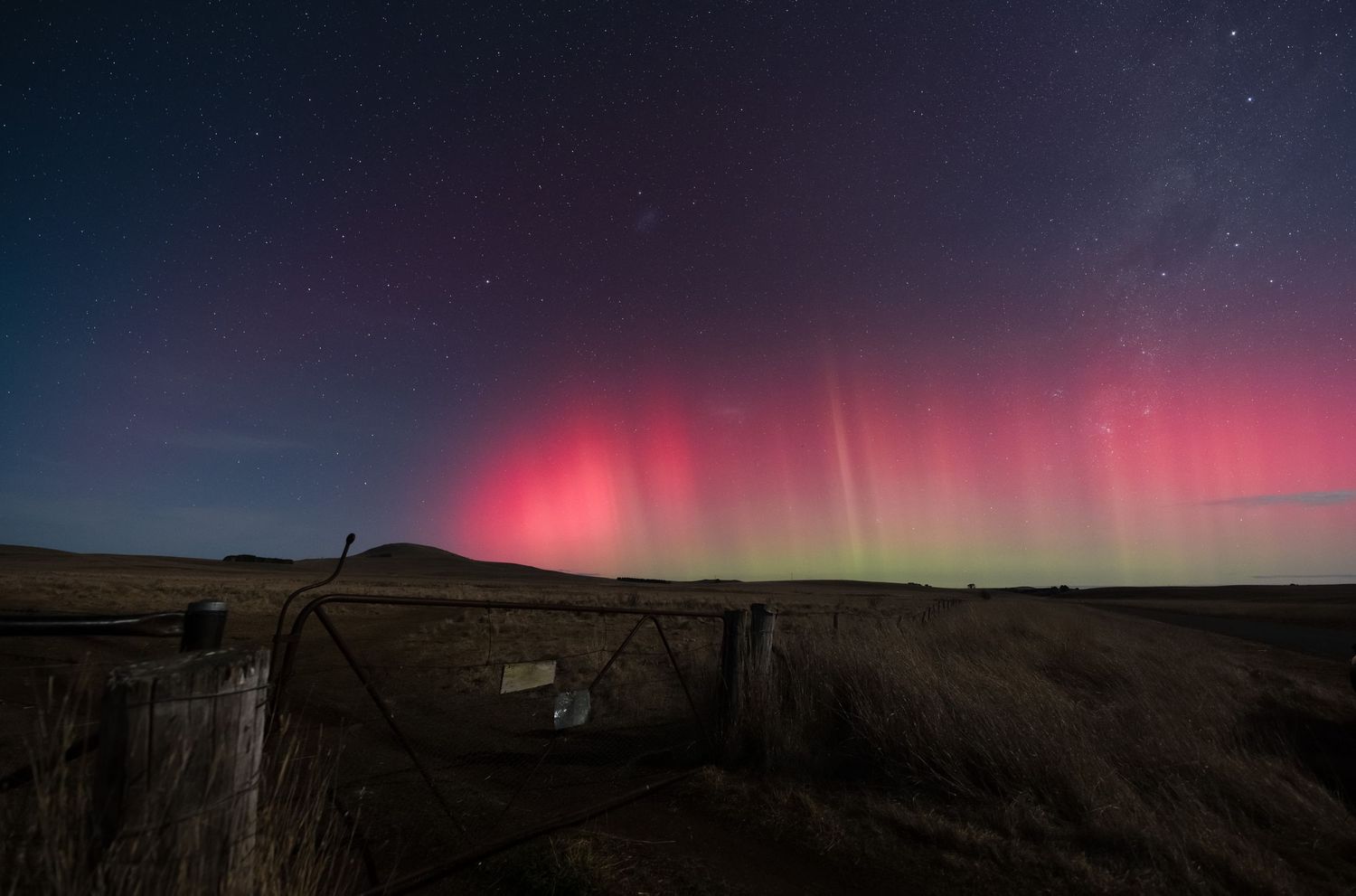
5536
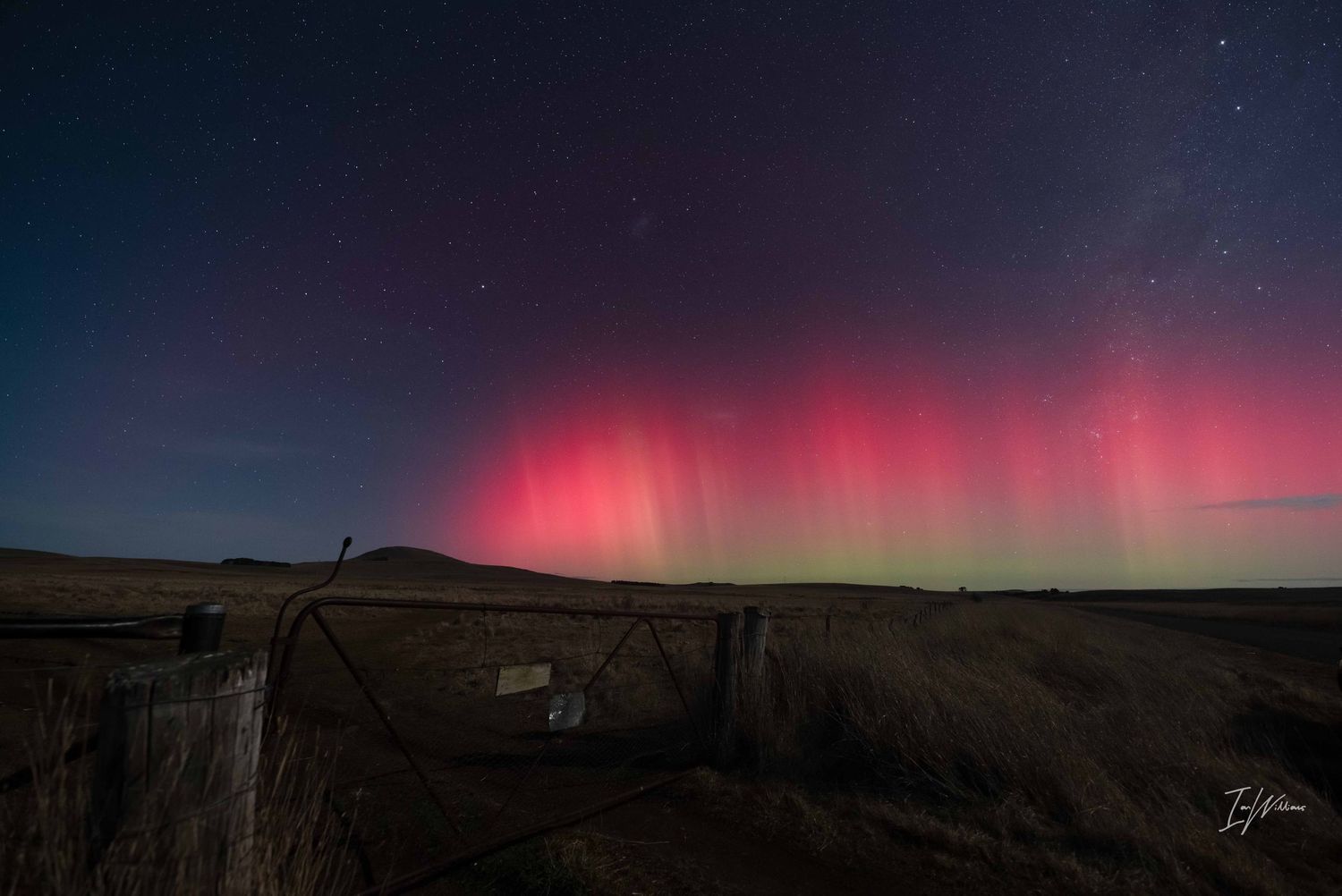
5537 - Aurora Australis at its crescendo
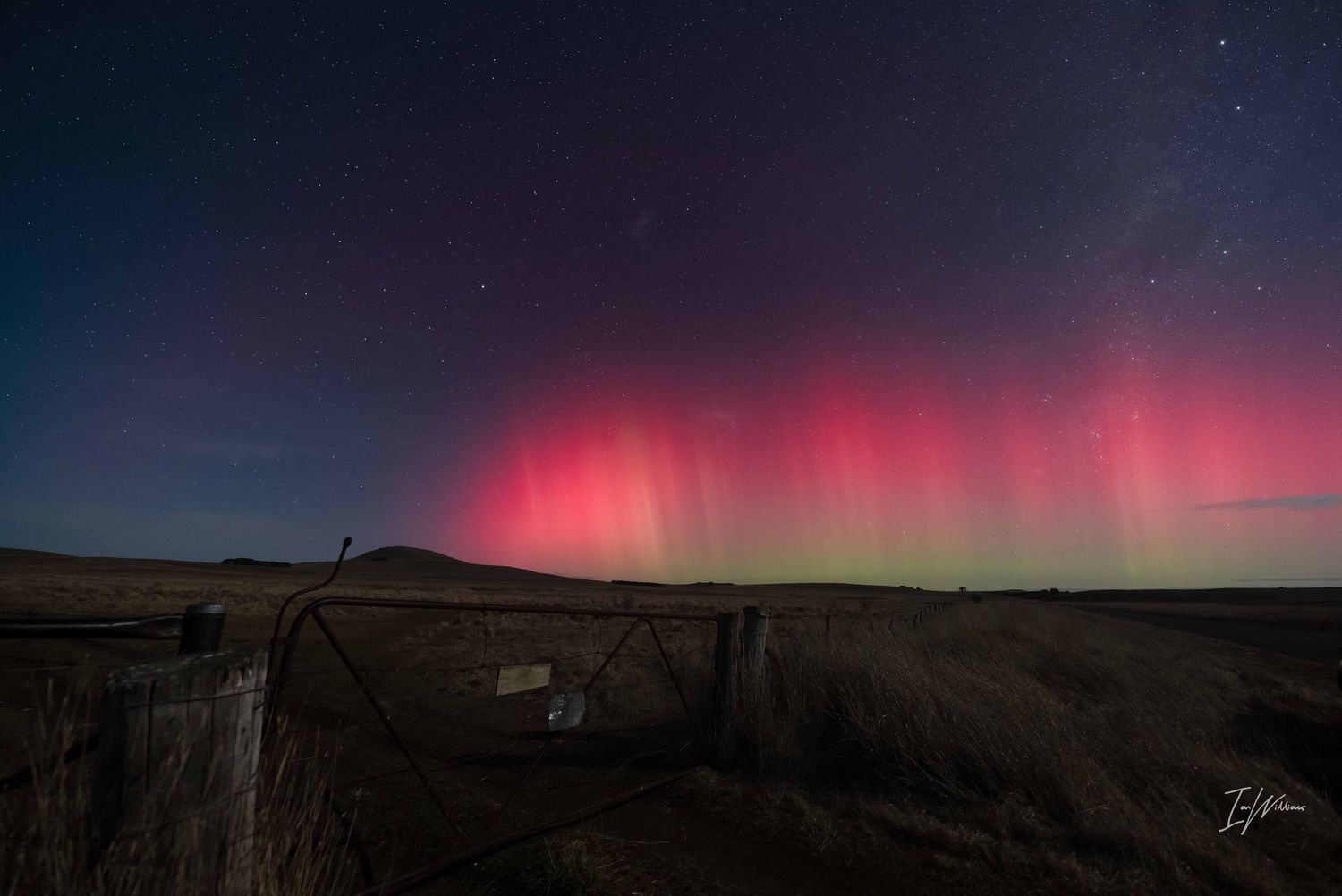
5537 - Aurora Australis in unspoilt skies on the Monaro
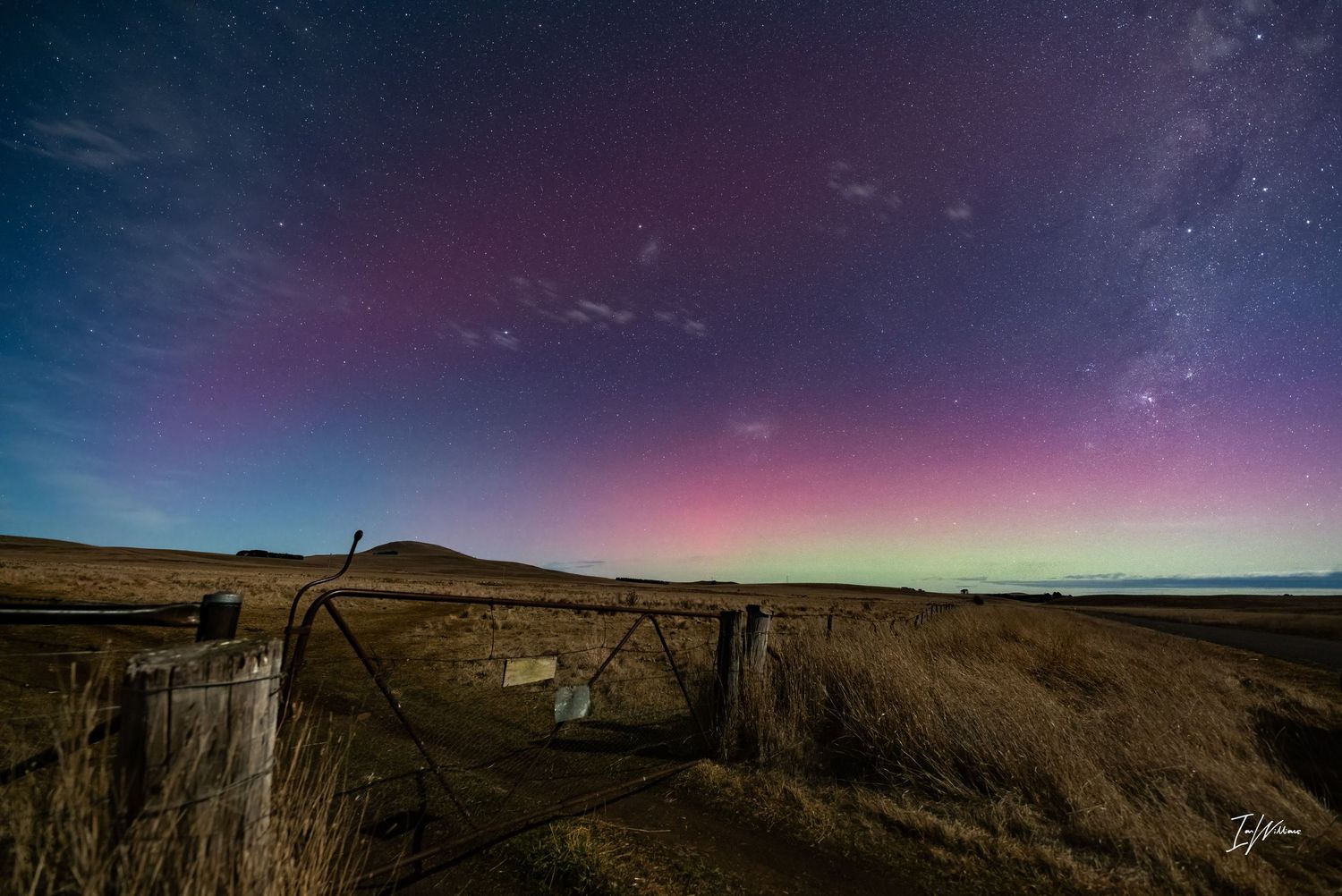
5590 - twin bands of auroral colour frame the gate
Biggest auroral display for over 20 years! The great aurora of 11-12 May 2024
At around 3:00 am on 11 May 2024, a series of CMES associated with at least 4 X flares impacted the Earth's magnetic filed. It generated auroral activity on scale some described as the best since 2003. One commentator even said the intensity of solar activity in the days preceding the event was unmatched since the 1930s.
I was fortunate enough to be on a two week photography trip in Tasmania. The trip had been booked several months before.
On 10 May from about 5:45 pm to about 1:30 am on 11 May we had maintained a patient vigil waiting for the expected solar storm. However, it did not arrive so we went back to our accommodation. For some reason I awoke at 3 am and decided to wander up the side of our accommodation to try and see the solar wind readings were doing to discover the storm had just started and it was at G3 (severe storm level). I looked to the south but could see no white glow of the aurora. Hover about 10 minutes later, it could easily be seen to the south as we drove 5 minutes to our viewing site that we had scoped out before.
The auroral display (seen from Southport Tasmania, the southern most town in Australia )was to seen to be believed. Yje reds, pinks, greens were visible to the naked eye as was the movement of beams. It was a stunning display and caused a bright reflection on the ocean from our various vantage points.
I will never forget that night!
Ian
The morning show
As we walked to our chosen spot, or rather half jogged as we were keen to start our photography, friend David Marriott remarked - there is a big fog. From my experience in Iceland I knew it wasn't the fog but the glow of the Aurora Australis on the southern horizon!
We imaged from about 4:00 am (my first shot was at 4:04 am) until it got too light to see the aurora at around 6:40am on 11 May 2024.

2629 - On of my first shots just after 4:00 am, Aurora Australis, Southport Tasmania
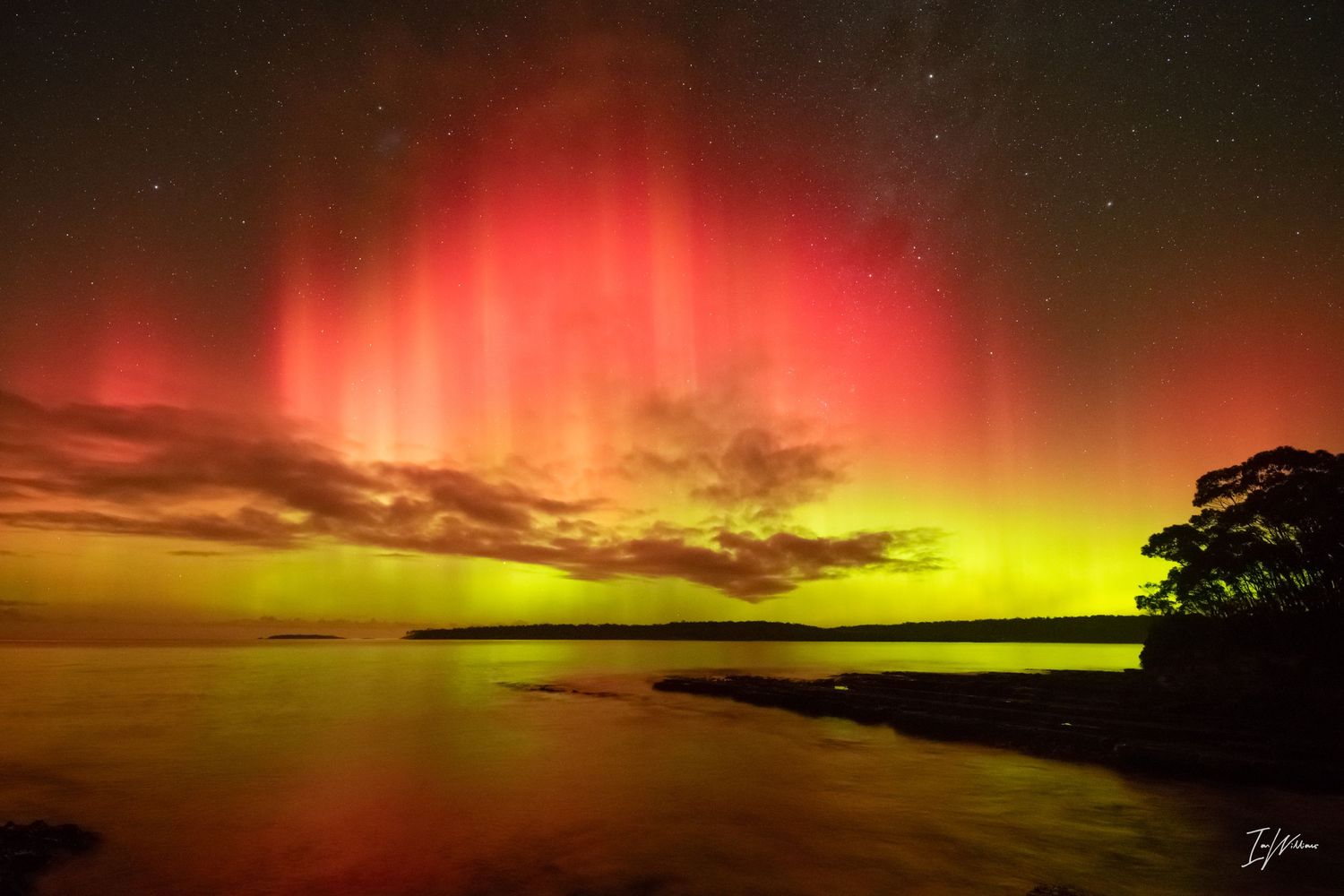
2634 - The aurora was expanding rapidly, here it is starting to cover the Southern Cross (upper right)
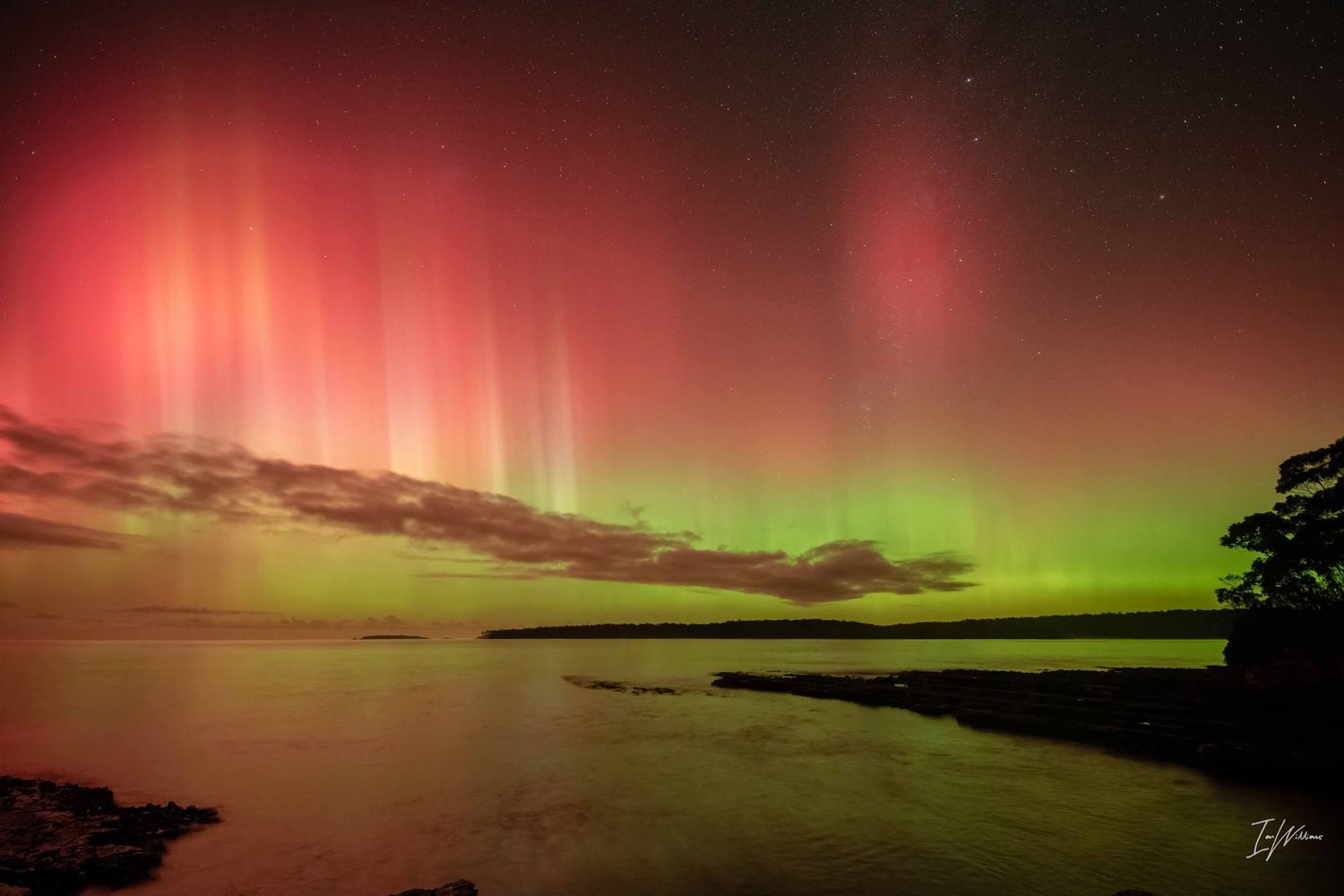
2653 - Beams and a blob!
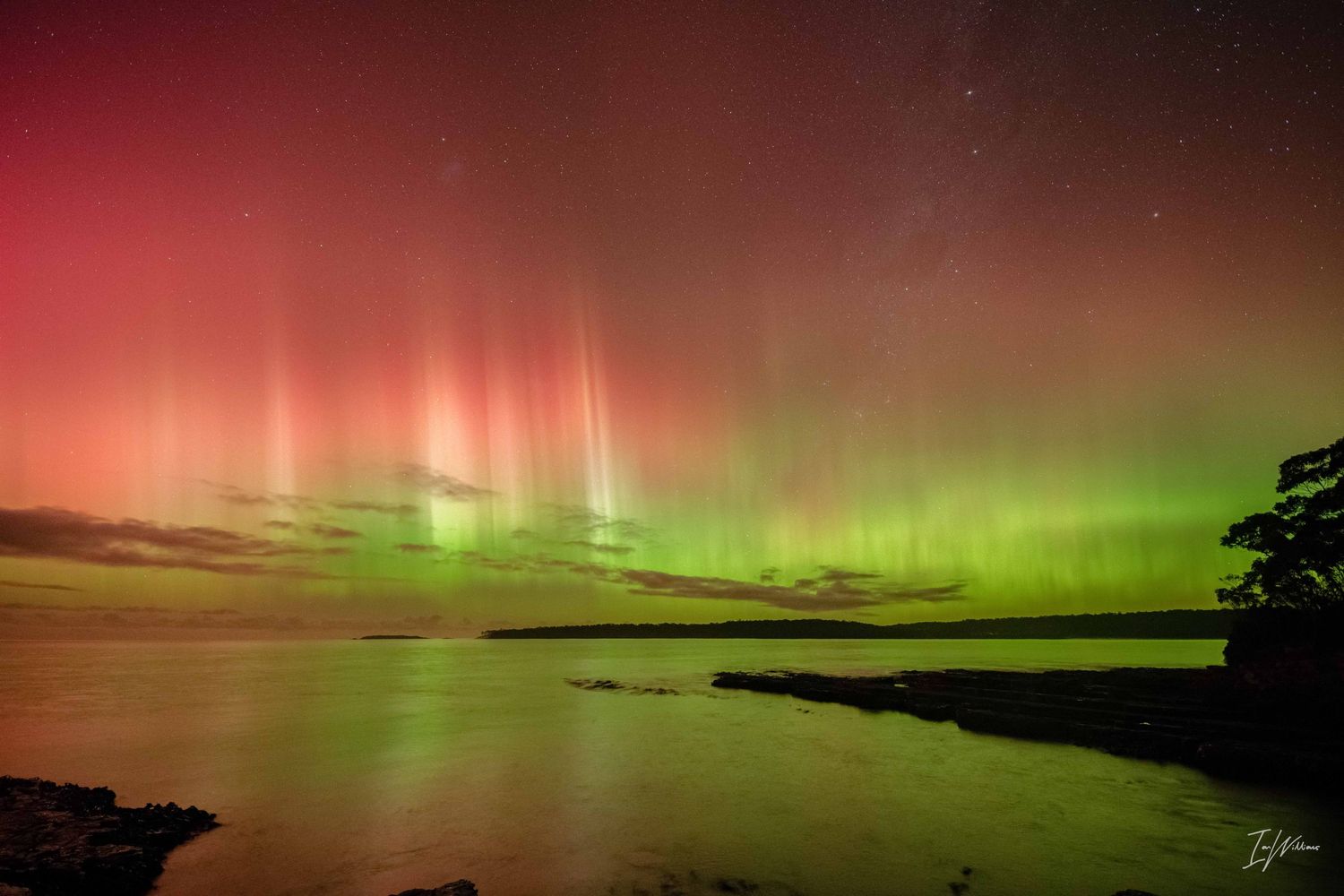
2697 - Delicate beams appeared for a brief time
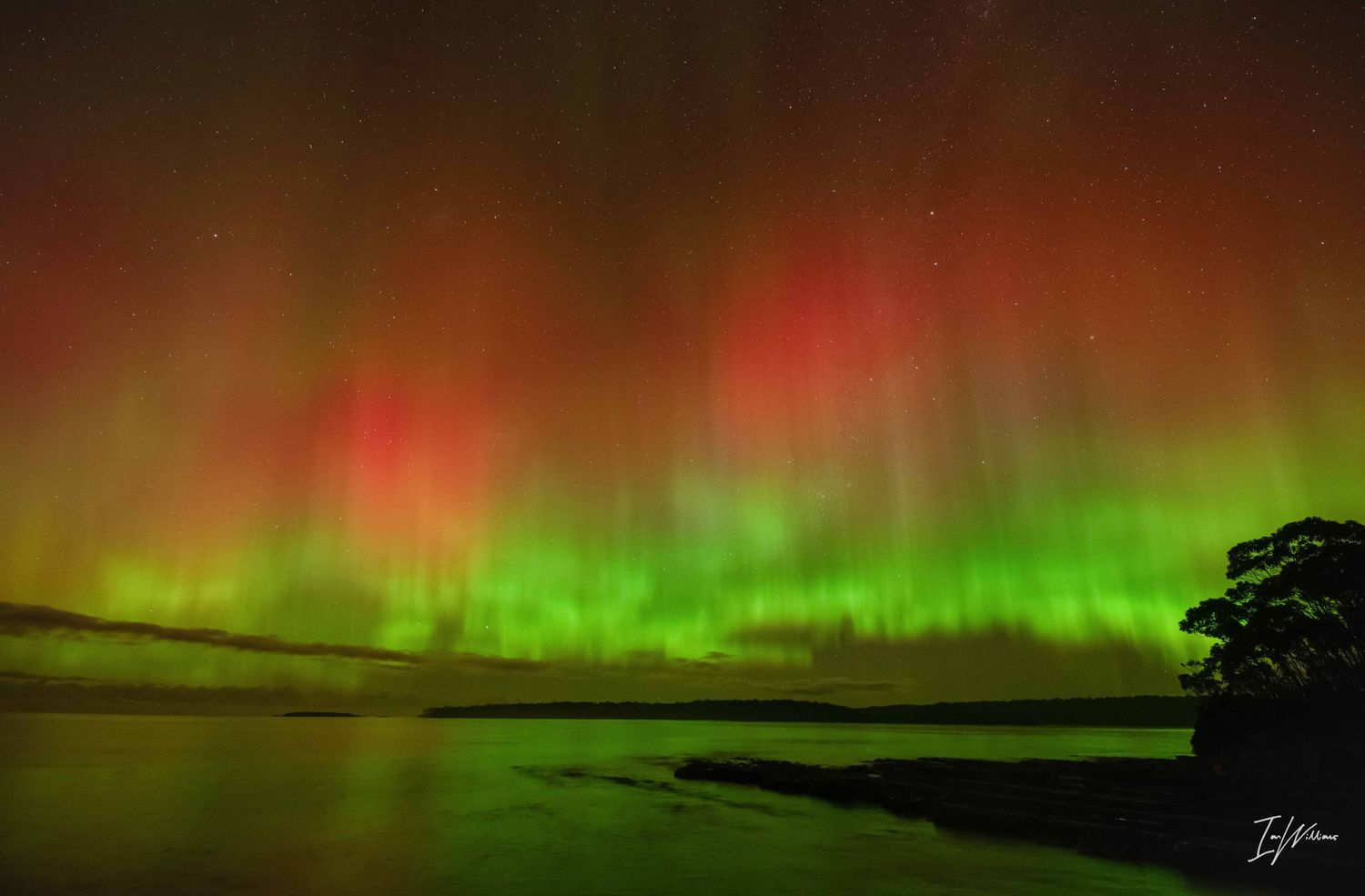
2750 - the rapidly changing auroral show!
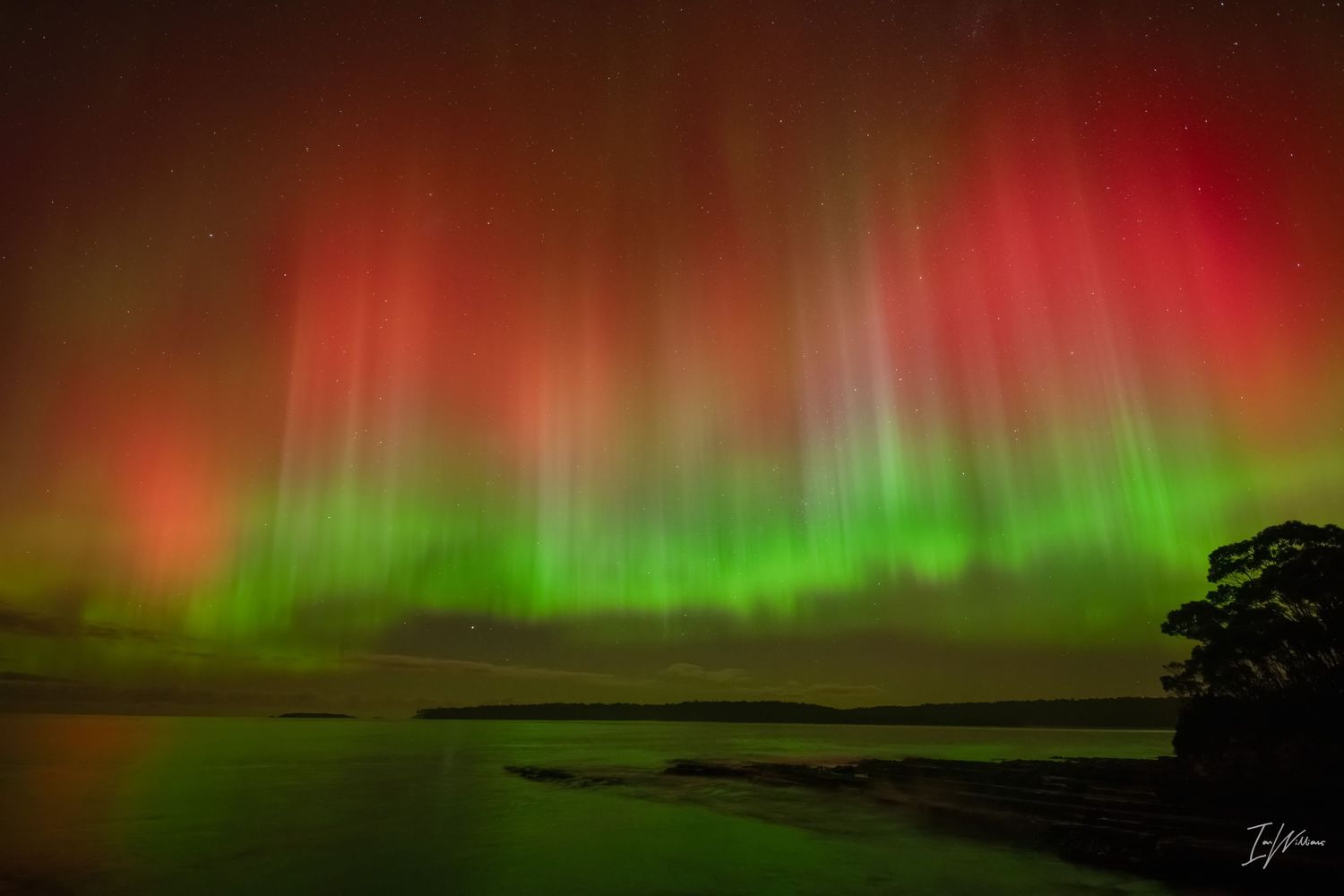
2767 - Curtains of the Aurora Australis, Southport, Tasmania
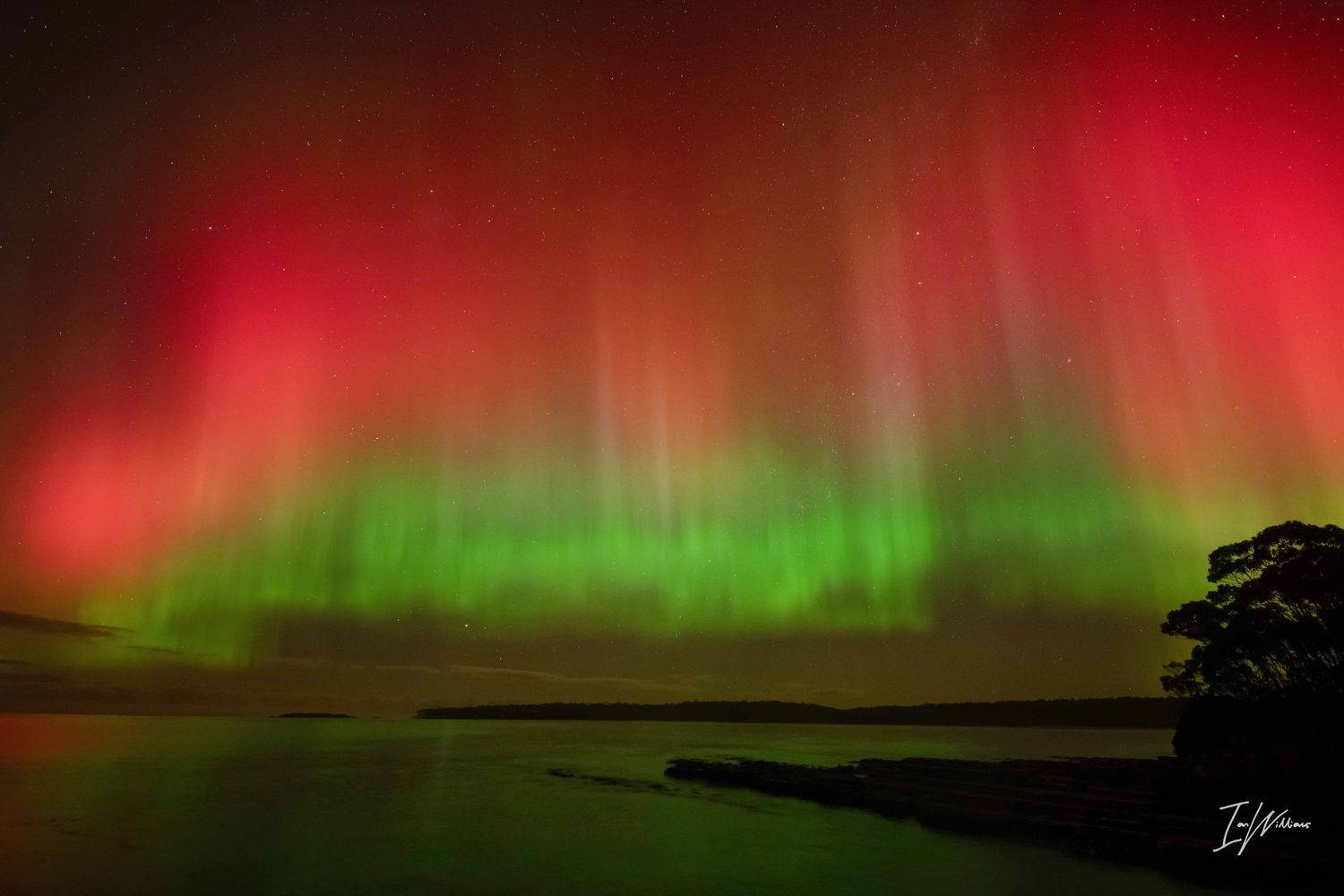
2790 - the red intensifies in the bright auroral show
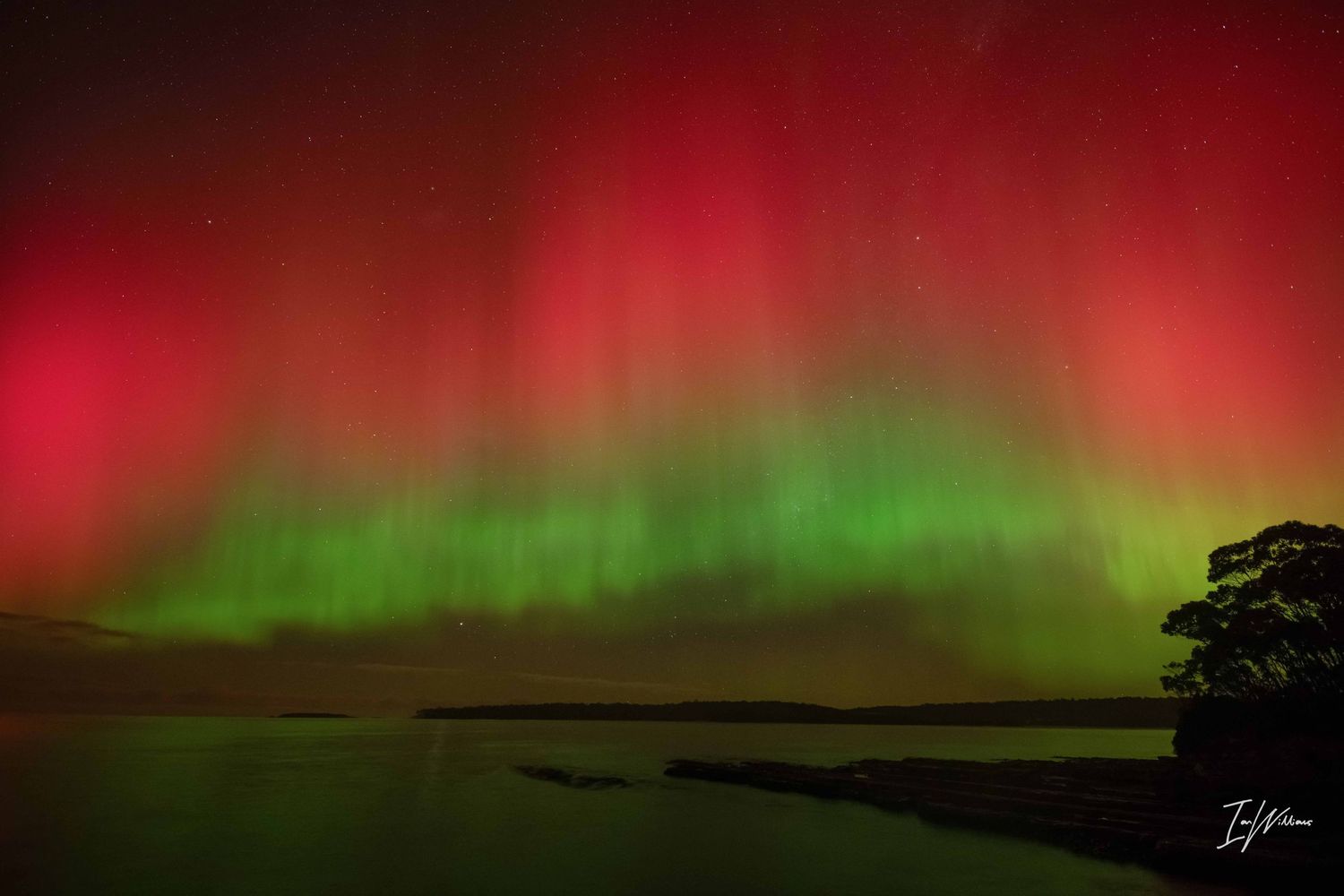
2810 - red blobs
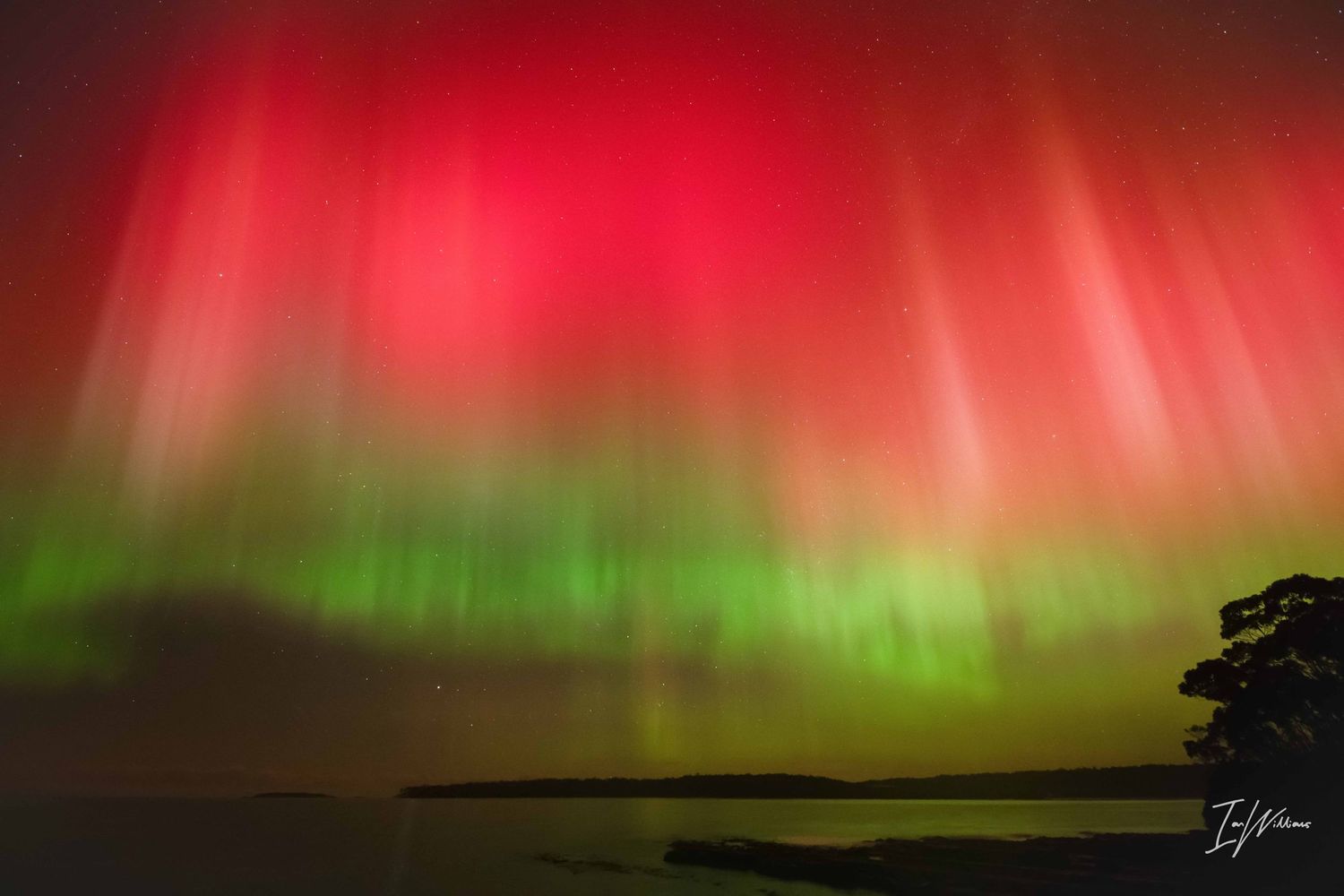
2851- the Aurora Australis in all its glory!
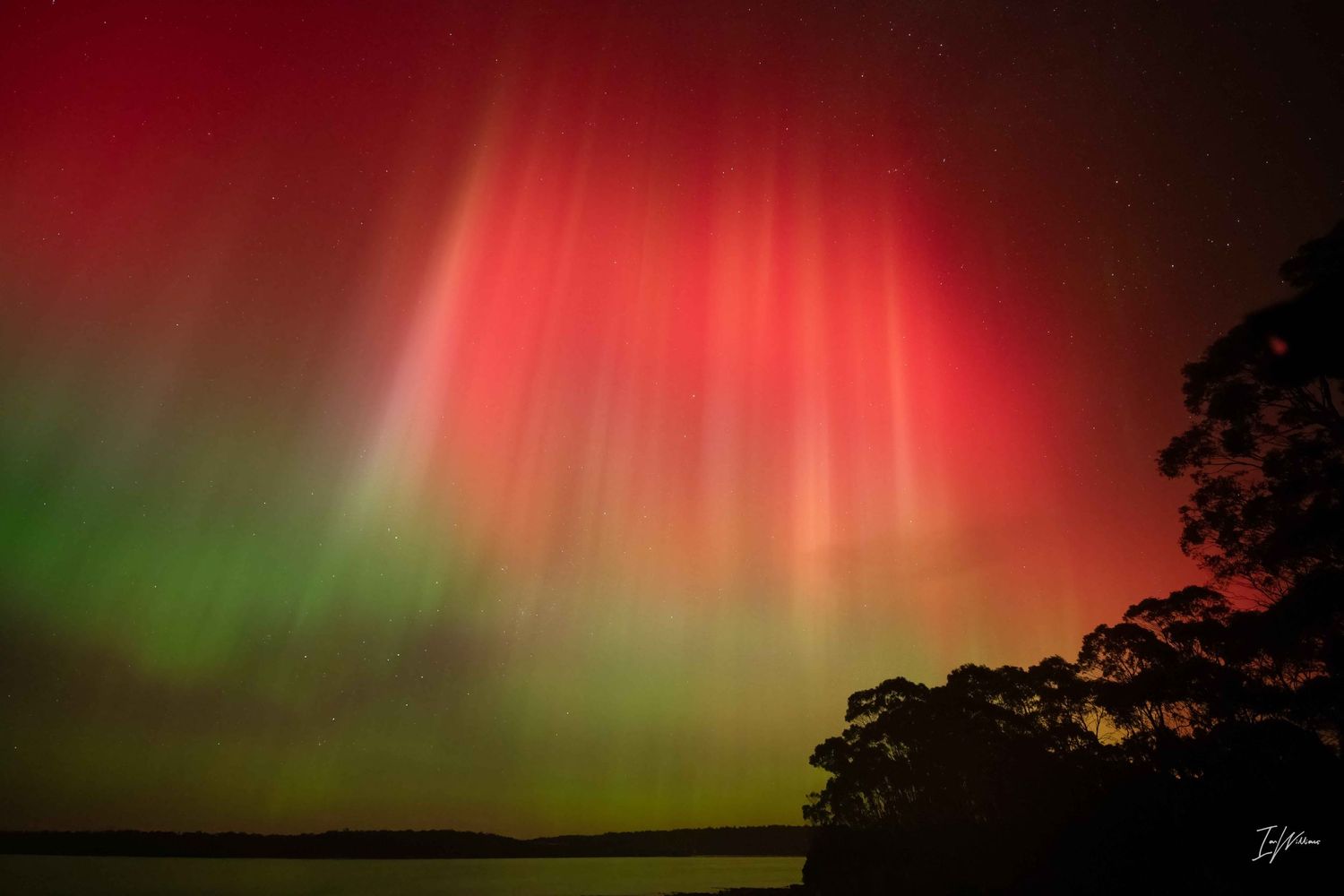
2856 - The Scorpion roasting over a celestial fire (can you see the constellation of Scorpius in the upper right, dwarfed by this mighty aurora?)
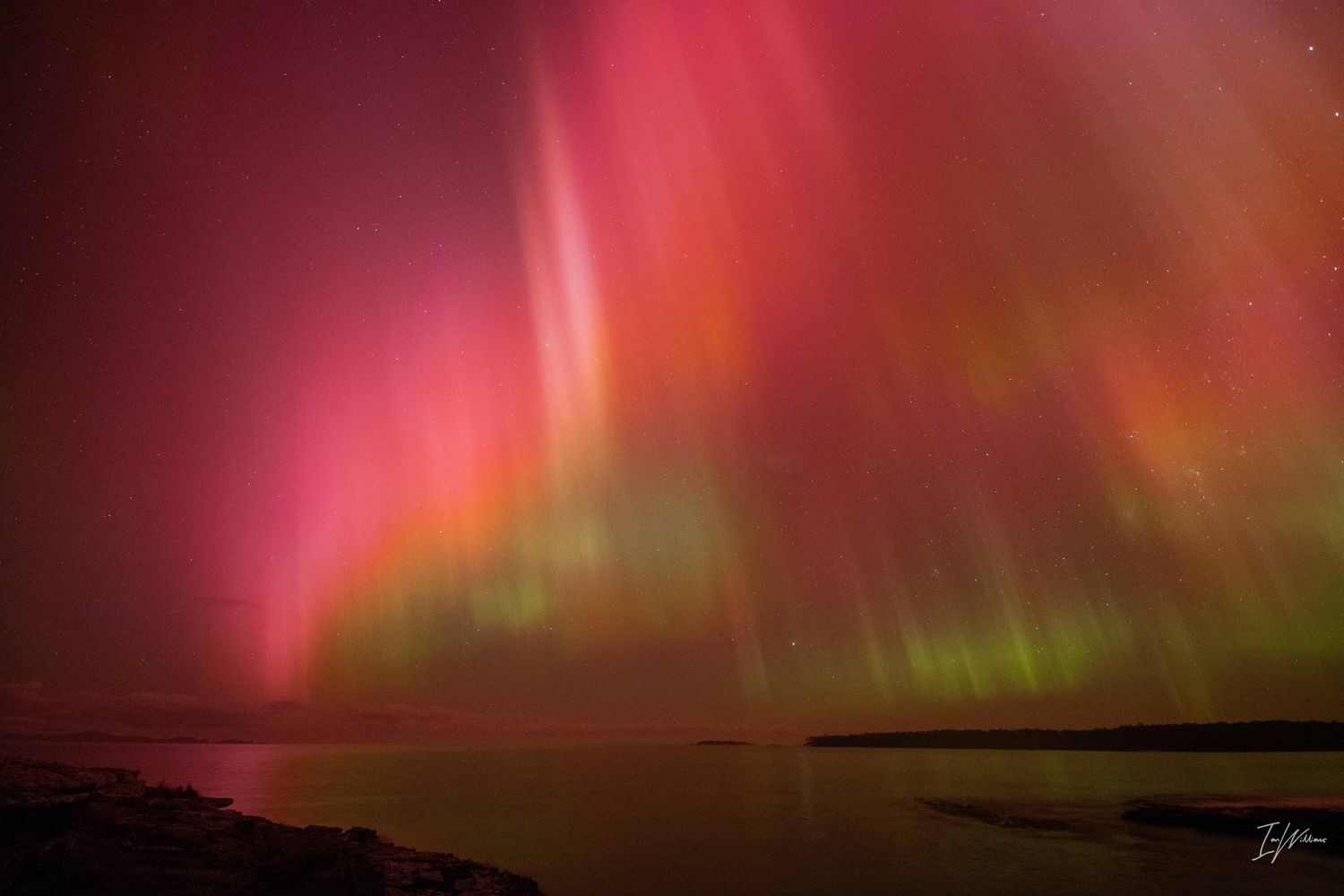
2888 - The Aurora Australis takes on pink as the yet to be seen twilight touches the higher beams
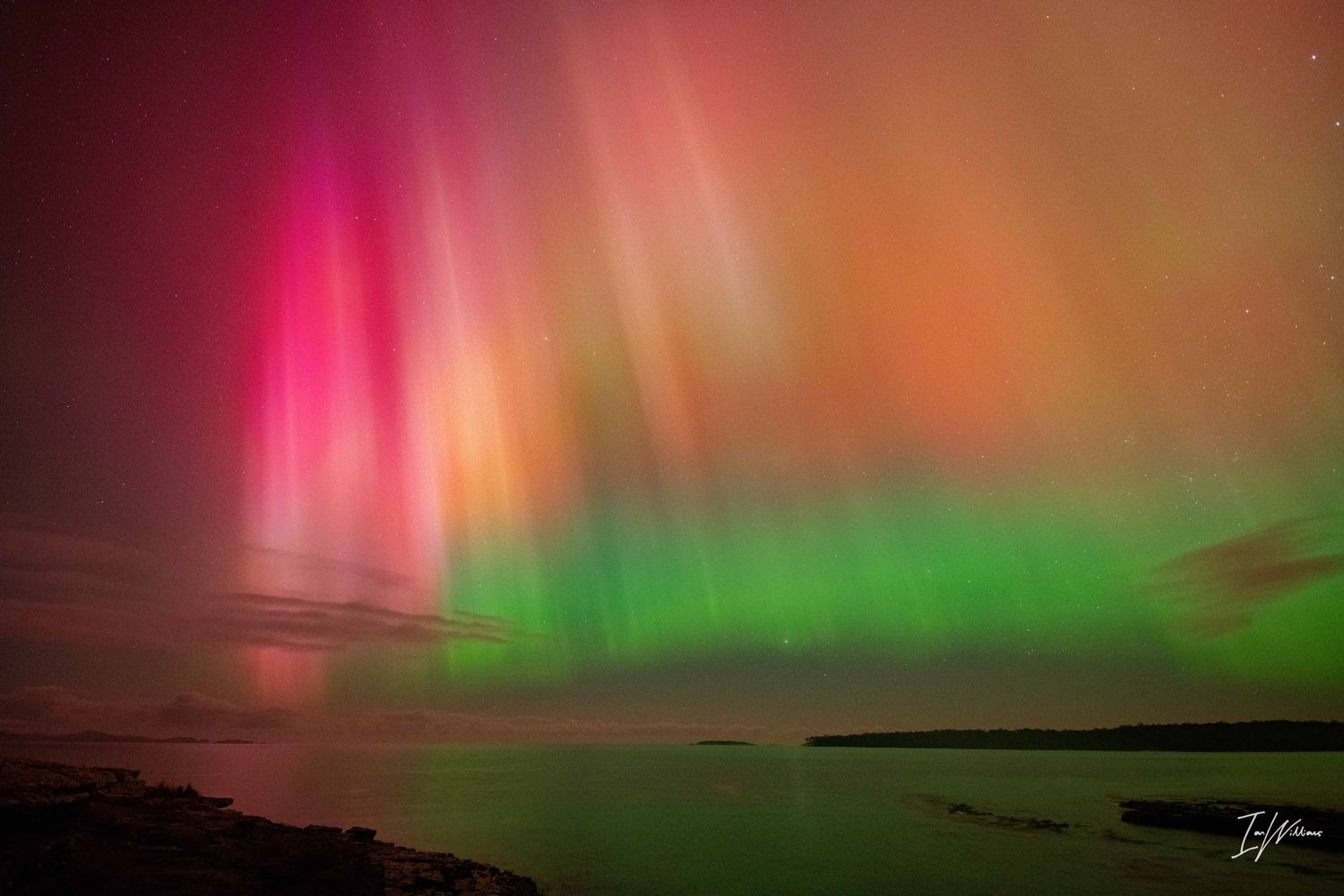
2944 - purple but intense beams are hard to expose correctly even though the exposure was brief
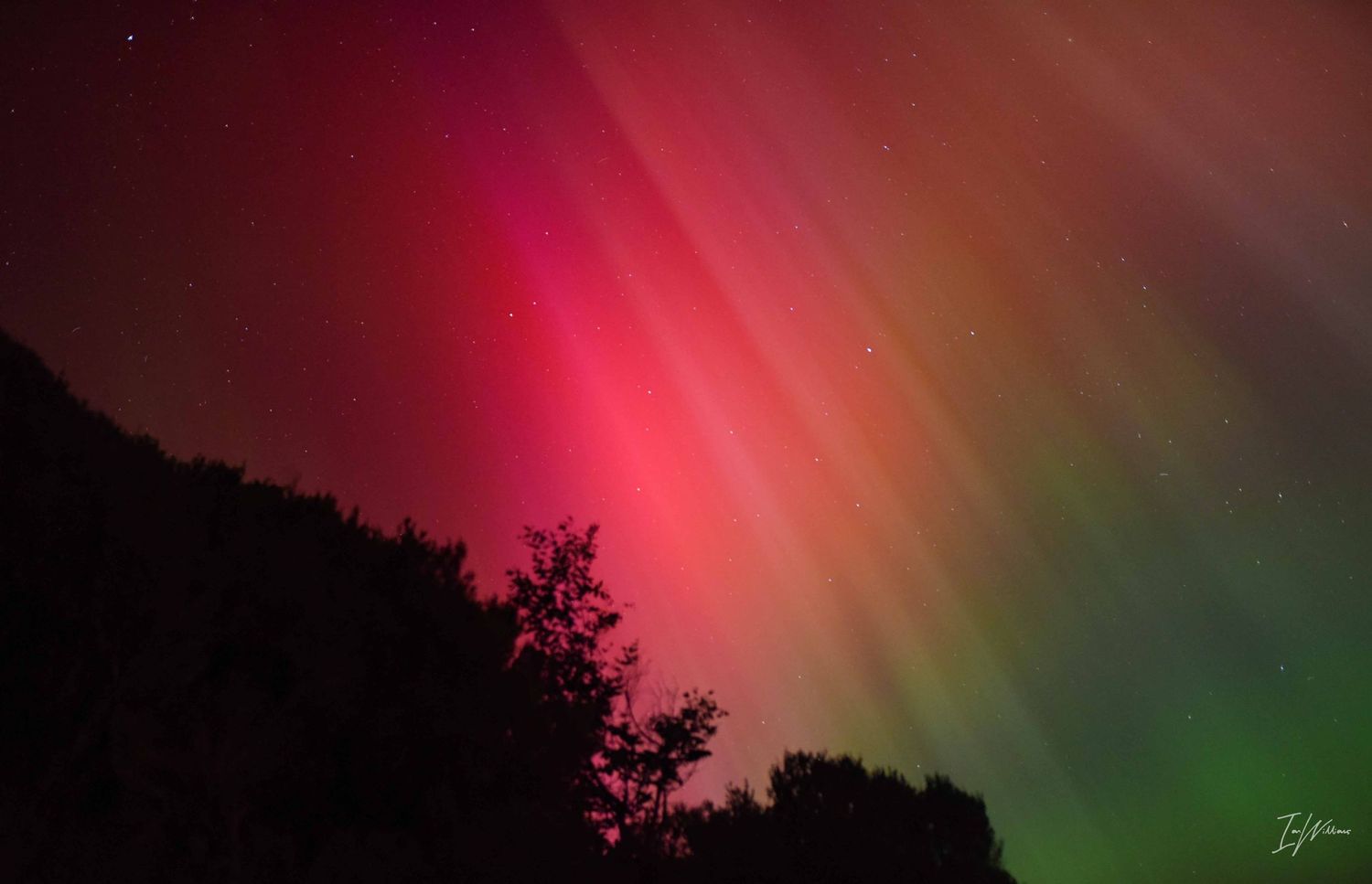
6482 - Yellow ribbon
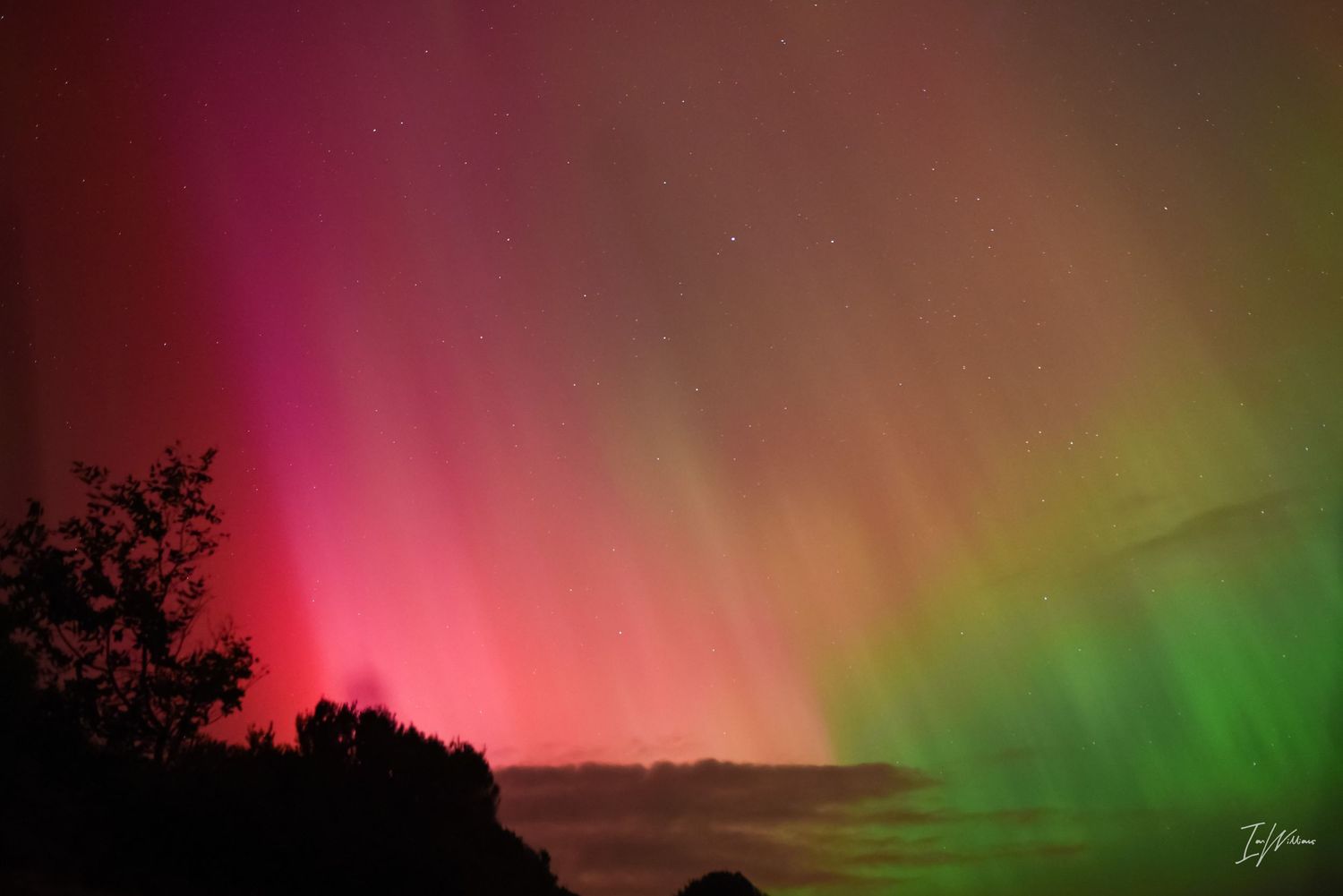
6647 - Beam me up Scotty!
6796 - Indescribable!
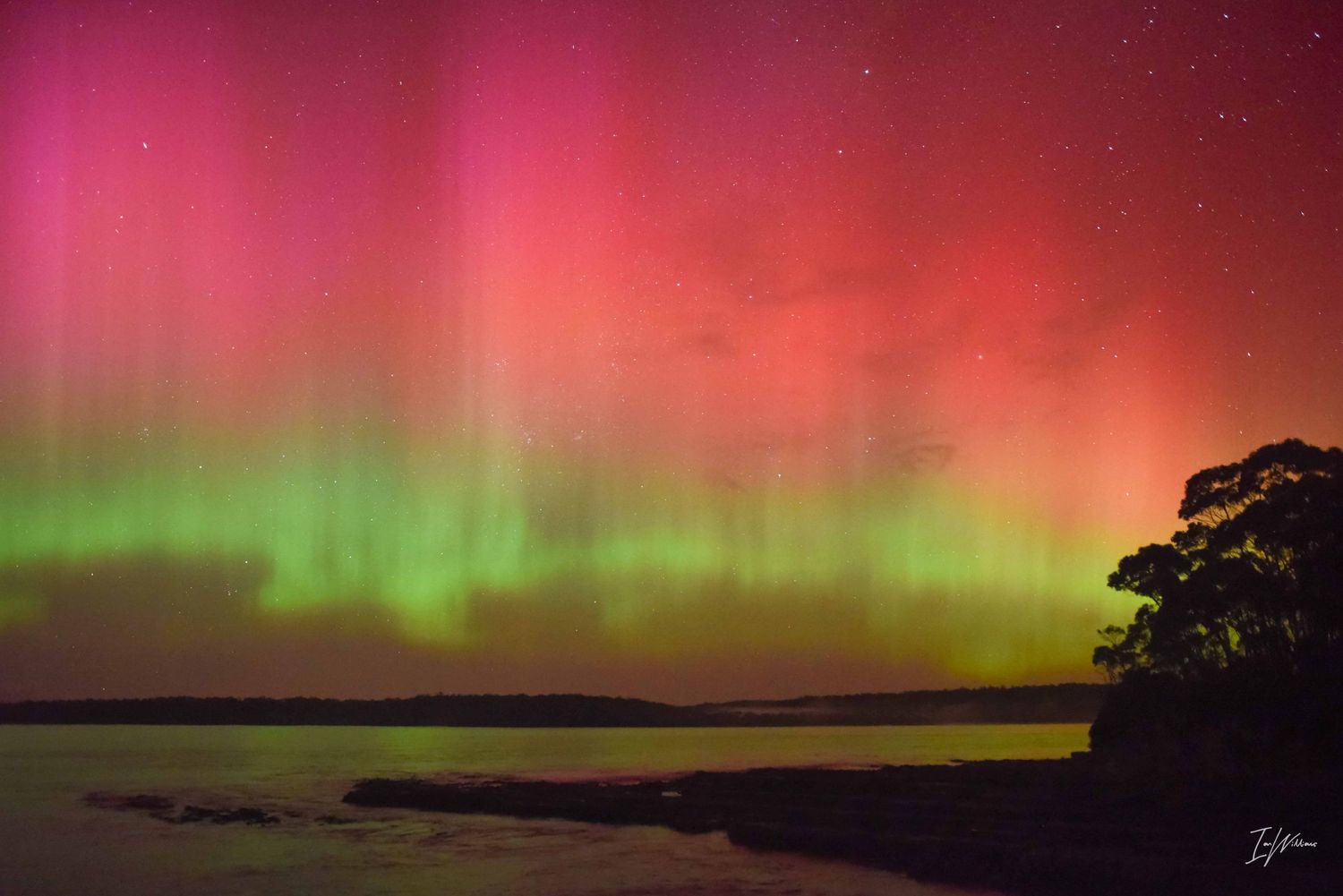
7140 - Awesome colours, Speechless!
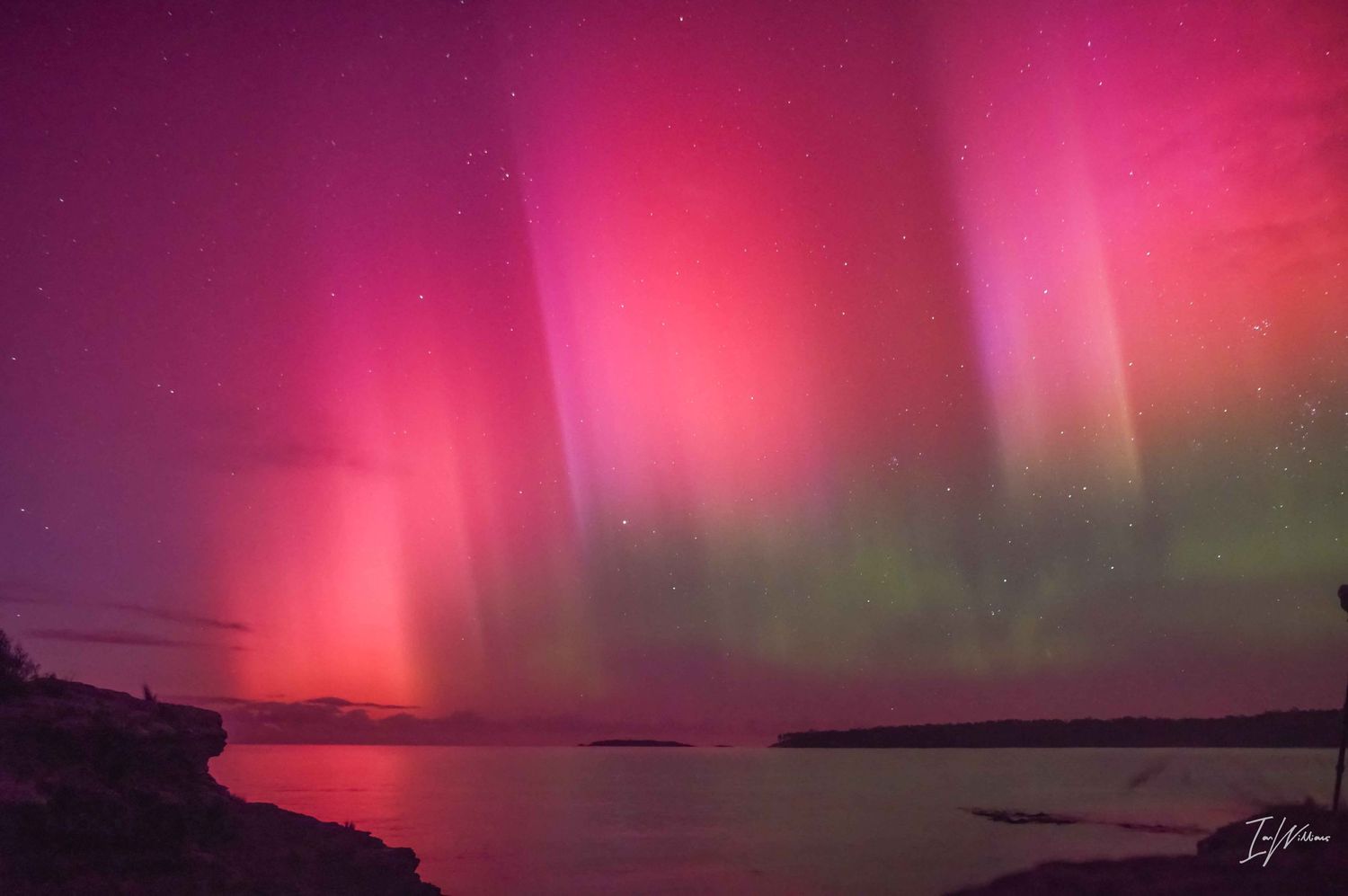
7152 - Purple beams!!!!
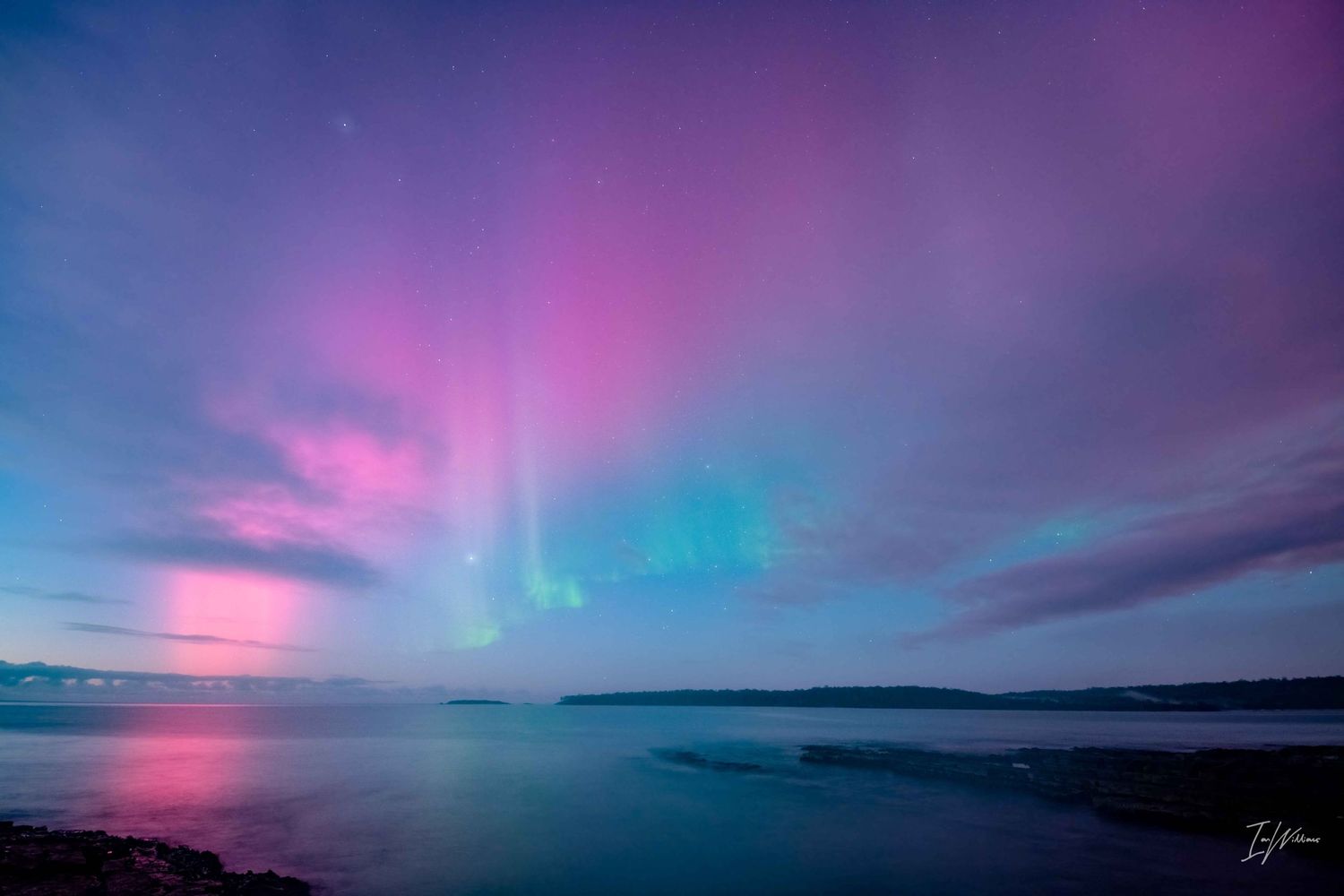
3383 - The aurora still went on until it envitably was washed out by the dawn
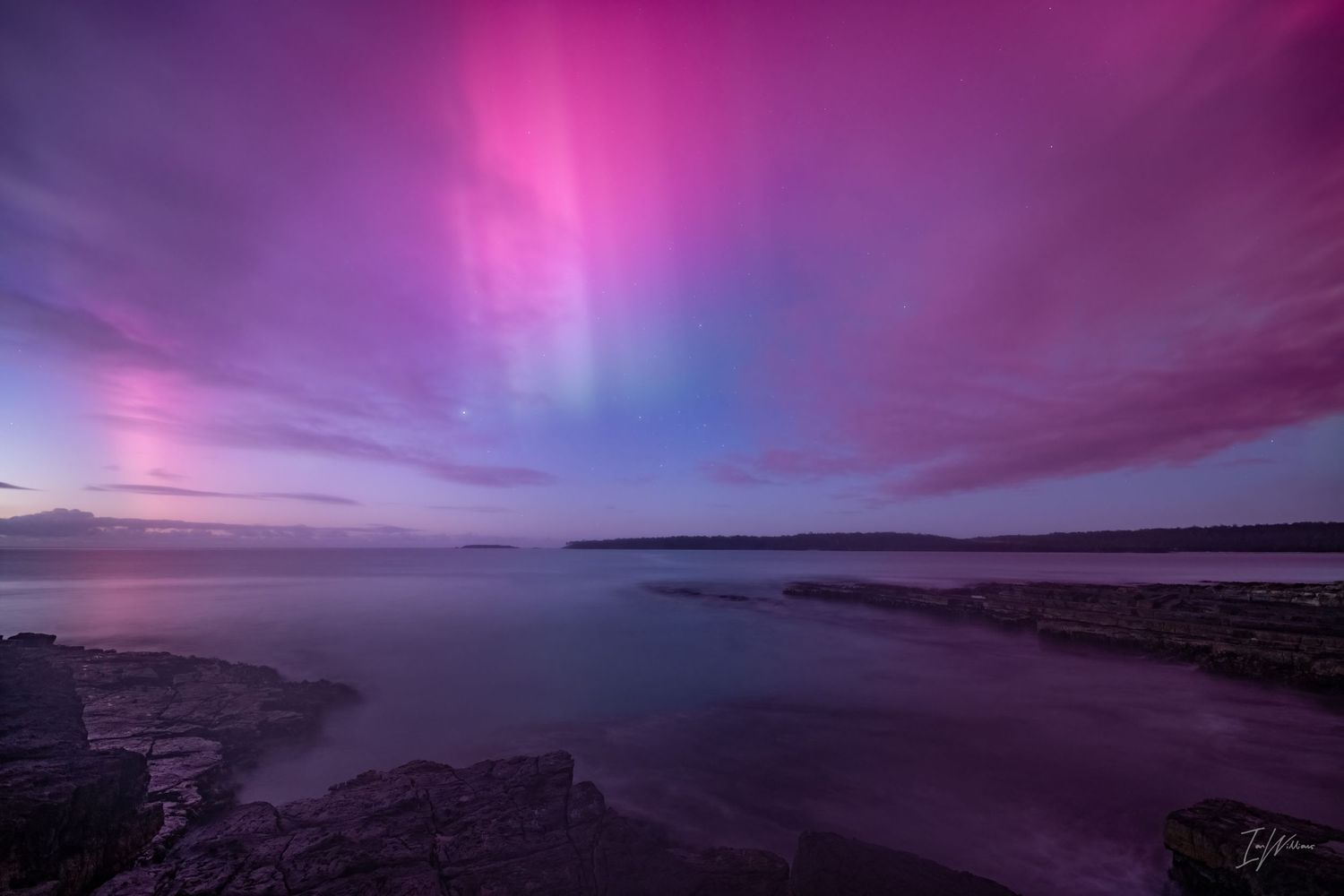
3396 - Auroral sunrise
The evening show
We arrived at our selected spot just after sunset. At around 17:51 pm, against the building twilight, a purple beam could be made out. Then you could see the subtle green of the aurora against the twilight sky. The first few images tell the story.
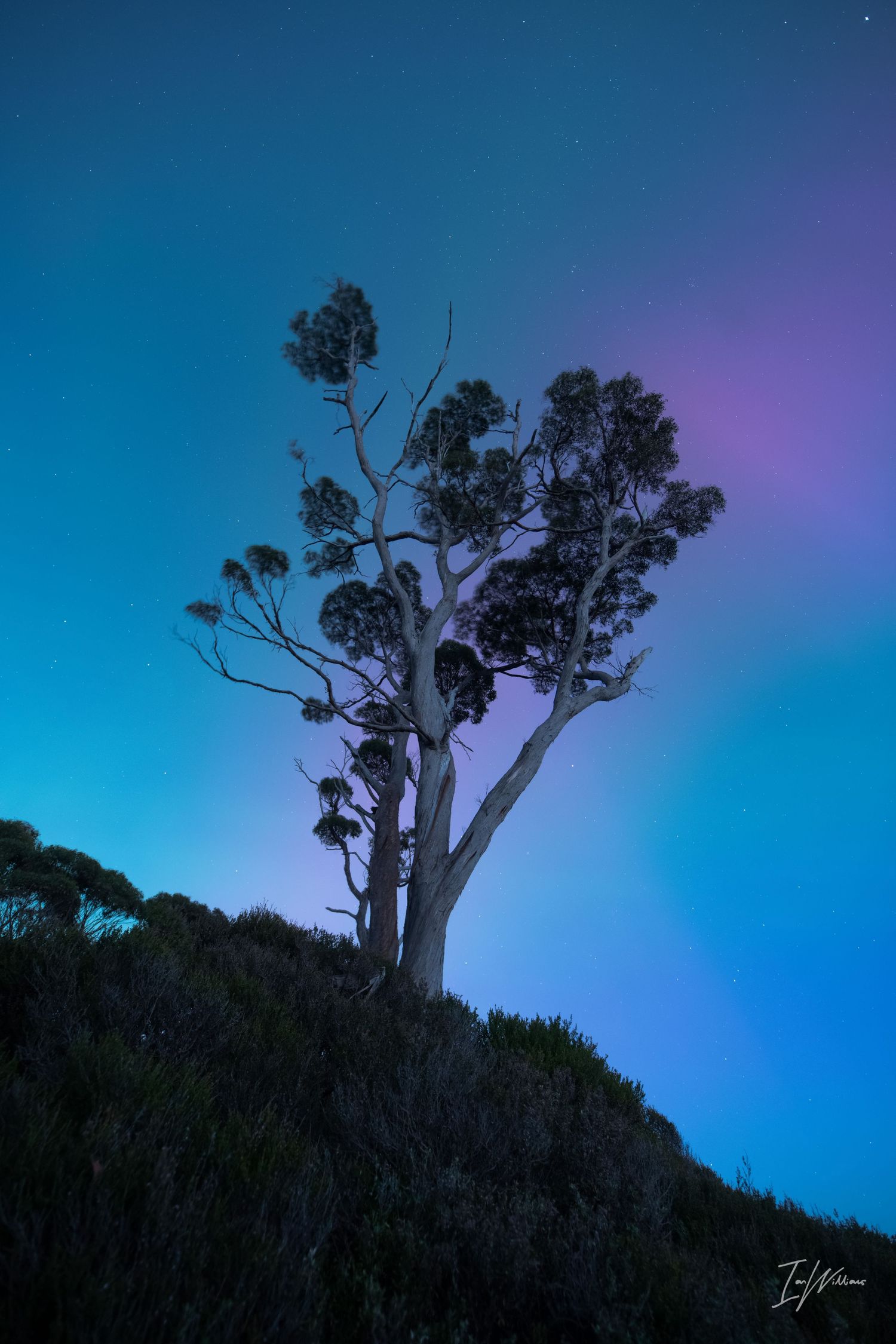
3440 - This was taken at 17:56 pm on 11 May 2024, the trunk is lit up by the persisting daylight, the subtle pink and green colours can be seen
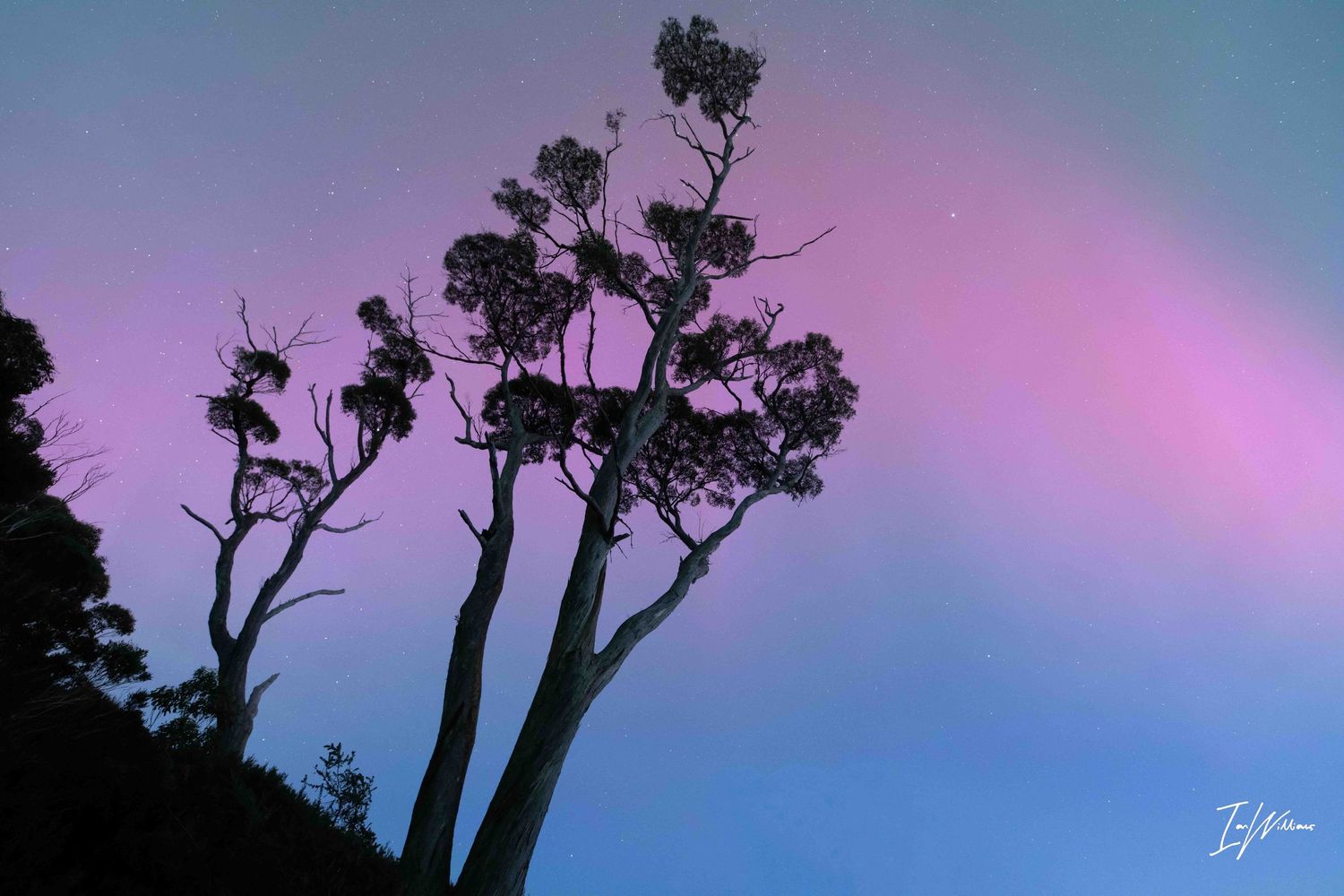
3446 - the colour of the Aurora intensifies
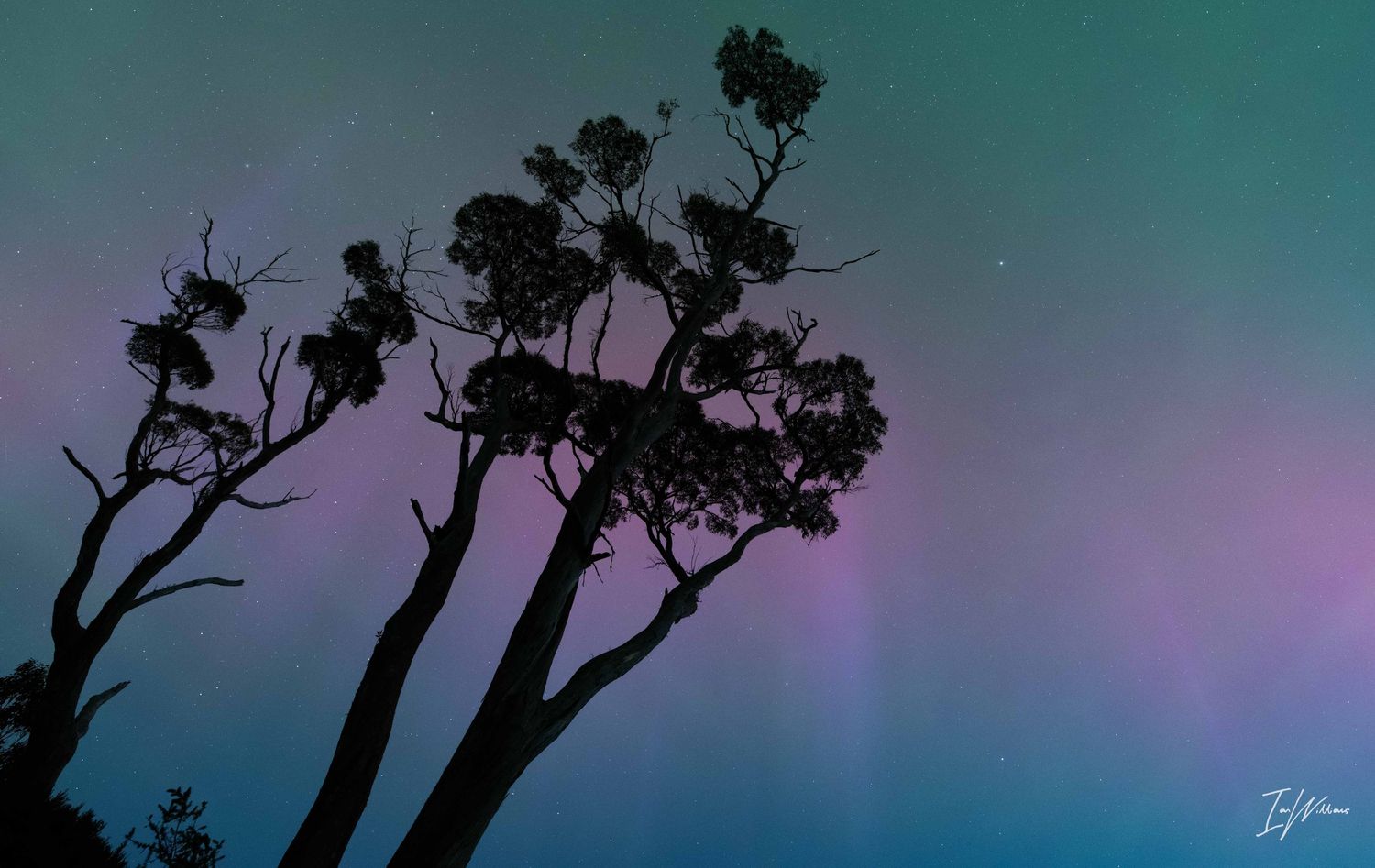
3450 - delicate beams can be seen and the sky alight with colour starting to take over the scene as it got darker
Auroral dunes
Just after the aurora started to be visible, the interesting phenomenon of auroral dunes appeared as shown by these new three shots. The dunes appeared to originate from the souther sky
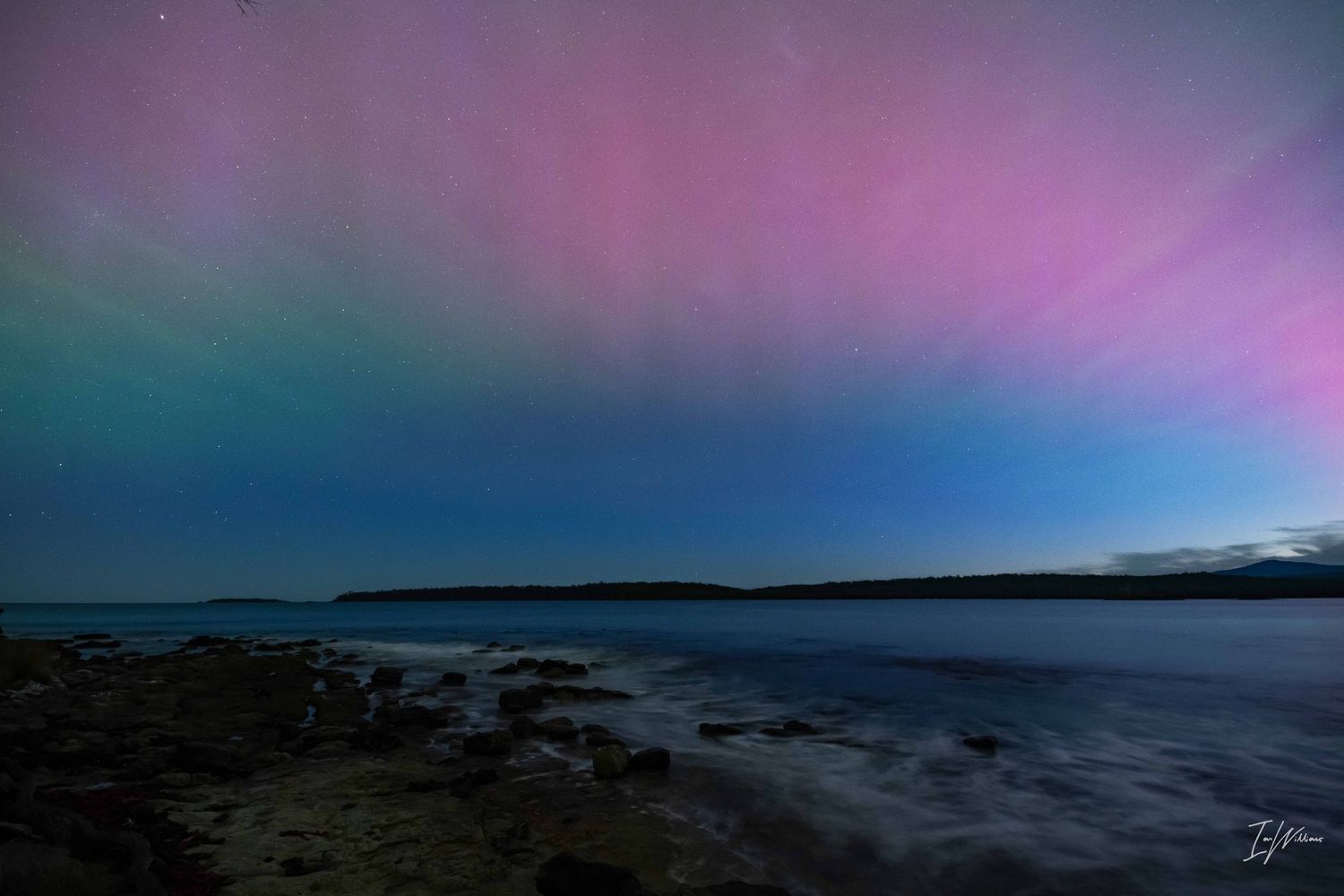
3351 - Auroral dunes and the strange blue colour underneath them on the southern horizon
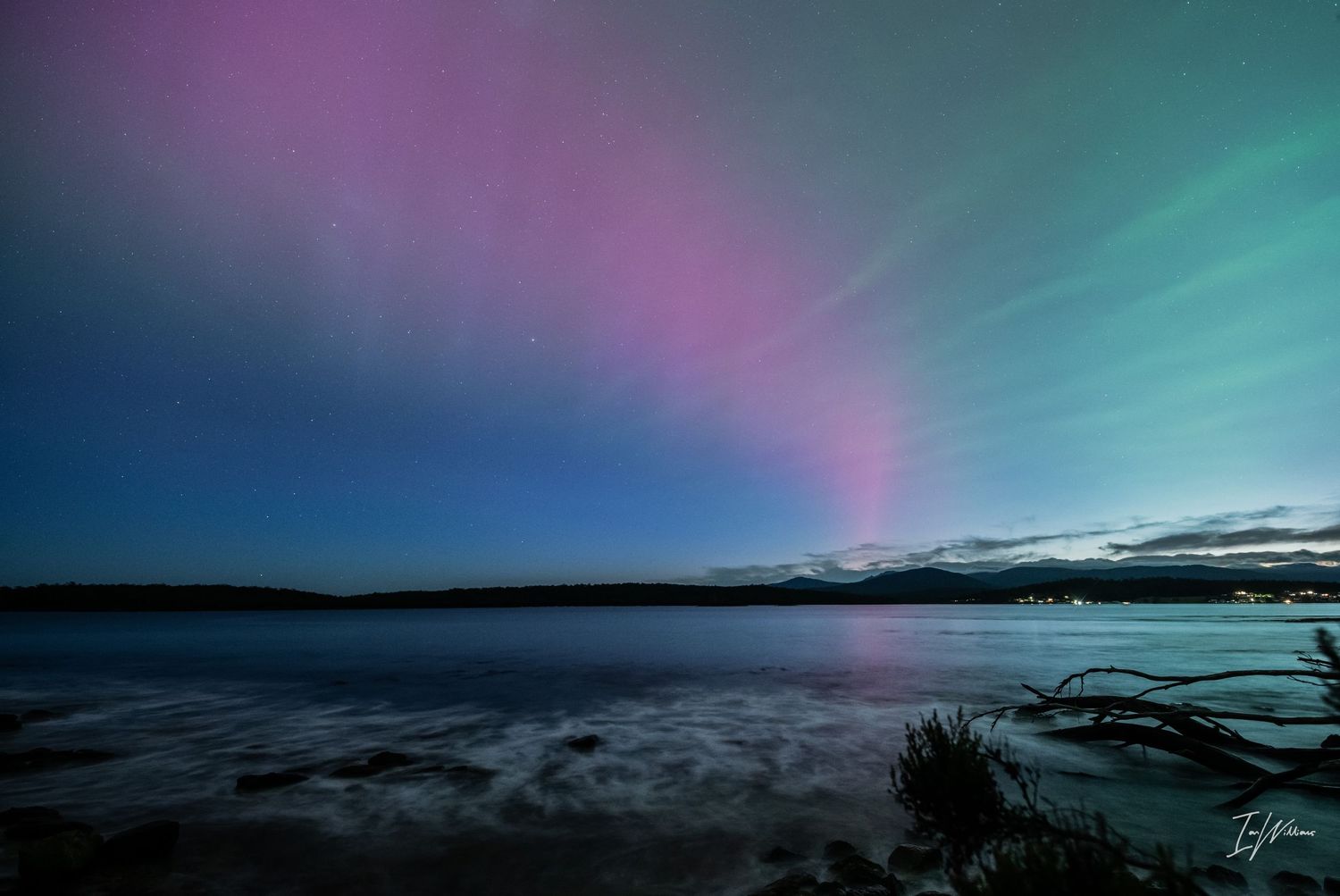
3352 - Another shot of the auroral dunes
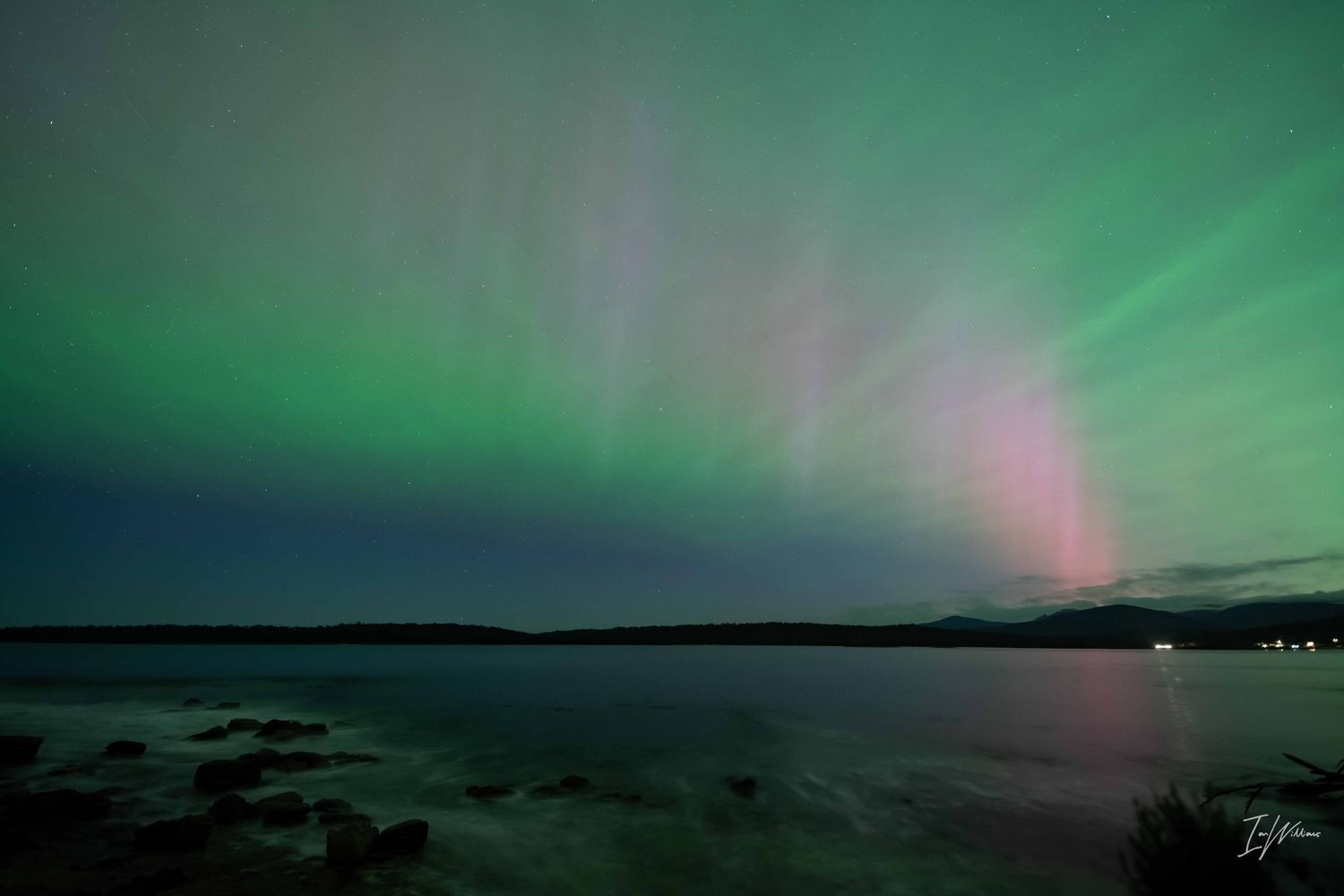
3461 - Another image of the amazing auroral dunes
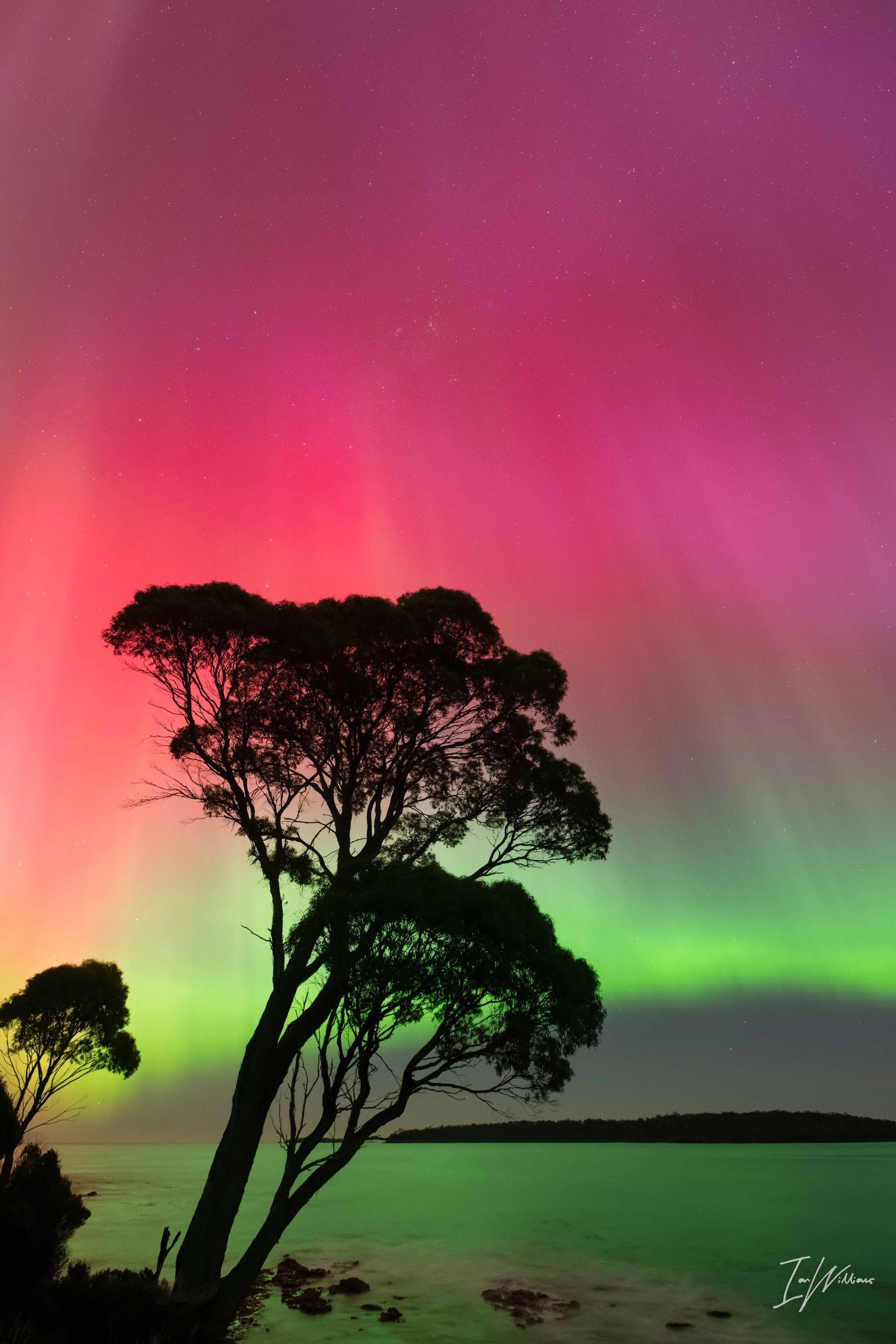
3516 - Aurora Australis behind a lovely gum, Southport, Tasmania, 11 May 2024
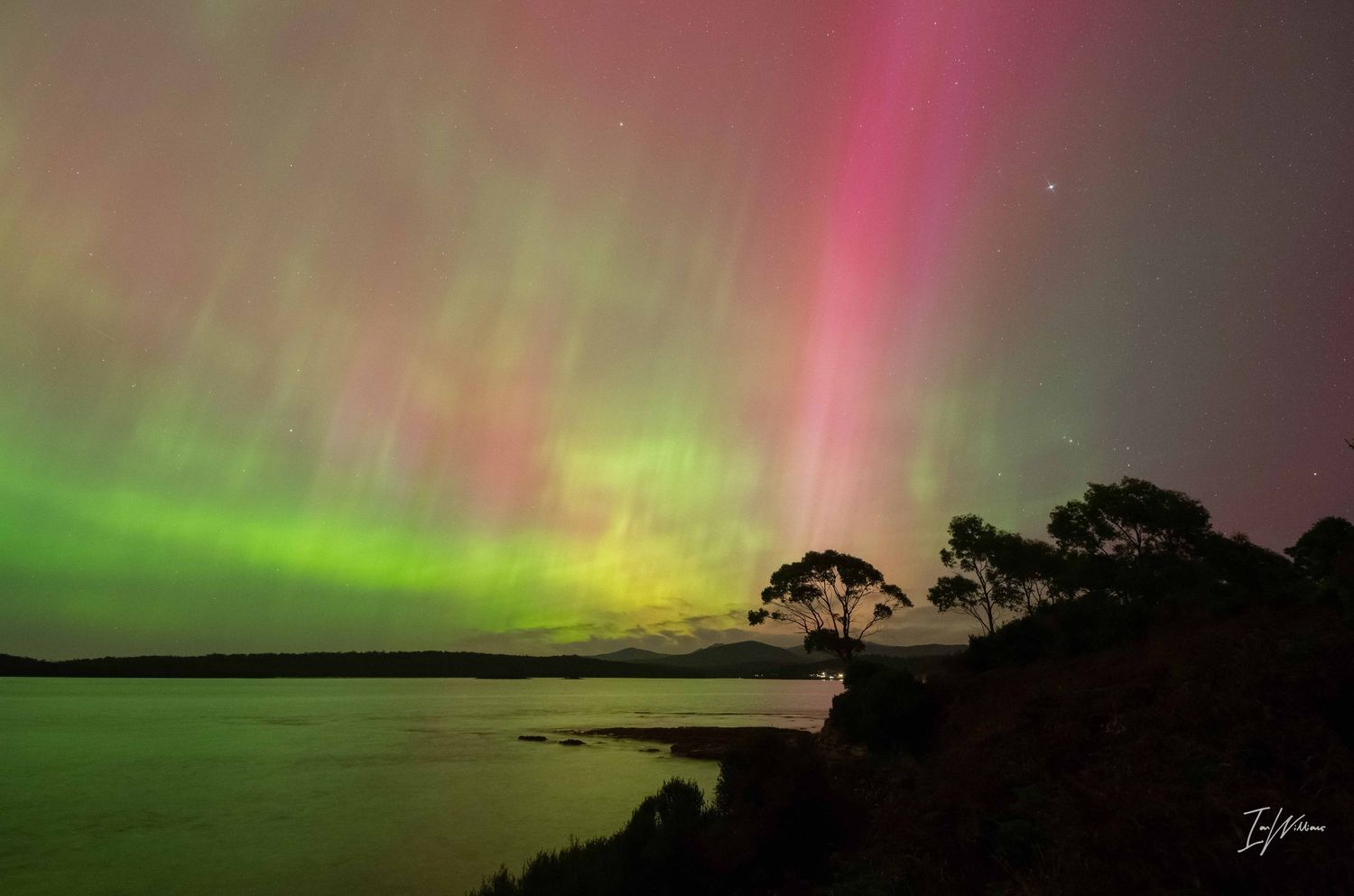
3561 - A giant pink beam cuts through almost due west through Canis Major
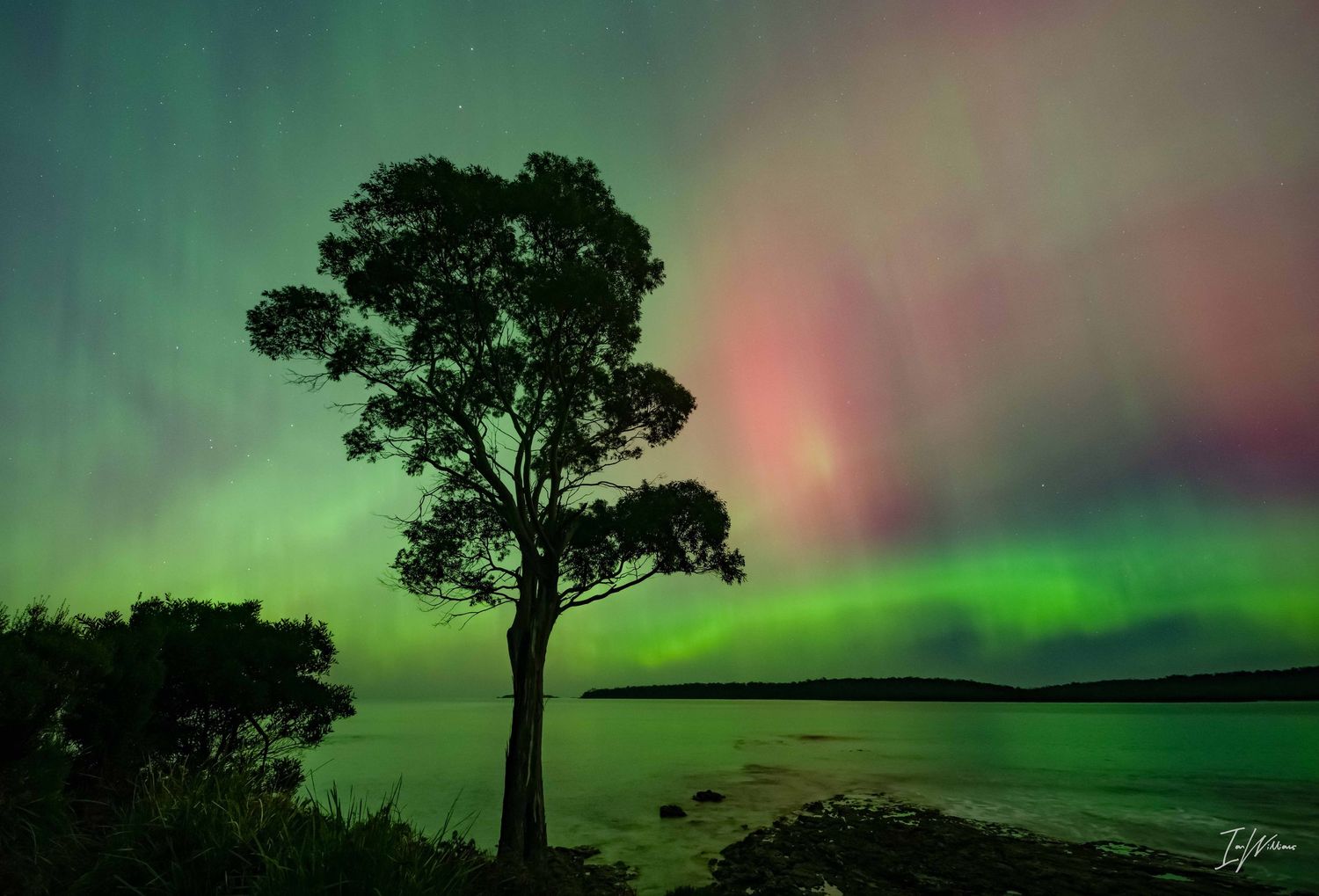
3755 - subtle colours behind the tree
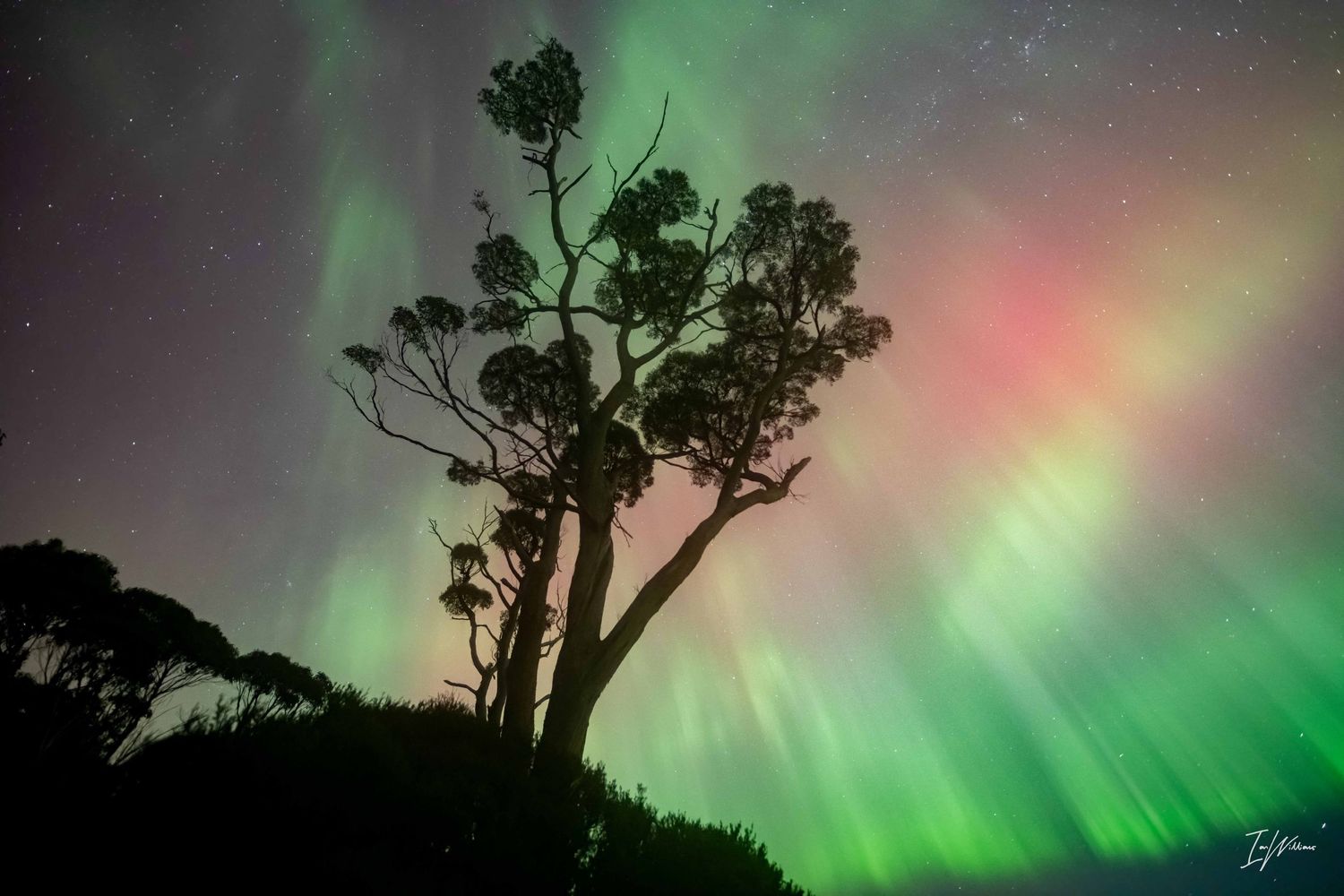
4432 - Colours erupt over the tree
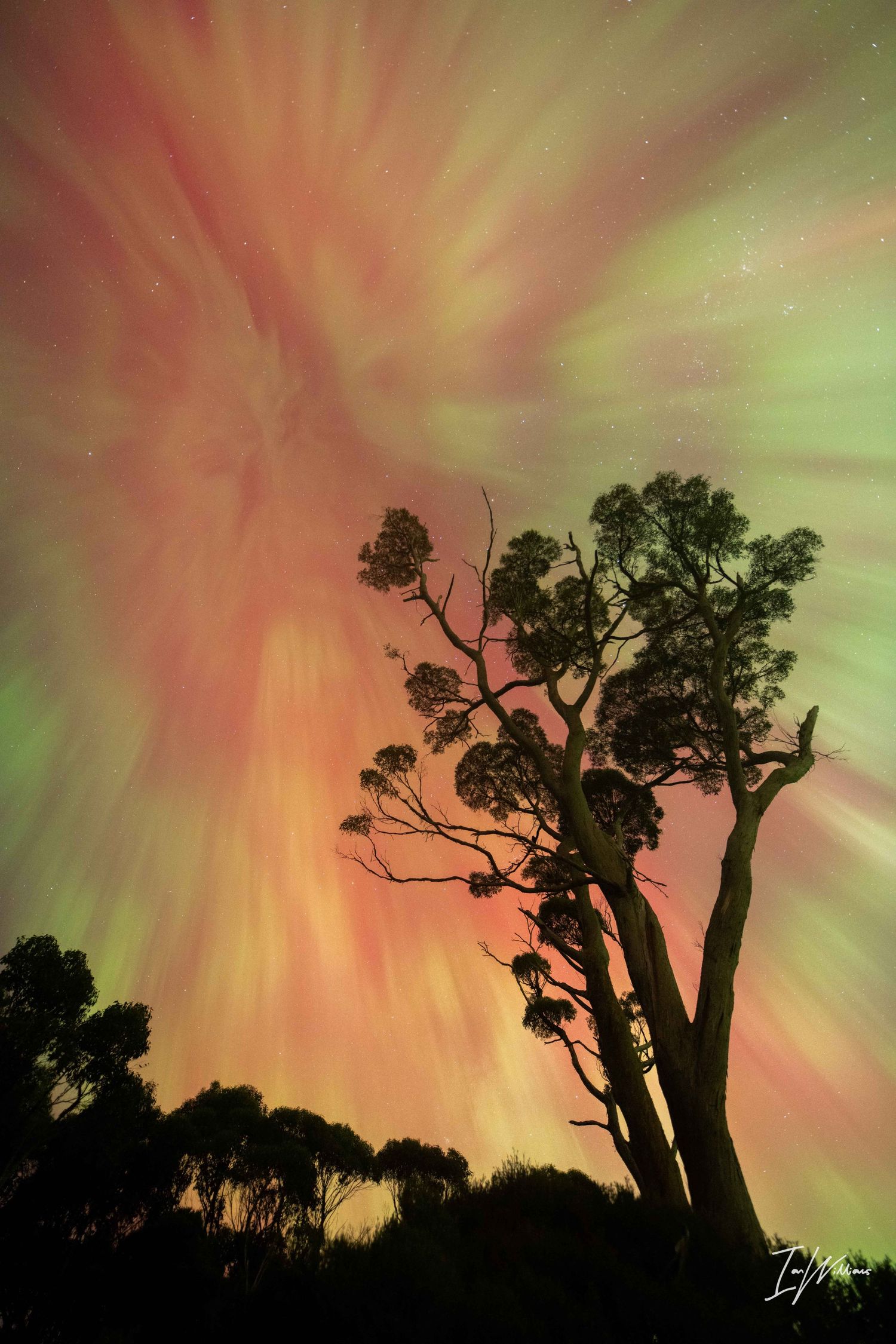
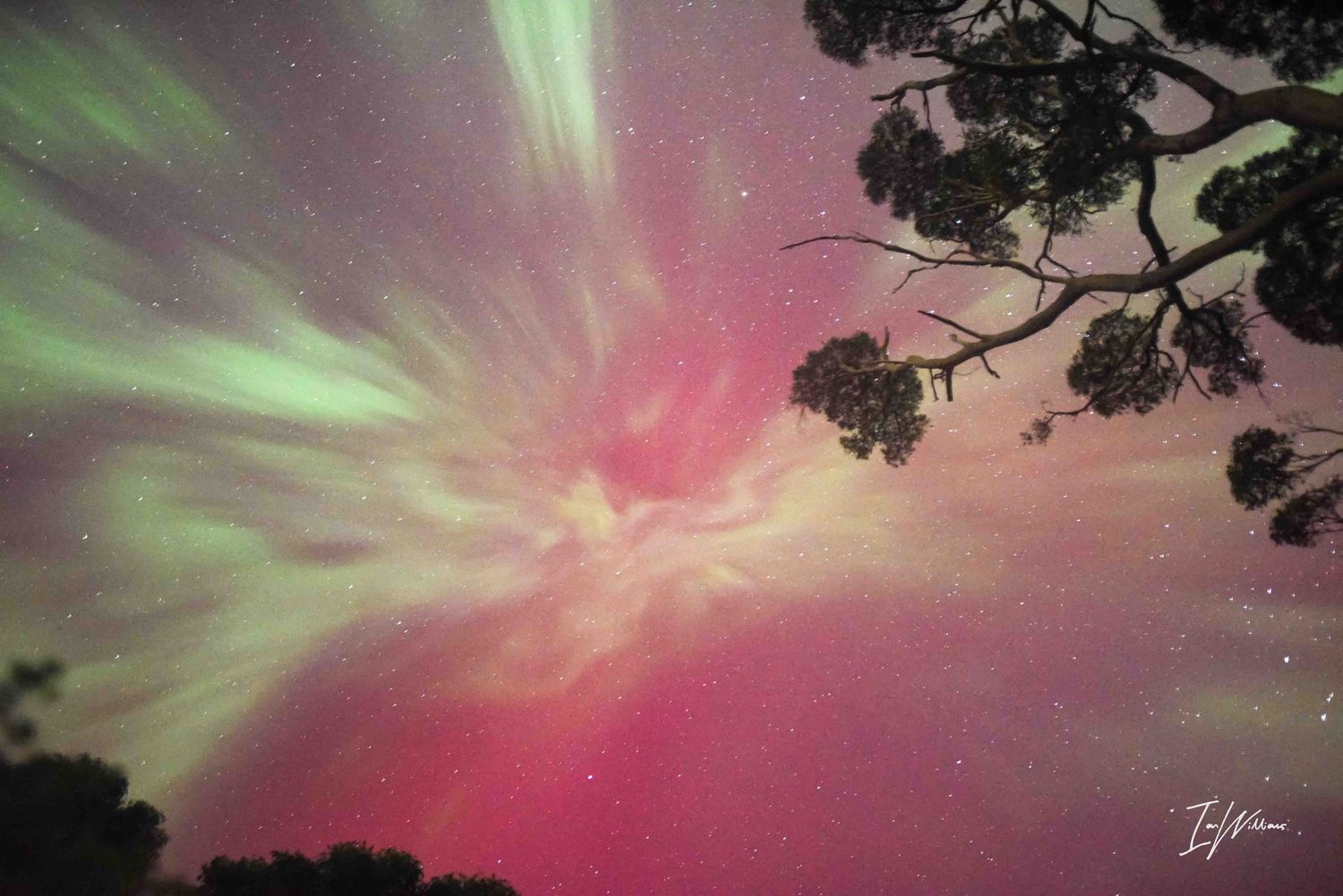
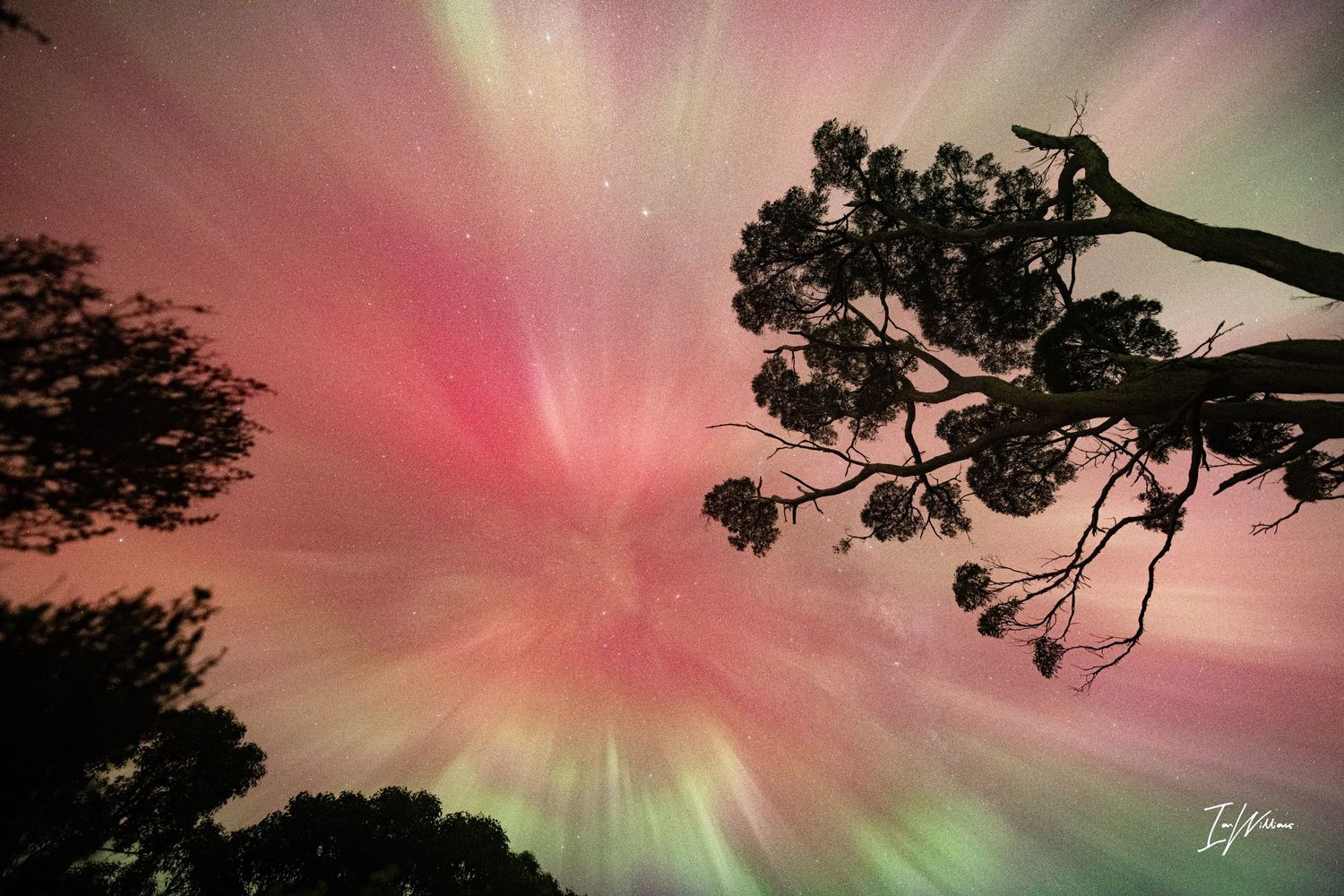
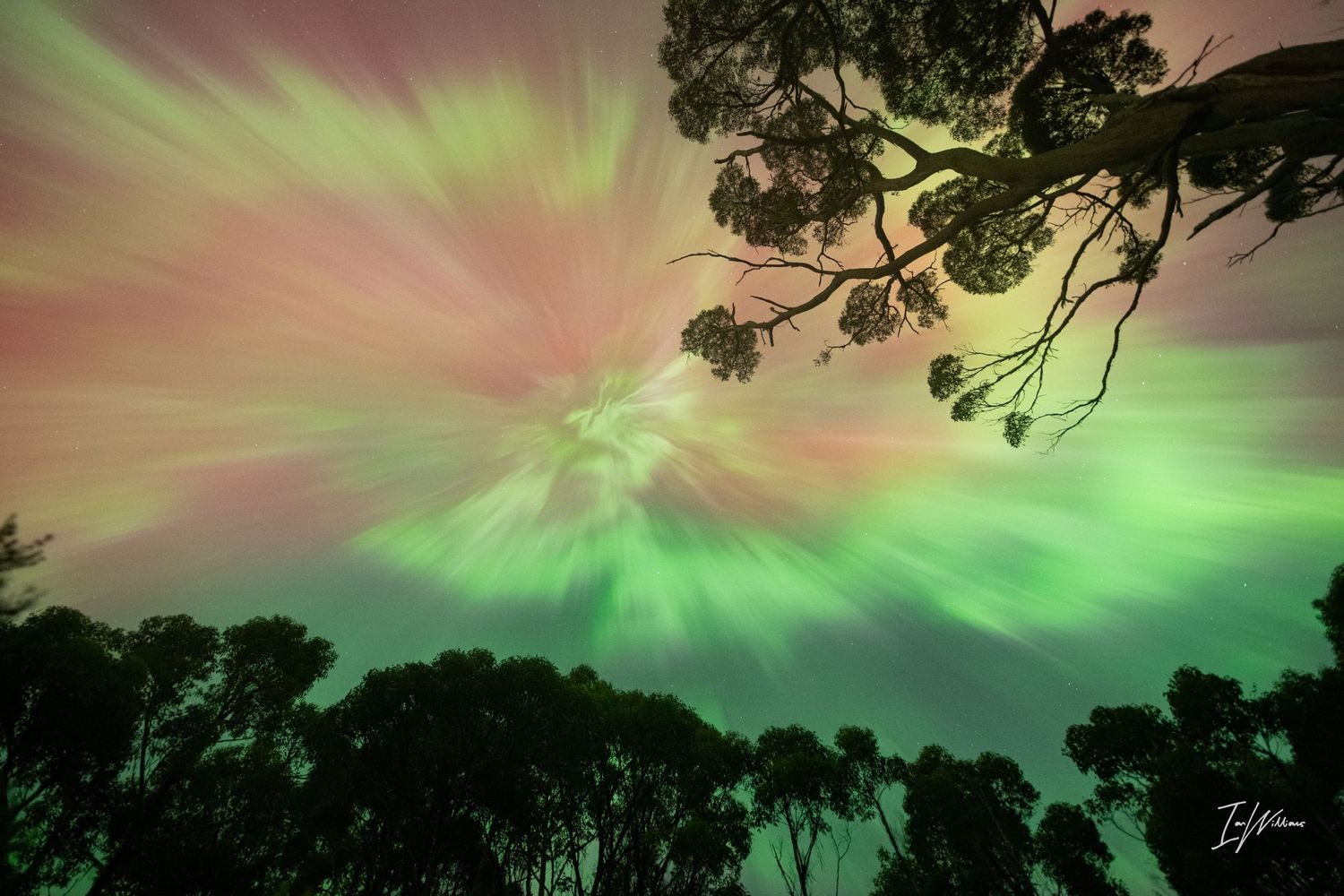
Corona of the Aurora Australis, 11 May 2024
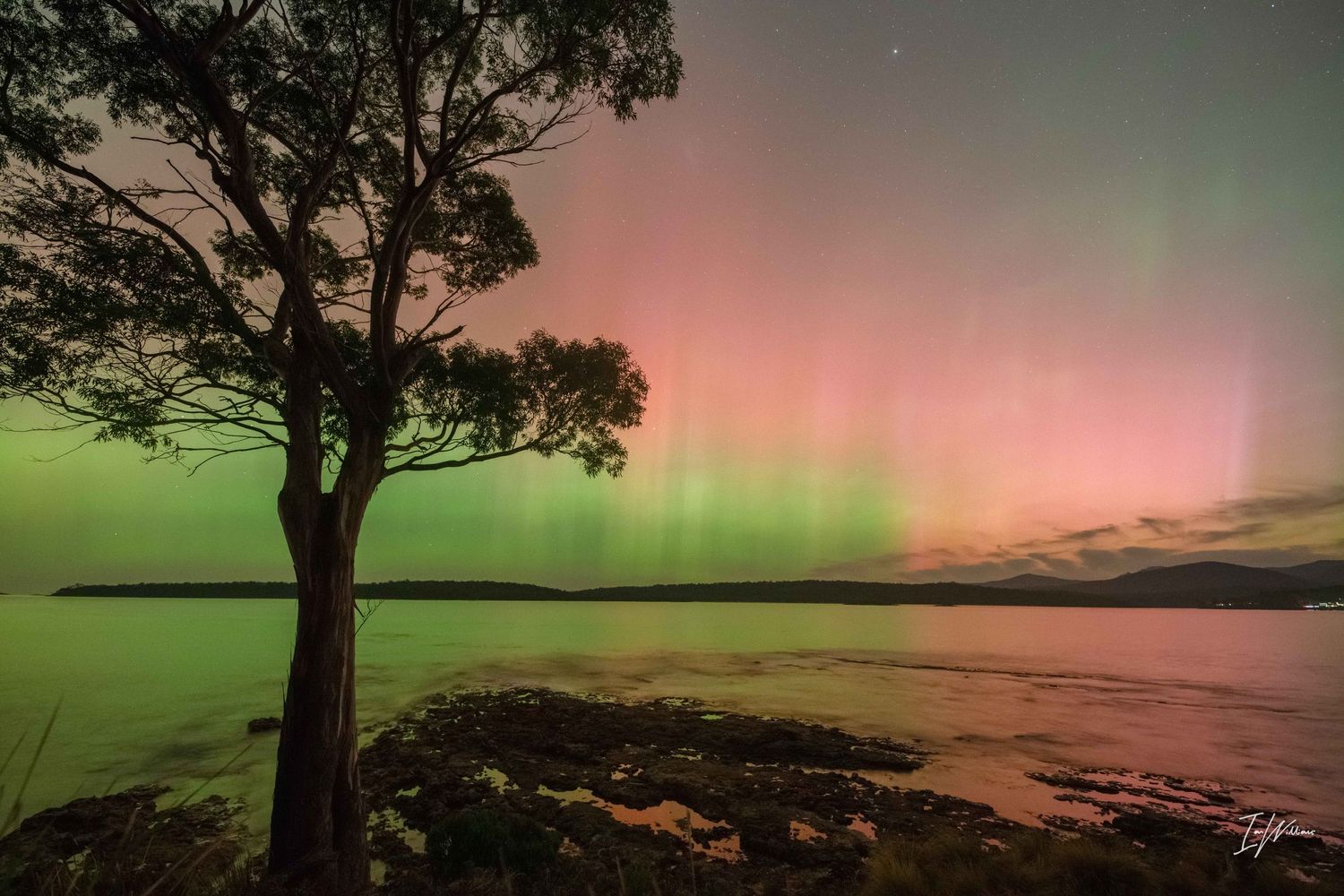
Aurora Australis dancing behind the Gum tree, 11 May 2024
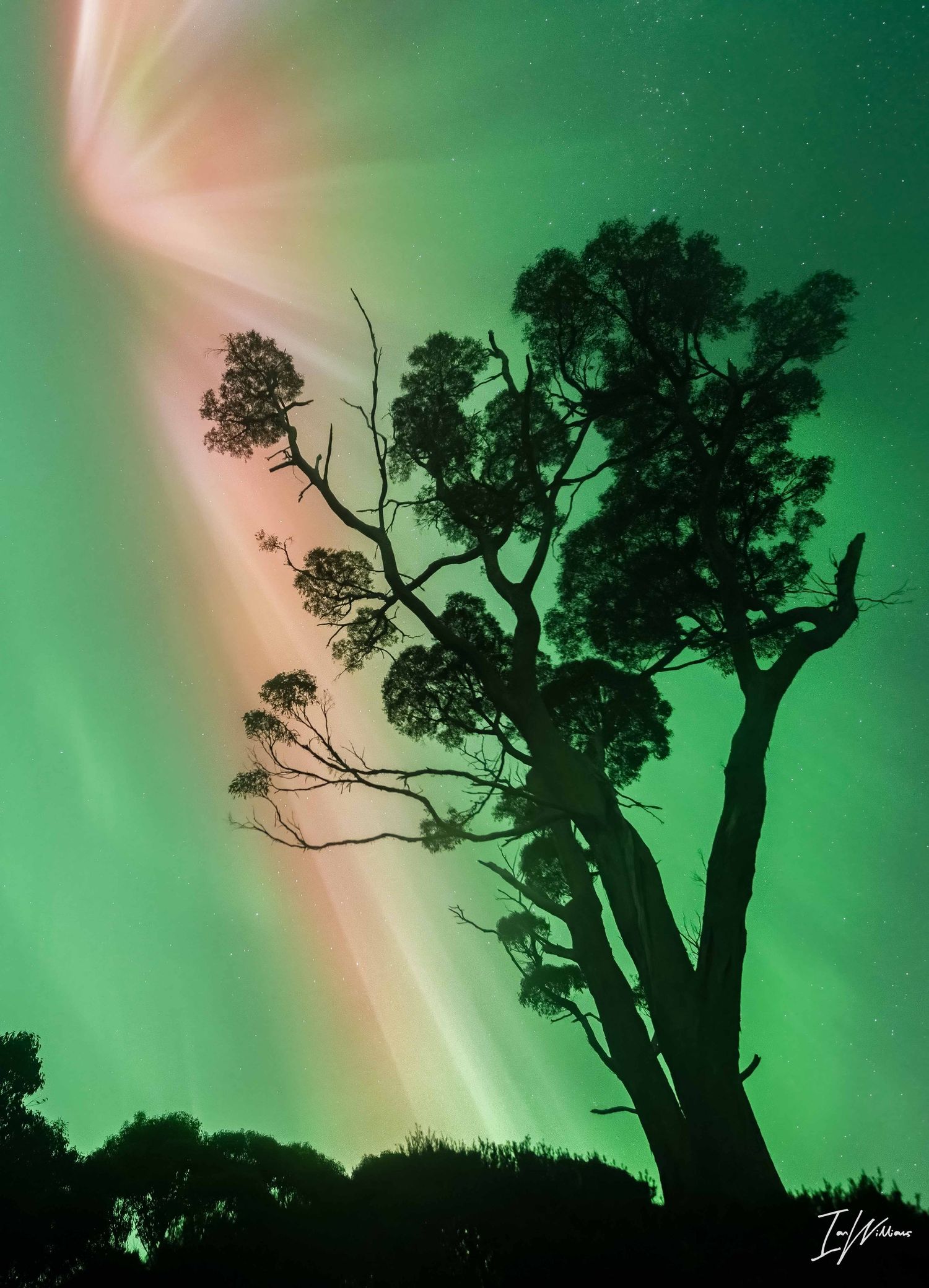
A stunning show of the corona beside the elegant eucalyptus tree, 11 May 2024
Corona of Aurora Australis, 11 May 2024, Southern Tasmania
3490 - Auroral dunes 2
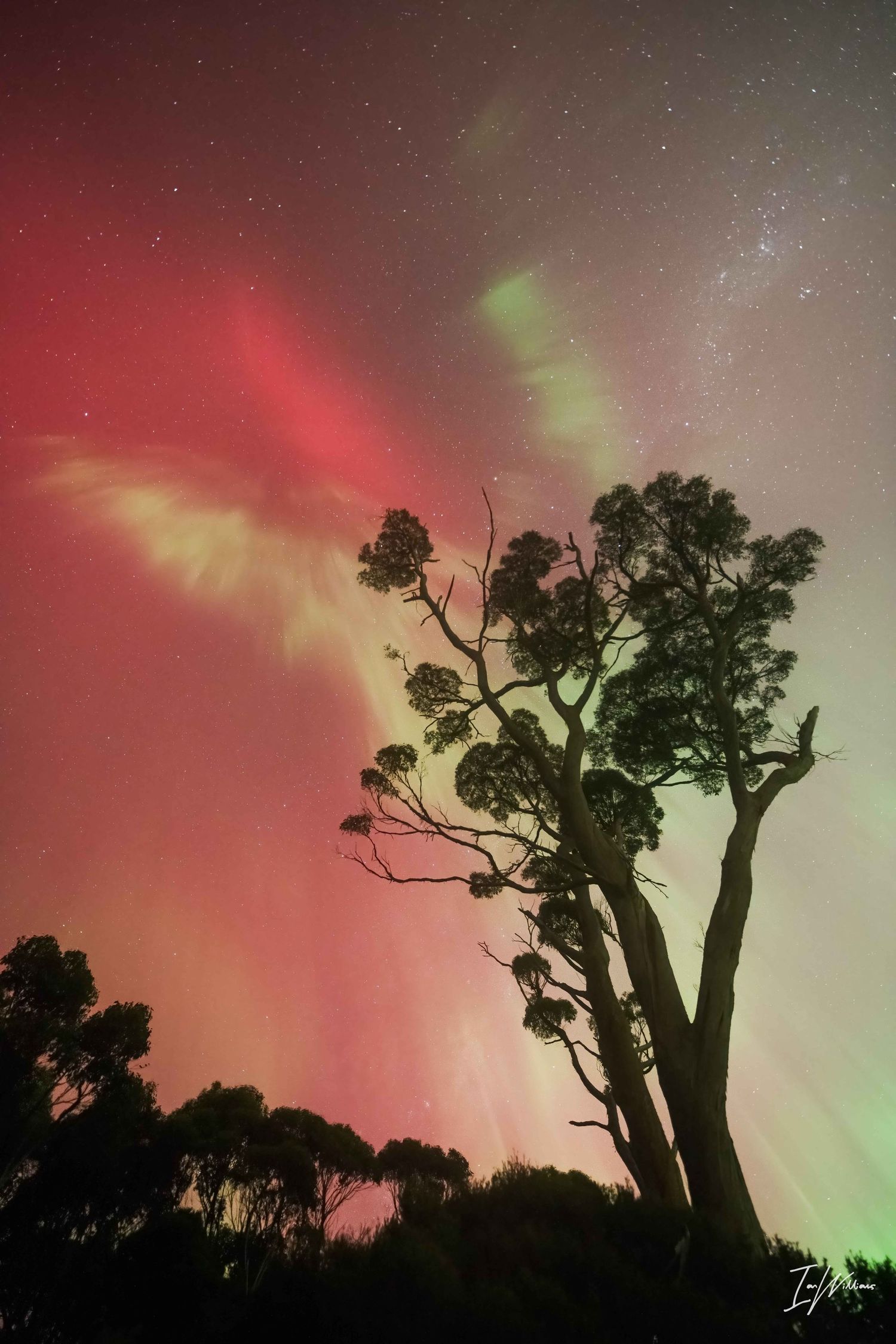
Intense red during the display of the corona
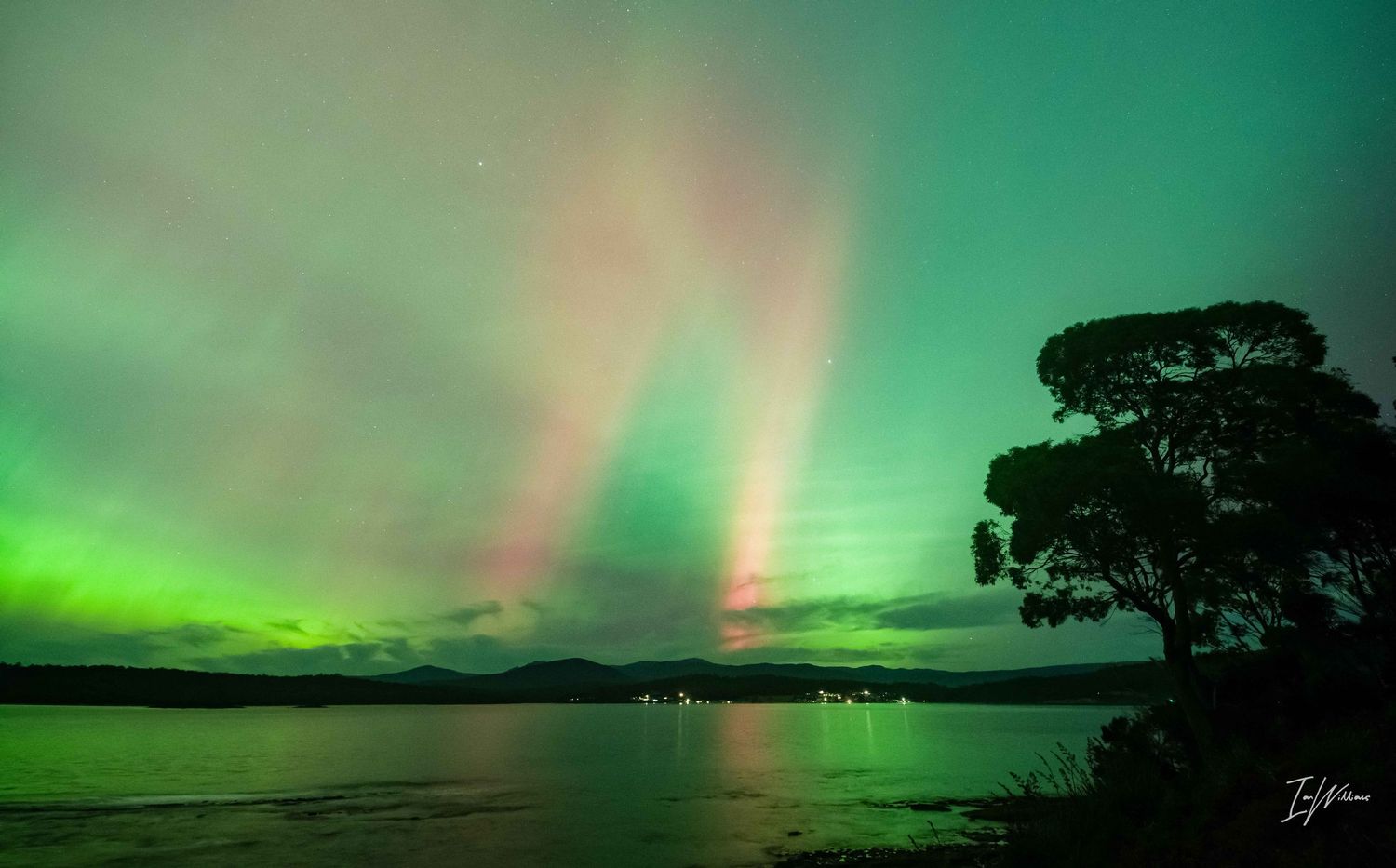
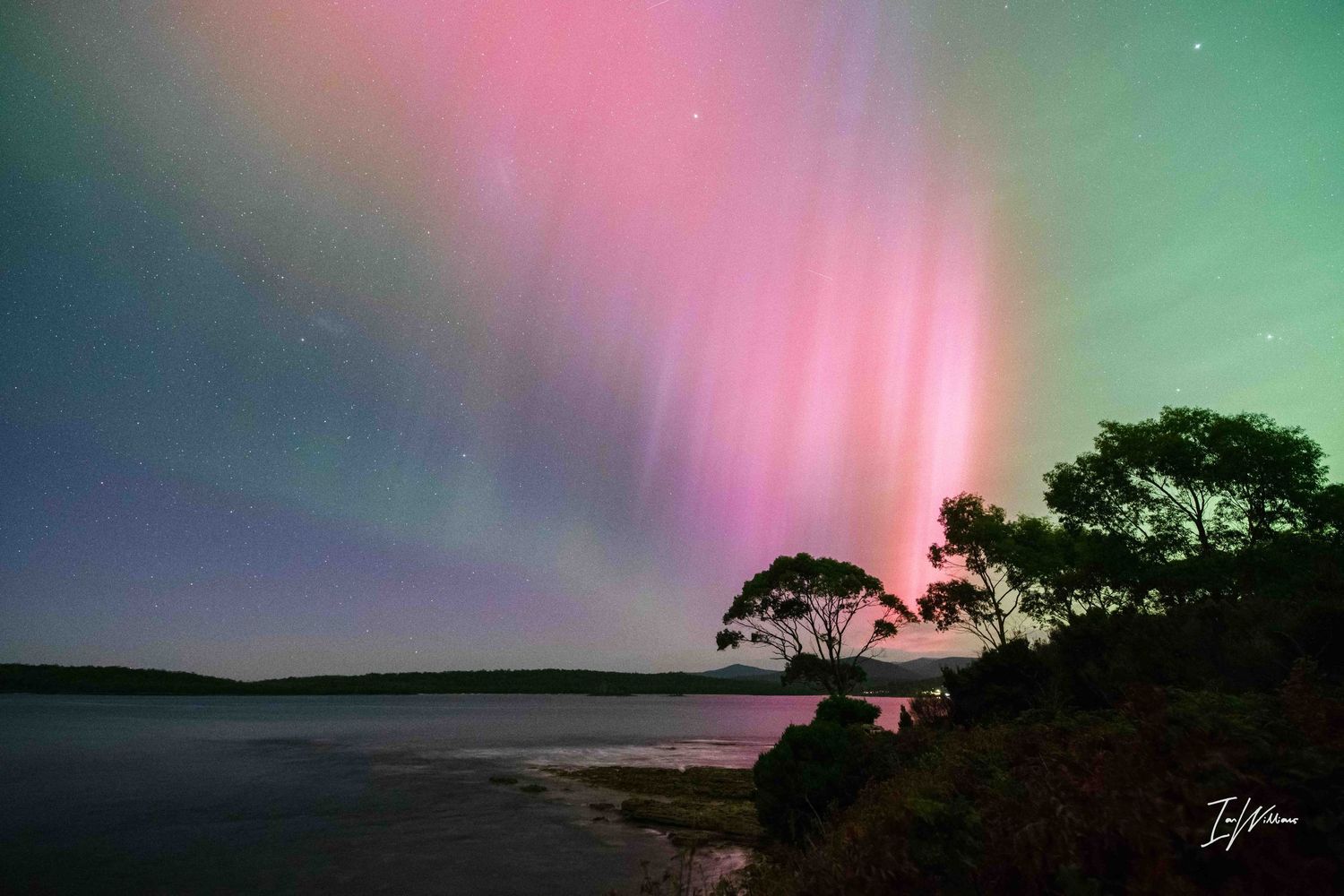
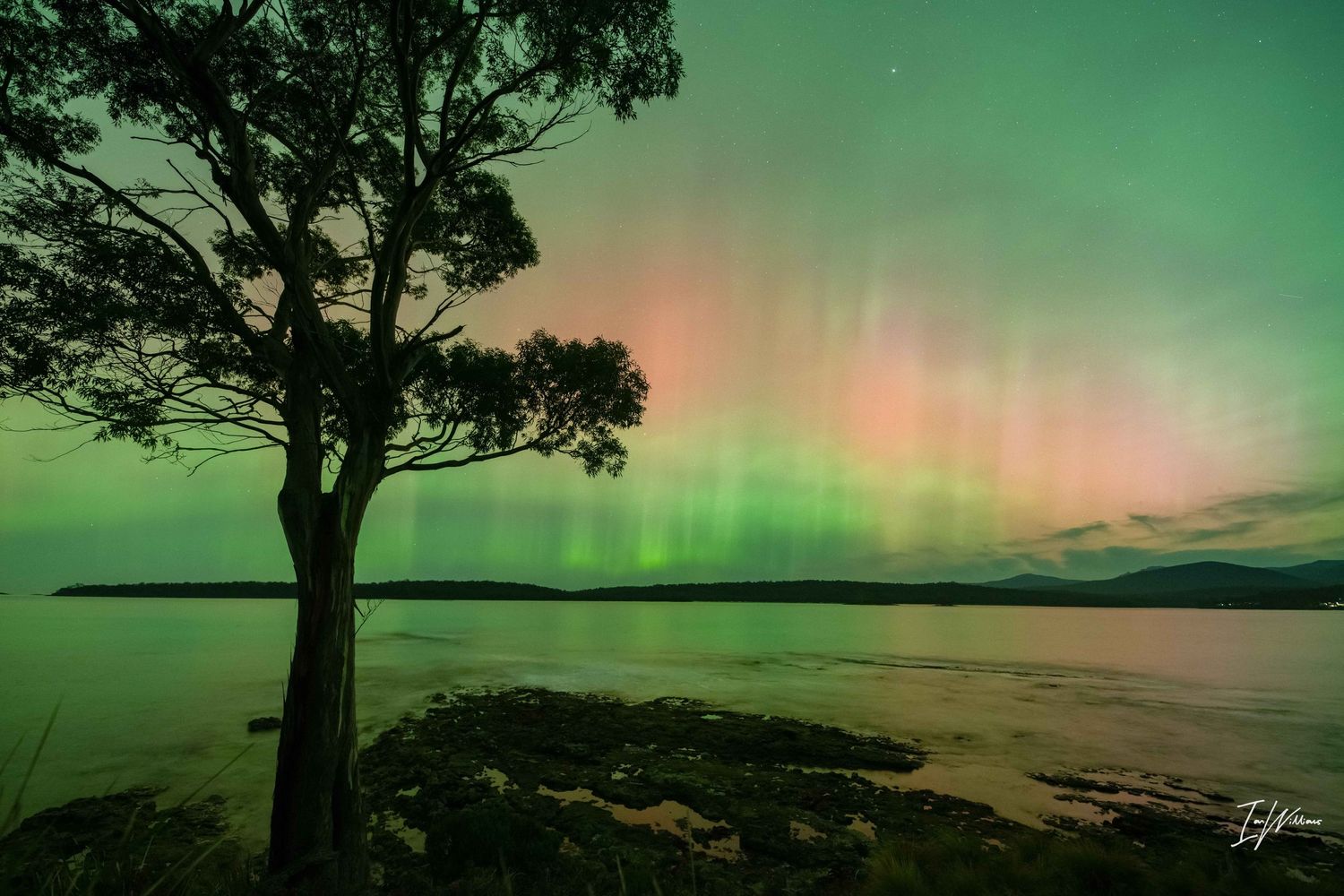
Two delicate pink beams erupt from the south western sky filled with beautiful green auroral colours 11 May 2024
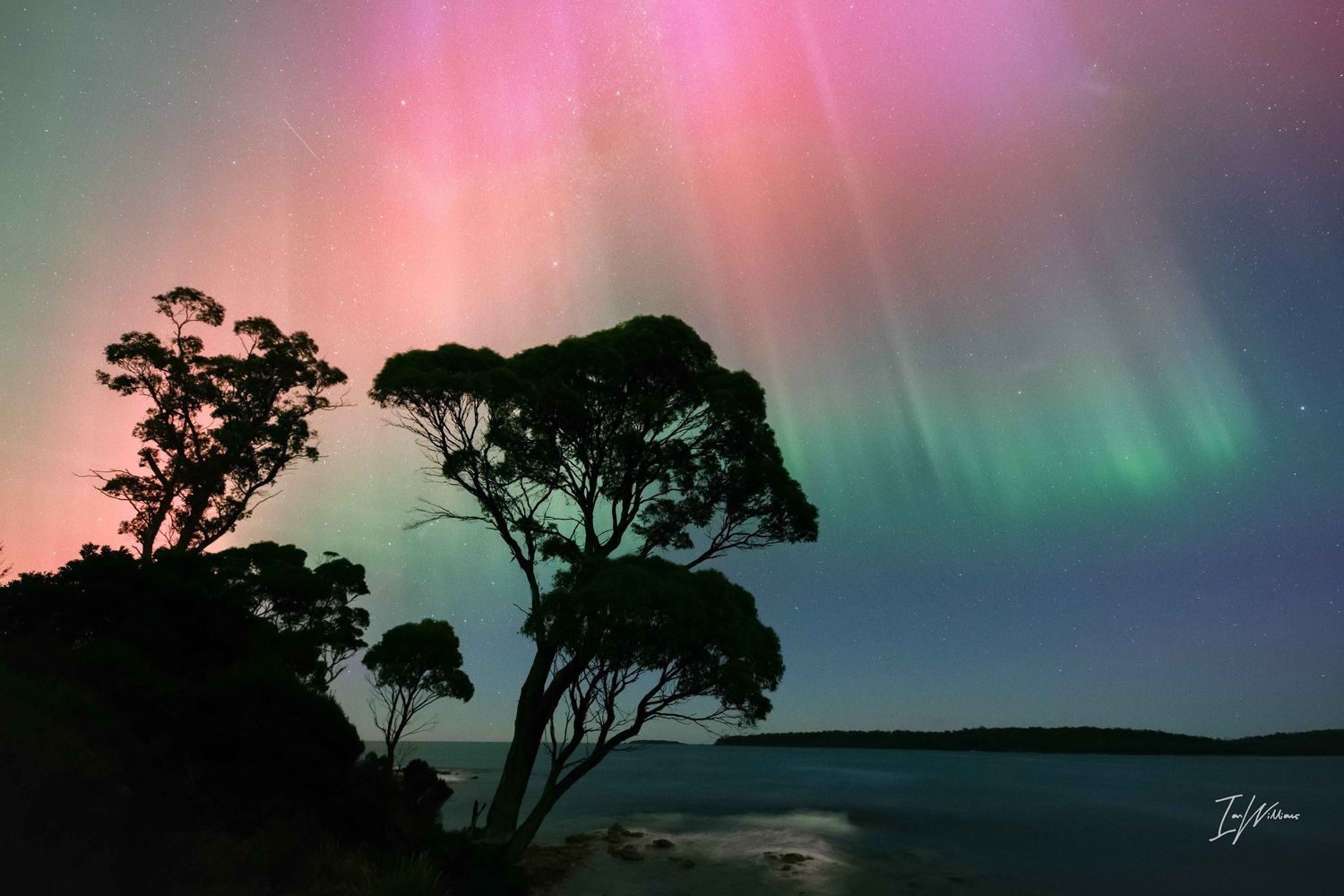
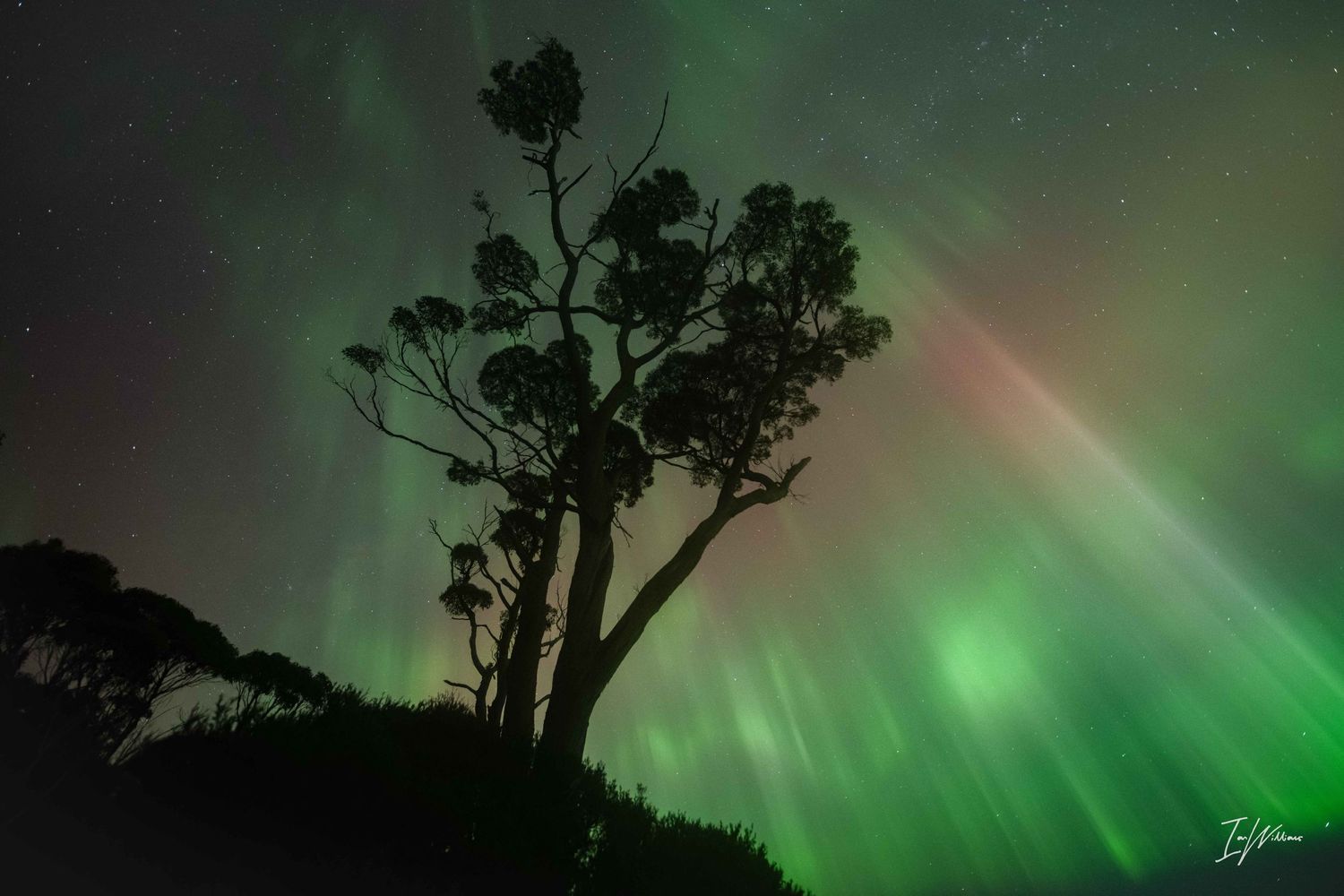
A delightful combination of pink and green auroral beams appeared behind the tree briefly on 11 May 2024
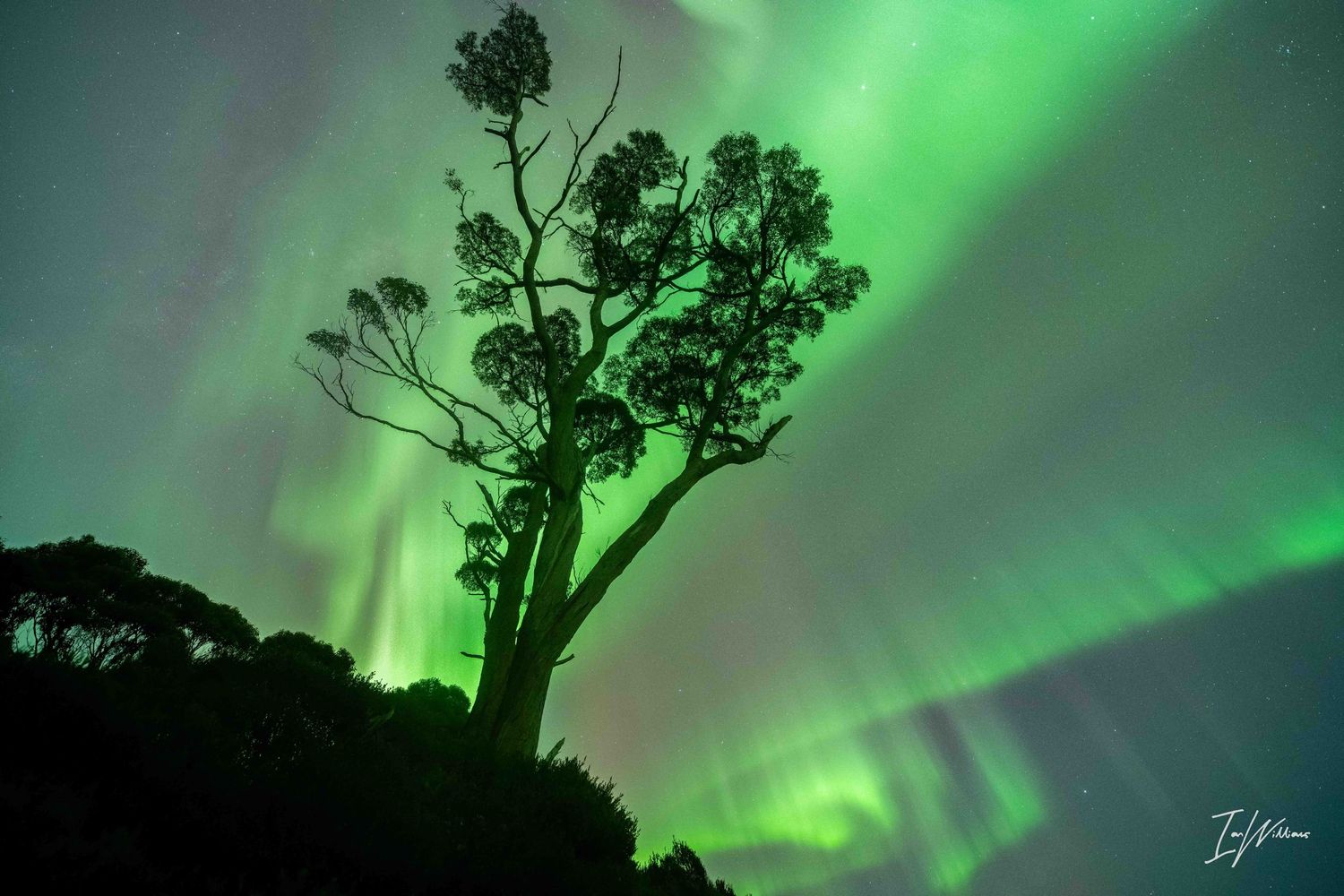

Corona of the Aurora Australis and gum tree, 11 May 2024, Southern Tasmania
A lovely little display at Freycinet, 6 May 2024
A nice walk to a secluded beach with great southerly views proved a productive night, helped by coffee to ward off the cold!
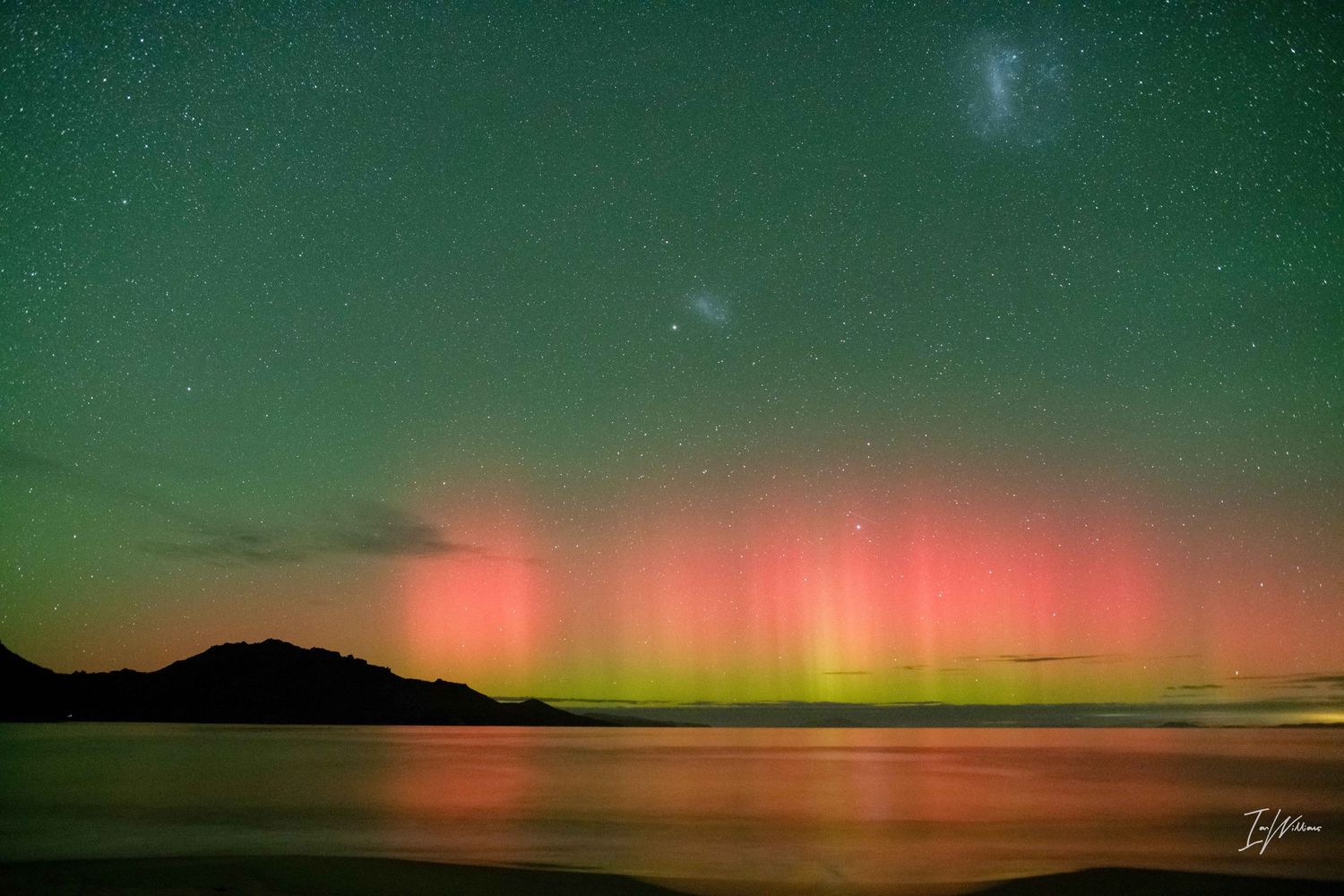
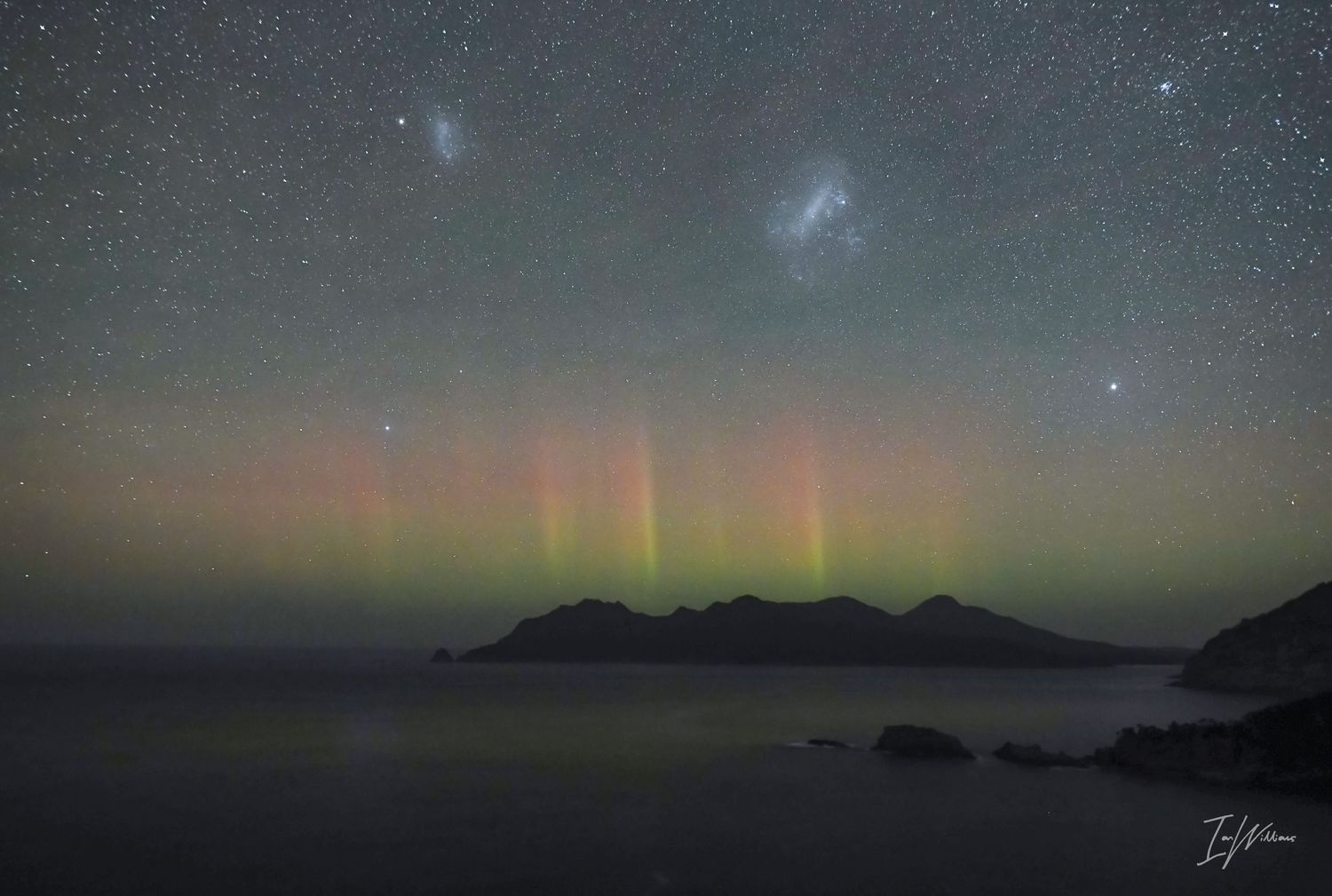
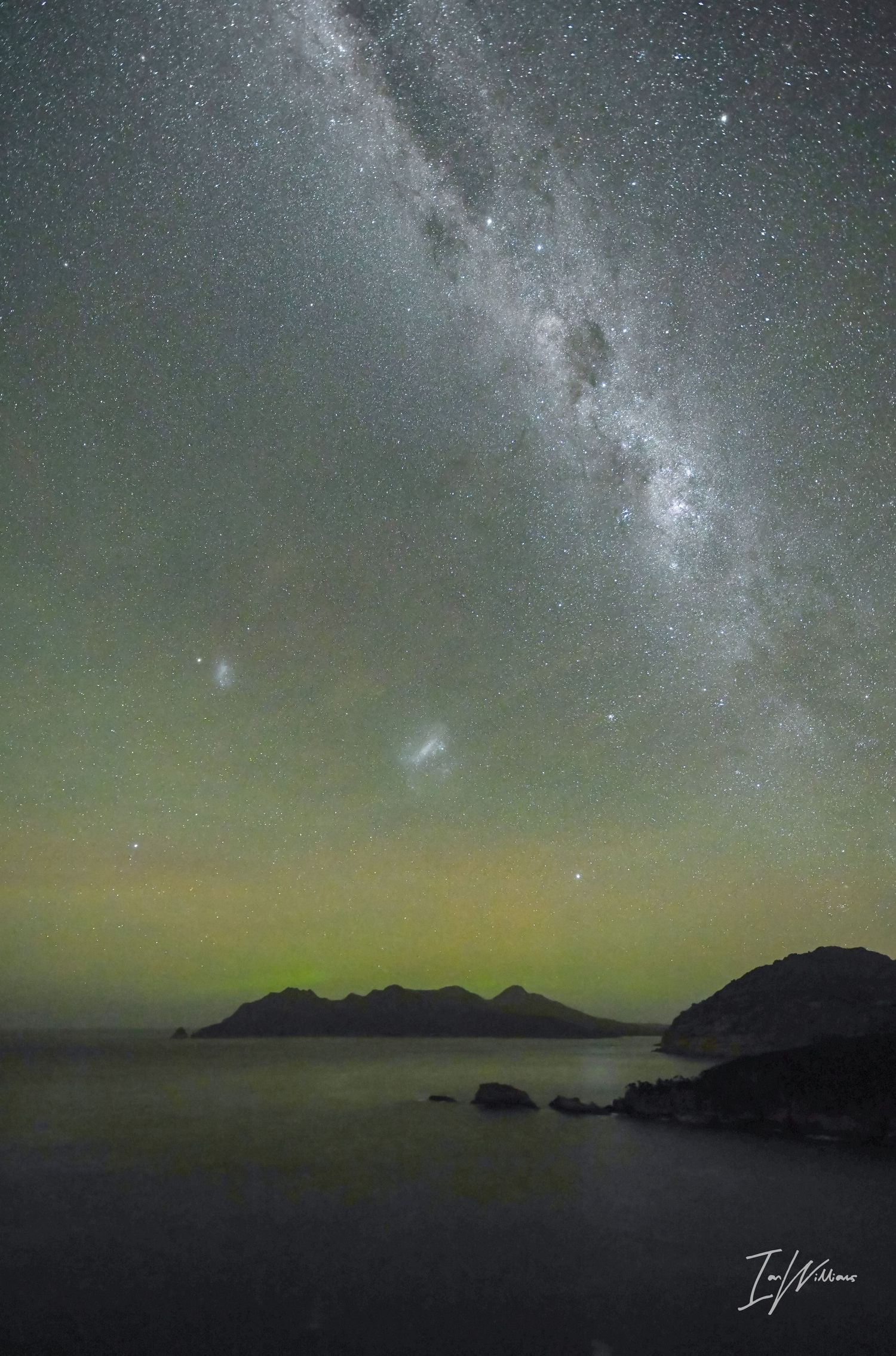
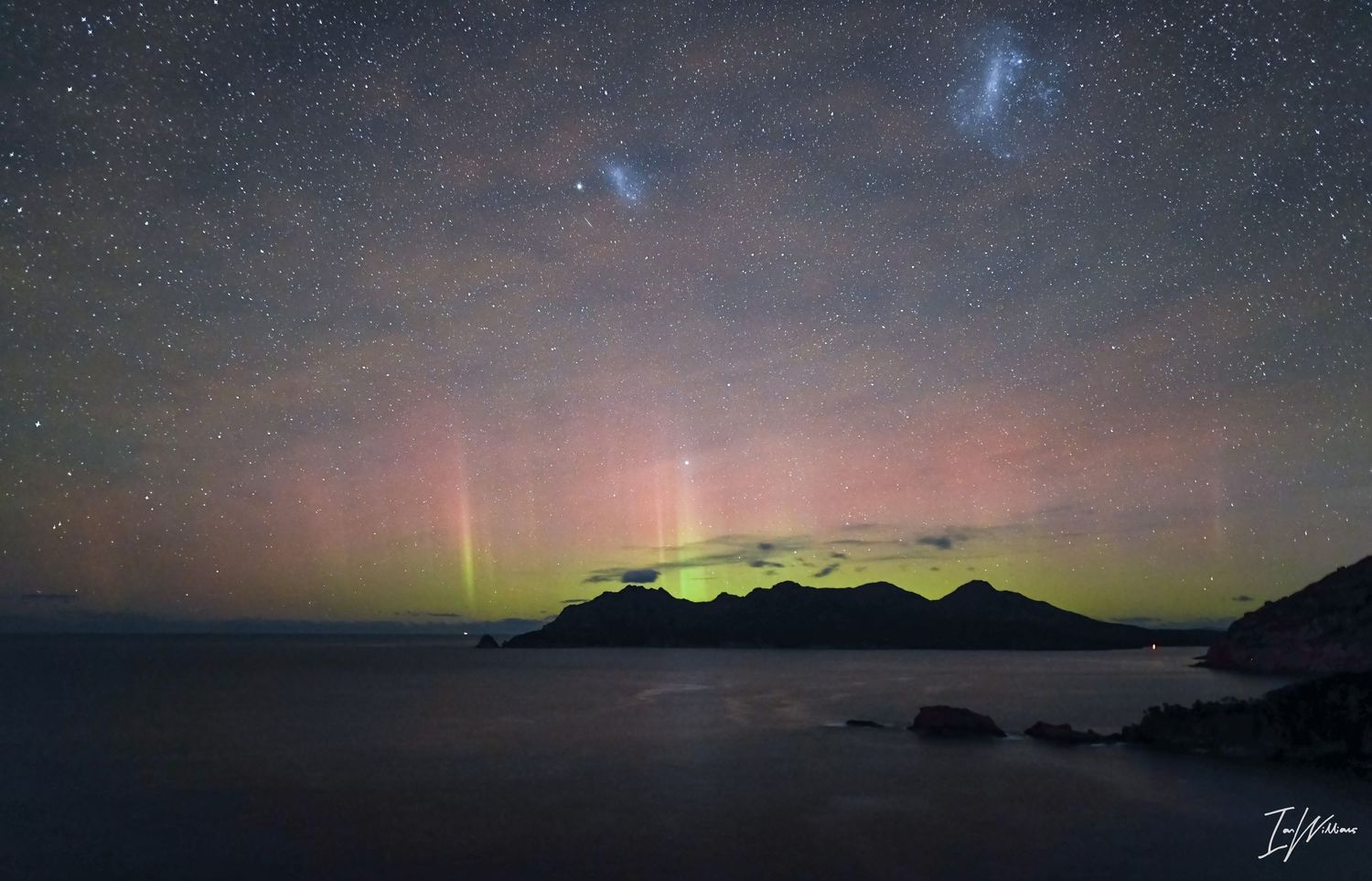
Aurora Australis and two Magellanic Clouds over the Hazards, Freycinet area, Tasmania
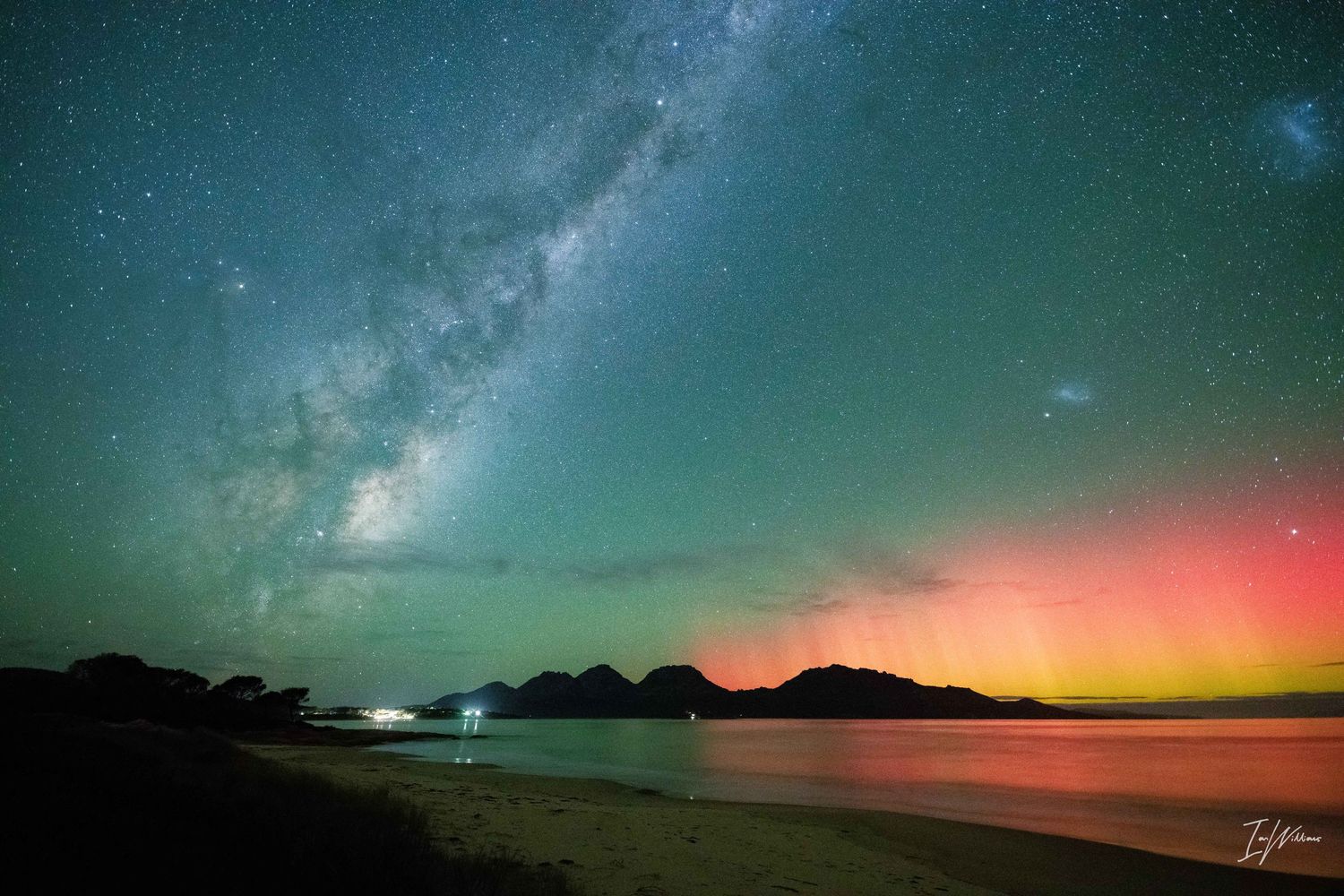
The Milky Way Core (the Emu) and Aurora Australis with the Large and Small Magellanic Clouds over the Hazards. Taken with 14 mm lens, with some slight distortion of the auroral beams seen but I still love it!
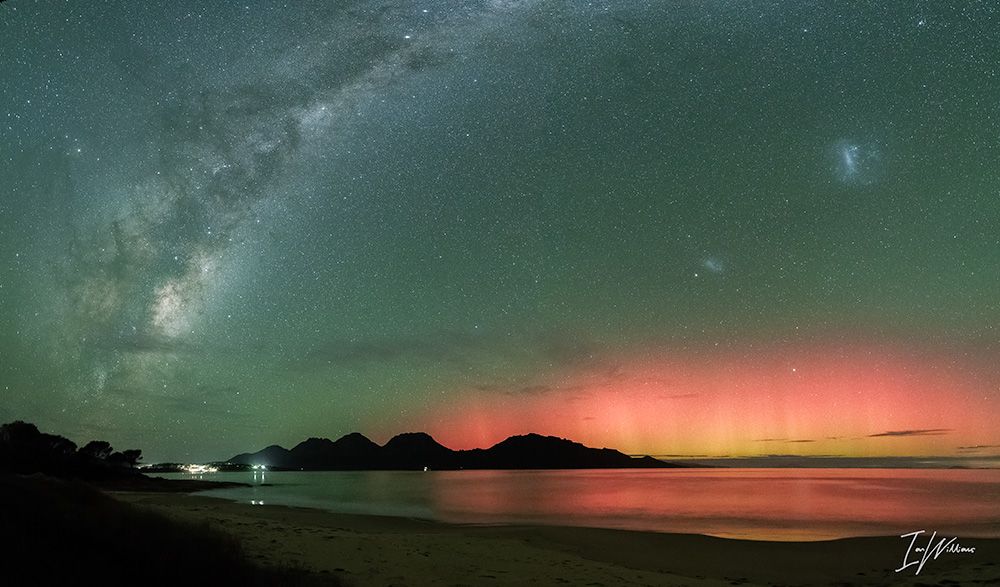
A two photo pano showing the small but vivid auroral display under the two Magellanic Clouds (to right) and the rising Milky Way core to the upper left
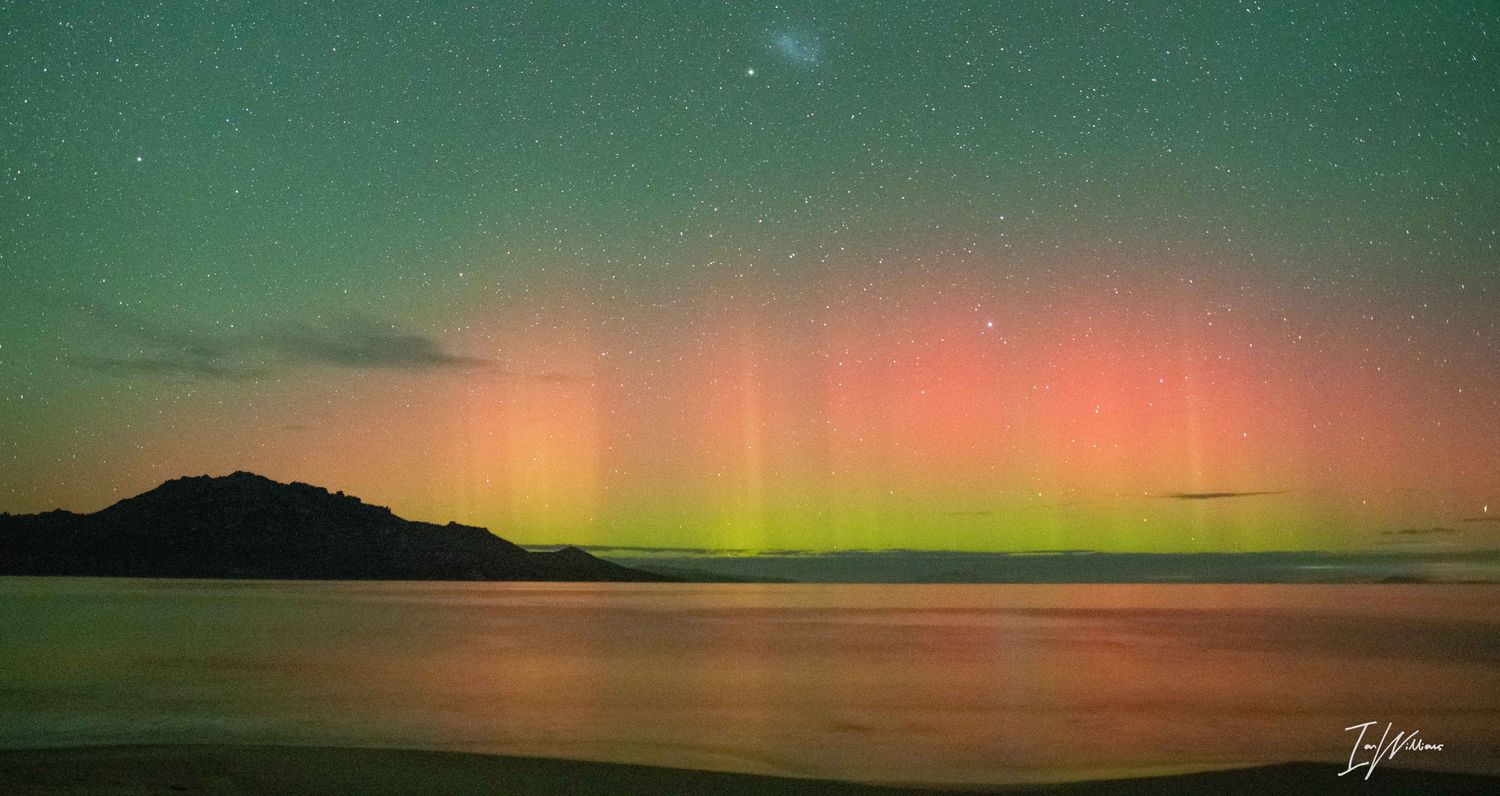
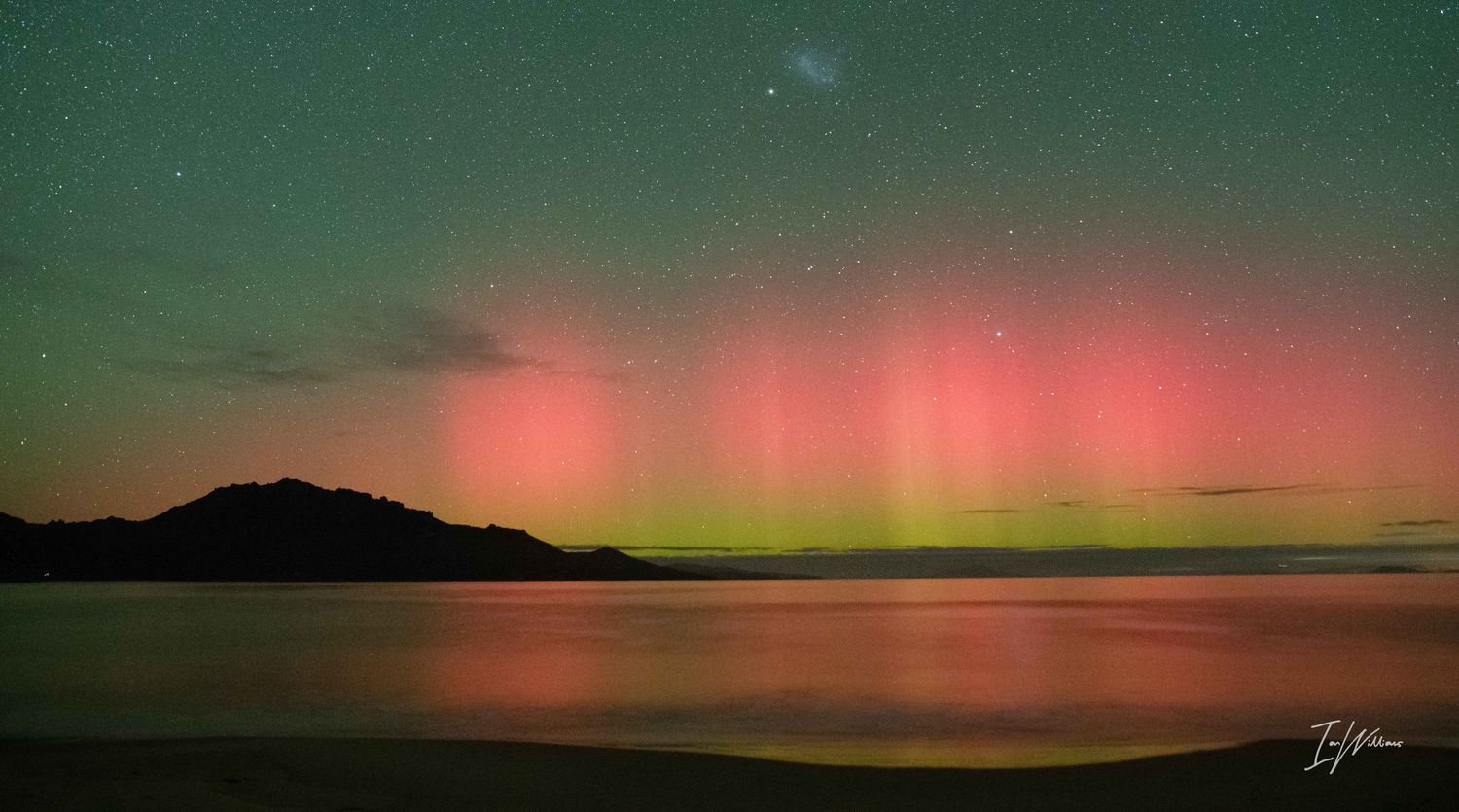
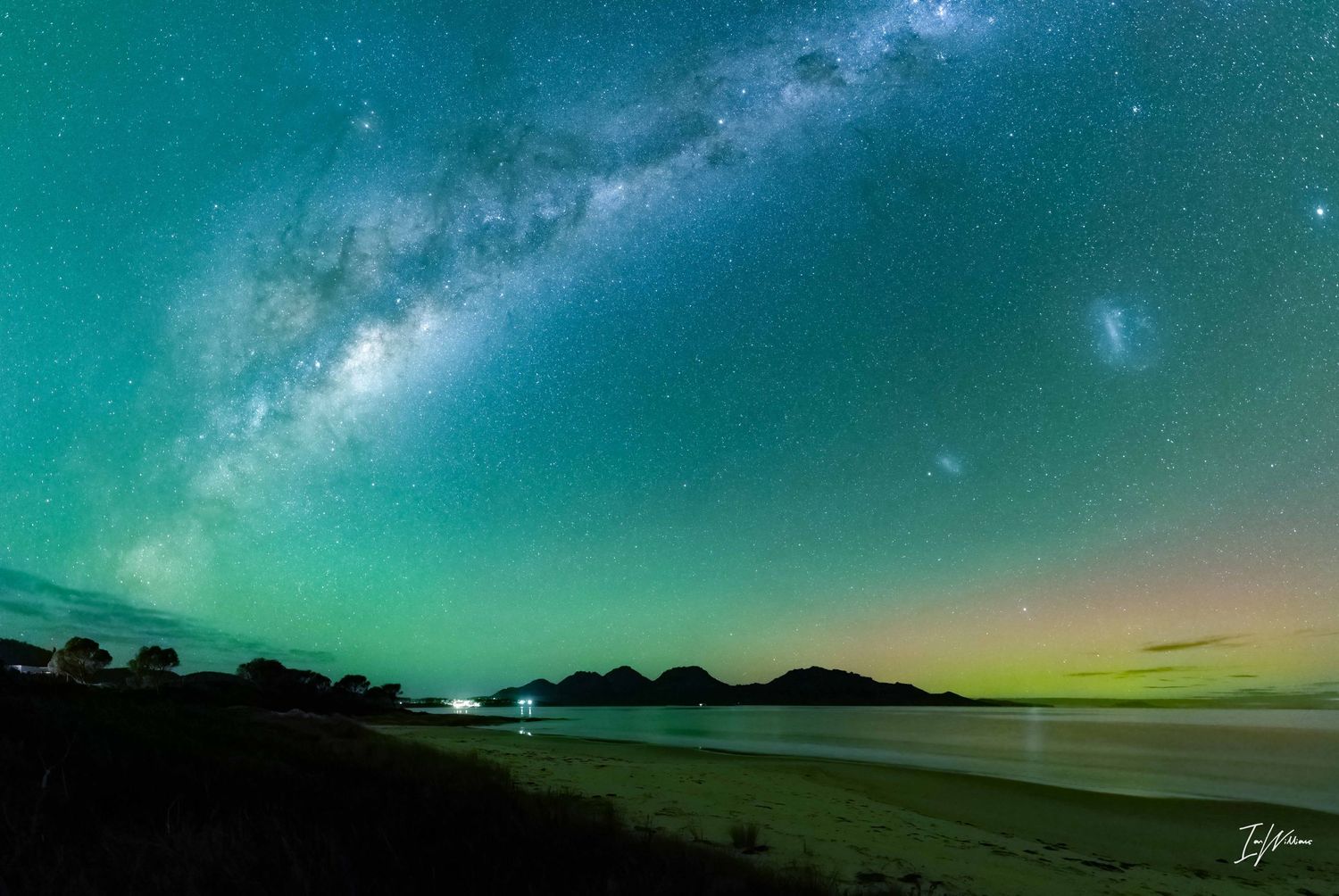
The Milky Way known to Australia's First People as "The Emu" rises in the left corner over the little township of Coles Bay and the mountain range known as the Hazards. The vestiges of a beautiful but bright show of the Aurora Australis is the yellow/reddish pink colour to the right of the Hazards overlooked by the Small Magellanic Cloud and Large Magellanic Clouds (right of image). This image is a panorama comprising 9 shots (3 panels of three shots taken with a Sigma 14 mm lens set to f2.8 for 10 seconds
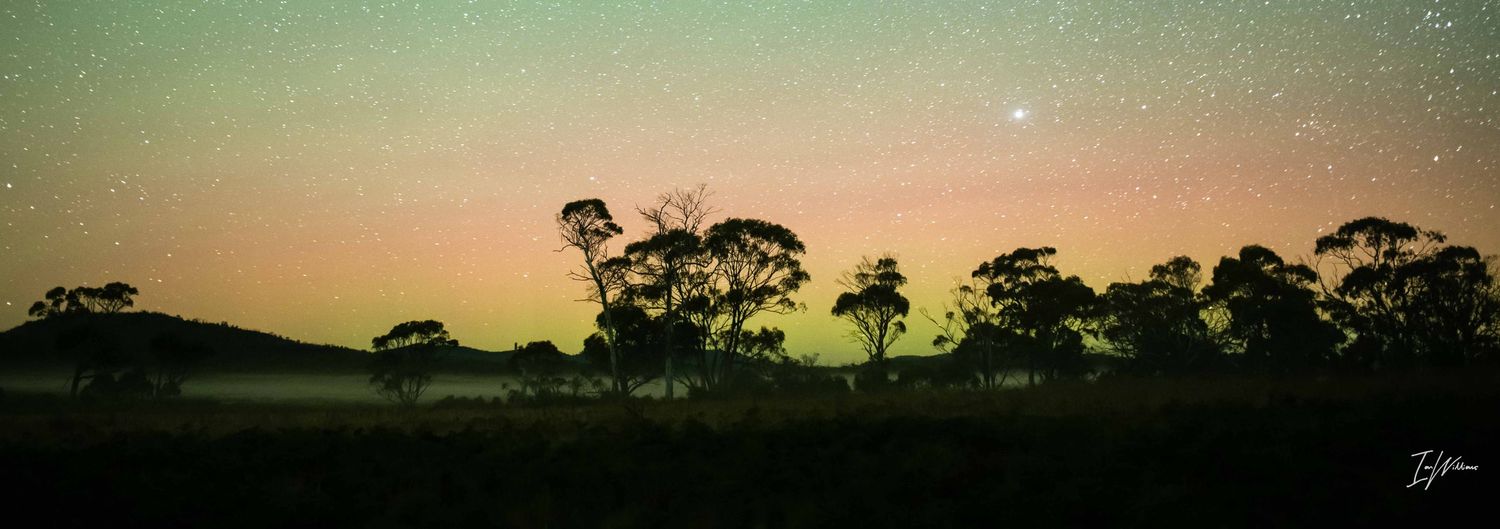
The glow of the Aurora Australis backlights gum trees in a foggy paddock in rural Tasmania, 7 May 2024
Corunna Lake and Mystery Bay, Narooma, Eurobodalla Coast, South Coast, New South Wales 12 to 13 September 2023
By chance I was out at Corunna Lake and various sites imaging the setting Milky Way when I noticed colour appearing to the south. It was the Aurora Australis, and what turned out to be a magnificent stay because of a coronal mass ejection hitting directly and not a glancing blow as first thought.
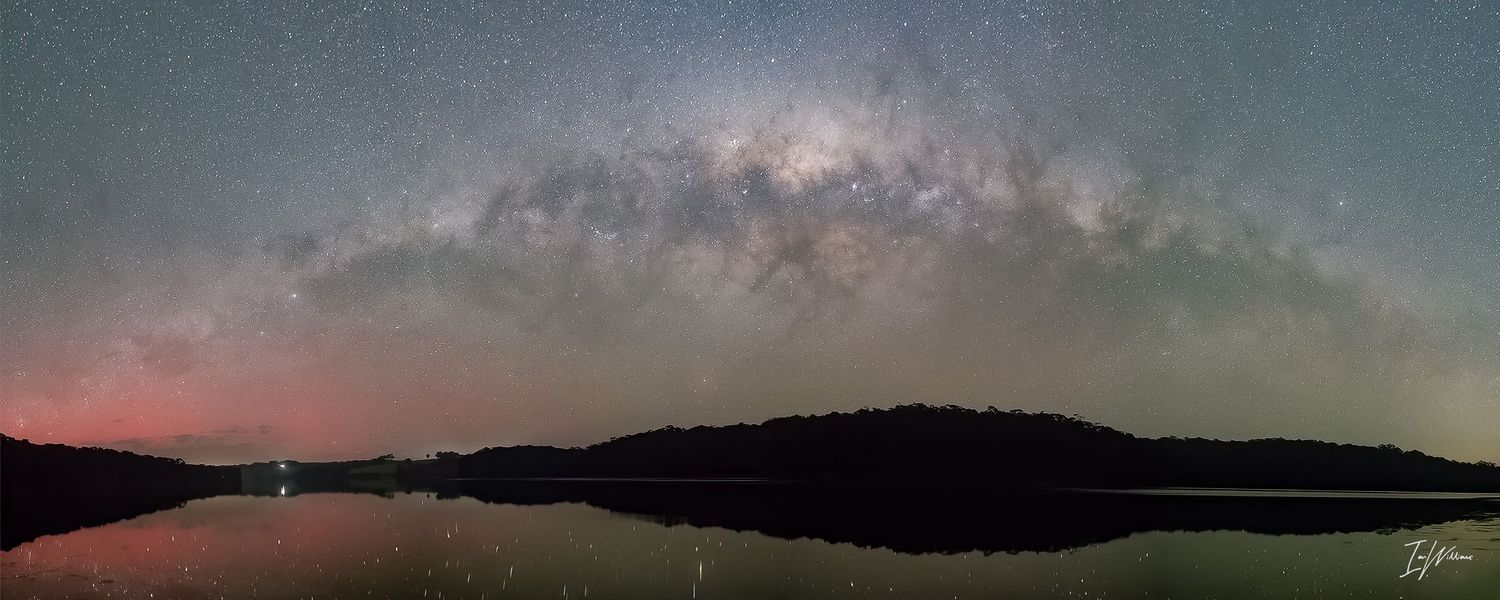
Aurora Australis and setting Milky Way arch over Corunna Lake, 12 Sept 2023
Cape Tourville, Freycinet National Park Tasmania, 21/22 May 2023
On 21 May 2023, David Marriott and I imaged the night sky from Freycinet National Park near Coles Bay. We had driven there after doing some photography at Mt Field National Park to try and get some clear skies for astrophotography.
We noticed before we headed out that there was some minor activity in the solar winds reading which was reflected in a promising auroral oval projection. The Bz, a great indicator, was reading "south" and had been so for several hours which was good. We both didn't say it but we individually didn't think there would be any activity on the auroral front. In fact, I even remarked to Dave that it was a privilege to be there under such dark and unspoilt skies even if there was no aurora. The Emu was majestic in all its glory high in the sky when we arrived and set up our tripods and cameras at around 9:50 pm. I decided to image the Emu high in the sky and was delighted with how the raw shots appeared on the camera.
Due to our location, we were limited to 8 second exposures.
Shots from our chosen vantage point facing due south did not show any aurora. Periodically we checked our aurora apps to note that the auroral oval was expanding and that the Bz had got further negative which was good.
Because of the clear skies I started experimenting with images with really high ISOs like 12,500 and 16,000 to better bring out the foreground and also any air glow. David had also noticed there was some bioluminescence in the water. It was during my high ISO shots that I noticed what was unmistakably the aurora, albeit not particularly strong in my images. Within about 15 minutes David remarked that he could see white beams. I couldn't see them initially but then they were seen quite easily in the dark southern sky. The first shot was taken around this peak in activity of the beams at around 11:25 pm on 21 May 2023. I love the subtlety of the display. It was taken with a 24 mm lens at ISO 3200 at f2 for 8 seconds. All other shots were taken with similar setting on the 35 mm or 14 mm lens.
After about half an hour the beams subsided with the aurora getting stronger yellows and greens and I could see isolated patches of yellow forming over parts of the mountain range before us. Towards the end we could see the bottom of the auroral arc in our shots. The colours were amazing.
It's a night I will never forget and such a blessing after having invested so much time finding great sites for the aurora that had occurred the night before to find that we were clouded out after a beautiful sunny start to the day. It is the highlight so far of our nine day trip and we have another 5 nights to go!
I am so enjoying revisiting the state that had been my home in the late 80s and early 90s when I shot my first aurora on a film camera in March 1989.
Ian
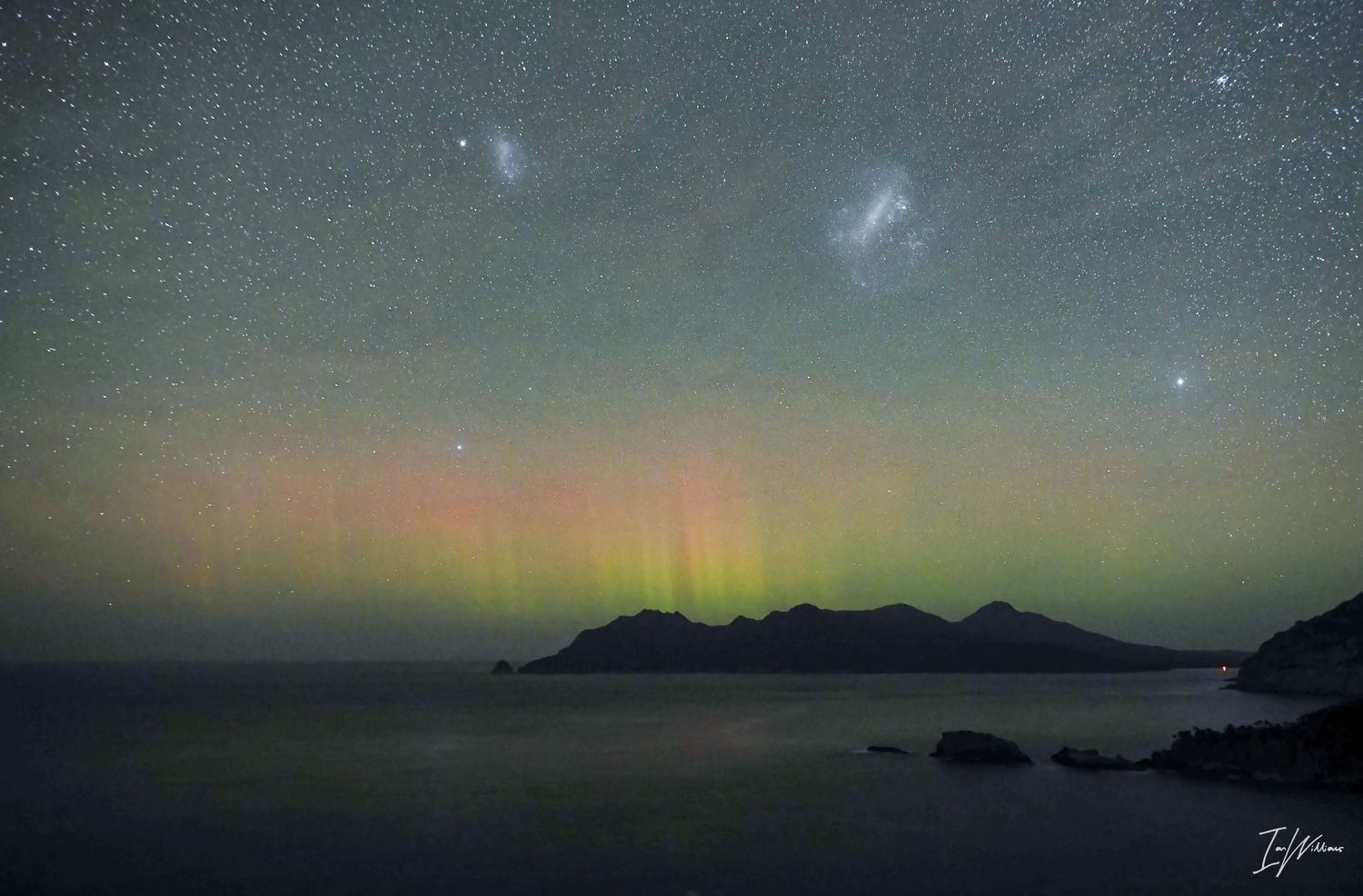
Thebeautiful aurora viewed from the Cape Tourville lighthouse on 21 May 2023
Subtle beams at around 11:37 pm on 21 May 2023
A wide view of the ongoing aurora showing the southern sky region including the Magellanic Clouds using the 14 mm lens
Cape Tourville, Tasmania 22 May 2023 (pm)
On the night of 22 May 2023 we returned to the lighthouse at Cape Tourville and was treated to another beautiful display of the Aurora Australis.
Cooma area, 20 April 2018
Heightened solar activity indicated by escalating readings on the Canberra magnetometer and solar wind readings led to the hasty decision to try and capture photographs of the aurora just to the south of where I live. fortunately a friend had given me the handy tip that there were bushfires in the Adaminaby area. This later helped inform a last minute decision to move to another site which I thought would be smoke free as my first choice was blanked by smoke from the fires.
After about 9o minutes in the car, I arrived at my chosen site full in the knowledge it provided a clear view south, with no light pollution to tarnish the image of the aurora. I hastily set up the camera in the middle of the road and obtained the first image in the sequence below. My jaw nearly dropped to the ground, as I had never seen a display like it in mainland Australia.


Namadgi National Park, Australian Capital Territory, 5 August 2019
This series of shots were taken from a locality known as Legoland due to the massive granite tors found in the area. Sadly the area was ravaged by bushfires in January 2020 so access is not permitted until the area is deemed safe from damaged trees. The spot provides an elevated view south over the Orroral valley a significant site involved with the lunar landings. The site is also near Honeysuckle Creek near the former tracking station that was instrumental in picking up the first images taken from Apollo 11.
The scene was gently lit by a crescent moon and also brought out a bit of purple in the aurora. the two whitish clouds in the shots are the Large and Small Magellanic Clouds.


